Considering visiting Busan while in South Korea? This complete 3-day Busan itinerary will help you plan the best things to do while there. I spent three days exploring all that Busan has to offer, so I’m sharing my personal travel experience to help you.
I found Busan to be a breath of fresh air following my 5 days in Seoul. Situated on the southern coast of South Korea, Busan has roots that start back as a port and fishing city. Today, its diverse neighborhoods, popular beaches, and historic temples make for an incredible visit.

The landscape here is unique, where the drastic mountains crash down into the southern coastal shores. You feel like you get this lovely blend of a bustling seaside city and then access to nature. Busan has wonderful opportunities for getting outdoors with several coastal promenades and walks, too.


In this Busan, South Korea travel guide, I’m sharing a thoughtfully curated itinerary for a few days in Busan—designed for slow travelers, memorable dining, and anyone craving a little coastal magic.
Short on Time? Here’s the Ultimate Busan Itinerary (3 Days):
Where to Stay
Stay near Busan Station for convenience or opt for Gwangalli or Haeundae Beach for a vibrant coastal vibe. If I had to choose my favorite hotels to stay at in Busan, they would be:
- Asti Hotel ($, Busan Station), for a clean, basic stay 5-minutes walk from the station
- After Chapter Hotel Gwanganri ($$, Gwangalli), for a chic, design-forward hotel with a pool
- Park Hyatt Busan ($$$, Haeundae), for a luxurious stay with stunning skyline views
Day 1: Arriving in Busan & Gamcheon Culture Village
- Morning: Arrive via KTX train from Seoul (2 hr 15 min) by 9:30 am, drop bags, and Uber to Gamcheon Culture Village. Stroll colorful streets and enjoy art-filled views.
- Afternoon: Lunch at 비비빔 BIBIBIM Restaurant for kimchi dumplings and bulgogi, then relax at Avant Garde Cafe for scenic terrace views. Explore Gwangalli Beach’s cafes like Picosten or Little Aus.
- Evening: Walk the Gwangalli Beach promenade for Gwangan Bridge views and dine at Eonyang Bulgogi Busanjip (Michelin-listed) for marinated Korean BBQ.
Day 2: Private Guided Tour & Haeundae Blueline Park
- Morning: Start a private guided tour (7 am) visiting Haedong Yonggungsa Temple (oceanfront), Seokbulsa Temple (cliffside Buddhas), and Samgwangsa Temple (lantern displays).
- Afternoon: Lunch at 교통부돼지국밥 for pork rice soup, then explore Huinyeoul Culture Village with a coffee at Having Moment. End at Dongbaek Island Coastal Promenade for coastal walks.
- Evening: Visit Simmian teahouse for mochi desserts, then ride Haeundae Blueline Park capsules at sunset (book tickets in advance). Dine at Grazie (Italian) or Bupyeong Kkangtong Market for local eats.
Day 3: Biff Square & Departure
- Morning: Explore Biff Square and Gukje Market for vibrant stalls, and visit Bupyeong Kkangtong Market or Bosu Book Street for books and goods. Optionally, see Yongdusan Park’s Busan Tower.
- Afternoon: Grab a quick bite at a market stall or station convenience store, then depart via train from Busan Station.
Things to Do
- Full-Day Busan Private Guided Tour
- Busan History and Market Food Tour with Local Chef
- Korean Cooking Class in Haeundae
Helpful Guides to Plan Your Trip
If you’re visiting from Seoul, don’t miss my Seoul itinerary, Seoul travel guide, and guide to where to stay in Seoul!
The Busan 3-Day Itinerary
Busan Travel Tips Before You Arrive
Getting There: The Seoul to Busan Train
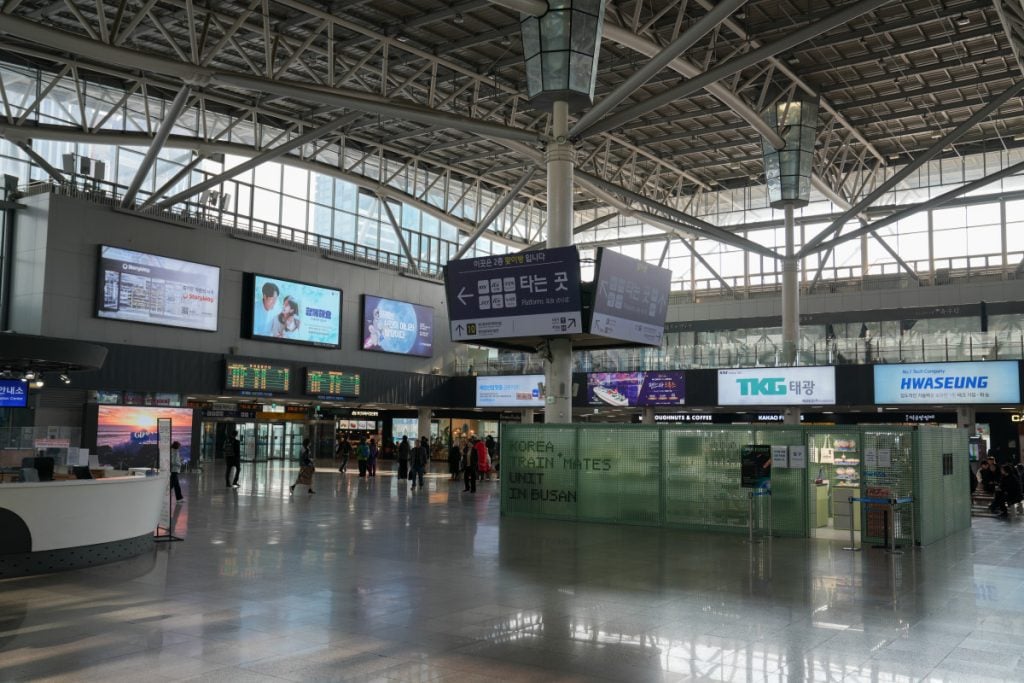
If you’re planning on visiting Busan as part of a trip to Seoul, know that it is quite easy to get there! The train from Seoul to Busan takes anywhere from 2 hr 15 minutes to 3 hours, depending on which rail line you choose. I highly suggest the fastest, which is the high-speed KTX train (2 hours 15 mins) from Seoul Station that goes directly to Busan Station.
When you’re booking your rail tickets in South Korea, it’s best to book direct on KO Rail. The tickets range from $35-70 depending on the class you book. I did first class on the way down and economy on the way back; both were comfortable. You’ll receive the train ticket by QR code, which you need to keep with you.
Travel Tip: Avoid booking with Rail Ninja, who have a reputation of being overpriced/not well-reviewed.
Getting Around Busan: A Very Large, Spread Out City
Something that you may notice as you begin to look at the map is that Busan is incredibly spread out. And, surprise, it’s very hilly on the coast! Public transportation here is limited to two metro lines and the bus, which is often slow due to traffic. My number one tip? For a short trip, hiring a private guide (the one I booked) or taking a guided tour are the easiest ways to see the majority of the sights.
For the rest of your time, I would cluster what you see by area, which I have done in this Busan itinerary below. I would use Uber to get around the rest of the time, which is the most affordable/easiest way to get around. Some of the longest Ubers across Busan at 30 minutes in distance were under USD 15.
Historical Importance and Geography
Busan’s roots go back to the 15th century as a small fishing village, and in the opening of Busan Port in 1876, it became a center for international trade. During the Korean War, Busan played a critical role as a refuge for people fleeing from North Korea. The city was one of the last remaining strongholds of the Republic of Korea (South Korea) after the invasion, and it saw massive population growth as people sought refuge here.
This is why there are so many villages today. In the 1950s, as refugees arrived, small villages began to pop up around the city center. That’s why there are places like the Gamcheon Culture Village, which began then and today now are a vital part of Busan’s growing neighborhoods.
Best Times of Year to Visit Busan
When you visit Busan, it depends entirely on your interests! It is a happening, white-sand beach vacation destination for Koreans. So come summer, many visitors come to spend their time on the coast. The rest of the year, spring is popular for blossoms, and fall is even more so for its fall foliage. I visited in March, and while it was cold and sometimes windy, it was still enjoyable to see all of the major sights.
Money and Language in Busan
Like Seoul, cash is needed for purchases at smaller businesses and food markets. I recommend always having about USD 50 in the local currency (Korean Won). When it comes to English, I would not expect everyone to speak it, so have a few common phrases and utilize a translation app when needed.
Other Important Travel Information:
- Have important apps downloaded: Naver Map for navigation, Kakao Talk for local communication for reservations, Papago for translations, and Uber for taxis.
- Get an eSIM Card for Connectivity: I recommend getting an unlimited data plan from Holafly.
- Make Reservations in Advance: Hotels, popular restaurants, and guided tours.
- Bring: Plug Type F Adapter, for charging electronics (it is not the same outlet as the US)
Choosing the Right Amount of Time in Busan
While I did 2 nights and three days in Busan, I felt like I was able to see the majority of the sights. I don’t know if I’d recommend much more than 3 nights unless you plan for a day on the beach and any other organized experiences. Many visitors do a South Korea itinerary of Seoul, Busan, and Jeju Island, which is why 3 nights is the right amount of time!
Where to Stay in Busan
For a short 2-night trip, staying right by Busan Station is the way to go for ease. I stayed at Asti Hotel, which is a 5-minute walk from the train tracks. If you’re looking for a more upscale beach holiday, I have a few suggestions as well.
Where I stayed: Asti Hotel ($)
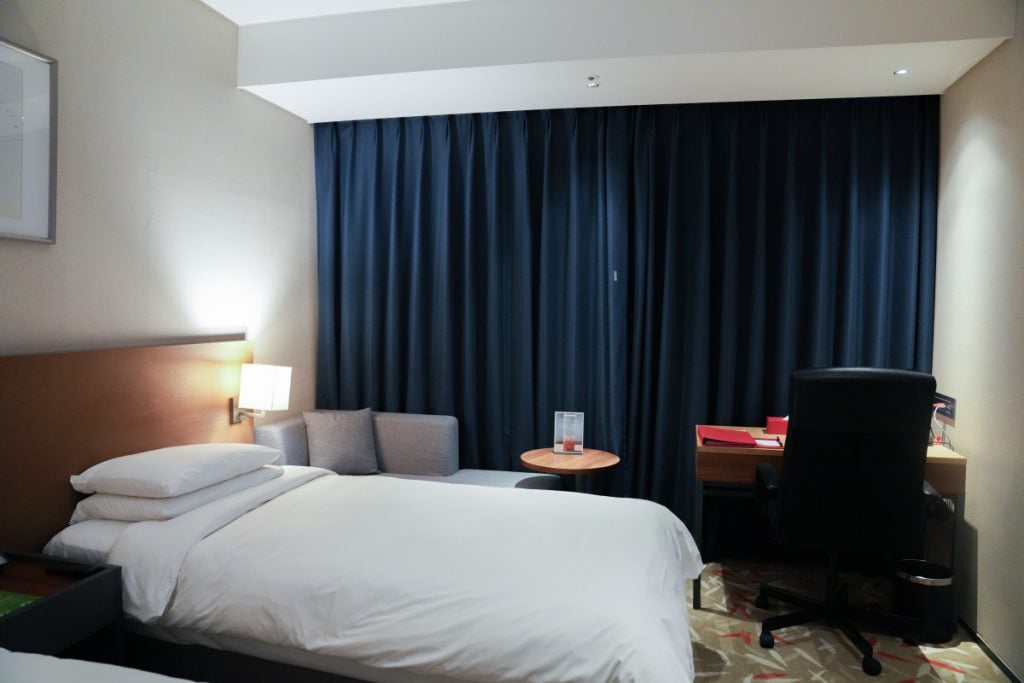
The Asti Hotel is a clean, super convenient hotel adjacent to Busan Station. It was very easy to drop off the bags as we arrived early in the morning and be able to take off to go explore. The rooms are basic but clean and do the job for a short stay. I would pass on the breakfast, if I may suggest, as it was not the best offering, and if you need something easy, there is a Starbucks downstairs.
Gwangalli Beach: The Hipster Beach Neighborhood
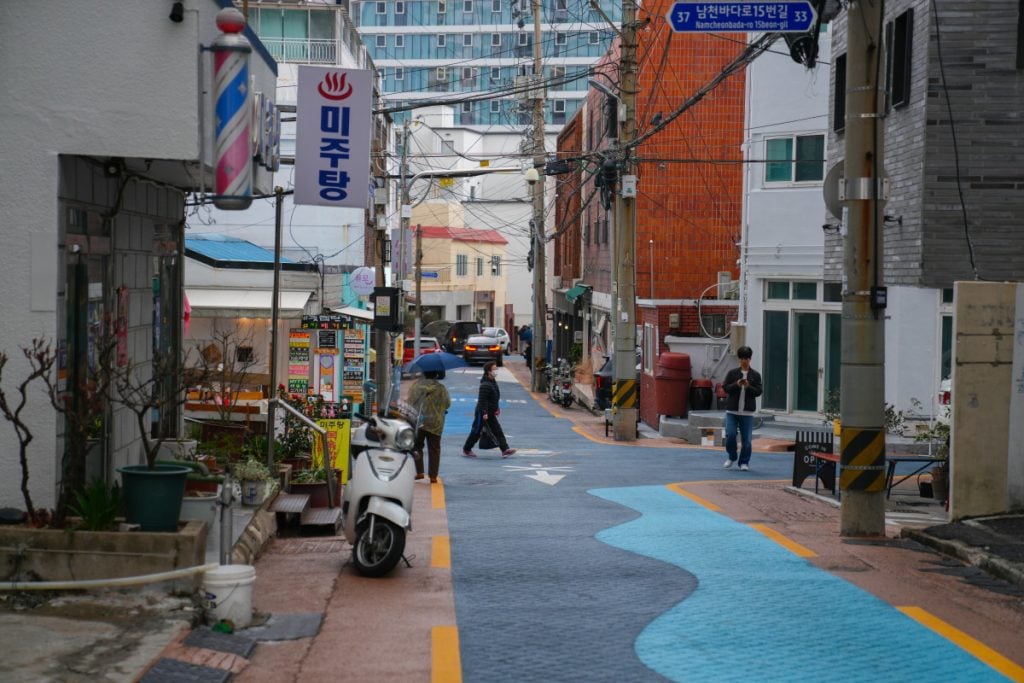
I had dinner and an afternoon in the Gwangalli Beach neighborhood and just loved the vibe. It was very young, the restaurants were plentiful, and there was a cute neighborhood area with lots of cafes. The beach here is quite popular for its views of the Gwangan Bridge, which has a light show on the weekends. The hotels are more limited, but I’d consider staying at:
- After Chapter Hotel Gwanganri ($$), a very chic, design hotel in the neighborhood. Love the elements here, pool included, and it gives me Soho House vibes.
- Hotel Central Bay ($), a modern, clean hotel that consistently gets great reviews for its location.
- H Avenue Gwanganri Beach ($), a good design hotel that offers rooms with sea views.
Haeundae Beach: The Upscale Beach Getaway
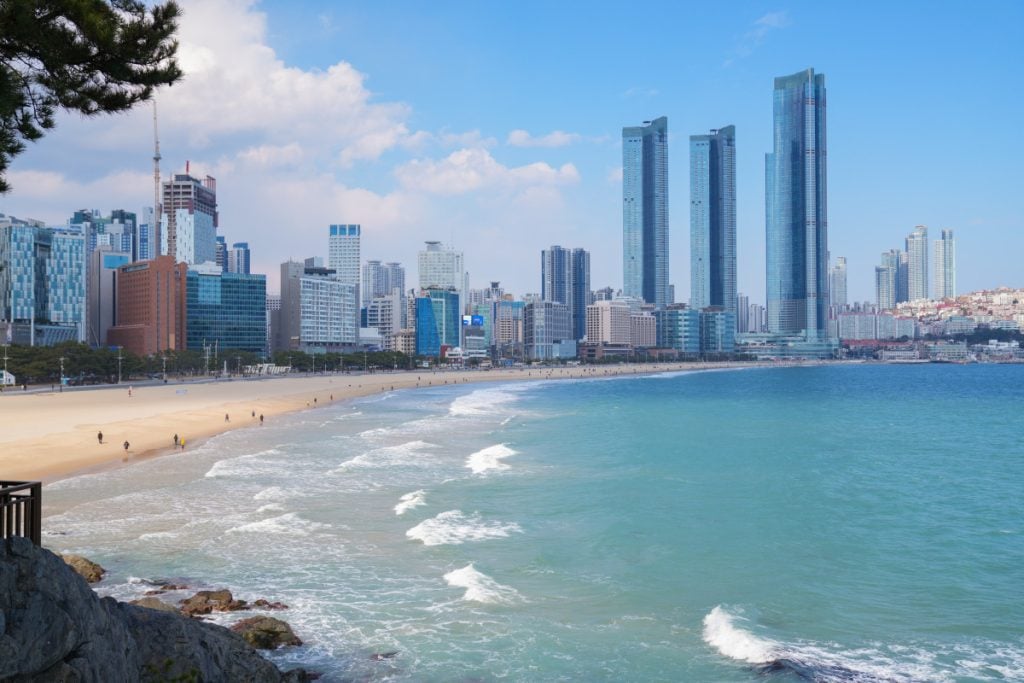
Haeundae Beach is the happening, upscale, white sand beach area of Busan. It has stunning skylines with nice restaurants, and it’s where all of the luxury hotels are. If I was coming in the summer for 3 nights, this is where I would choose to stay. Some hotels here that caught my eye while researching are:
- Park Hyatt Busan ($$$), arguably the most luxurious hotel in Busan
- Signiel Busan ($$$), a stunning luxury hotel with an infinity pool
- The Westin Josun Busan ($$$), I walked through this hotel, it looks up the coast of Haeundae and is adjacent to the stunning Dongbaek Island Coastal Promenade
- Shilla Stay ($), a good local Korean hotel chain known for reputable, affordable stays
Day 1: Arriving in Busan
Morning: Arrive in Busan and Gamcheon Culture Village
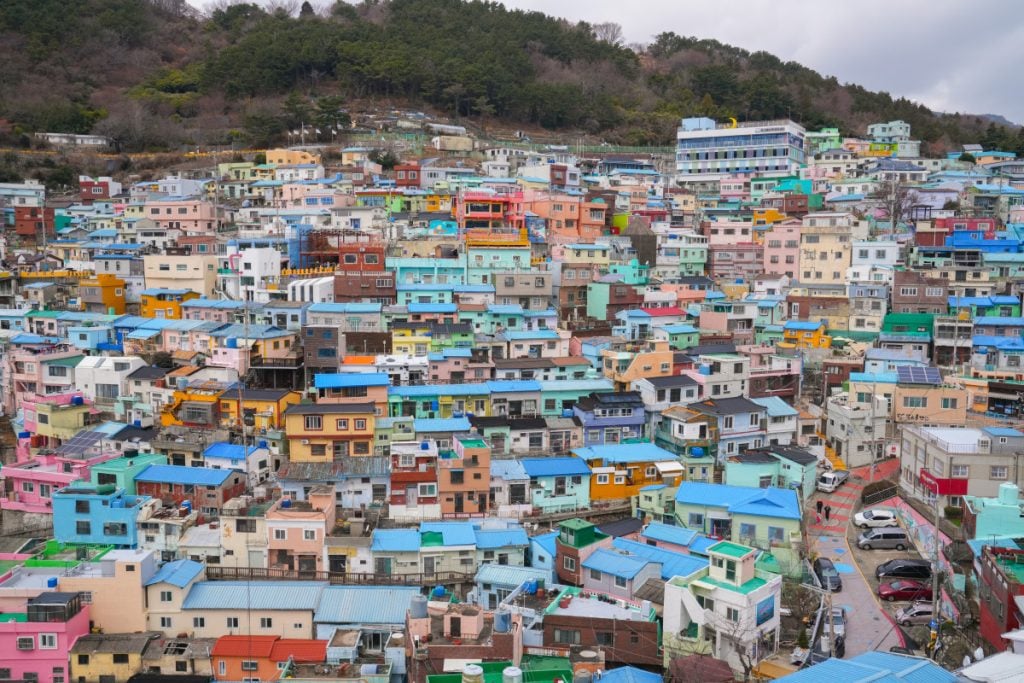
My number one tip to maximize your day in Busan is to take the earlier train from Seoul. You can arrive at Busan Station by 9:30 am, drop your bags, and be off on your way exploring! This is why I suggest the Asti Hotel for its convenience if you have a shorter stay.
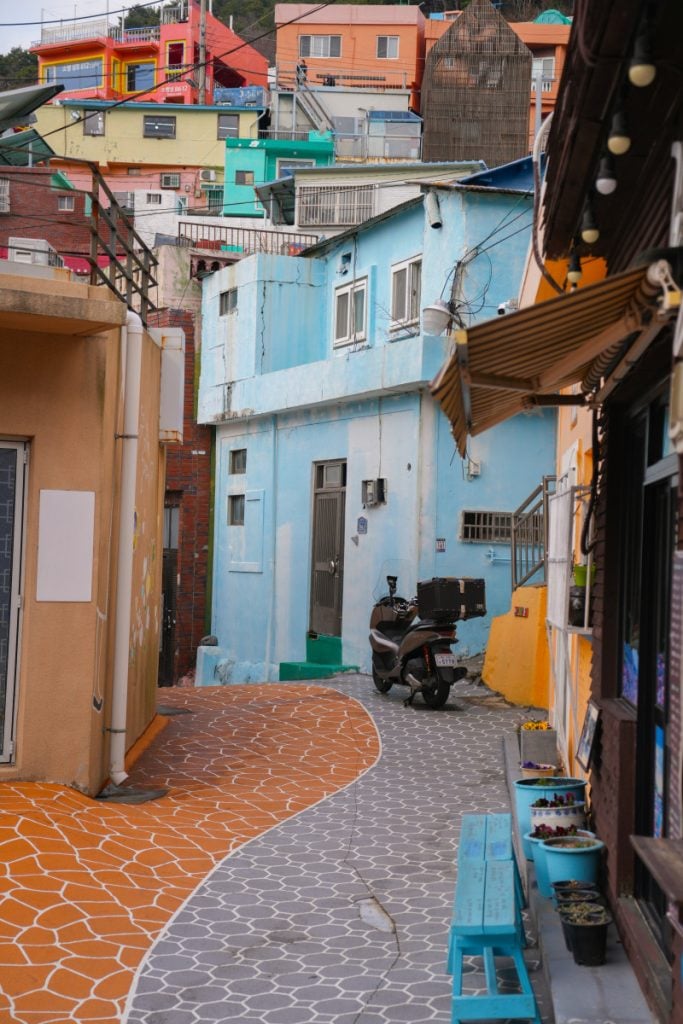
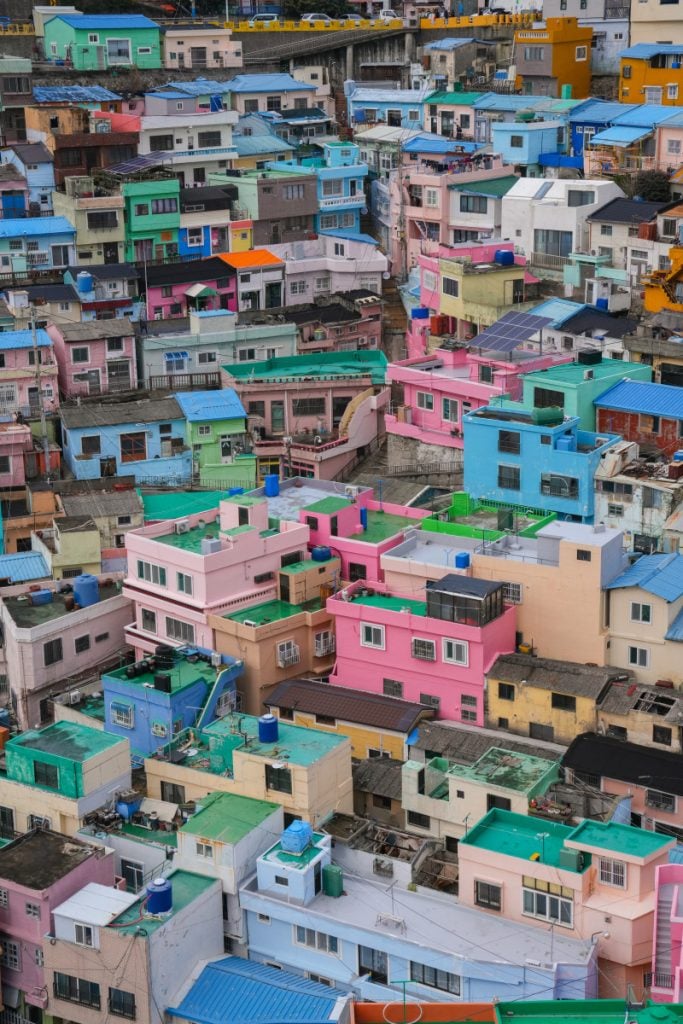
The first place I would head to is Gamcheon Culture Village. I’d hop in an Uber for less than $10 to get there from Busan Station, and it will drop you right off at the base of the village. Established in the 1950s, Gamcheon Culture Village began as a refuge for displaced families during the Korean War. Over time, the community evolved, and in 2009, a revitalization project led by residents and artists infused the area with art and color, reshaping its identity.
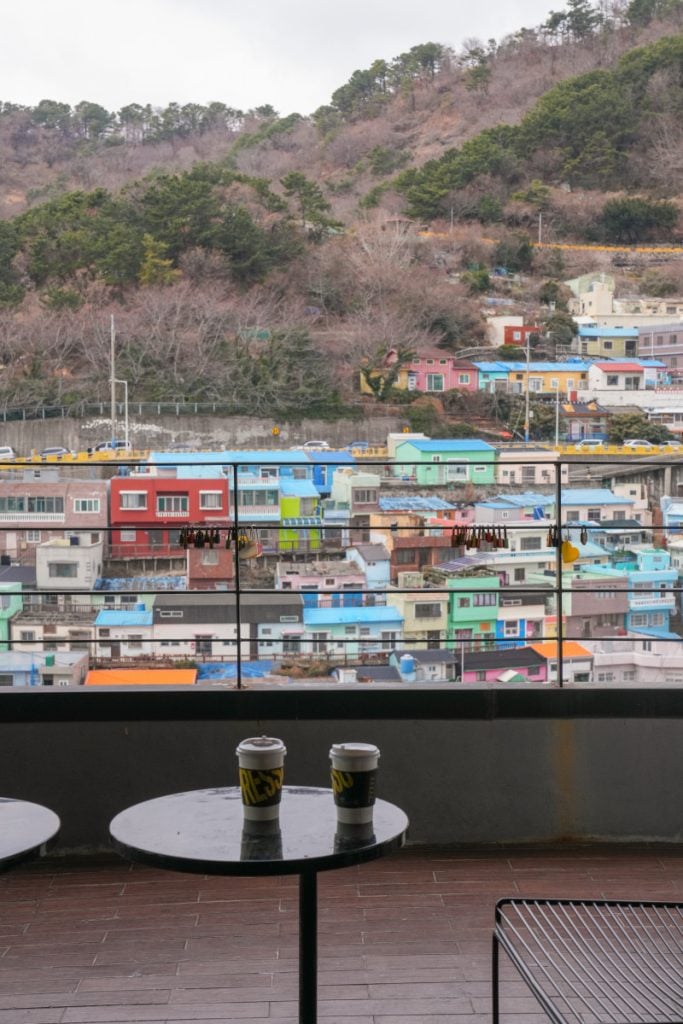
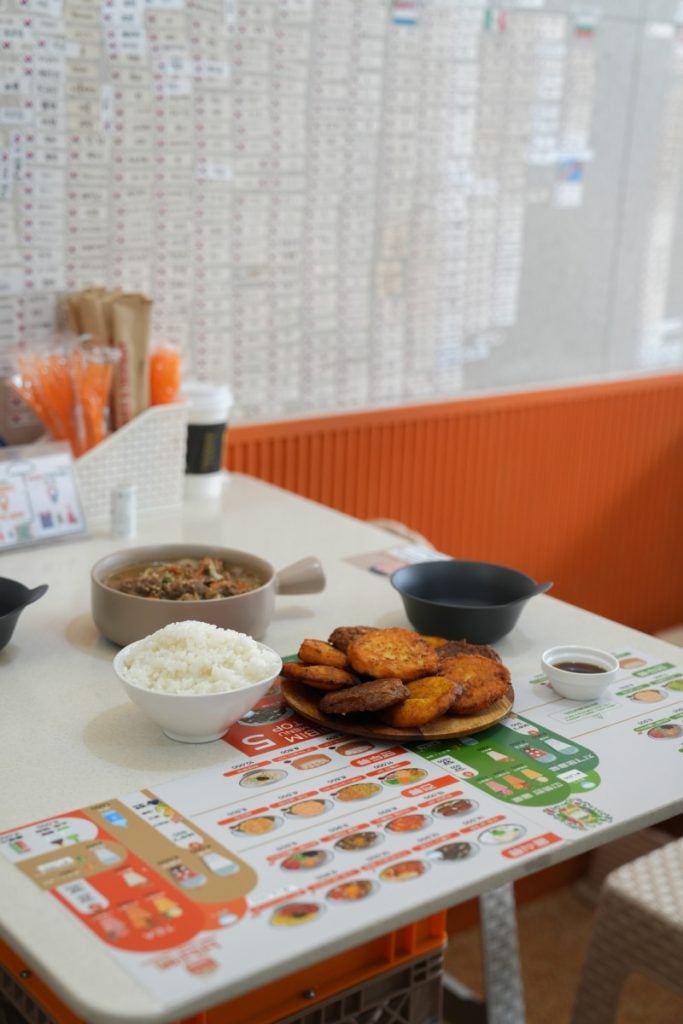
Today, it’s very popular for visitors to come, go for a stroll, and enjoy the art and colorful homes. There’s a handful of scenic viewpoints here as well, which make for a lovely experience. I’d pop into 비비빔 BIBIBIM Restaurant for lunch for Korean classics like kimchi dumplings, bulgogi, and more. Just next door, Avant Garde Cafe has some of the best views of the cultural village. The drinks are nothing to write home about, but the terrace is lovely to sit on for a minute.
Travel Note: If you’ve booked a guided tour that includes the Gamcheon Culture Village as part of it, you could switch this with more time near Biff Square first.
Optional Stop: Stairs of Wishes, Somang Stairs Monorail and Dakbatgol Mural Village
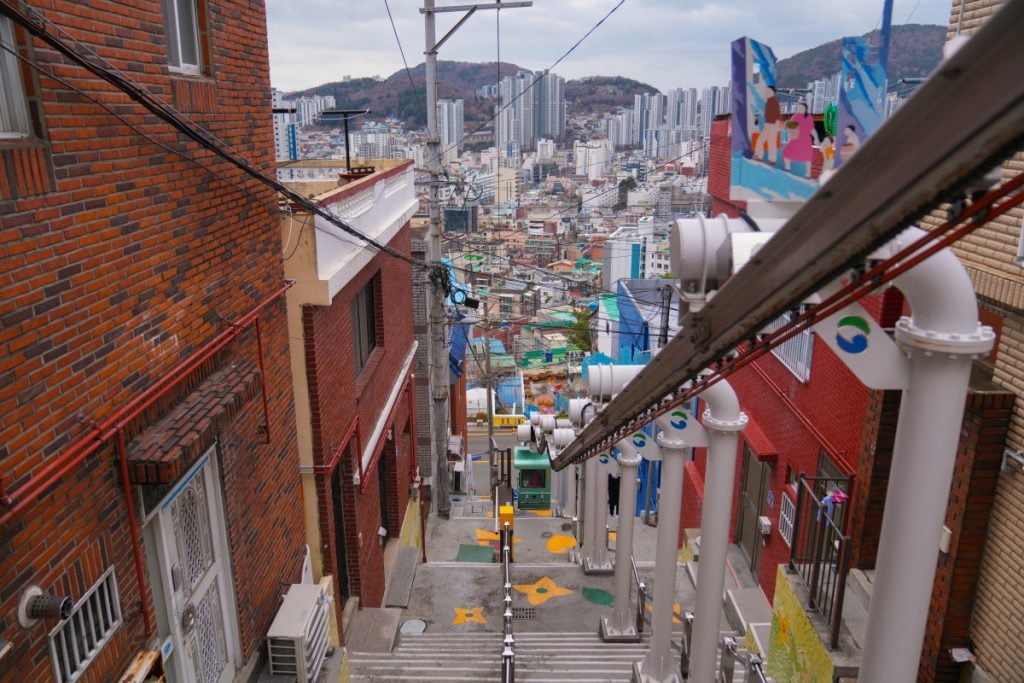
As you make your way across Busan for the rest of your afternoon, I’d suggest a quick stop at the Stair of Wishes if it interests you. This monorail that helps locals go up and down the set of steep steps is a) very adorable and b) a glimpse into local life. It is close to Dakbatgol Mural Village, which you could stop into as well. And around the corner is YouSee cafe if you need a coffee.
Afternoon: Gwangalli Beach
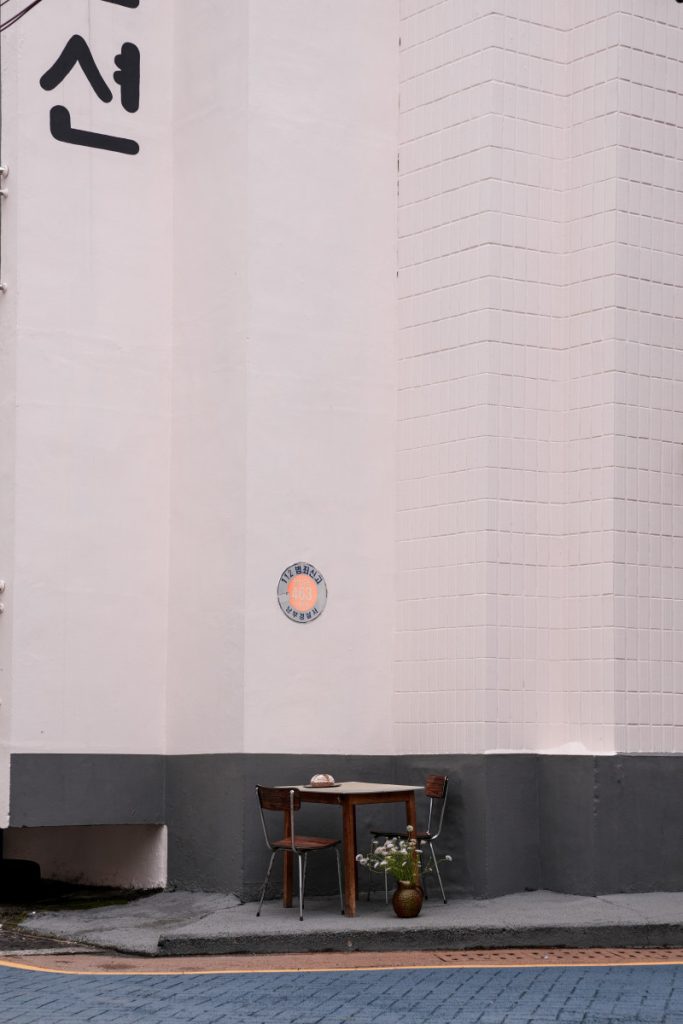
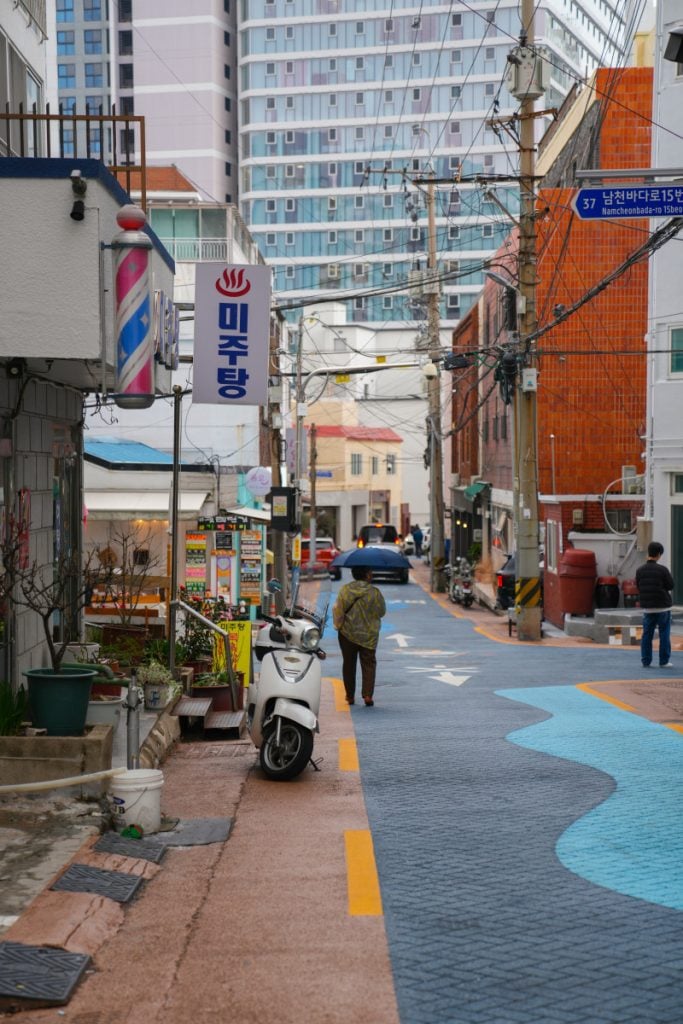
In the late afternoon, make your way over to the hip Gwangalli Beach area. While many flock to the beach to enjoy the views, start your time in this fun cluster of shops and cafes. Down the street of Suyeong-ro (use Little Aus as a good marker), you have about a dozen cafes, restaurants, and coffee shops.
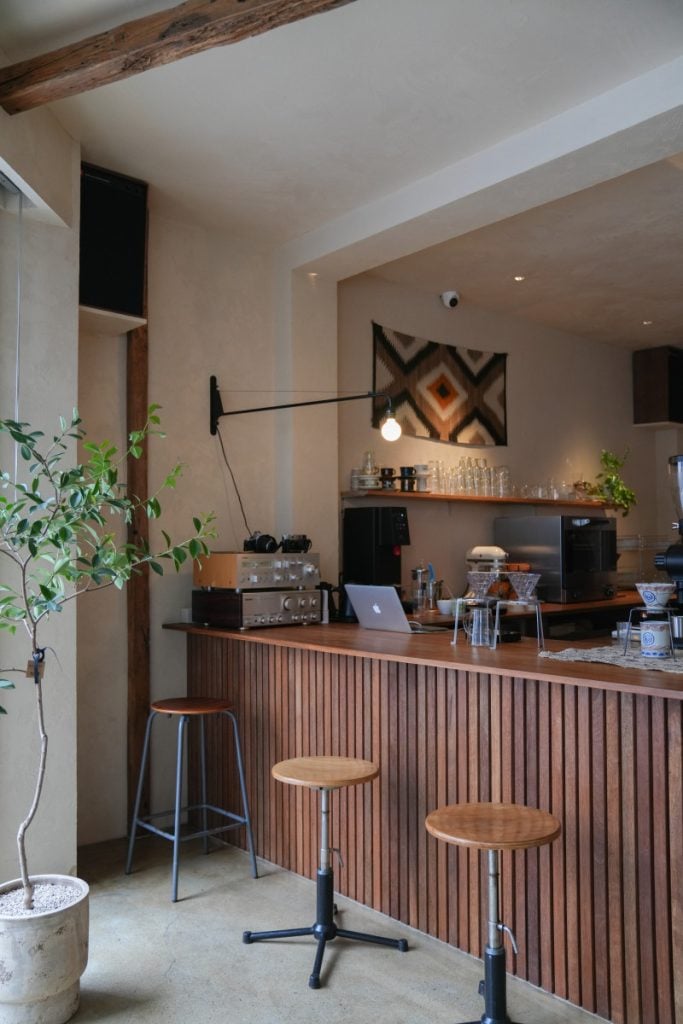
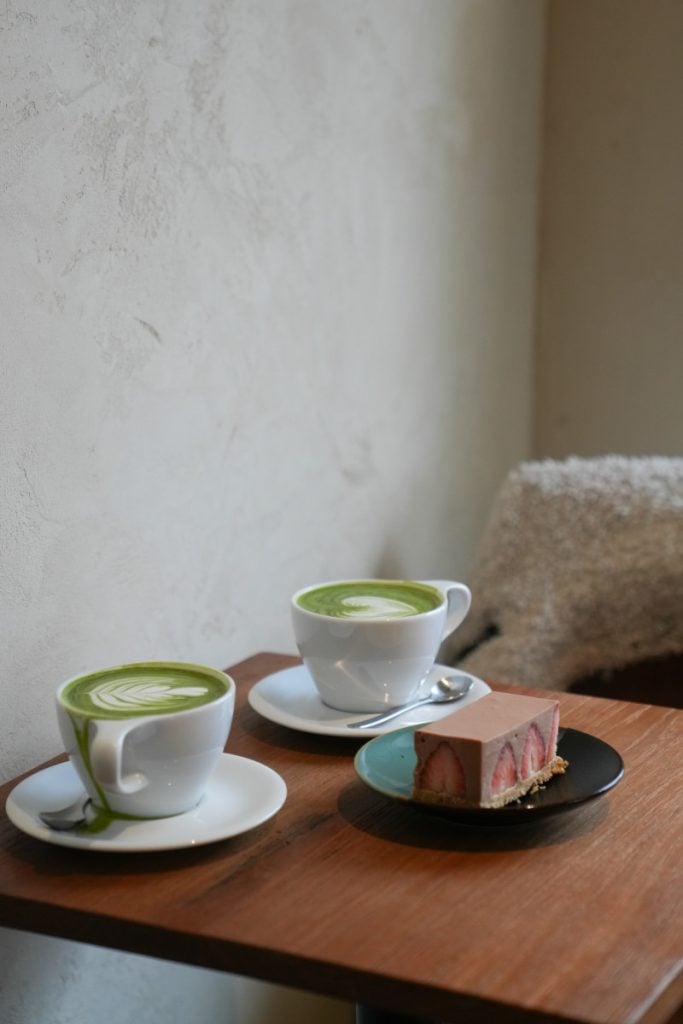
I stopped into Picosten for a matcha and pastry and loved the very charming space. The espresso at Little Aus was also great. The bakery called 더베이베이커리 is also very popular, but it does close a touch early, so I missed it while there. Stroll around in this area and the side streets to find a handful of fun local stores and spots.
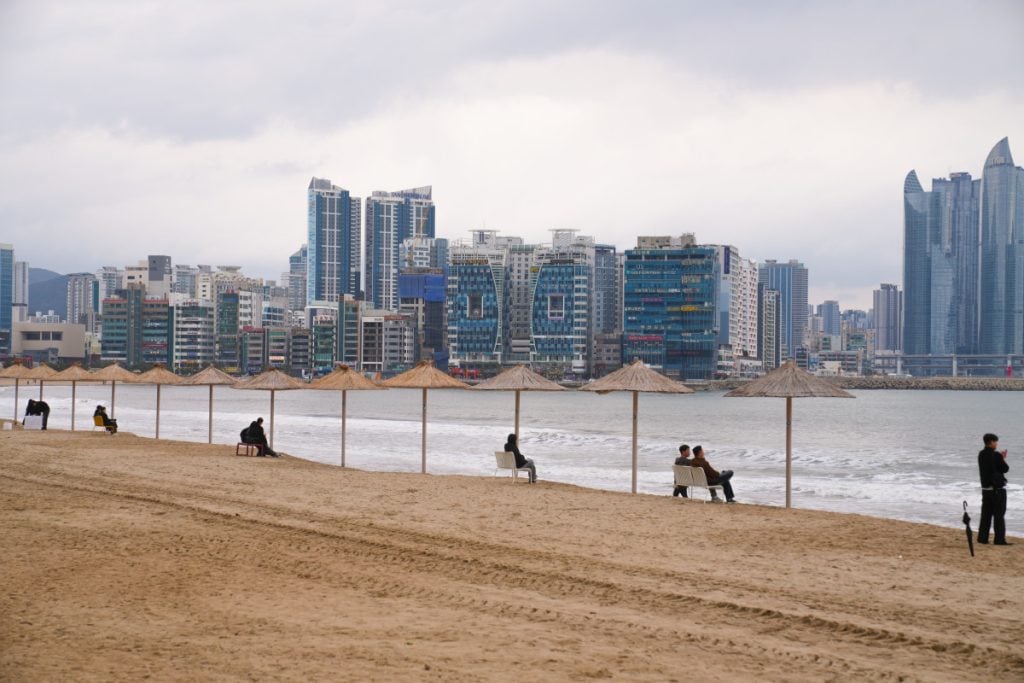
Afterward, make your way down to Gwangalli Beach. There’s a nice promenade if you want to go for a walk or sit back and enjoy your feet in the sand. The views of Gwangan Bridge are lovely, and if you’re there on a Saturday, there is a weekly drone light show around 7 or 8 pm, depending on the time of year.
Dinner at Gwangalli Beach
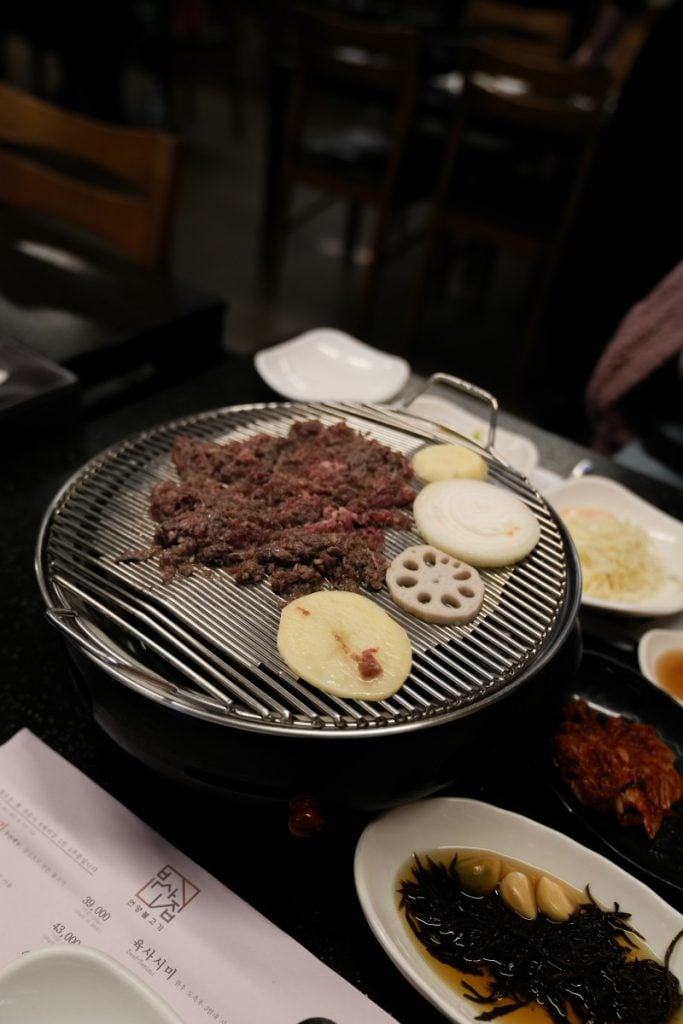
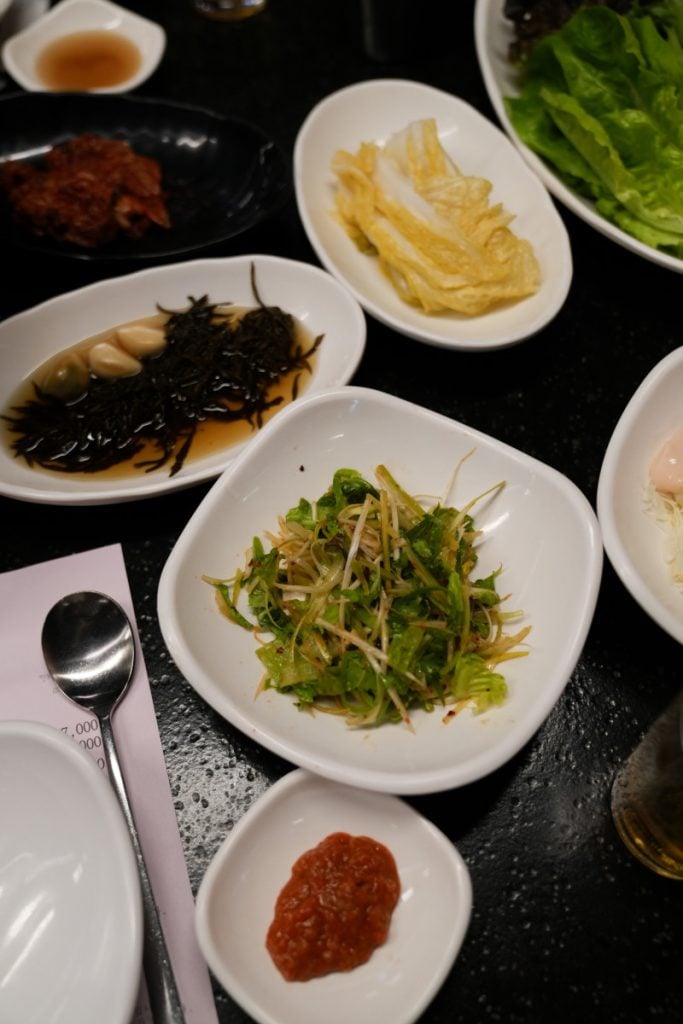
One of my favorite meals in Busan was at this Michelin Guide-listed Korean BBQ spot in the neighborhood. Called Eonyang Bulgogi Busanjip, this place was packed to the brim because it’s known for its marinated meat grilled right in front of you. This was SO much fun; the team there helped us cook our dinner and taught us how to combine all of the banchan with the meat for fun bites. I’d go out of my way to eat here if I could!
Day 2: Full-Day Private Guided Tour and More
Morning: Start Your Private Guided Tour!
As I shared how Busan is incredibly spread out, the best way to see several sights is by doing a guided tour. There are several group tours to jump on, but truthfully, this hired private tour is amazing as you get to customize your time, and it’s cost-effective if there are 2-4 people. Most private guided tours are 8 hours long, with the option to add more time.
The Private Tour I Booked
I booked this private guided tour, and Jason was our guide. He was so accommodating, helped us put together an itinerary with the places we wanted to visit, and took us to an amazing local restaurant for lunch. The guided tour included a hotel pick up, and we were dropped off where we wanted in Busan at the end of it. Our start time was 7 am to beat the crowds, and we went until 3 pm.
These are the places that were on our itinerary for the day:
- Haedong Yonggungsa Temple (45 minutes)
- Seokbulsa Temple (1 hour)
- Samgwangsa Temple (45 minutes)
- Local Lunch at 교통부돼지국밥 (30 minutes)
- Huinyeoul Culture Village and Cafe Stop (1 hour)
- Oryukdo Skywalk Observation Deck (30 minutes)
- Drop off at Dongbaek Island Coastal Promenade
I’ll share a bit more about each of the stops, what I enjoyed, and what I would do differently. Now, if you don’t book a private guided tour, I would consider booking one of these group tours, which include a few of the same stops above:
Highlights of the Private Guided Tour
Haedong Yonggungsa Temple
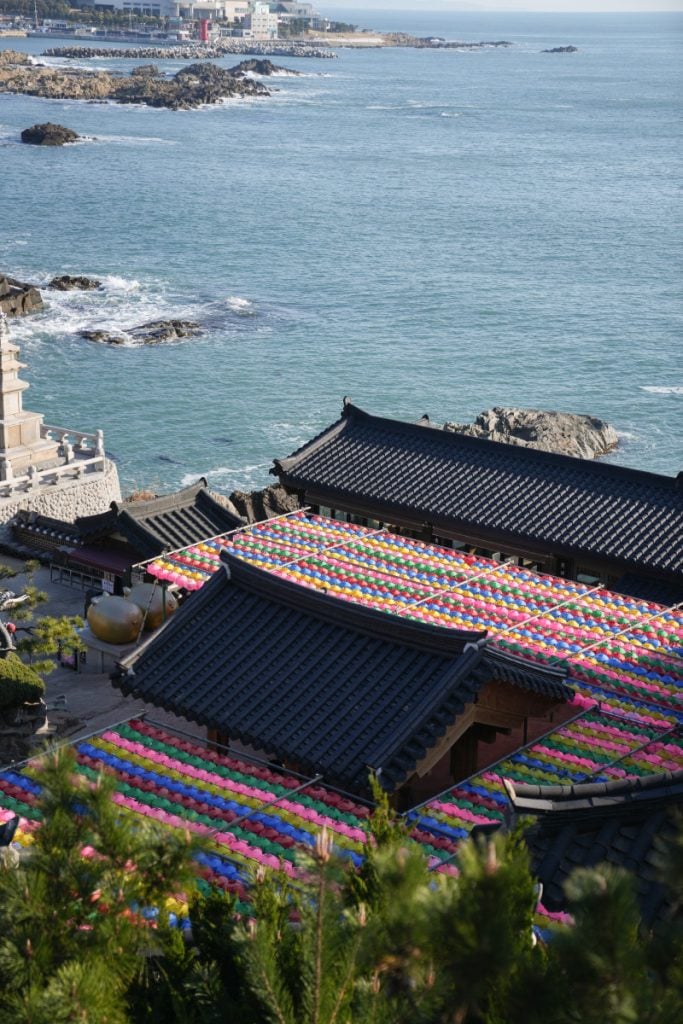
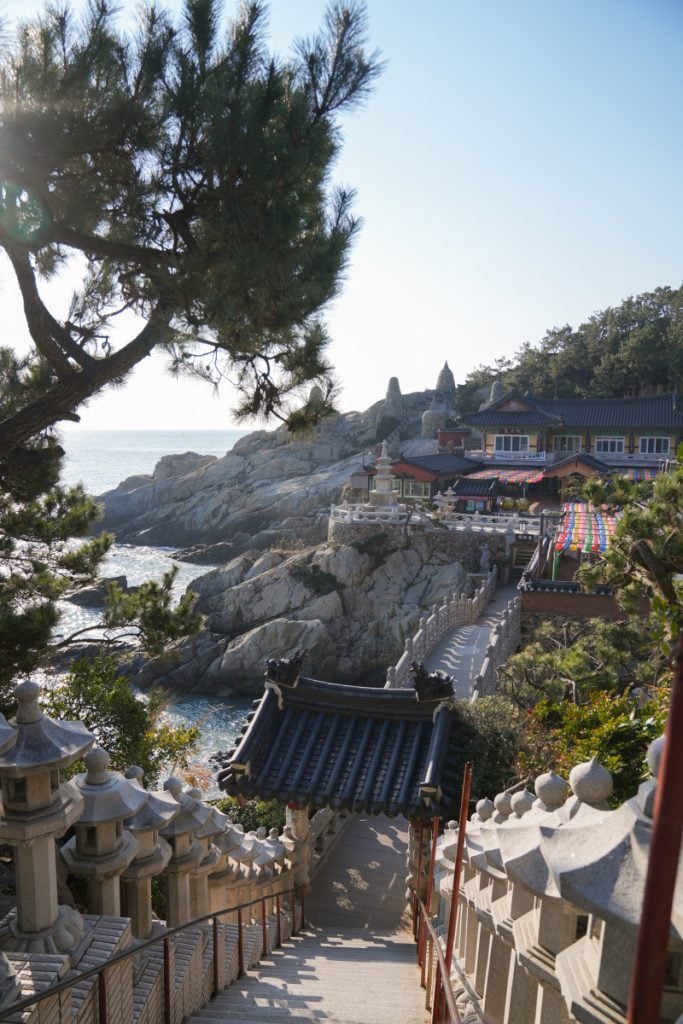
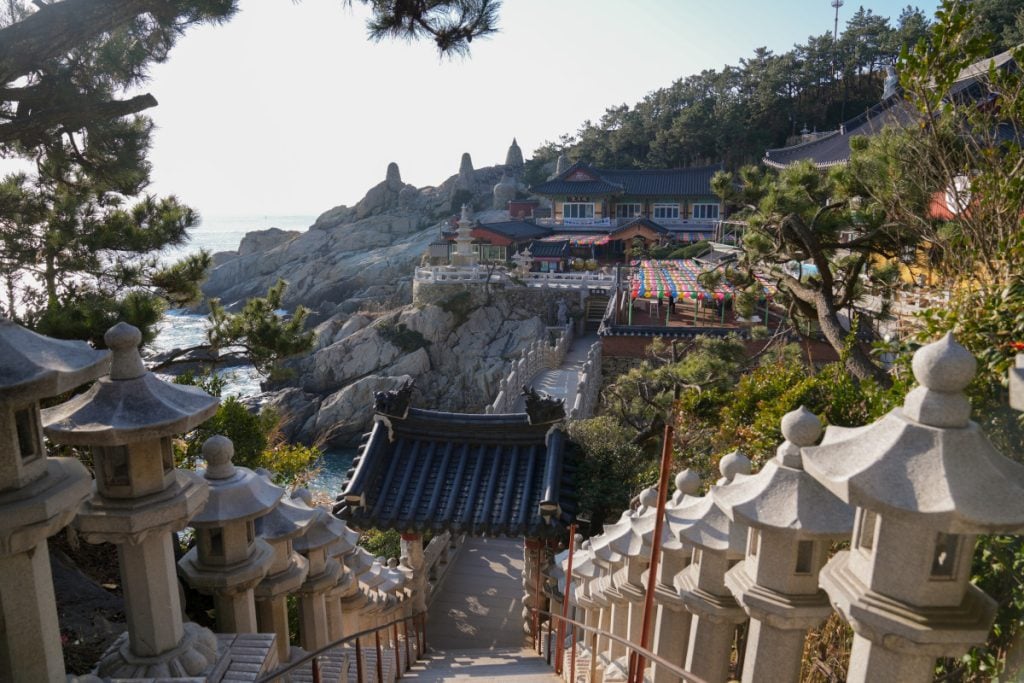
Starting with sunrise at Haedong Yonggungsa Temple was the highlight of the day. It’s one of the busiest sights in Busan, so arriving early is helpful. The main sanctuary was rebuilt in the 1930s, and further renovations in 1970 restored its traditional colors and architectural style. What makes this temple so unique is its location adjacent to the ocean. Haedong Yonggungsa Temple is a distinctive Buddhist temple and one of the most unique temples in South Korea.
Seokbulsa Temple
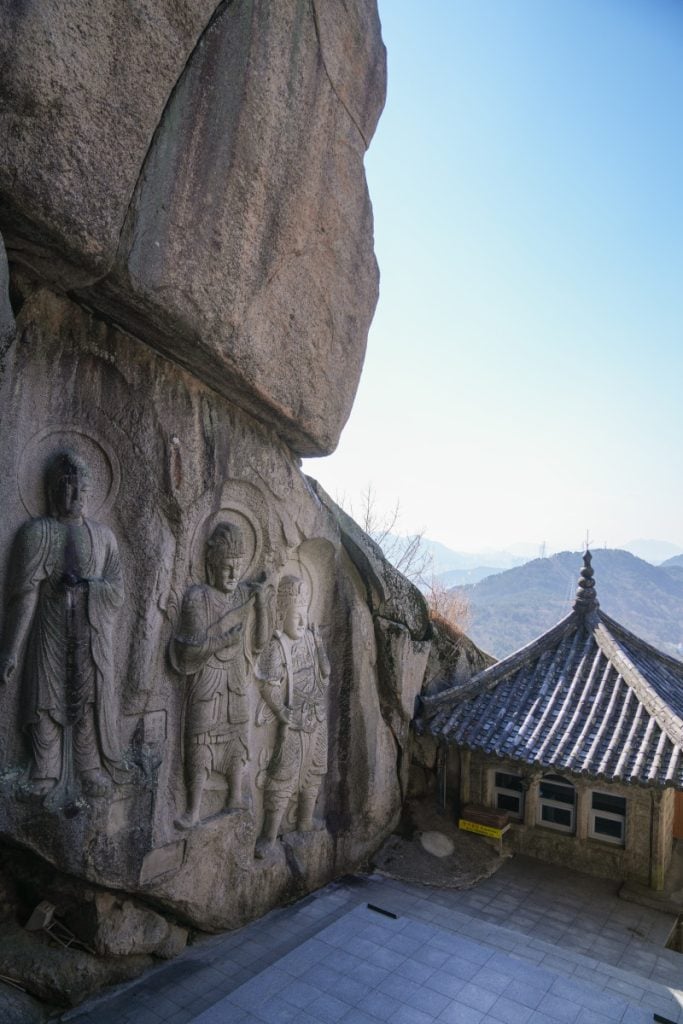
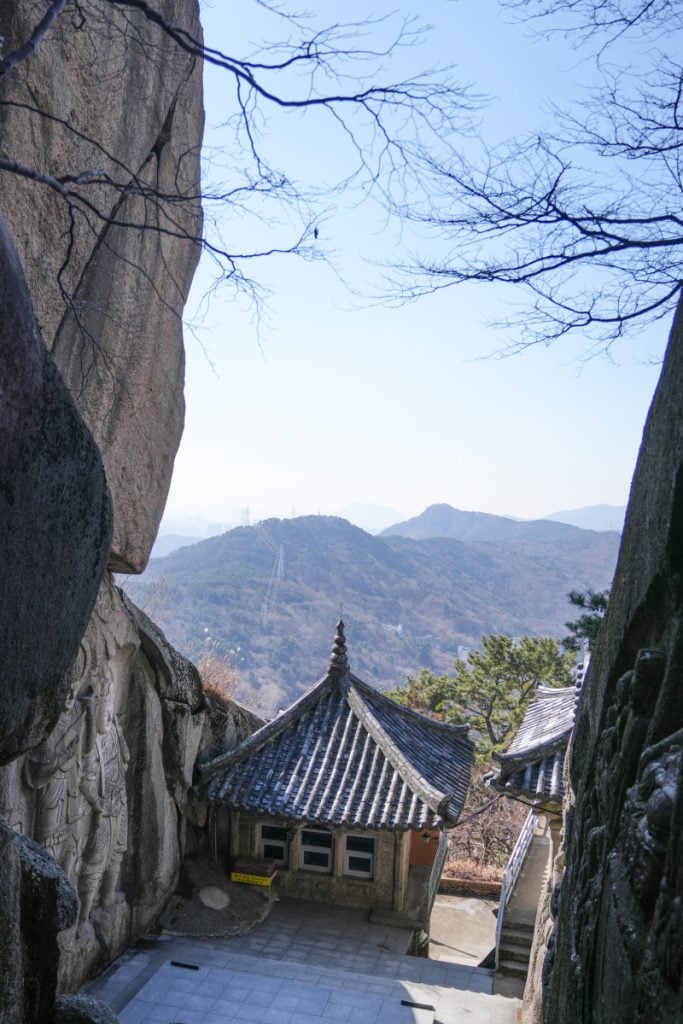
While it may be a steep climb, Seokbulsa Temple is one that I feel not many visitors get to while in Busan. Known as the “cliffside temple,” it was carved into the mountainside in the 1930s by Monk Jo Ilhyeon. Many of the guided group tours do not come here, so it will likely require a private tour or taxi transfer to get here. It is nestled in the Geumjeongsan mountains of Busan, with stunning views over the hills. The temple’s most striking feature is the series of 10-meter-tall Buddha figures and various Buddhist images meticulously carved into the sandstone cliffs.
Samgwangsa Temple
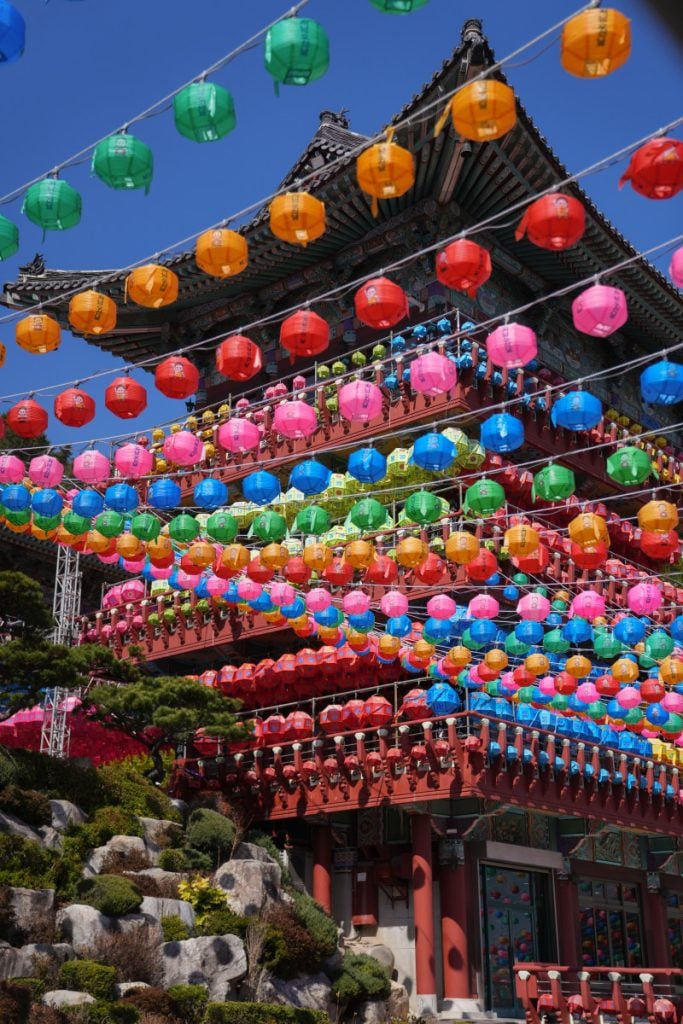
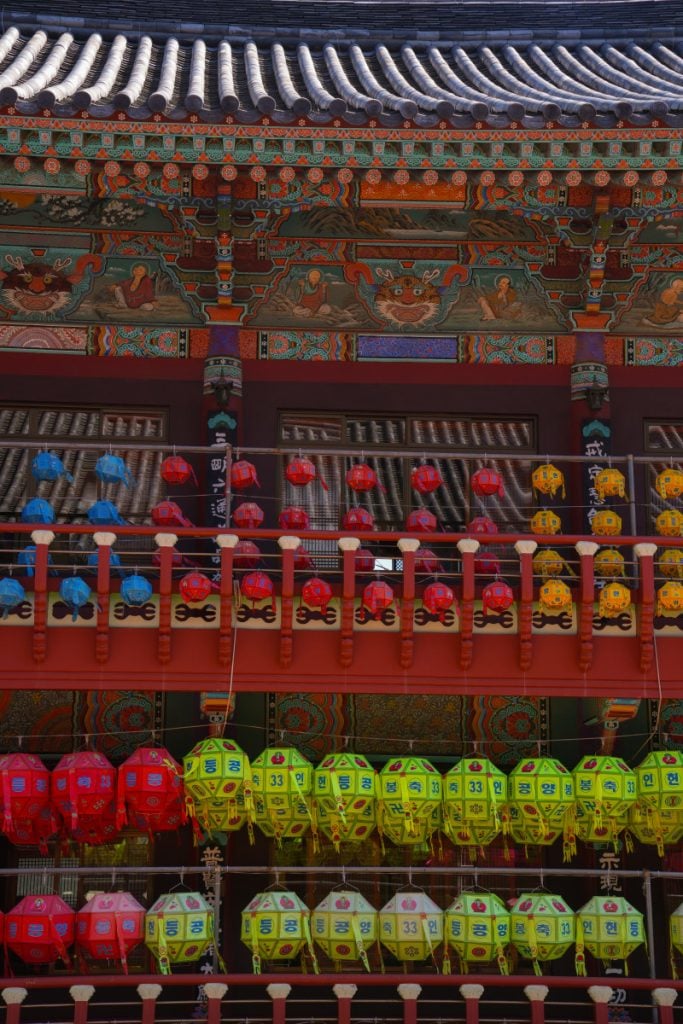
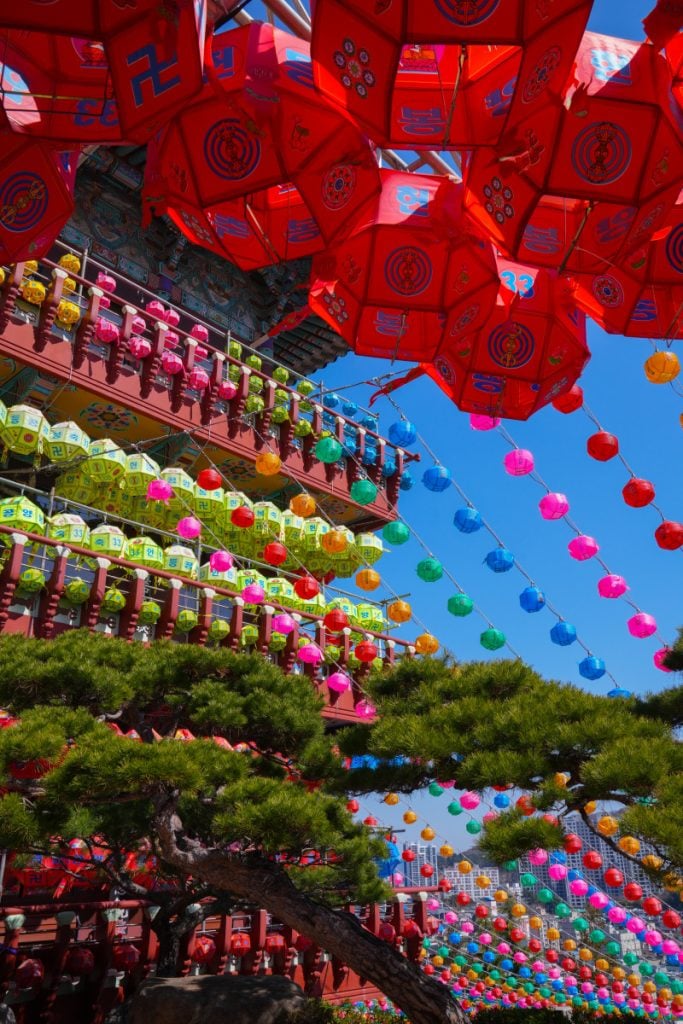
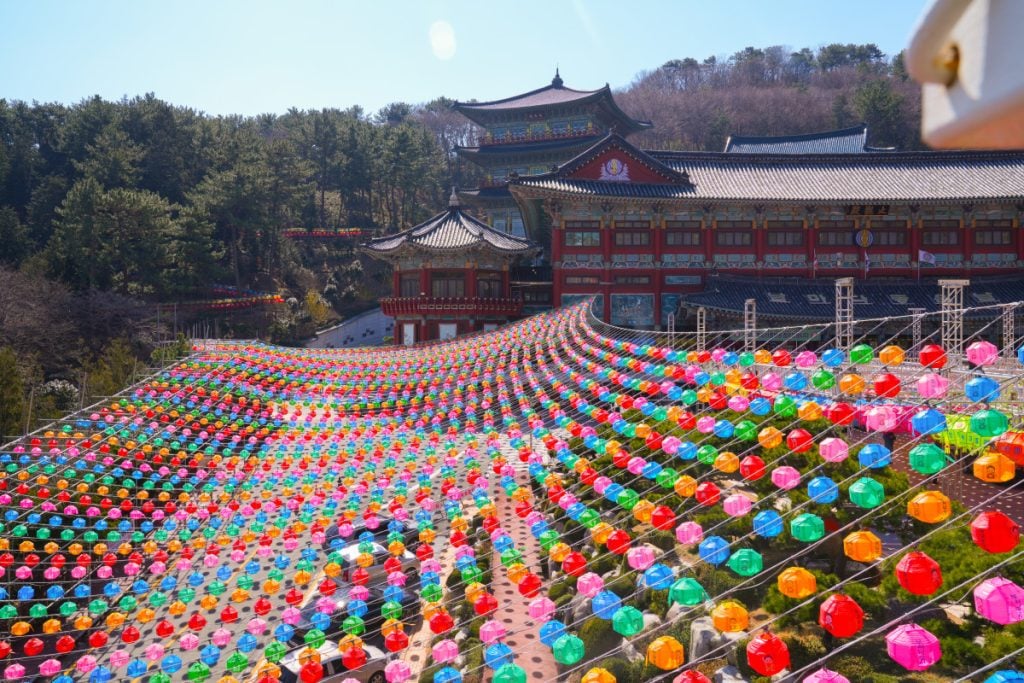
The famous Samgwangsa Temple is well-known for its extensive lanterns that light up the temple every year. While they’re always hanging, each year, Samgwangsa Temple hosts a Lantern Festival to celebrate Buddha’s birthday (usually late April), illuminating the temple with approximately 50,000 lanterns in various colors and formations.
Local Lunch at 교통부돼지국밥 (Pork Rice Soup Restaurant)
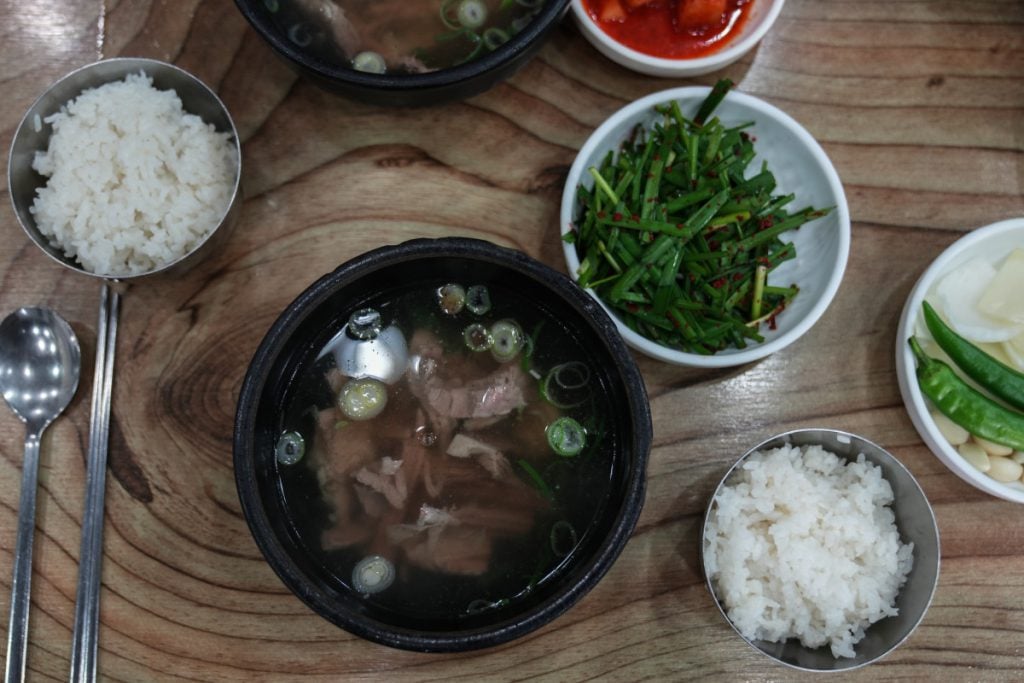
Our guide took us after the Samgwangsa Temple to this local Korean restaurant, 교통부돼지국밥, famous for the Busan pork and rice soup. The broth was delicious, accompanied with kimchi on the side.
Huinyeoul Culture Village and Cafe Stop
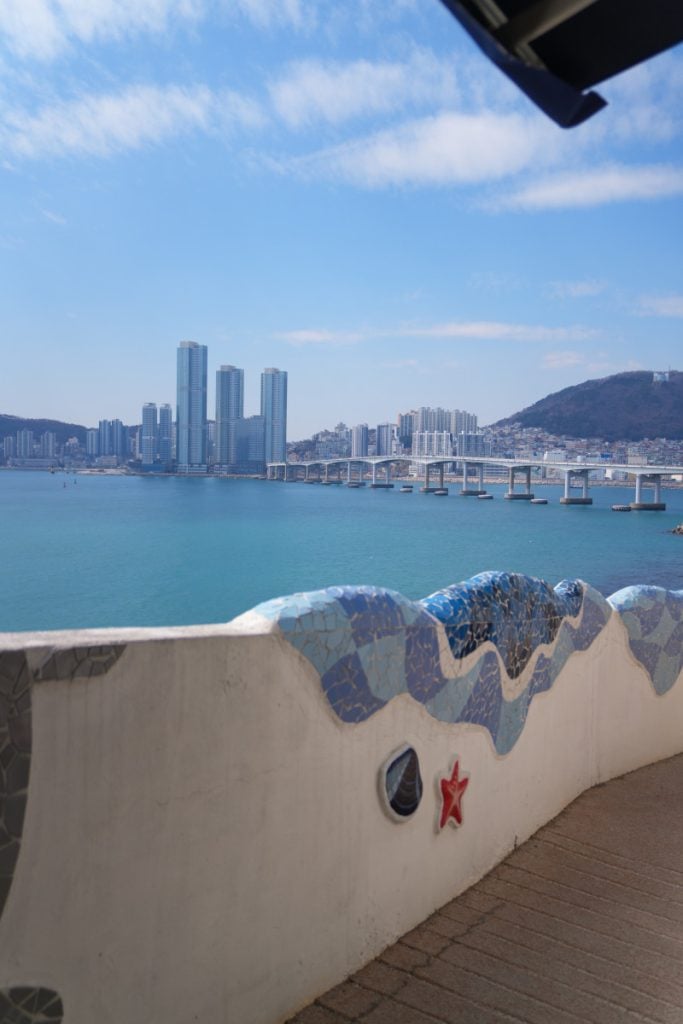
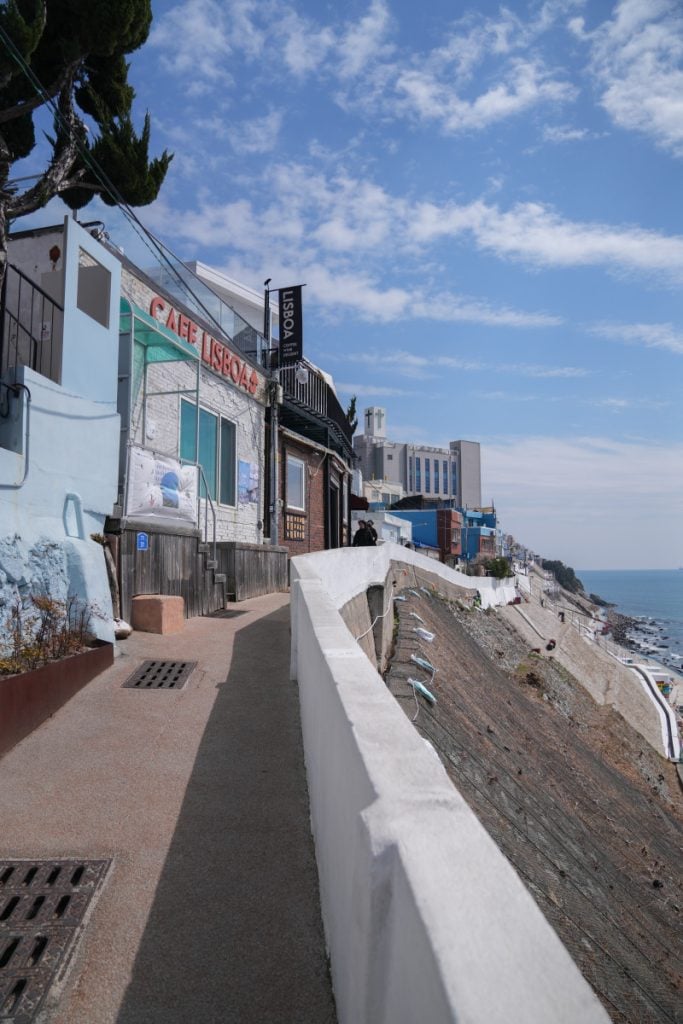
Often dubbed the “Santorini” of Busan for its whitewashed buildings and coastal trail, the Huinyeoul Culture Village has stunning views of Busan. The village features a promenade known as the Jeoryeong Coastal Walk below it, which is very popular. I found it just okay, to be honest. It was a touch touristy, but the views were amazing.
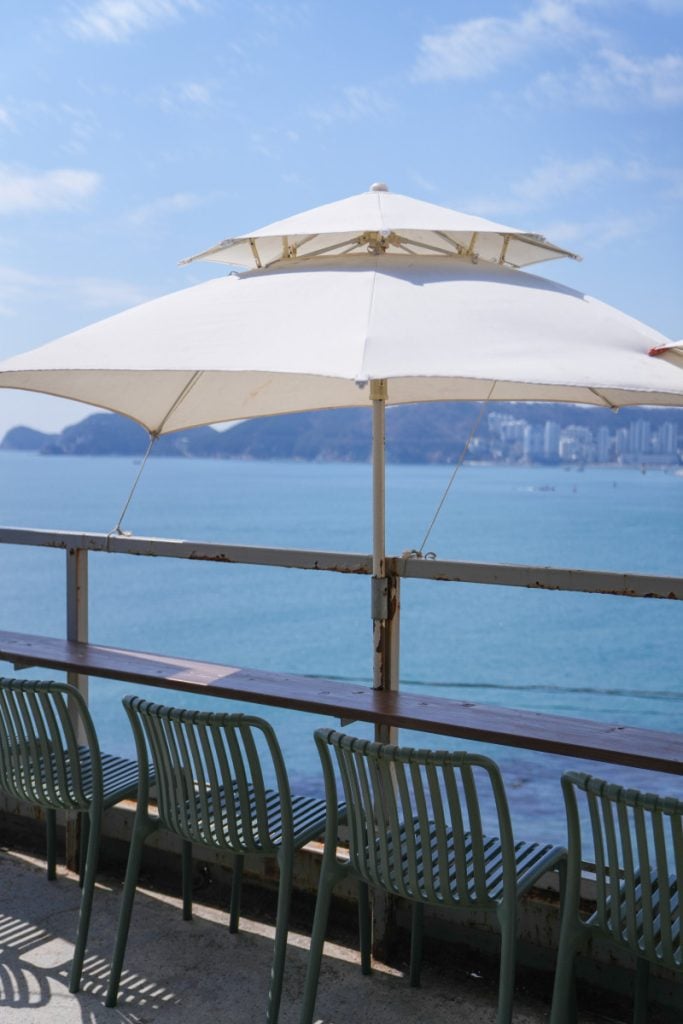
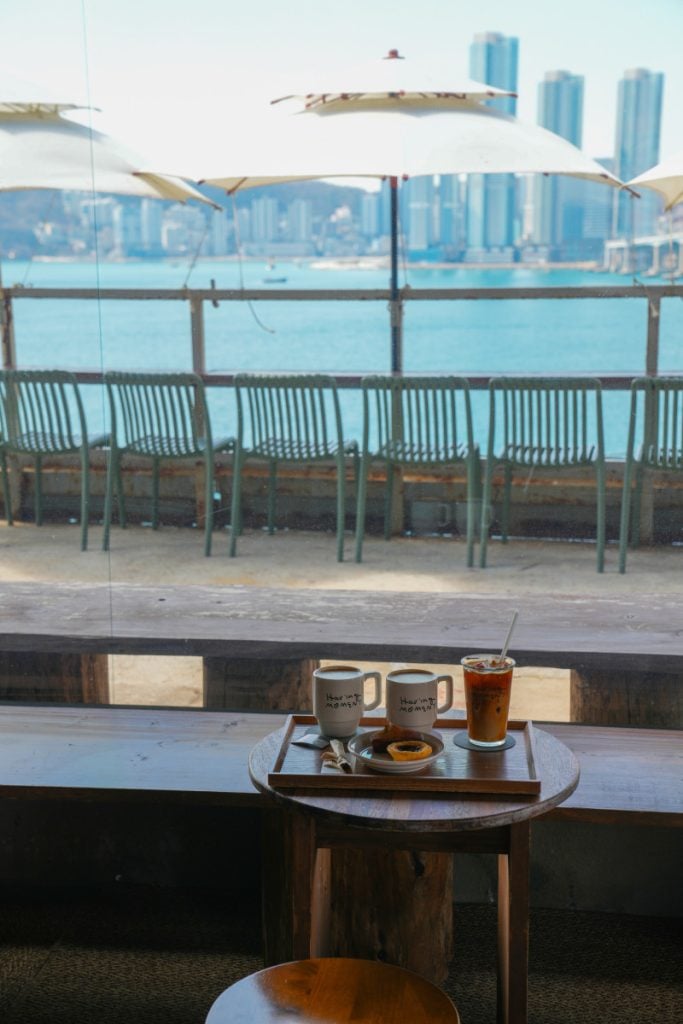
During our time there, we stopped into Having Moment for a matcha and pastry. It’s a lovely spot, quite popular, and there are two floors plus a small patio.
Oryukdo Observation Deck

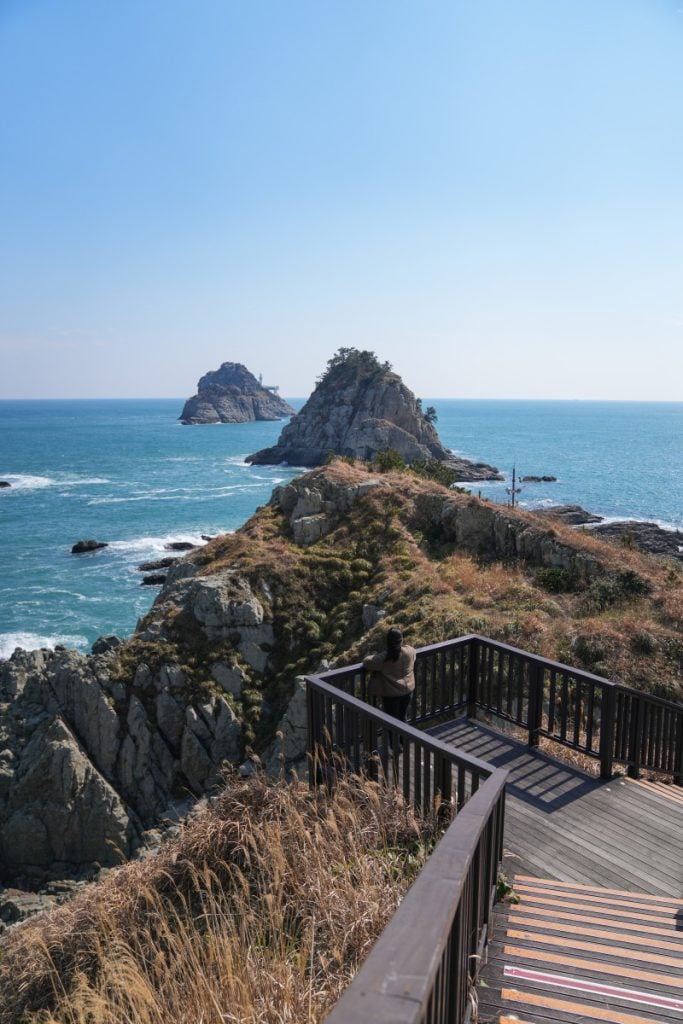
Oryukdo Observation Deck was my least favorite stop on the guided tour. You’ll see that there are observation decks all over Busan. I don’t fully understand it, but if you’re inclined to walk out on the transparent glass deck for the views, it could be worth it.
Afternoon: Dongbaek Island Coastal Promenade and Japanese Teahouse
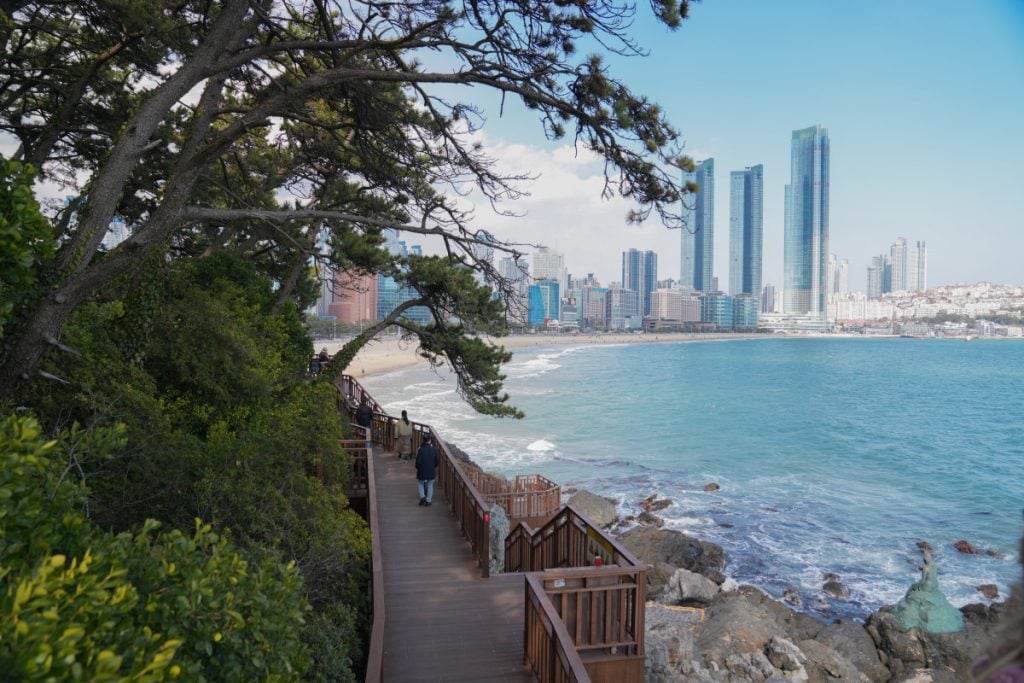
After the guided tour, the driver dropped us off at the Dongbaek Island Coastal Promenade. This was such a stunning part of Busan, with a circular paved path that goes along the coast. There are also small coastal paths on decks with views back to Haeundae Beach.
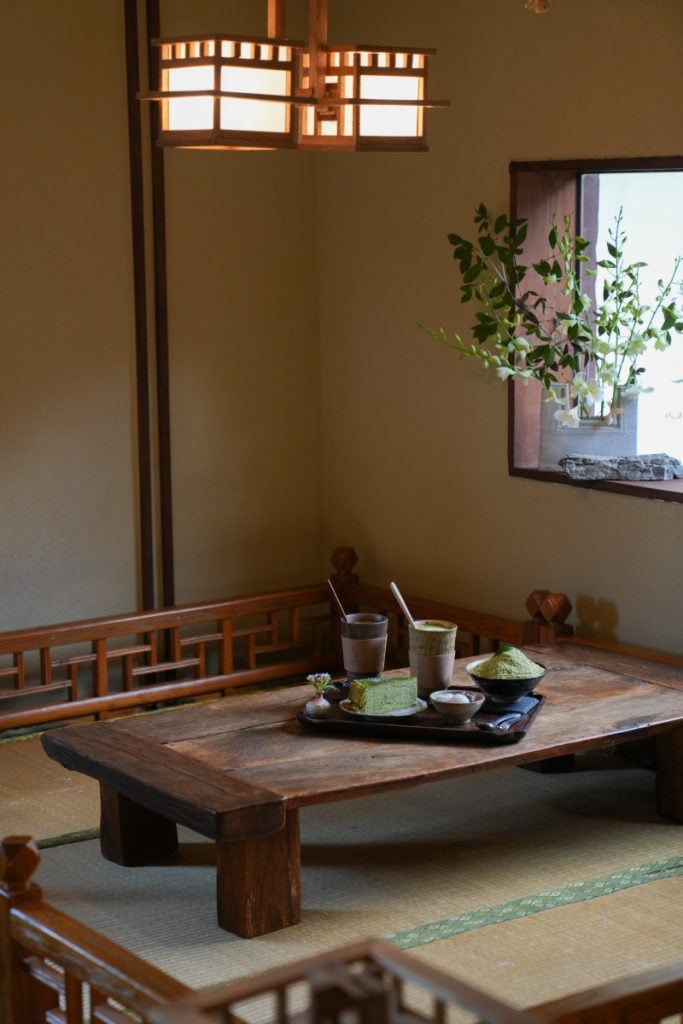
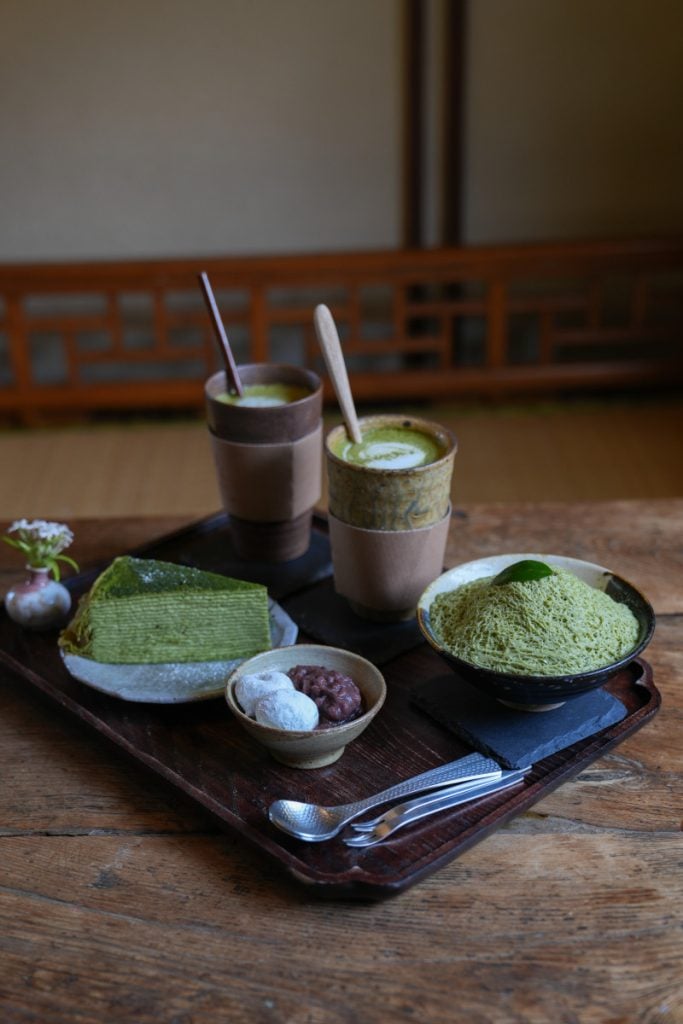
After that, take a taxi to Simmian, a local Japanese teahouse. This was my favorite cafe/teahouse of the trip. It serves a variety of mochi desserts and matcha drinks. The setting is stunning and has a very serene feel.
Sunset: Ride the Capsules on Haeundae Blueline Park
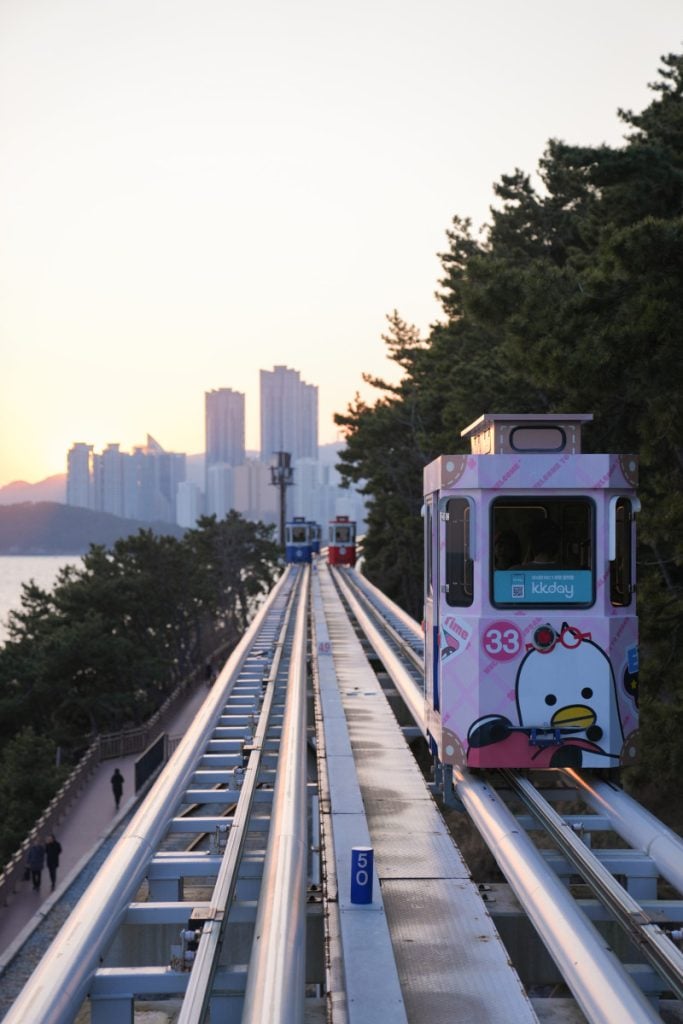
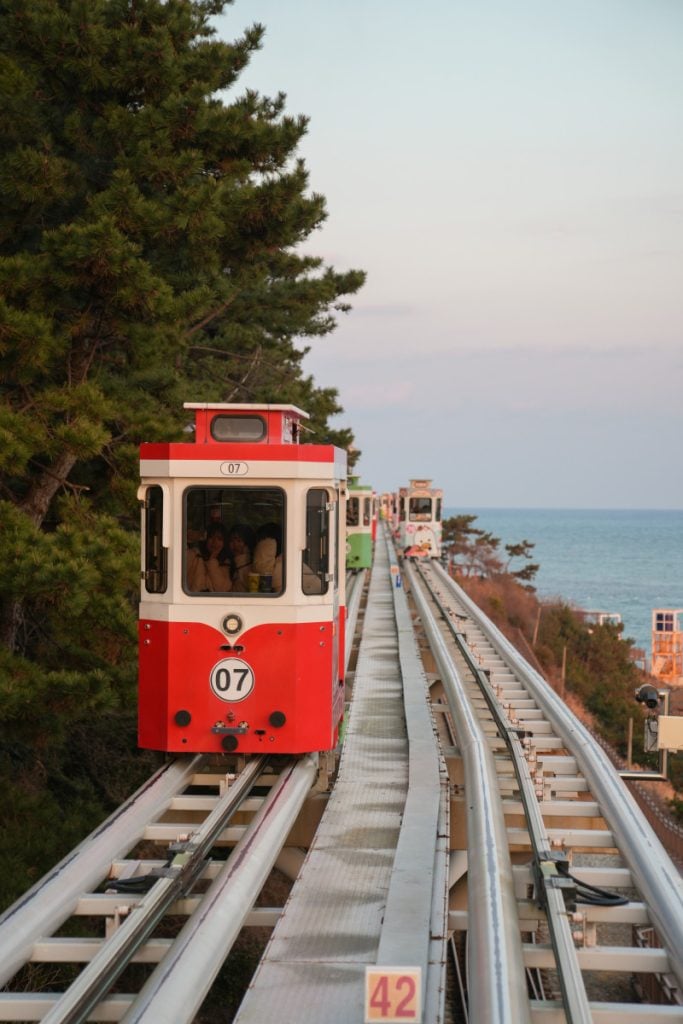
You’ve probably seen countless videos of the capsules that go along the coast called the Haeundae Blueline Park. It is well worth the effort to ride these, and the sunset is magical. You can get on at two locations: Cheongsapo Station (near Simmian) or at Mipo Station (at the end of Haeundae Beach).
You can pay for a round-trip ticket or go one way. For sunset, tickets do sell out in advance, so I recommend purchasing online or stopping by to get tickets for a dedicated hour-slot. We could not buy tickets online at the time as they weren’t accepting foreign credit cards online, so we had to do it in person, which worked out ok.
Travel Tip: For the best sunset views, ride from Cheongsapo to Mipo. If you want the best photography, Mipo to Cheongsapo is the outer track closest to the ocean.
Dinner: A Few Ideas
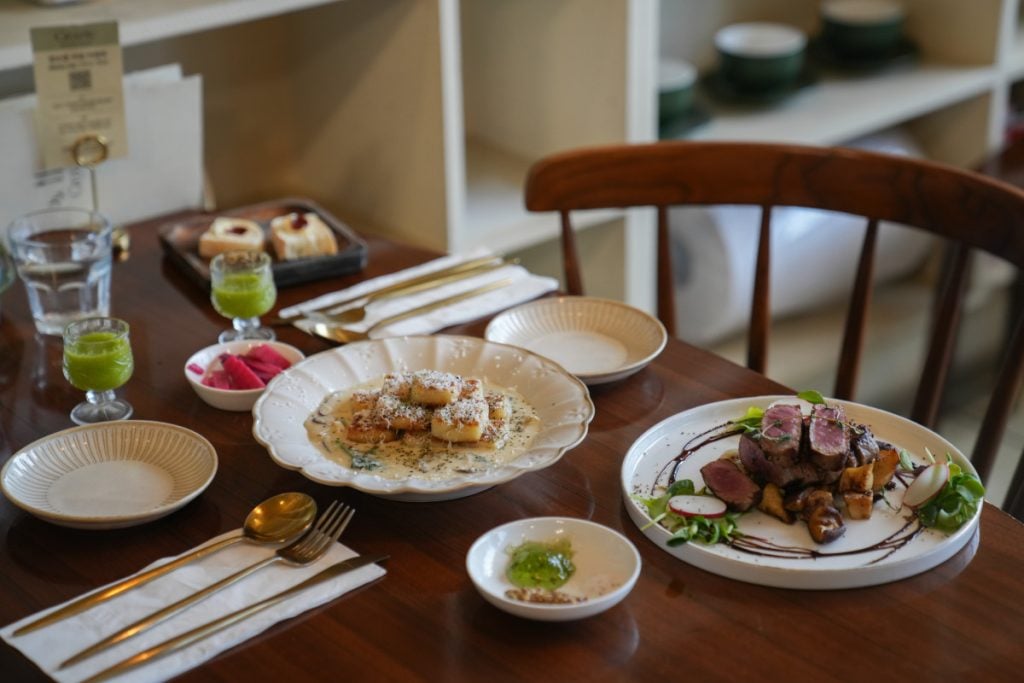
Come dinner time, after riding the capsules, you have a few options. I have a handful of restaurants I scoped out, along with some other favorites:
- Grazie (Yeongdo Island) — an Italian-fare restaurant set in a cozy home-style restaurant known for their gnocchi.
- Bupyeong Kkangtong Market (Downtown Busan) — a nighttime market with several local eats, go to Bupyeong Kkangtong Market.
- 야키토리 해공 (Yakitori Restaurant, Gwangalli Beach) — a yakitori-Japanese restaurant listed in the Michelin guide. Would have loved to have eaten here; the food looks amazing.
- Gohyang Katsu (Gwangalli Beach) — a tonkatsu restaurant known for quality pork.
Day 3: BIFF Square Area and Departure
Morning: BIFF Square Area and Markets
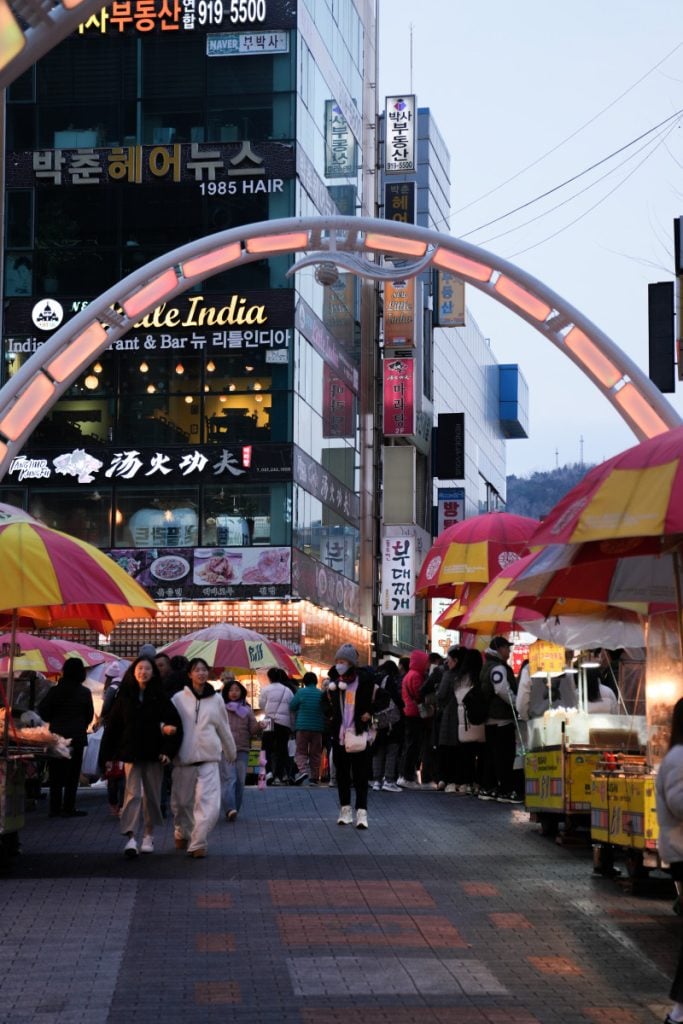
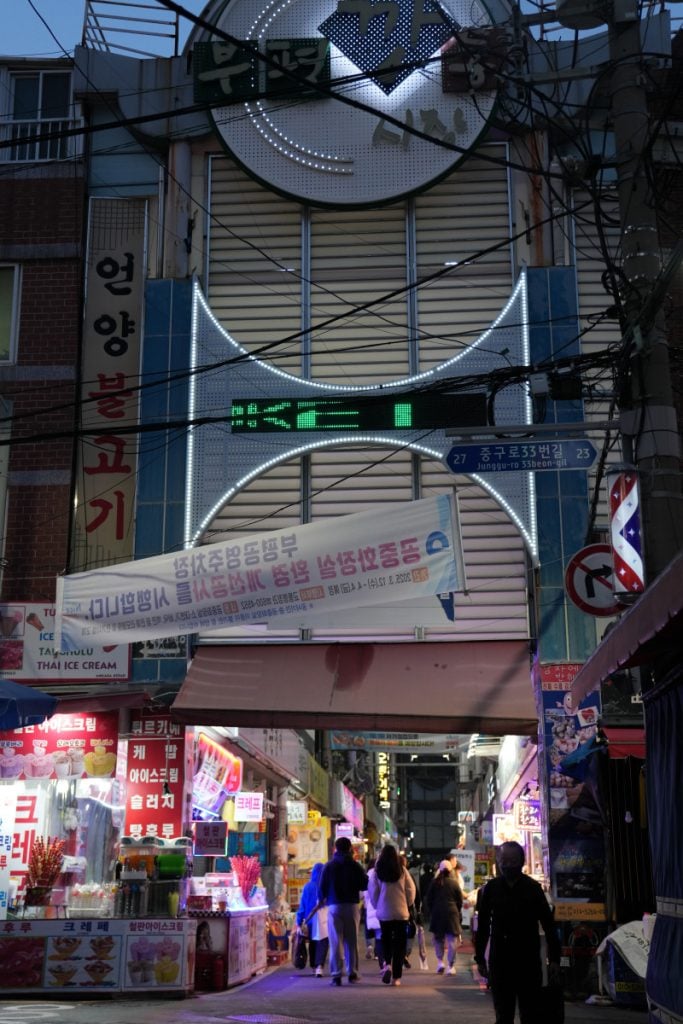
On your last morning, head over to the BIFF Square area of Busan. It’s home to several markets, which are a great way to make the most of your morning. And as the birthplace of the Busan International Film Festival, BIFF Square is filled with handprints and footprints of renowned actors and actresses, reminiscent of Hollywood’s Walk of Fame.
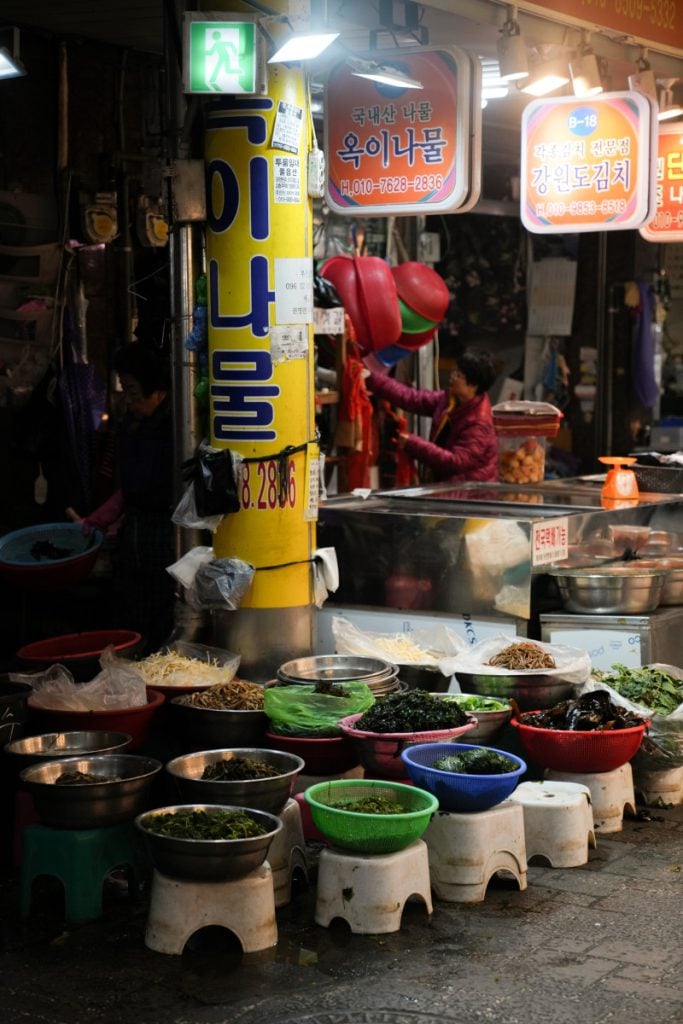
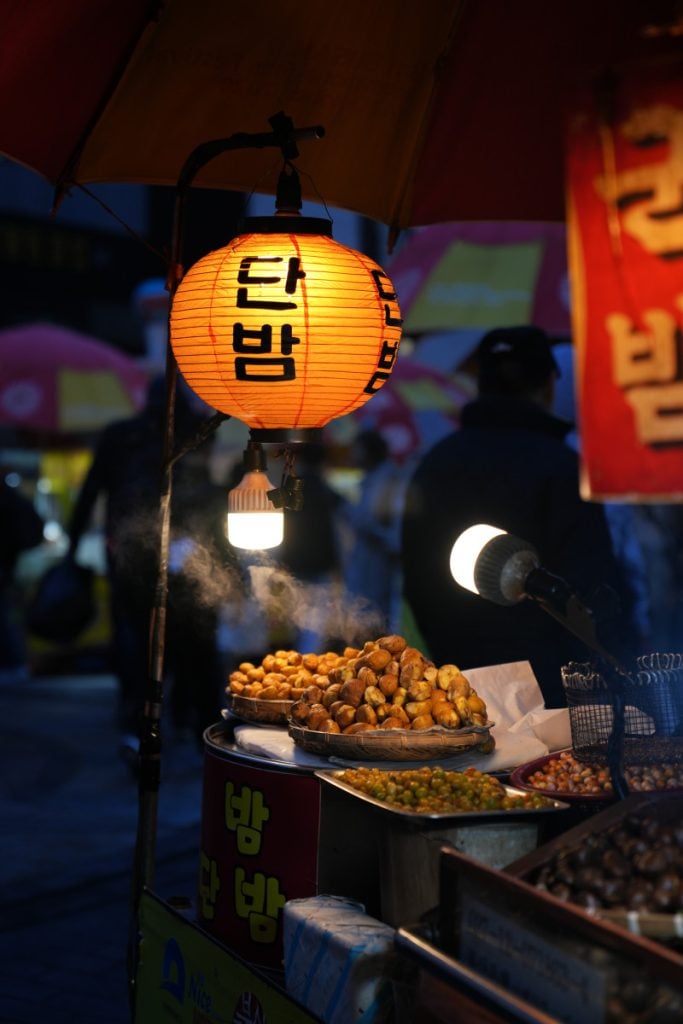
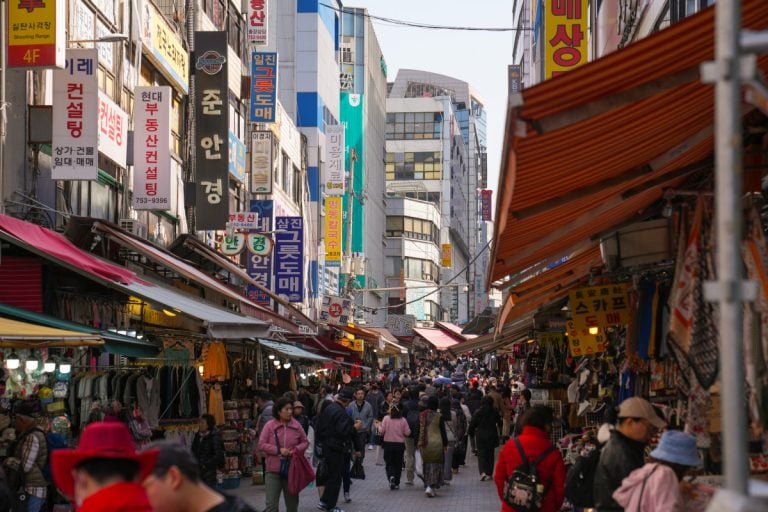
Head over to Gukje Market, also known as the International Market, one of South Korea’s largest and most vibrant traditional markets. Established in 1945 by war refugees, it has evolved into a bustling hub selling a diverse array of goods and experiences. Right by is Bupyeong Kkangtong Market, which was lovely to visit either night or day.
Nearby is the Bosu Book Street, a street lined with shops selling books, paper goods, and more. This is super popular to visit and is open most of the day. Also, consider a visit to Yongdusan Park, which is known for the Busan Tower.
Departure

After your final morning, grab your luggage and head to your next destination. If you’re taking the train, there are a handful of restaurants and convenience stores in the train station to stock up on food.
More Things to Do in Busan
Yeongdo Island

While you probably stopped at Huinnyeoul Culture Village during your tour, there are a few other highlights on Yeongdo Island to consider visiting. For me, one of my favorite exhibits (great on a rainy day!) was the interactive ARTE MUSEUM Busan.
The ARTE MUSEUM Busan has sensory-forward interactive exhibits similar to teamLabs and well worth taking the Uber over to do it. It’s also close to Grazie, the Italian restaurant I recommend above for your time.
Jagalchi Fish Market
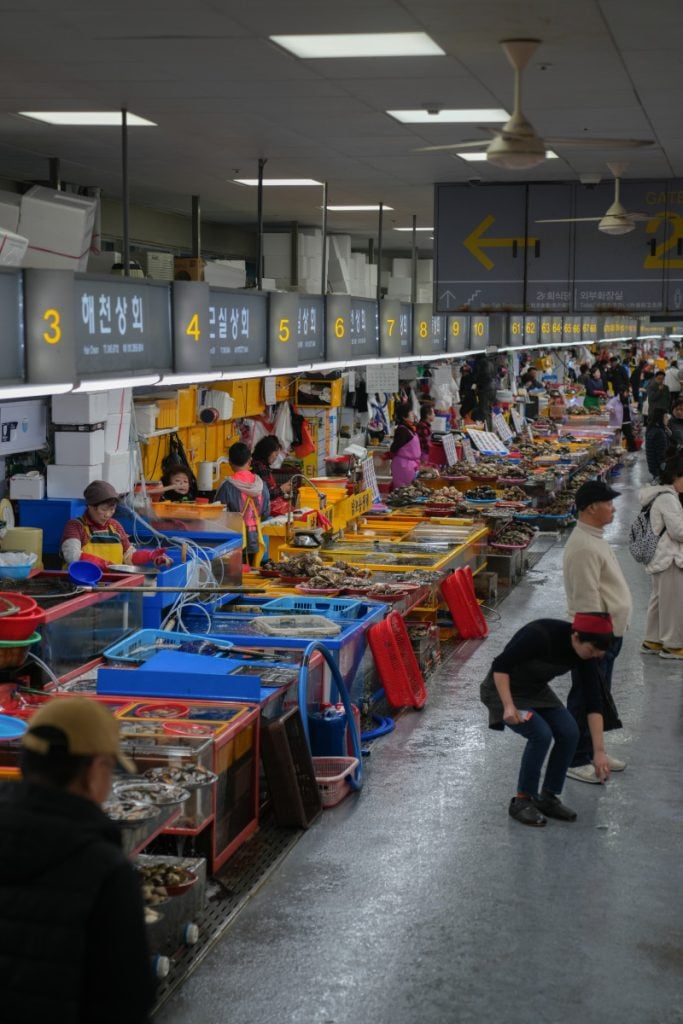
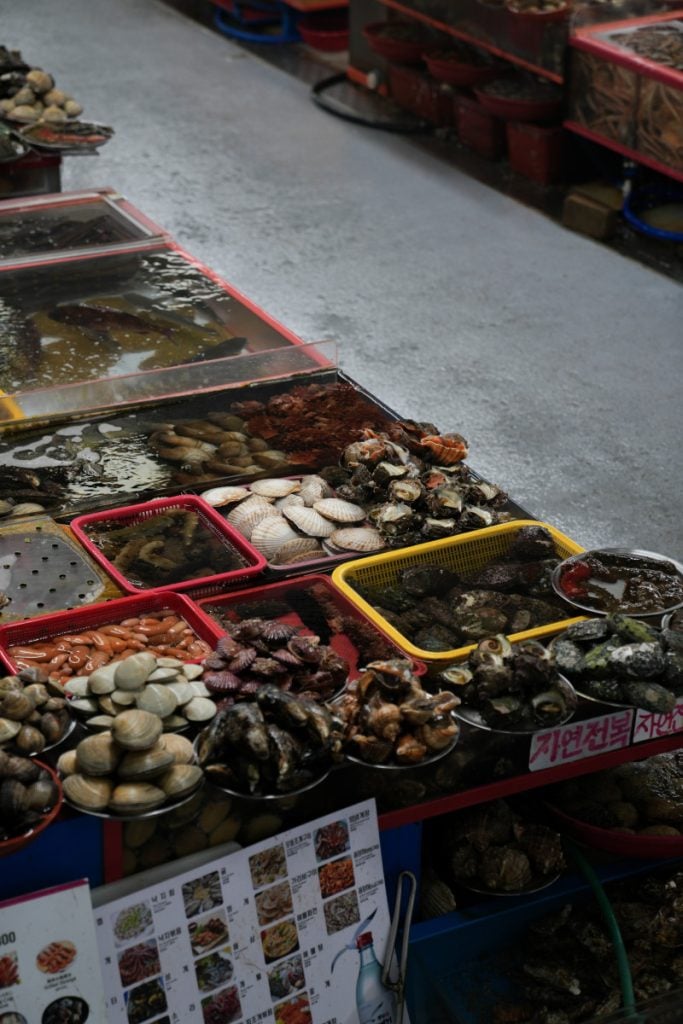
This is Korea’s largest seafood market. I did not include Jagalchi Market in the itinerary mostly because I think it’s a touch overwhelming. You’d really need a guide to navigate, you may not feel comfortable with the halls of live seafood. So if you do want fresh seafood, this is where to go, but be prepared to know what you’d like to eat. You usually pick it out downstairs, and then the restaurant upstairs cooks it for you.
Songdo Beach and Songdo Bay Station (Songdo Cable Car)
One of the most popular tourist attractions in Busan is the Songo Cable Car, which is an aerial tram over the ocean. The views looked good, but I didn’t make it there. Nearby is also the popular Songdo Beach.
Save This Post for Later on Pinterest


PS — Are You Booking a Trip Soon? Use My Booking Checklist!
These are the sites I use most to book my own trips. Using the links below is a great way to support Bon Traveler’s travel journalism at no extra cost to you. If you need help organizing your itinerary, get my free travel itinerary template here.
1. Book Your Accommodations
I use Booking.com for hotels and Airbnb for vacation rentals. They have the biggest inventory and consistently offer the best rates.
2. Book Your Rental Car
Self-driving is the best way to explore most destinations. I use Discover Cars for our rental cars, select full coverage insurance, and opt for a reputable company like Alamo, Hertz, or Sixt.
3. Book Your Tours & Experiences
I use Viator, Airbnb, and Get Your Guide to find the best tours and experiences. They are my favorite tour search engines. I always check all three as their inventory varies depending on the destination.
4. Book Your Private Transfers
For easy, reliable private transfers, I use Welcome Pickups. It’s my go-to for arranging a driver in advance — whether it’s an airport pickup, a hotel-to-hotel transfer, or a day trip. The experience is seamless, with English-speaking drivers and upfront pricing, so you can travel stress-free at every stage of your trip.
5. Get Cell Data for Your Trip
I use Holafly for international cell data. Their unlimited data eSIMs are easy to install, activate instantly on arrival, and let you skip local SIM cards and expensive roaming fees.
6. Don’t Forget Travel Insurance
I never leave the country without travel insurance. It provides comprehensive protection in case anything goes wrong (ie. illness, injury, theft, or cancellations).
My favorite companies that offer the best coverage and rates are:
- World Nomads (best for all-around)
- Safety Wing (best for frequent travelers)
Xx,
Jessica