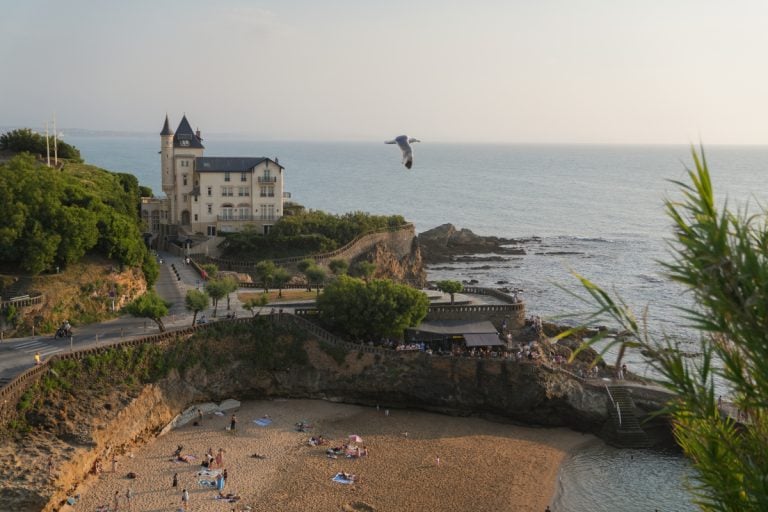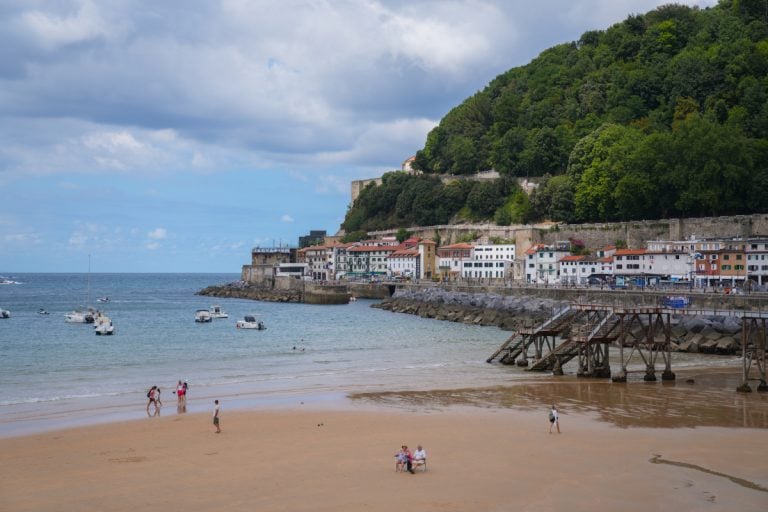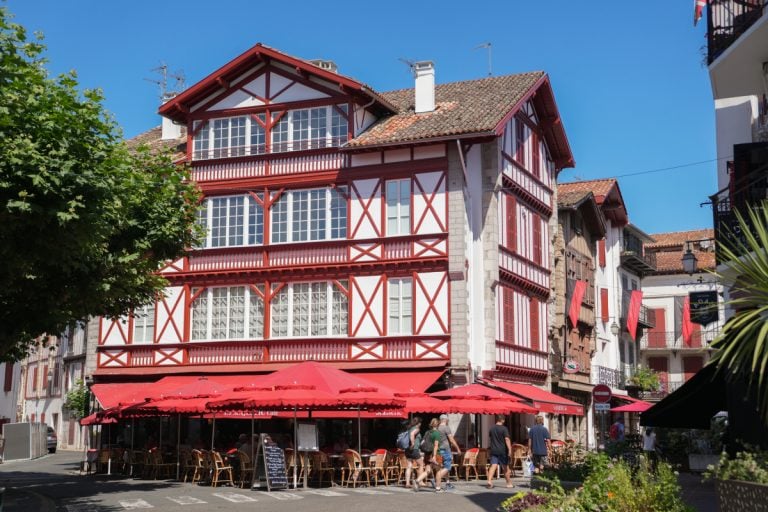
Corsica is one of the Mediterranean’s best-kept secrets. I’ve long been drawn to the island’s rugged coastlines, beautiful beaches, and charming towns. In this guide, I’ve pulled together the best places to visit to help you plan a well-paced trip.
I spent nearly a month exploring Corsica. It’s real and rugged. Unpretentious in the best way, the island is still chic and elevated in all the right places. For me, Corsica struck a rare balance between adventure and relaxation, with plenty of pleasant surprises along the way.
We traveled across the island in late spring and early summer, balancing beach time, road trips, and slower family travel days to understand what truly works when planning a trip here.
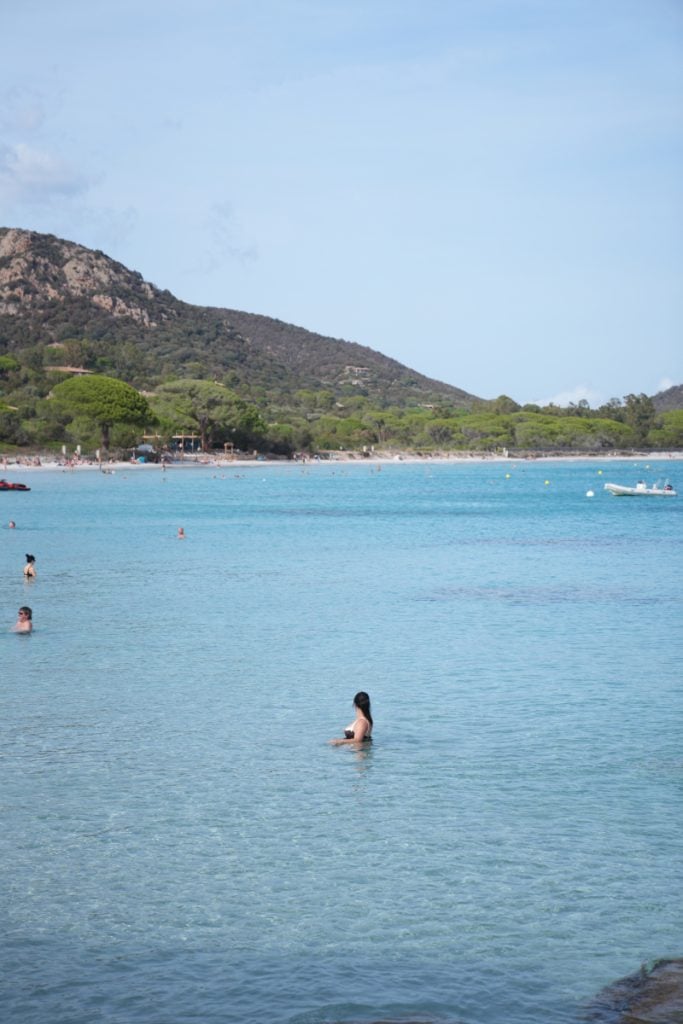
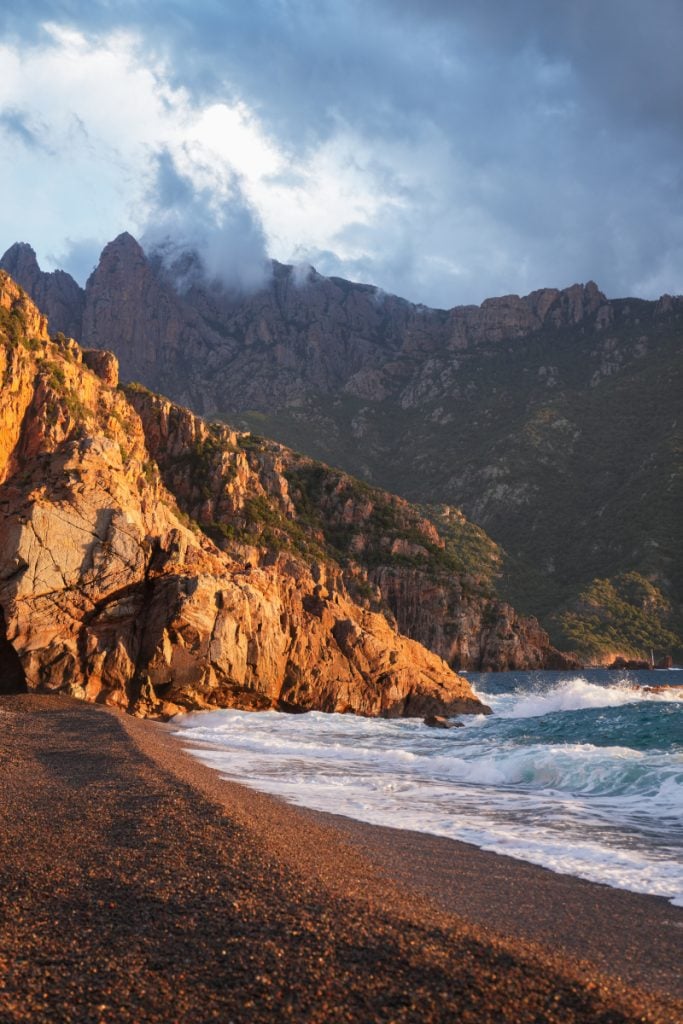
If you’re beginning to plan your Corsica trip, one thing becomes clear quickly: the island is deceptively large. Driving from one end to the other can take several hours. As you decide on the best things to do in Corsica and the best towns to base yourself, planning matters more here than most travelers expect.
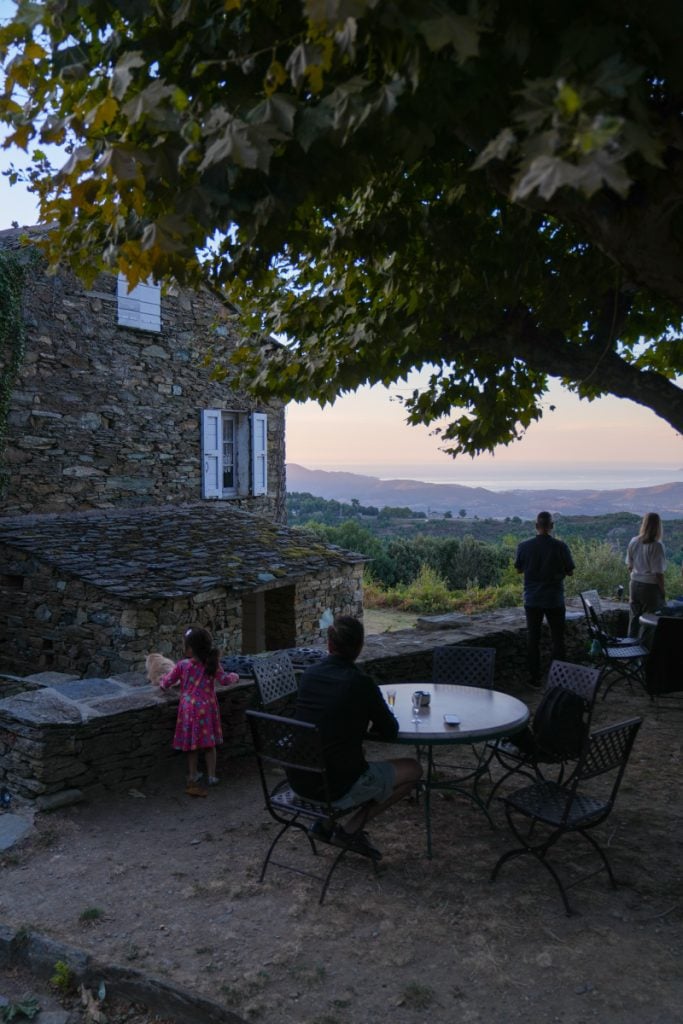
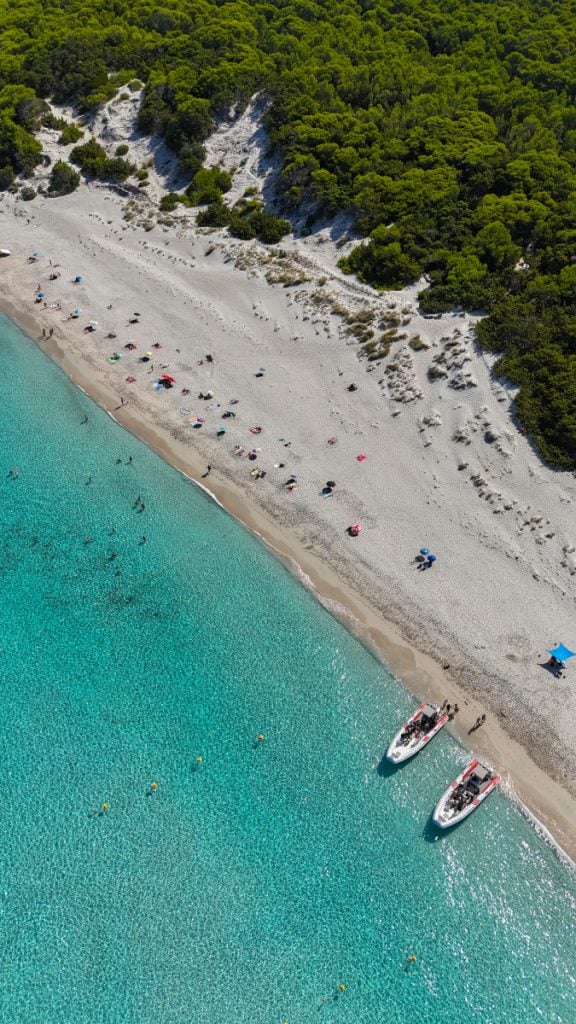
Leading into the trip, I spent months of research determining where to go in Corsica. Looking for a blend of wild places, storybook towns, and Corsican culture, I quickly found there was a shortlist of places not to miss. After living it myself, I’ve put together this guide to Corsica to help you decide where to go. I’ve included highlights of each of these areas from Bonifacio in the south to Saint-Florent in the north.
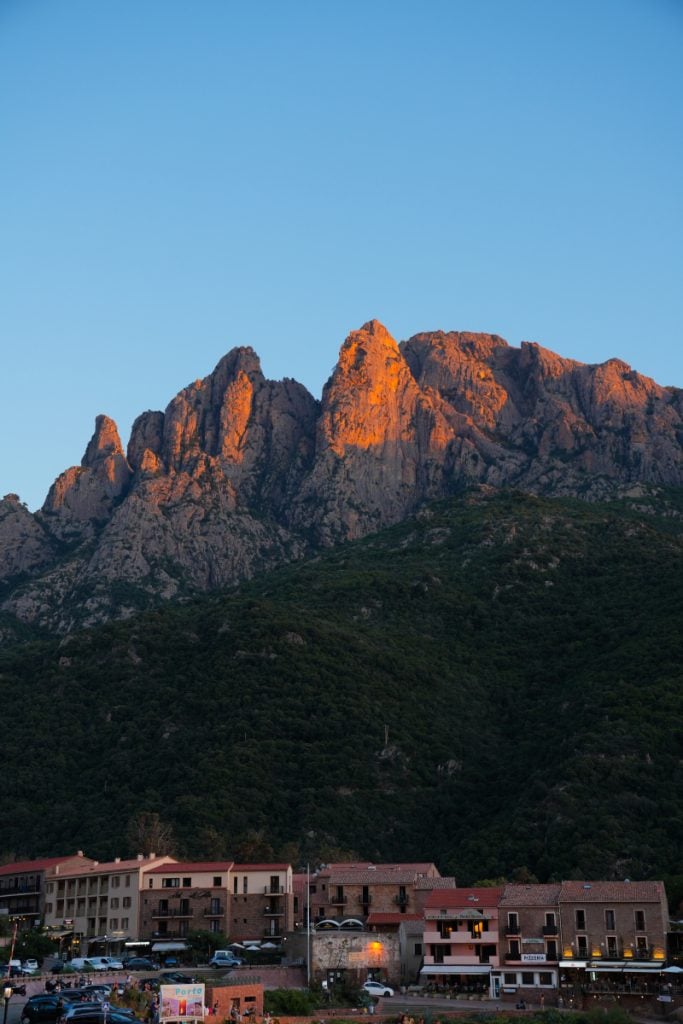
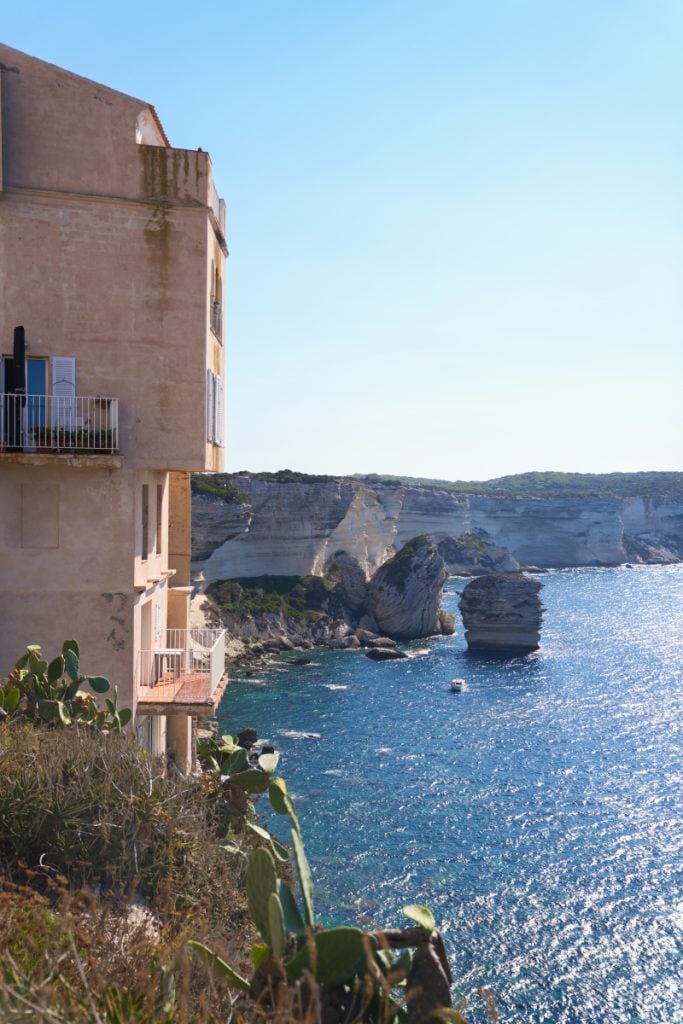
Read on to find my ultimate guide to Corsica, France. And from one French-American traveler to you, know that I wish I had visited much sooner. I think this will be the next top spot to visit in the Mediterranean. It’s a rare luxury to be there before it is.
Short on Time? Here Are My Top Picks for Where to Stay in Corsica:
Corsica’s size makes pacing everything. With one week, I recommend splitting your time between Saint-Florent in the north and Porto-Vecchio in the south. With 10+ days, adding Porto / Piana along the west coast unlocks the island’s most dramatic landscapes. And with 14+ days, slowing down with time in L’Île-Rousse (Balagne) and Corte allows each region to shine. These are the five places I’d prioritize as bases, depending on how much time you have.
- Saint-Florent (staying at Basgi Basgi Boutique Hotel), for the best all-around base in northern Corsica
- L’Île-Rousse (staying at Hôtel Villa Joséphine), for relaxed beaches and access to Balagne’s hilltop villages
- Porto/Piana (staying at L’Aiglon), for Corsica’s most dramatic coastline
- Corte (staying at Dominique Colonna ($$)), for the best inland base for hiking and mountain landscapes
- Porto-Vecchio/Bonifacio (staying at Les Bergeries de Palombaggia), for the best beaches and southern highlights
Things to Do
- Boat to the Désert des Agriates (Saleccia & Lotu Beaches), full-day catamaran excursion from L’Île-Rousse to Corsica’s most famous wild beaches — crystal-clear water, white sand, and swimming stops along the coast.
- Scandola Nature Reserve Boat Tour (from Porto), half-day boat tour through Corsica’s most dramatic coastline, including volcanic cliffs, sea caves, and the UNESCO-listed Scandola Reserve.
- Lavezzi Islands Half-Day Boat Tour (from Bonifacio), explore the protected Lavezzi Islands with snorkeling stops and time on remote rocky coves just off the coast of Bonifacio.
- Lavezzi Islands Catamaran Trip with Snorkeling (from Bonifacio), a more relaxed, scenic way to experience the Lavezzi Islands, with open-water sailing, swimming stops, and views back toward Bonifacio’s cliffs.
- Guided Marine Park Boat Tour (Bonifacio Coast), smaller-group guided tour focused on the marine park around Bonifacio, with snorkeling and coastal exploration.
Travel Tips
- Rent a Car for Corsica — Renting a car is the only way to explore Corsica. We use Booking.com for our rental cars in Corsica, choose full coverage insurance, and recommend renting only with Enterprise/National/Alamo, as it is by far the highest-rated agency in Corsica (the others have very poor ratings). Renting a car and driving in Corsica is quite easy. Book your car with Booking.com here.
- Get Cell Data Before You Arrive — We never travel abroad without cell data. We use Holafly unlimited data eSIMs for all international travel and recommend installing yours before arrival so maps and directions work the moment you land. Pre-Purchase your Holafly eSIM here.
Helpful Guides to Plan Your Trip
For a clear, well-paced route across the island, see my 10-day Corsica itinerary, which links Saint-Florent, the Balagne, Porto, and Corsica’s best beaches near Bonifacio and Porto-Vecchio into a cohesive north-to-south plan. If you’re deciding where to base yourself along the way, I’ve also put together a complete guide to where to stay in Corsica, with recommended towns and curated hotels by region. For more Mediterranean travel inspiration, you may also enjoy my Mallorca travel guide and my South of France and French Riviera travel guide.
The Ultimate Guide to Corsica, France
A Quick Look at Corsica’s History
Corsica’s history is shaped by its rugged landscape and strategic position in the Mediterranean. Settled since prehistoric times, the island later absorbed influences from the Greeks, Etruscans, and Carthaginians before becoming part of the Roman world. After the fall of Rome, Corsica passed through the hands of various powers, including the Byzantines and the Papacy, but it was the long period of Genoese rule (13th–18th centuries) that left a lasting mark on its towns, coastal defenses, and social structures. In the 18th century, Corsica briefly achieved independence under Pasquale Paoli, whose Enlightenment-inspired constitution was ahead of its time. In 1769, however, the island was ceded to France, ironically, the same year Corsica’s most famous son, Napoleon Bonaparte, was born.
Corsican culture today reflects a strong sense of identity rooted in language, tradition, and attachment to the land. The Corsican language, closely related to Italian, remains an important symbol of heritage. Modern Corsica is part of France but maintains a distinct character. Tourism coexists with local life, and debates about autonomy and cultural preservation are ongoing. Corsica is distinctly Mediterranean, but it’s very much its own place.
You’ll see this layered history everywhere you travel in Corsica: from Genoese citadels anchoring coastal towns to mountain villages shaped by centuries of independence and isolation. Understanding this context helps explain why Corsica feels so distinct from mainland France, both culturally and geographically.
Corsica, France Travel Planning Tips Before You Arrive
Best Time to Visit Corsica
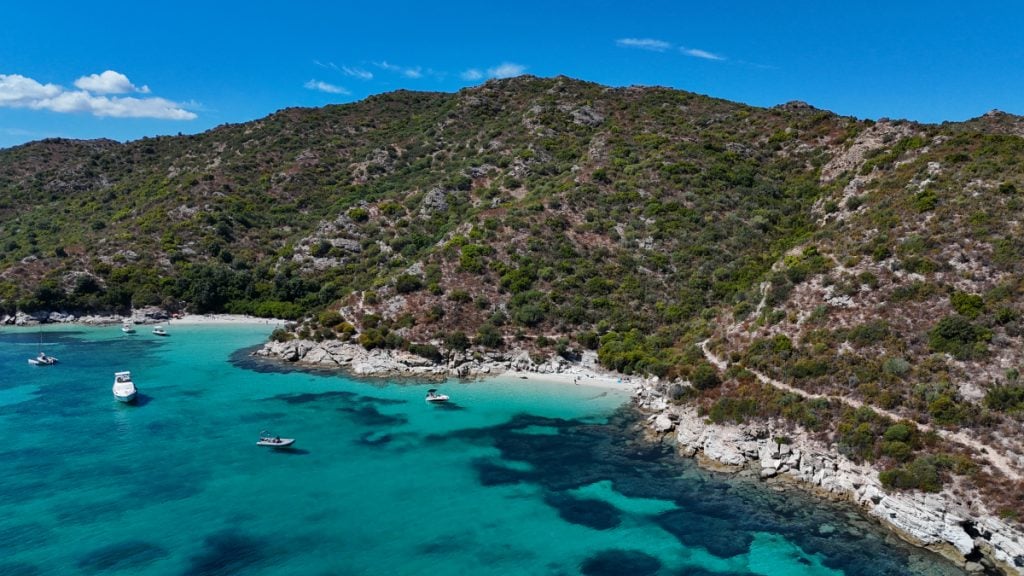
The best time to visit Corsica depends on what you want from your trip: weather, crowds, outdoor activities, and beach time all play a part. For beaches and warm weather to swim, my recommendation is June through September. Just be aware that it will be at its busiest during the peak season. If you come in September, most of the crowds are gone by then, as the French are back to work and not vacationing on the island, and the water is still very warm.
Other pleasant months to visit, if you’re not focused on beaches, are May and October. Both seasons are great for hiking and enjoying the villages.
How Much Time is Needed for Corsica
To see the entire island of Corsica properly, you would need at least two weeks, as it is quite large. It’s the fourth largest island in the Mediterranean. However, you can see a portion of the island or 2-3 places with a one-week itinerary. What I do love about Corsica is that you can easily spend 2+ weeks and feel like you’re experiencing different landscapes and villages. You will not run out of new things to do, as it’s not all beaches. This is how I would prioritize my time:
- One week: Saint-Florent and Porto-Vecchio/Bonifacio
- 10+ Days: Saint-Florent, Porto, and Porto-Vecchio/Bonifacio
- 14+ Days: Saint-Florent, Balagne, Porto, and Porto-Vecchio/Bonifacio
Getting to Corsica
The only way to get to Corsica easily is by plane. Corsica has four airports with regular flights from many European cities. The typical flight time from most European cities is anywhere from 1 to 2 hours; it’s an easy flight as you’re already in Europe. The airports are:
- Figari – Sud-Corse (FSC) (southeast)
- Ajaccio – Napoléon Bonaparte (AJA) (southwest)
- Bastia – Poretta (BIA) (north)
- Calvi – Sainte-Catherine (CLY) (northwest)
Getting Around Corsica
The best way to get around Corsica is by having a car. Public transportation is limited, and while there is a single train route (the Chemins de fer de la Corse (CFC), affectionately known as “U Trinicellu”), it mainly connects coastal cities like Ajaccio, Bastia, and Calvi. It’s scenic, but quite limiting if you want to explore southern Corsica, smaller villages, beaches, or the interior of the island.
Renting a Car in Corsica: What to Know Before You Book
Picking Up & Dropping Off
We picked up a rental car on arrival at Figari Airport (FSC) and returned it there as we did one large loop around the island. Alternatively, you can pick up a rental car at one arriving airport and return it to another airport on the island for an additional fee.
Important Rental Car Reality (Especially About Electric Cars)
If you look up car rental agency reviews in Corsica, you’ll notice they are consistently poor. One of the biggest issues to be aware of is that many agencies primarily offer electric vehicles. Even if you reserve (and pay more for) a gas car online, they’ll only give you an electric car at pickup.
We booked a gas car and were unapologetically given an electric car with no refund for the price difference. The car itself was great, but traveling with our young daughter meant we had to plan charging carefully, as a full charge typically takes around 45 minutes. For us, this meant my husband spent a handful of evenings at a charging station after bedtime.
The Takeaway: Be prepared to receive an electric car regardless of what you book. Save money by booking one in advance.
Charging Stations (If You End Up With an EV)
In practice, we were usually able to find charging stations within a 15-minute drive of where we stayed, but it required intentional planning. The fastest and most reliable options were Tesla Superchargers and E-Motum charging stations (both accept contactless payments with credit cards and Apple Pay).
Google Maps works well for locating chargers. Simply search “charging station.” It will often show charging speed, number of chargers, and how many are currently available.
Where to Book and Insurance Advice
We book rental cars in Corsica through Booking.com, always choose full coverage insurance, and recommend renting only with Enterprise/National/Alamo, which consistently have the highest ratings on the island. Other agencies tend to receive very poor reviews. Renting a car and driving in Corsica is quite easy. Book your car with Booking.com here.
Travel Tip: Fuel or charge up early. Petrol and charging stations can be scarce in rural and mountain areas. Some petrol stations close early or at lunchtime, so don’t wait until the tank or battery is low.
Is it Better to Visit North or South Corsica?
Both regions offer something different, and the best choice depends on your travel style. Northern Corsica (Saint-Florent, L’Île-Rousse, Cap Corse) is ideal for scenic drives, wild beaches, and village-based travel, while southern Corsica (Porto-Vecchio, Bonifacio) is best for calm, sandy beaches and a more polished resort feel. If you have at least 10 days, I strongly recommend visiting both. If you’re deciding how to split your time, I break this down clearly in the “How Much Time is Needed for Corsica” section above.
Cash and Credit Cards in Corsica
While many of the larger restaurants and hotels operate with credit cards, there are a handful of places you’ll undoubtedly come across that are cash only. I’d highly recommend keeping 200-300 euros on you just in case you run into this.
Language in Corsica
Corsica has a rich linguistic heritage shaped by its history and geography. The main language spoken today is French, which is used in education, government, and everyday life. Alongside French, many locals also value Corsican (Corsu), a regional language closely related to Italian, particularly Tuscan.
You’ll Want Cell Data in Corsica
Cell service in Corsica is generally reliable in towns and along the coast, but it can drop quickly once you’re driving through mountain roads, rural areas, or more remote beaches. Having cell data makes navigating, finding fuel or charging stations, and adjusting plans on the go much easier.
We used Holafly’s eSIM, which worked well throughout the island and kept us connected without having to deal with physical SIM cards. I recommend purchasing your data plan and installing your eSIM before arrival so everything is set up as soon as you land.
Cell Data Travel Tip: If you want a deeper breakdown of coverage, speeds, and why I recommend it, you can read my full Holafly eSIM review, where I explain why I think it’s the best eSIM option for travel in Europe.
Download Google Maps Offline Before You Go
Even with cell data, I strongly recommend downloading Google Maps offline for Corsica. This is especially helpful when driving through mountain regions, where service can be spotty and directions are still essential.
Before your trip:
- Open Google Maps
- Search for Corsica
- Tap “Download offline map” and save the full island
With offline maps, you’ll still have access to turn-by-turn navigation, saved places, and base-level directions even without service. This makes driving in Corsica far less stressful.
Other Helpful Tips
- Distances are deceptive. Corsica looks small on a map, but winding mountain roads mean journeys take much longer than expected. Plan fewer stops per day and allow extra driving time.
- Sunday is very quiet. Many stores close on Sunday, similar to mainland France.
- Corsicans value politeness. A simple “Bonjour” when entering shops or restaurants goes a long way and is genuinely appreciated.
Where to Stay in Corsica, France
I spent countless hours researching where to stay in Corsica. The island is deceptively massive. You can’t do it all, but you can get a good sense of the island in even a week. At a minimum, I recommend splitting your time between the north and the south. I’ve also put together a full guide on where to stay in Corsica, with short-hand recommendations below.
How I’d Break Out My Time
If you’re deciding how to split your time across the island, this map shows how Corsica breaks down geographically and helps explain how I’d structure time across regions.
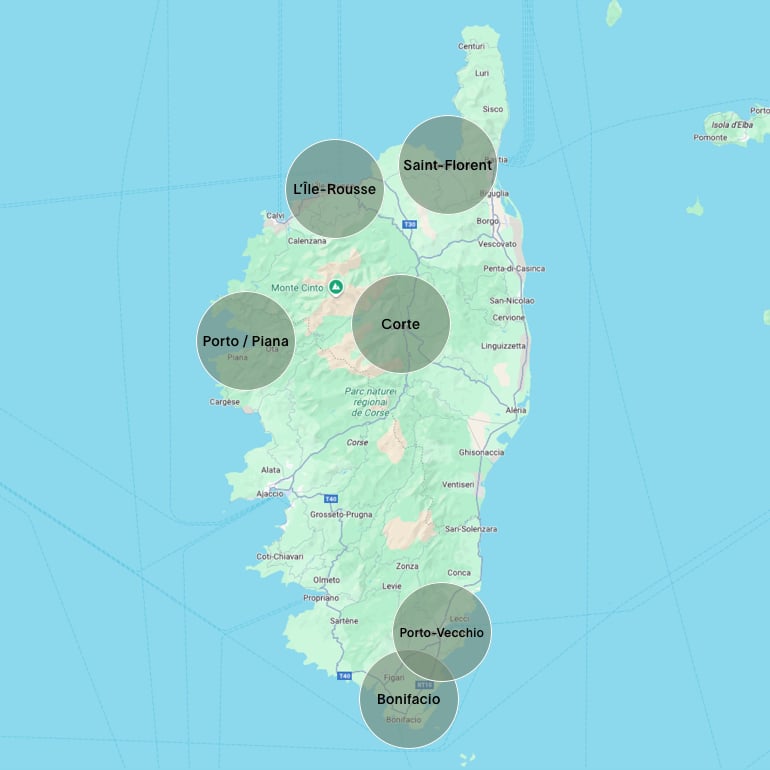
- One week: Saint-Florent and Porto-Vecchio/Bonifacio
- 10+ Days: Saint-Florent, Porto, and Porto-Vecchio/Bonifacio
- 14+ Days: Saint-Florent, Balagne, Porto, Corte, and Porto-Vecchio/Bonifacio
Where to Stay in Saint-Florent
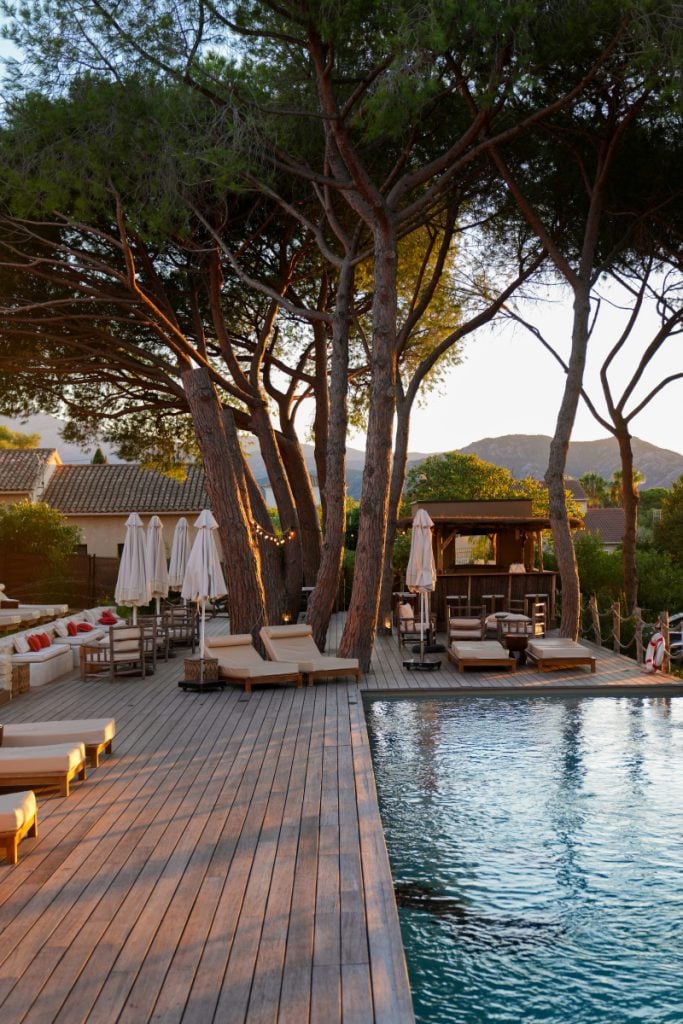
- Basgi Basgi Boutique Hotel ($$ / Where I Stayed), for the best all-around boutique hotel with a central pool, eco-forward design, and an excellent on-site restaurant
- Hotel Aethos U Palazzu Serenu ($$$), for the best design-forward countryside stay
- Hotel de la Roya ($$), for the best resort-style hotel
- La Dimora Hôtel & SPA ($$), for the best elevated countryside escape
- 2 Bedroom Charming Beach House
- 2 Bedroom Harbor Apartment with Sea Views
Where to Stay in L’Île-Rousse
- Hotel A Piattatella ($$$), for the best mountainside stay
- Casa Paradisu ($$$), for the best luxury chic hotel
- Hôtel Villa Joséphine ($$), for the best-designed boutique hotel
- Résidence Dary ($$), for a no-thrills, yet elevated beachfront hotel
- Hôtel Perla Rossa ($$), for a budget hotel stay
- 1 Bedroom Charming House with Hot Tub
- 2 Bedroom Stone House with Ocean Views
- 3 Bedroom Luxury Family Apartment
Where to Stay in Porto/Piana
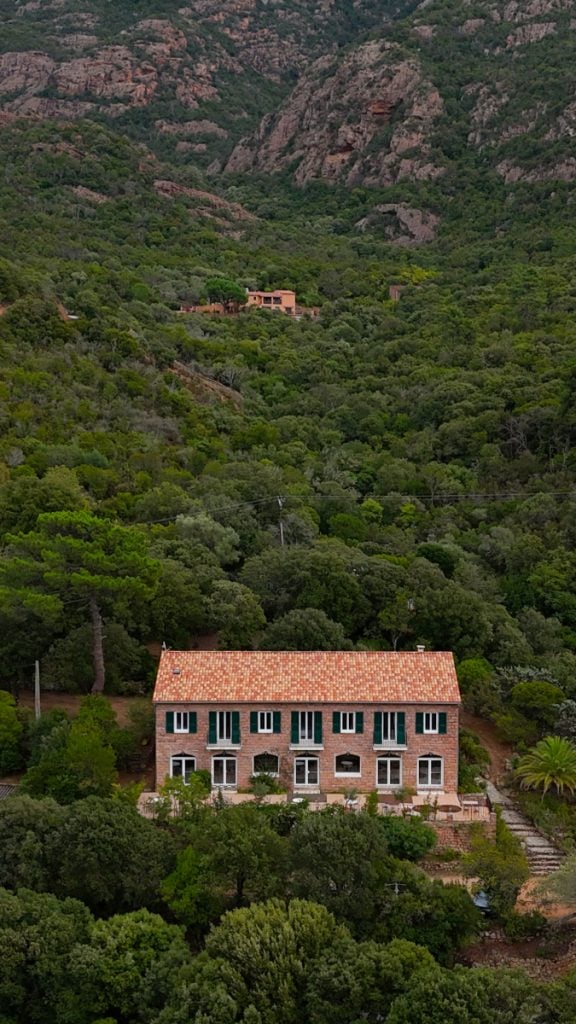
- L’AIGLON ($ / Where I Stayed), for the best-designed base with apartment-style suites (and kitchens) plus a stunning pool for slow afternoons
- Hotel Scandola ($), for the best luxury hotel
- Domaine Codaleone ($), for the best elevated countryside stay
- Hôtel Les Flots Bleus ($), for the best in-port hotel
- 1 Bedroom Restored Mill
- 1 Bedroom Stone Cottage with Pool
- 2 Bedroom Renovated Home
Where to Stay in Corte
- Dominique Colonna ($$), for the best luxury boutique hotel
- Si Mea, Corte ($$), for the best design for dollar hotel
- 2 Bedroom Chic Apartment
- 2 Bedroom Modern Central Apartment
Where to Stay in Porto Vecchio
- Casadelmar ($$$$), for the best luxury resort hotel
- Les Bergeries de Palombaggia ($$$), for the best boutique luxury hotel
- Domaine Les Oliviers de Palombaggia ($$), for the best-designed hotel
- Riva Beach ($$), for the best design for dollar hotel
- Hotel Moderne ($), for the best in-village hotel
- 1 Bedroom Palombaggia House with Sea Views
- 2 Bedroom Villa with Pool
- 2 Bedroom Luxury Designer Villa
Where to Stay in Bonifacio
- Version Maquis Citadelle ($$$), for the best luxury modern hotel
- U Capu Biancu ($$$), for the best luxury and intimate hotel stay
- Lodge de Charme A Cheda ($$), for the best design for dollar stay
- A Speranza ($), for the best boutique countryside stay
- 1 Bedroom Modern Loft in Town
- 2 Bedroom Contemporary House with Pool
- 3 Bedroom Cliffside Apartment
The Best Places to Visit in Corsica, France
Corsica reveals itself in layers, and each part of the island offers something different. We spent nearly a month exploring from the northern coast to the mountainous interior and down to the southern beaches. These are the places that left the strongest impression, and the ones I’d prioritize when planning a trip.
Saint-Florent
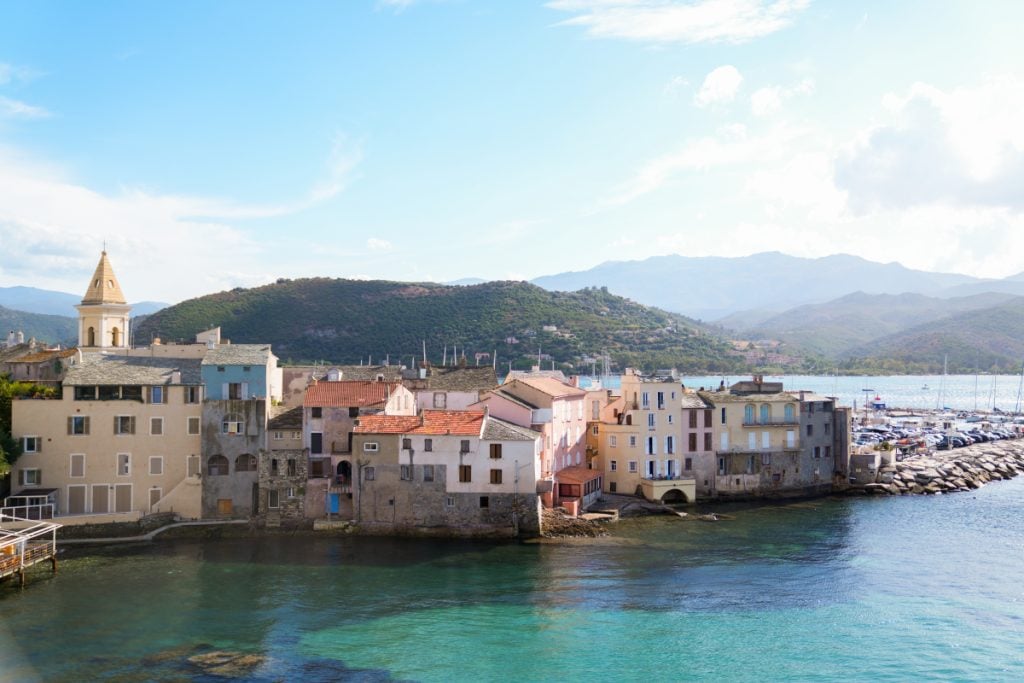
If I could only send someone to one place in Corsica, it would be Saint-Florent. For me, it’s the number one place to go in Corsica, France — a bustling seaside port and village that captures everything I love about the island. Imagine restaurants serving fresh seafood, access to wild beaches, and being within 30 minutes of dozens of incredible places in northern Corsica.
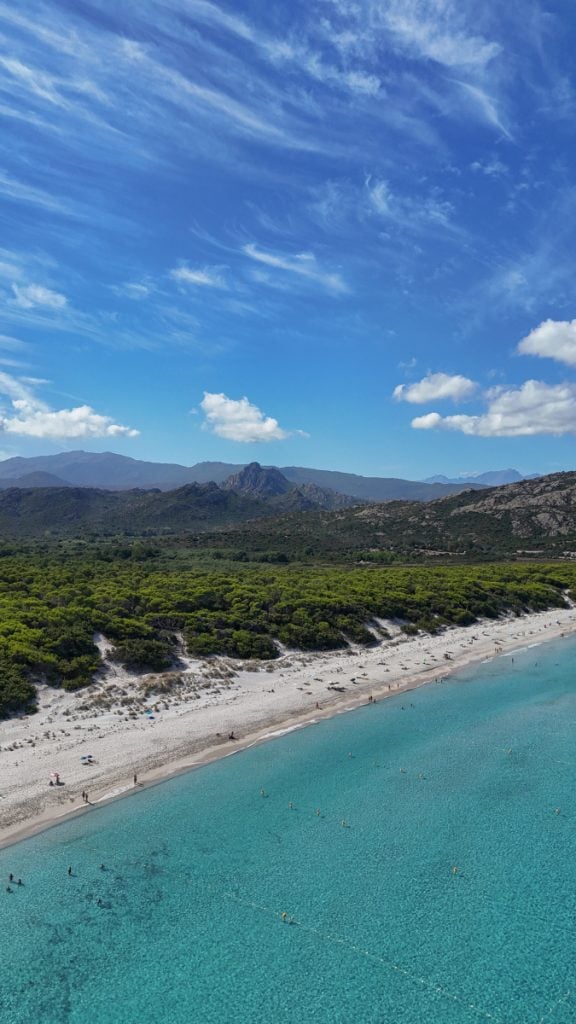
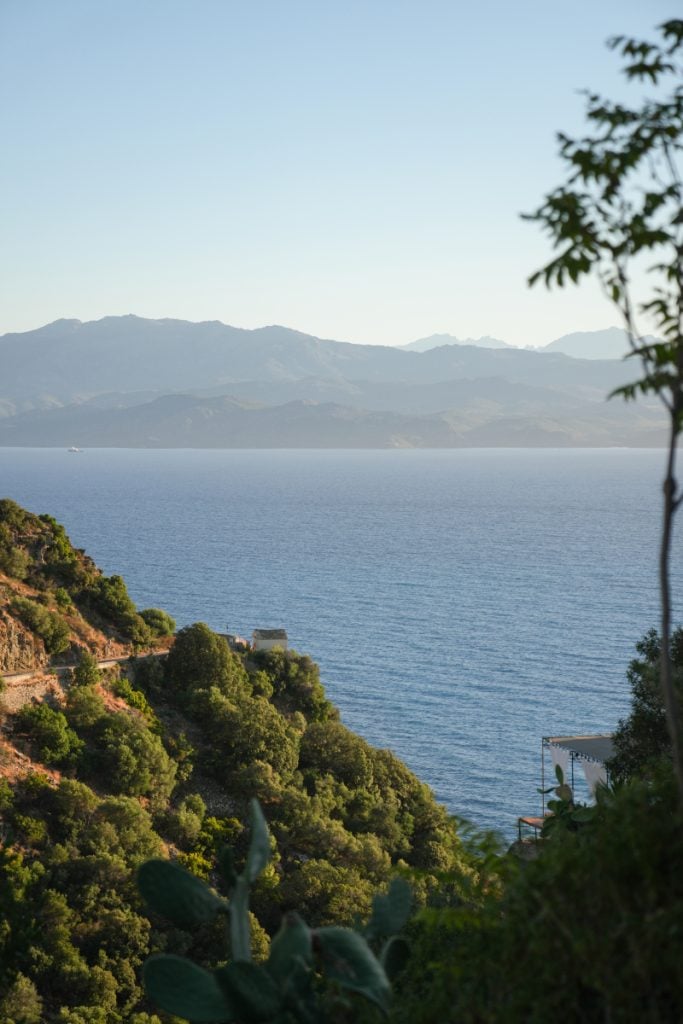
During our nearly one-month trip in Corsica, I spent 5 nights in Saint-Florent and fell completely in love with this part of the island. It’s down-to-earth, but has all the unique history and culture that sets Corsica apart from the rest of the Mediterranean. It makes for a wonderful base for a variety of day trips, from wine tasting to hilltop villages, which is why it’s number one on my list.
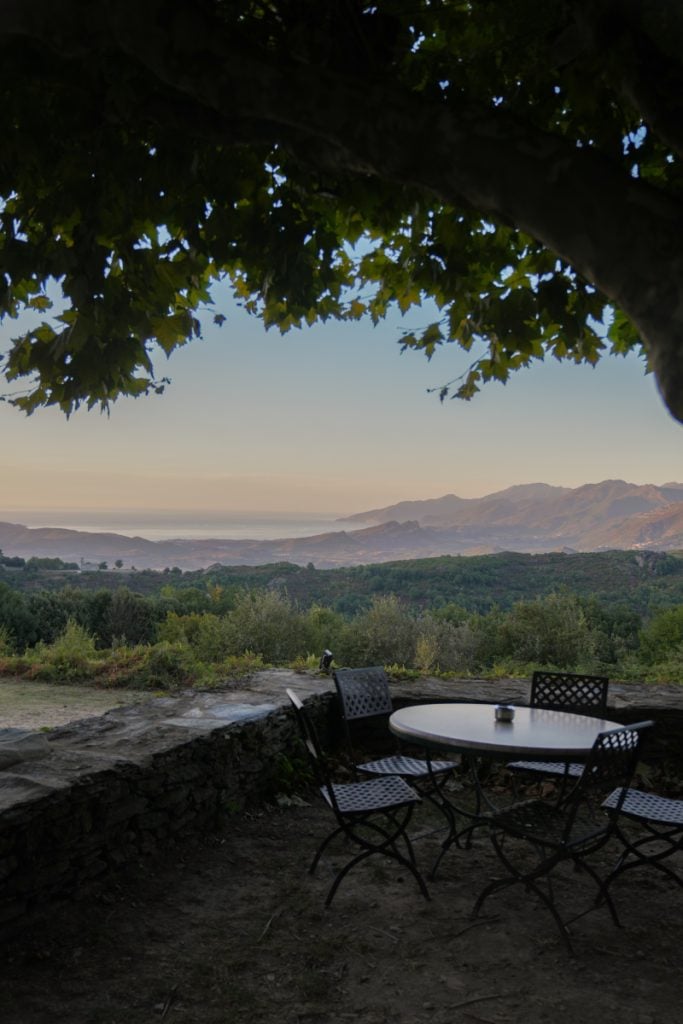
Favorite Things to Do in Saint-Florent
- Explore the Village of Saint-Florent — A few quaint streets that wind in and out of the port along the seaside, with ice cream shops like La Gelateria de Saint-Florent. One store to seek out is Epicerie Scotto Sarl for local Corsican specialty foods and great souvenirs to take home. For sunset, head to Point de vue sur St Florent for the best views over the port!
- Spend a Day at the Beaches of Désert des Agriates — One of the most popular day trips to do from Saint-Florent is to access by boat to the famous beaches of Saleccia and Lotu. Both beaches are best visited by boat — you can either hop on a group water taxi boat to be dropped off, join a group tour like this, or hire your own boat with or without a skipper. I opted to hire a boat with a skipper with Corsica Nautic so that I could go at my own pace and visit more of the coastline. I’d also consider joining this catamaran tour for a smaller-group experience.
- A Dinner to Remember at La Ferme de Campo di Monte — If I could repeat one meal on the entire island of Corsica, it would be La Ferme. Set on the mountainside, this farm-to-table experience is hosted in their original stone house. The meal is multi-course, takes about 3 hours, and is one of the best dining experiences I’ve ever had. You have to reserve weeks, if not a month or two, in advance, and it is cash-only. I don’t want to spoil it too much, but trust me, it is worth the drive up that steep dirt road.
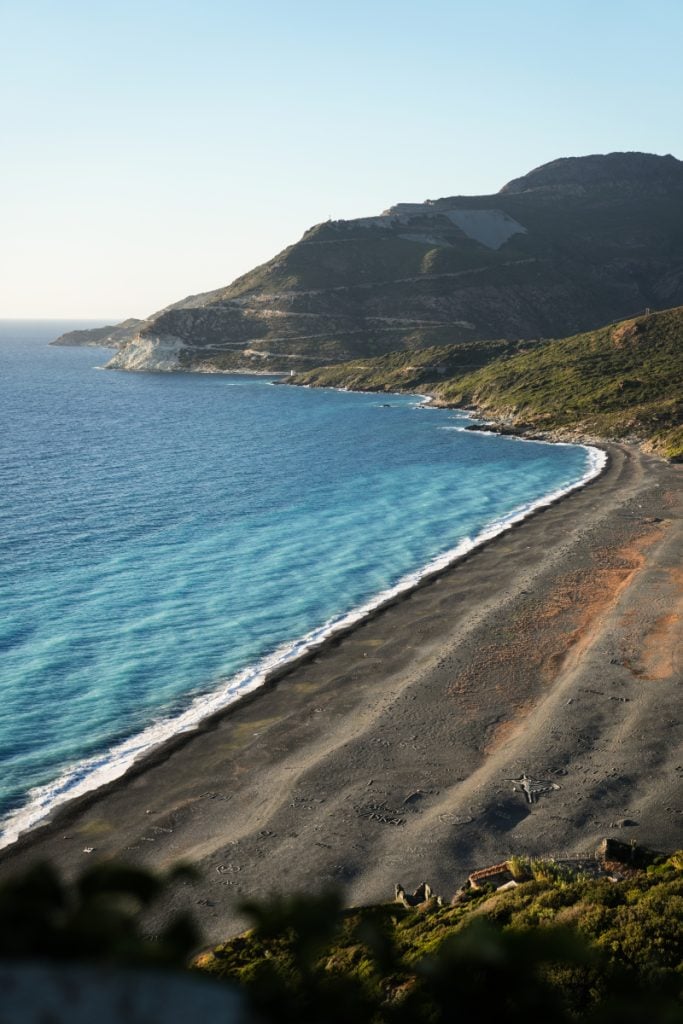
- Go for a Drive up Cap Corse — I thoroughly enjoyed stopping into the village of Nonza, getting a drink at the famous La Sassa bar. Continue onto Plage de Nonza and Plage d’Albo for scenic beaches.
- Beach Hop Down the Coast — A few wonderful beaches are close to Saint-Florent; our favorites from the trip were Plage de la Roya and Plage d’Olzo.
- Have Dinner at La Table du Basgi Basgi — Set inside our hotel, we stayed out at the most idyllic restaurant featuring a multi-course dinner with creative dishes by the chef. Highly recommend an advanced reservation.
- Go Wine Tasting in Patrimonio — Just 15 minutes north is the Patrimonio wine region of Corsica, where there are many wine tasting rooms to visit. My favorite from the time here was Orenga de Gaffory, an intimate wine tasting room that showcased the grape varietals so well.
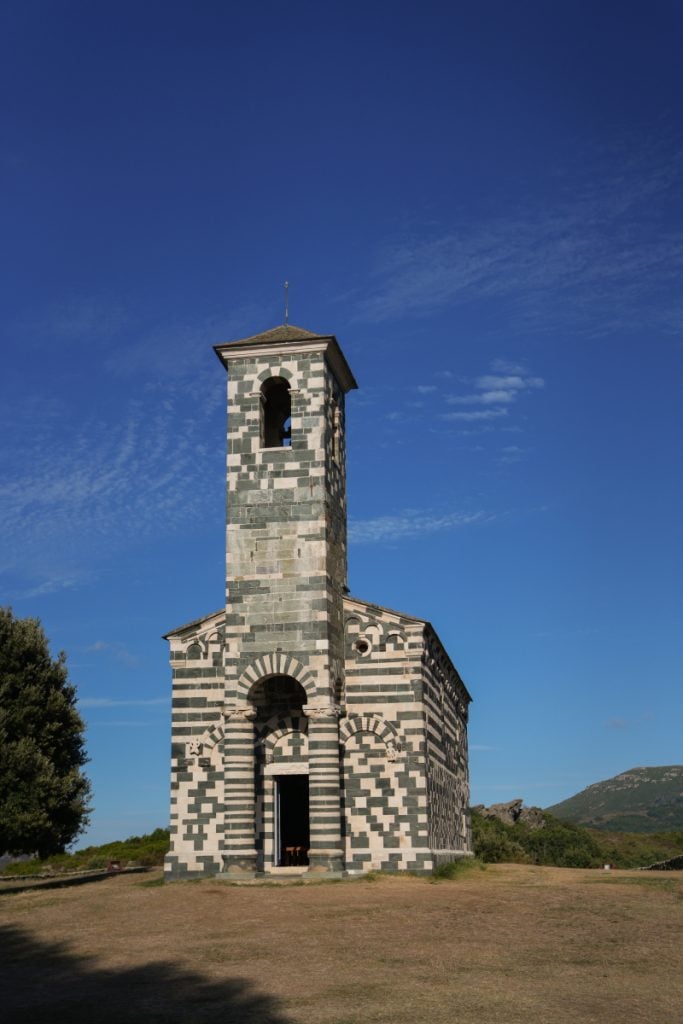
- Visit Nearby Hilltop Villages — Just inland, about 10 minutes away, are a handful of small villages to visit. Go for a stroll through Oletta and see the historic church, and stop into L’olittese, a wonderful local gourmet grocery store. A bit further is the town of Murato, and the main draw here is the famous Église Saint-Michel de Murato, a 12th-century two-toned marble church.
Bastia
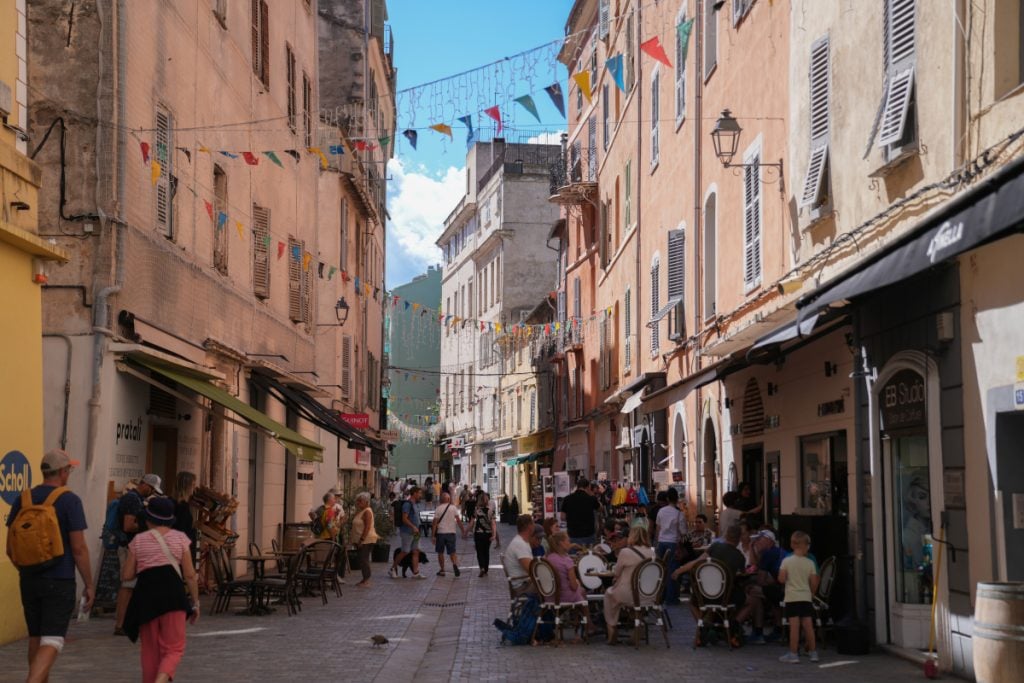
Often referred to as the gateway to Cap Corse, Bastia is a lively northern seaport and is a wonderful day trip if you’re basing yourself in Saint-Florent. Many travelers pass through on the way to Cap Corse, but I recommend giving yourself a full day to explore. There’s a lot going on in the old town and citadel, including plenty of restaurants, shops, and cafés.
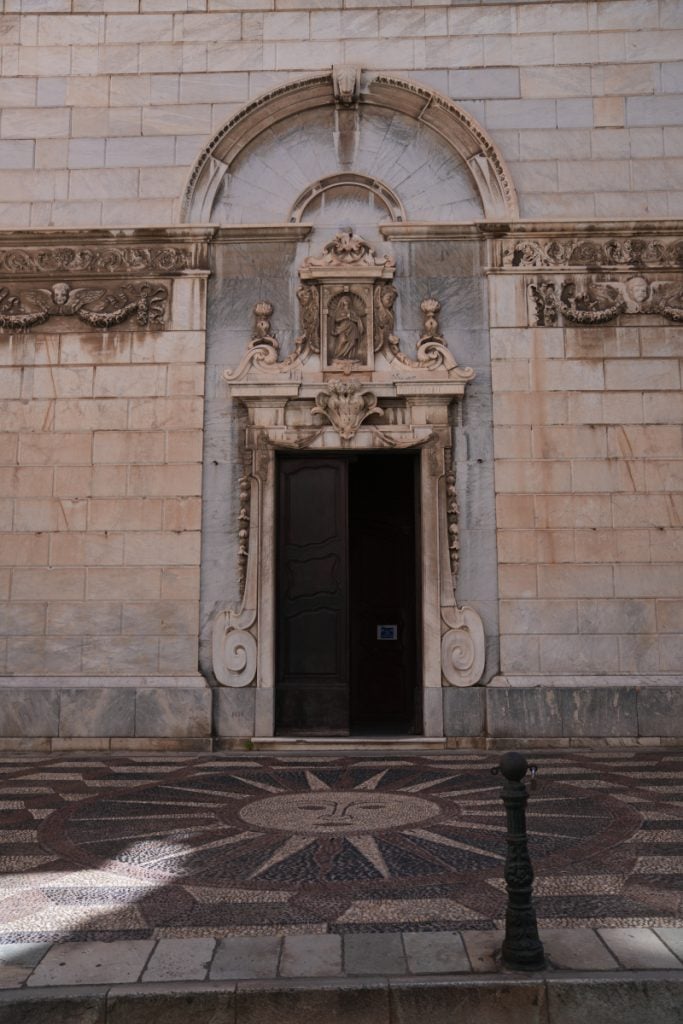
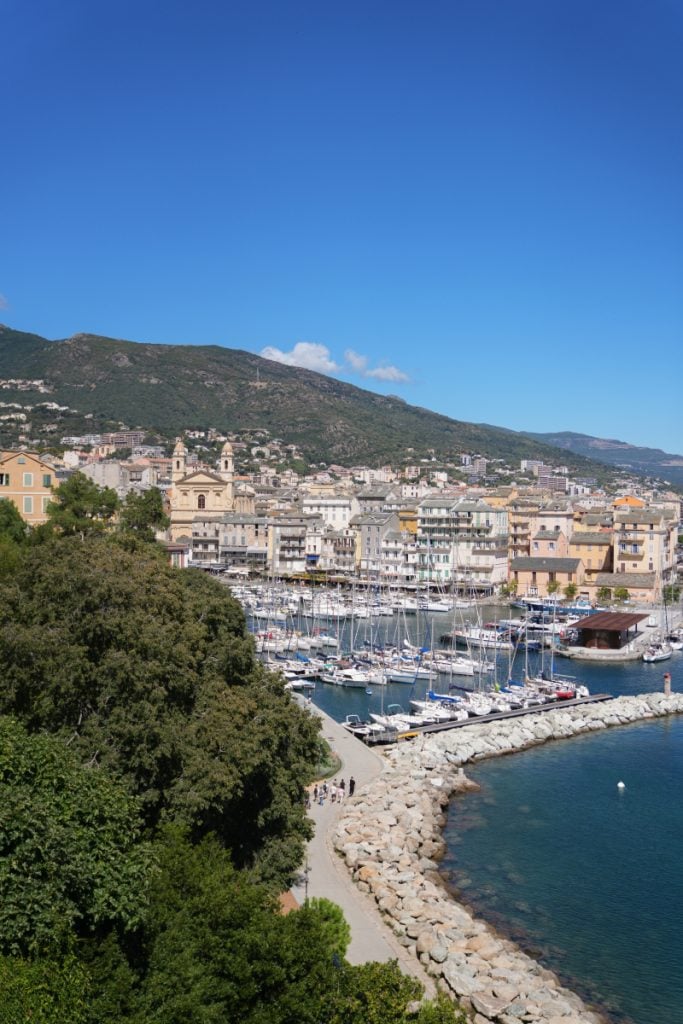
Founded in 1378 by the Republic of Genoa, Bastia’s history centers around its citadel and fortress, which once defined the city. Over time, it expanded into the Terra Vecchia district below, now marked by Baroque churches, bustling markets, and elegant squares that give the city much of its character today.
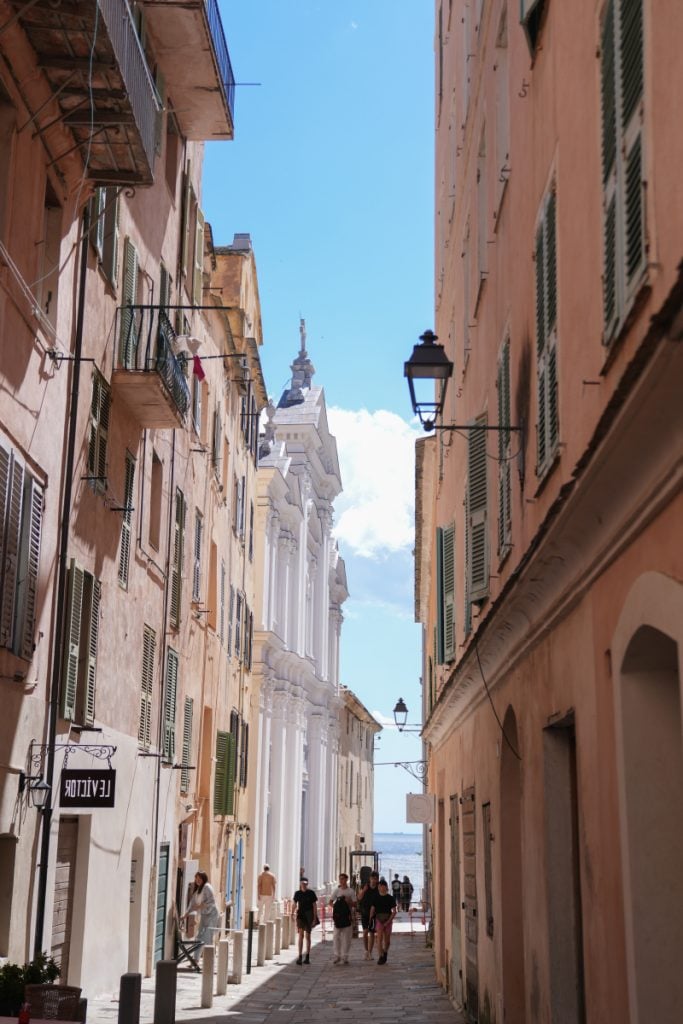
Favorite Things to Do in Bastia
- Stroll the Citadel — The Citadel of Bastia, known as Terra Nova, is the historic heart of the city and one of its most atmospheric areas. Built by the Genoese in the 15th century, it sits on a rocky promontory overlooking the Old Port and was originally designed as a fortified administrative center rather than a residential quarter. While there, don’t miss a visit to Cattedrale Santa Maria Assunta, antique shopping at Brocante – soso Lucchesi, the hidden Ghjesgia Santa Croce, and Musée de Bastia.
- Soak in Views from the Old Port (Vieux Port) — One of the best places to go for a leisurely walk is along the port. It’s lined with restaurants and is a good spot to grab a bite. I’d eat at Restaurant Col Tempo or Cafè THEODORE.
- Get Lunch at Restaurant Chez Vincent — One of the best views overlooking Bastia is from Restaurant Chez Vincent, and the food here is typical Corsican. It’s lively and always busy, so consider calling ahead.
- Trying Canistrelli Biscuits — Head to A Biscutteria for one of the oldest biscuit houses in Corsica. Their cafe has coffee, and you can try a few or buy some to bring home.
- Visit the Famous Churches — Set by the Old Port, there are two must-see churches. The first is Oratoire de l’Immaculée Conception, marked with a seashell on the outerwall. And then the famous Église Saint Jean-Baptiste, adjacent to Place du Marché, which is the largest church in Corsica, with striking twin bell towers and a richly decorated interior.
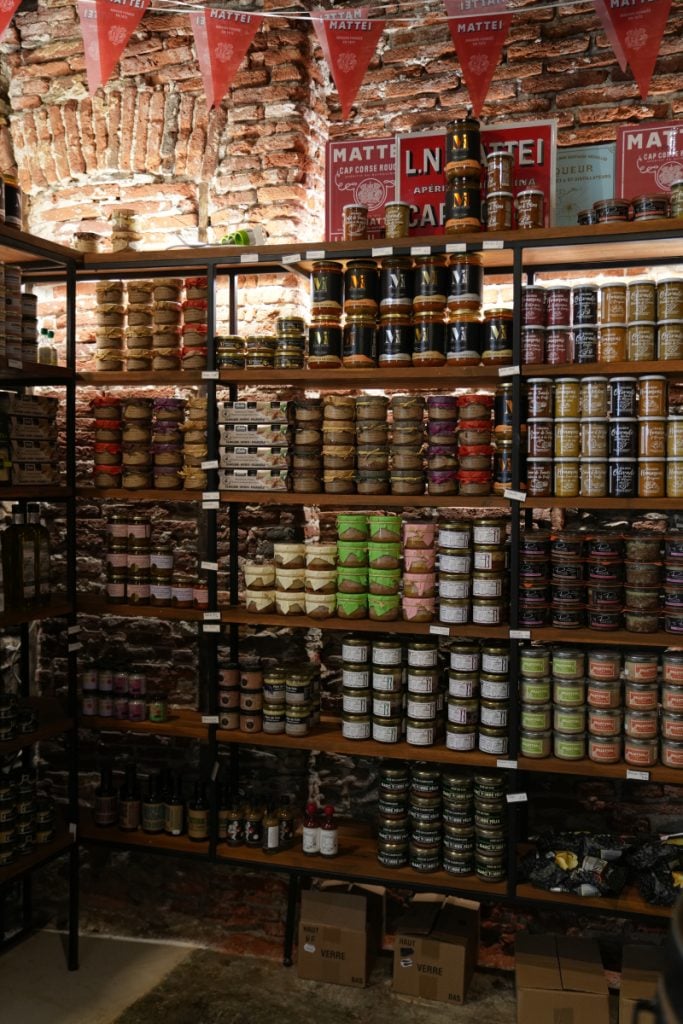
- Shop Local — Bastia is an excellent place to shop local, especially if you enjoy food, wine, and one-of-a-kind boutiques. The first is U Paese, a deli and wine shop for gourmet items. A Tinella, a cheese shop for all things Corsican cheese. For home and lifestyle, head to Boulevard Paoli and Rue César-Champinchi. For unique finds, stop in at Maison 123 and Leone Boutique.
L’Île Rousse
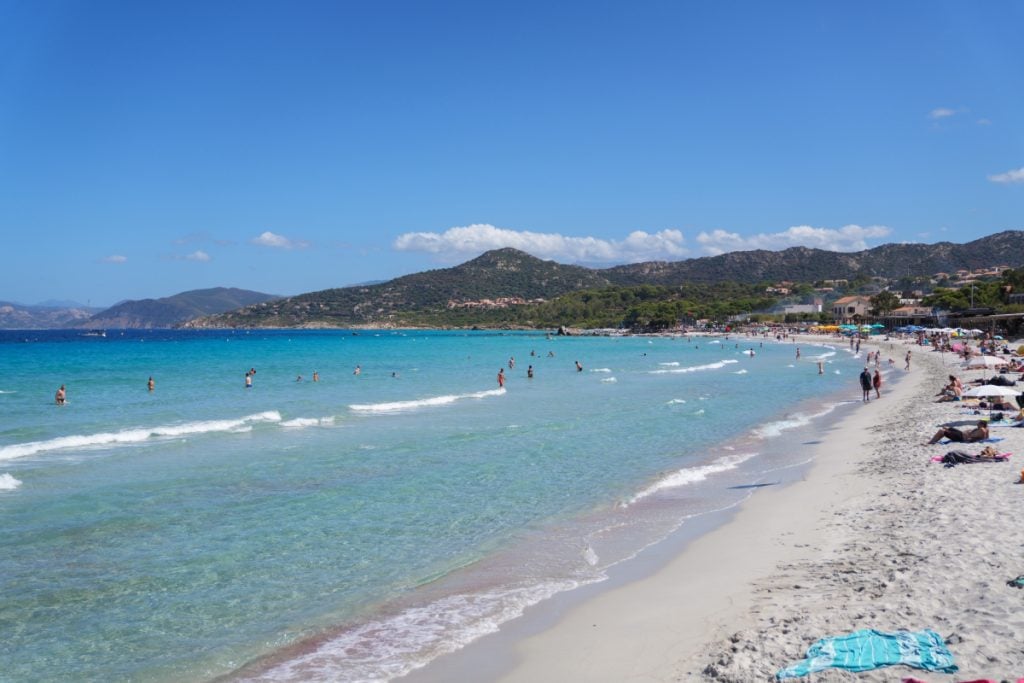
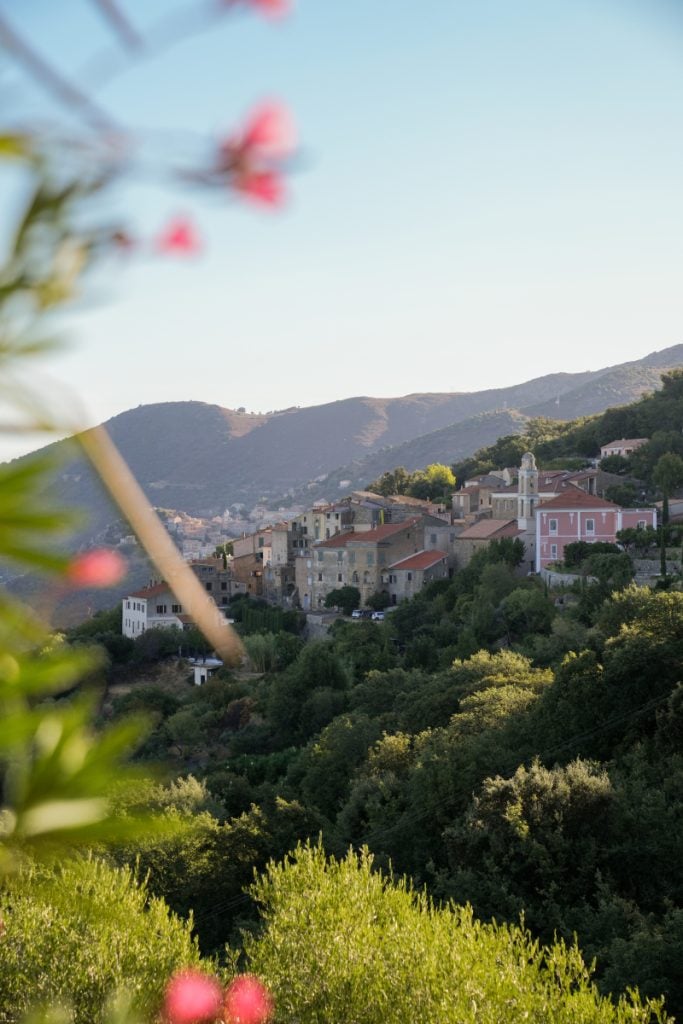
L’Île-Rousse was one of those gems I adored during our time in Corsica. It’s laid-back and part of the culturally rich Balagne region. We had nearly a week here with our family, beach hopping, exploring hilltop villages, and soaking in the views.
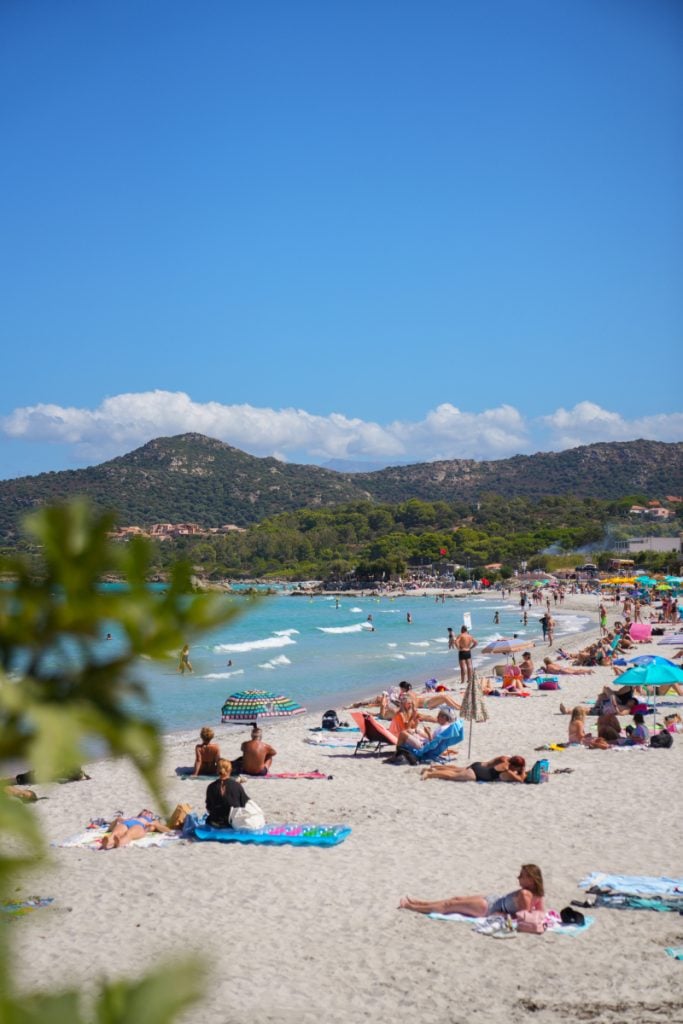
The beaches around L’Île-Rousse are some of the most accessible in northern Corsica, with several white-sand stretches and clear, turquoise water. The calm swimming makes this one of the most family-friendly beach areas on the island, outside of Porto-Vecchio in the south. From here, it’s easy to balance beach days with inland excursions into the Balagne, day trips west to Calvi, or ventures east to the Désert des Agriates.
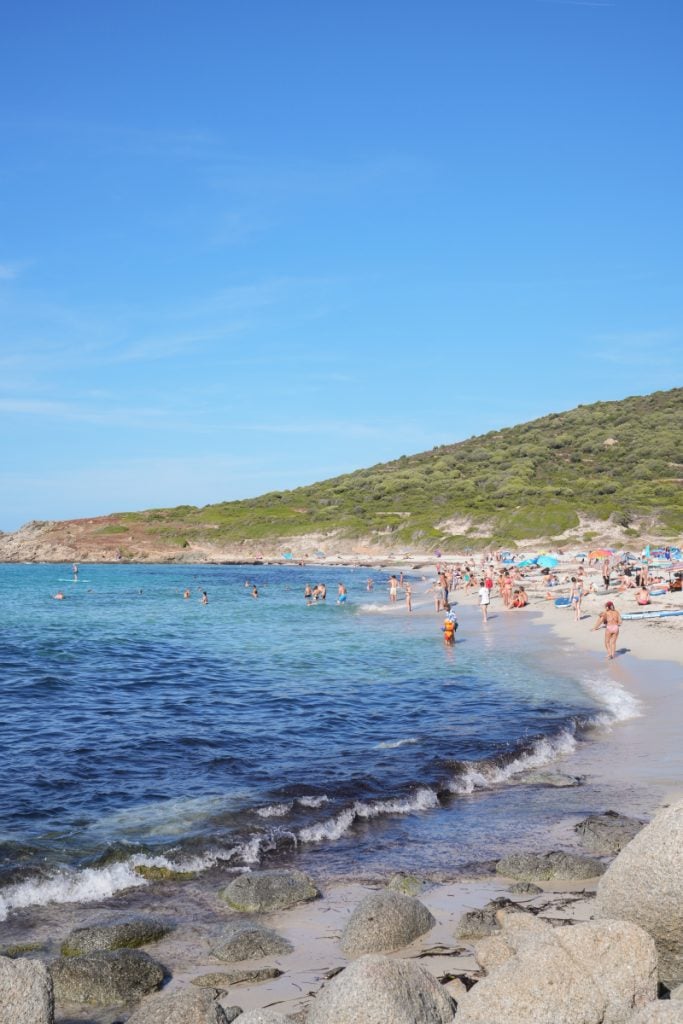
Favorite Things to Do in L’Île Rousse
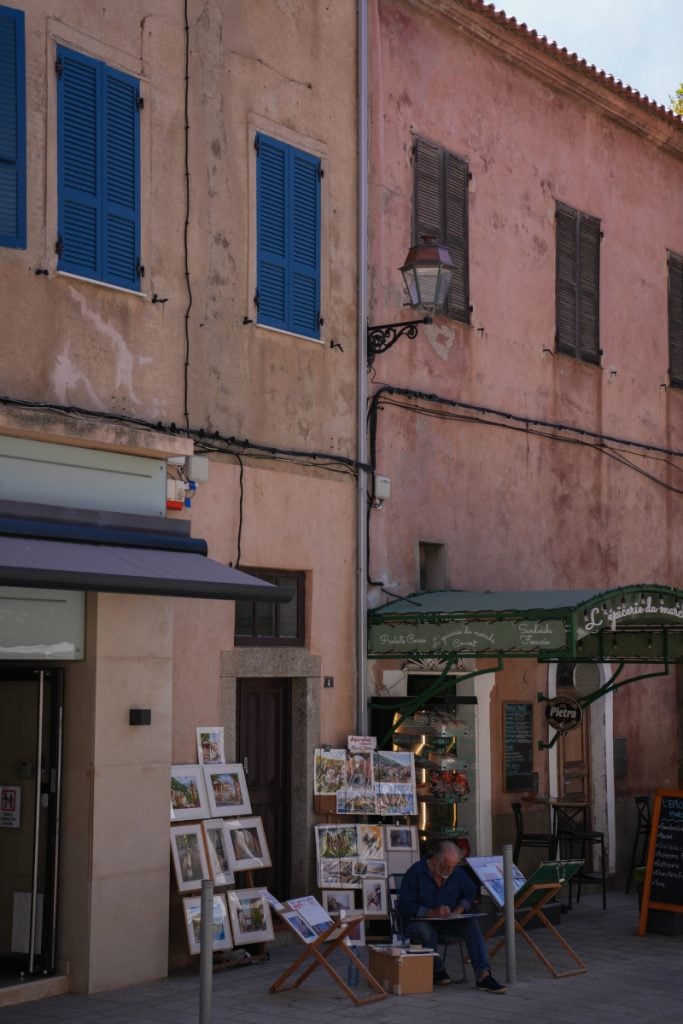
- Spend time in the Village of L’Île Rousse — The village itself is a charming historic coastal town with lots to do. Catch the morning market, called Mercatu Cupartu di L’Isula Rossa (the covered market), for local seafood and produce, and shop through the small streets. There are a handful of wonderful restaurants, like Restaurant U Spuntinu, L’Osteria, and Casa Corsa. While there, don’t miss Le Bon Café, an old-world coffee shop. And then stroll out to Île de la Pietra for stunning views back to the village.
- Spend a Day Roadtripping Through the Balagne Villages — One of the highlights of my time near L’Île Rousse was spending a day village hopping through La Balagne. La Balagne is made up of many ancient hilltop villages such as Sant’Antonino, Pigna, Corbara, Speloncato, and Montegrosso, most of which date back to the Middle Ages. These villages were traditionally built high above the coast for defense against pirate raids and invasions, with narrow stone streets, tightly clustered houses, and panoramic views of the sea and mountains. My favorites were Pigna and Speloncato, and the views from Sant’Antonino.
- Beach-Hop Down the Coast. This section of the coast, from the Desert Agriates to Calvi, has some splendid beaches. During our week here, our favorites were Plage d’Aregno, Plage de Bodri, Plage de Ghjunchitu, Plage de Lozari, and the locals’ favorite of Plage de Manghja Saccu.
- Eat and Relax at a Beach Club. L’Île-Rousse has a handful of beach club restaurants that feel genuinely chic rather than touristy. It’s an ideal place for a long, leisurely lunch by the water. The most popular are Le Matahari, La Licorne, and Restaurant Le Pain de Sucre. We had lunch at Restaurant Le Pain de Sucre and absolutely loved our beachfront meal.
Calvi
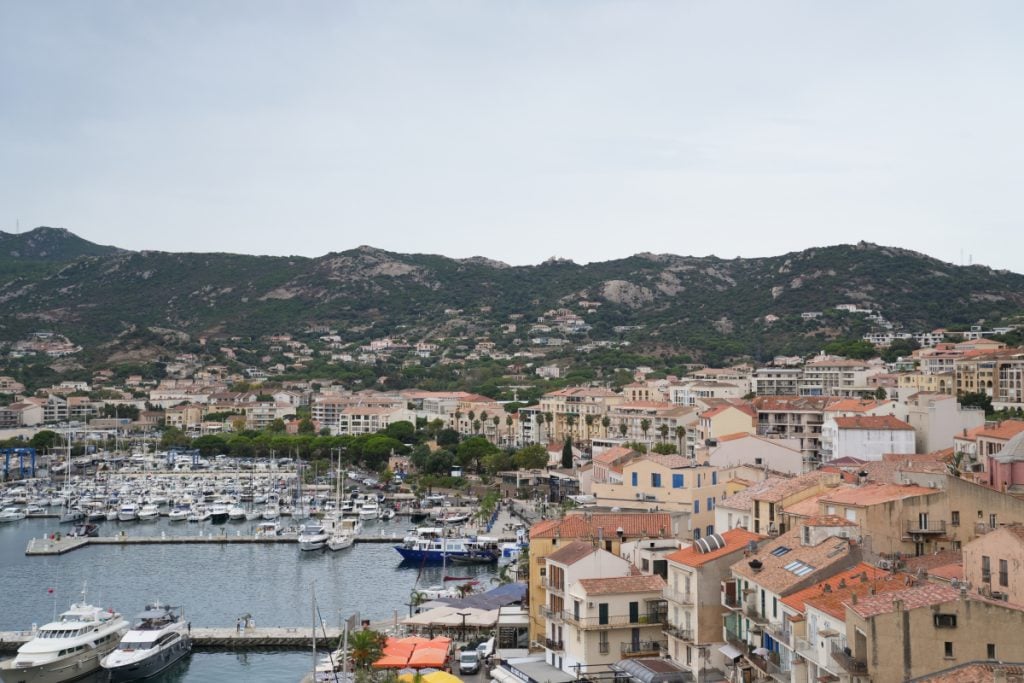
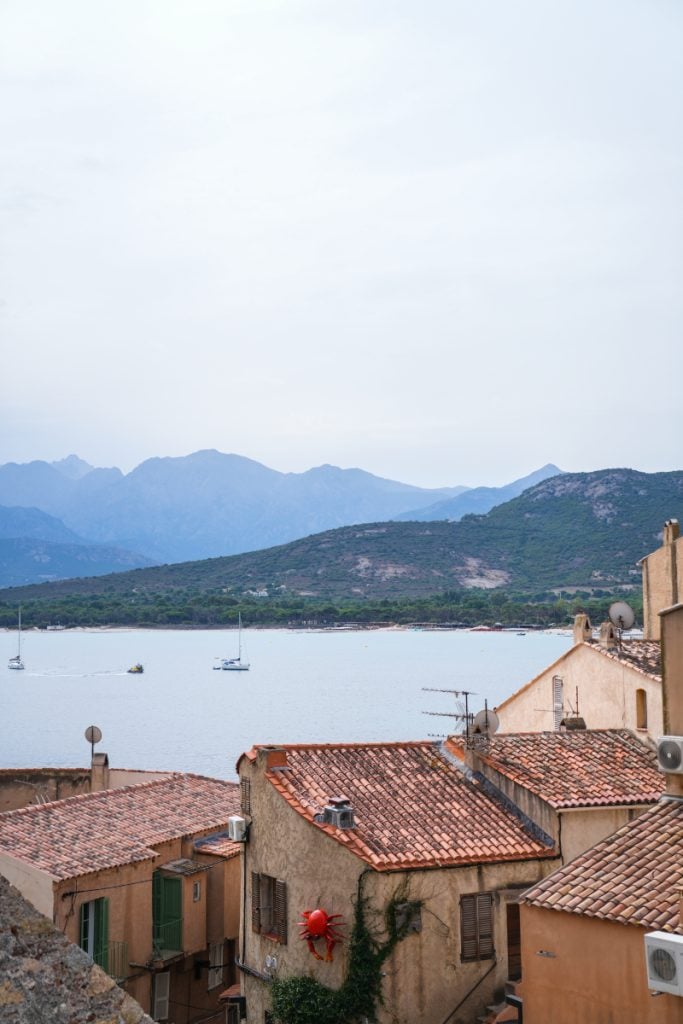
While I wouldn’t recommend basing yourself in Calvi, it’s one of those wonderful day trips, especially from L’Île-Rousse. The historic citadel offers some of the best views along the coast, and the town itself is well-suited to a relaxed morning or afternoon, ideally paired with a long lunch at one of the many wonderful restaurants.
Favorite Things to Do in Calvi
- Visit La Citadella di Calvi — Explore the iconic Genoese citadel towering above the town, with so many charming narrow streets to wander. There are a few highlights here, such as the MUDACC Museum, the Cathédrale Saint-Jean-Baptiste, and viewpoints along the coast.
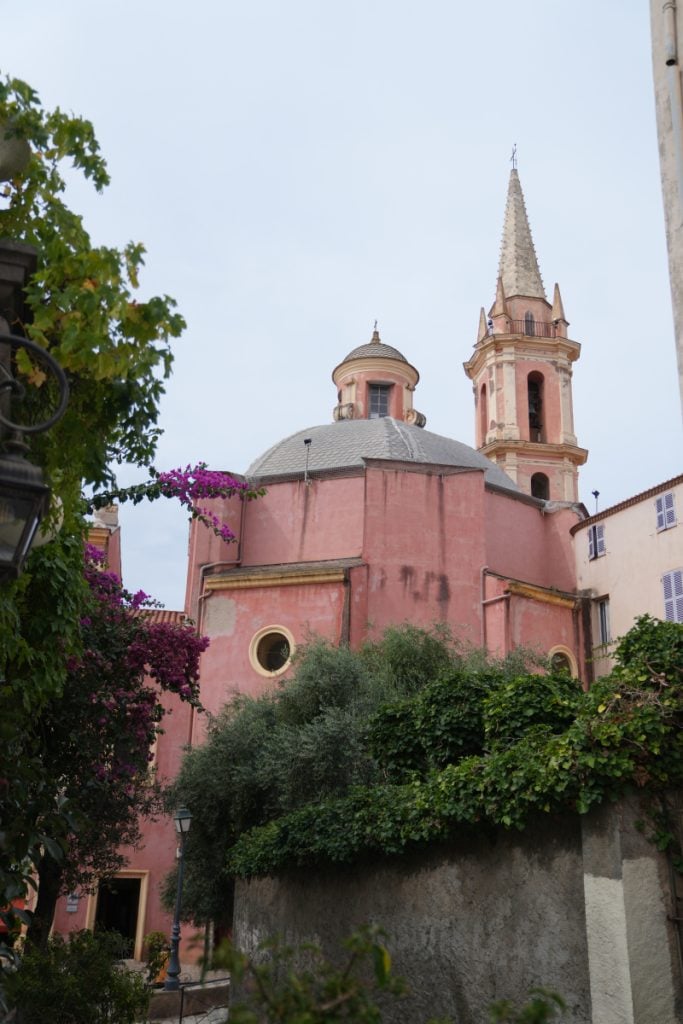
- Spend Time in Old Town Calvi — Just below the citadel of Calvi is the historic old town. It’s small, but the main roads of Rue Georges Clemenceau and Boulevard Wilson have most of the gems to see. There are dozens of stores and restaurants, so it’s a good spot to stroll and shop. While there, step into the pink-hued Église Sainte Marie Majeure, a gem of a visit. A few standout spots for food are La Bohème, A Casetta, A Piazzetta, BASTA BASTA, and Café Bel Ombra.
- Relax at Plage de Calvi — One benefit of time in Calvi is that you’re only a 10-minute walk to its main beach. While it’s not the most spectacular white sands of Corsica, it does offer a stunning view back to the citadel. It has dozens of beach clubs with restaurants, chairs, and parasols.
Porto
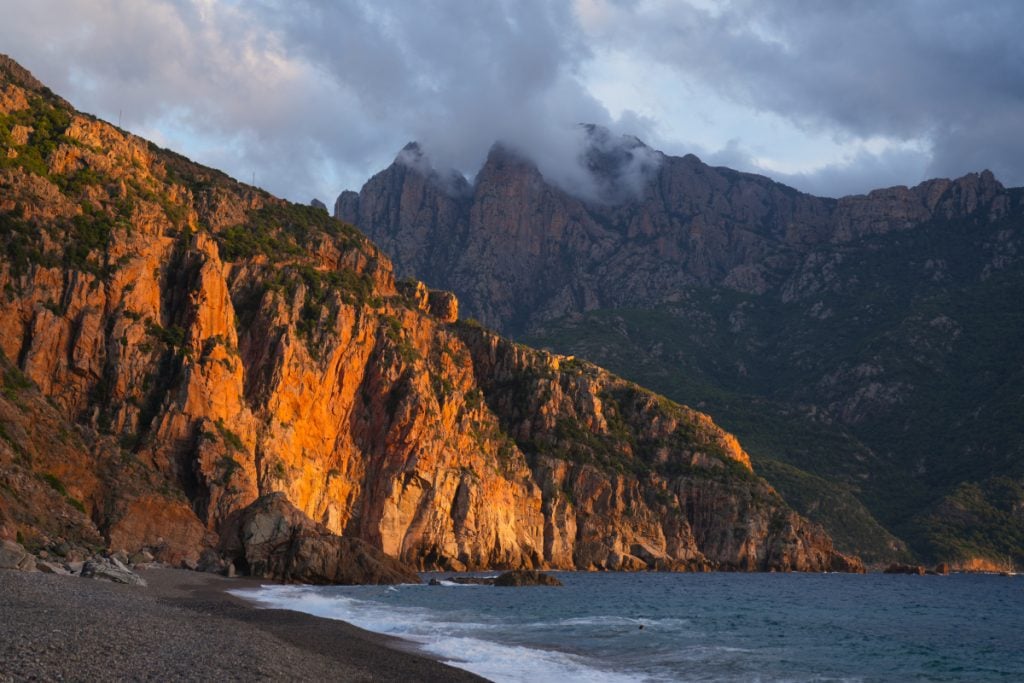
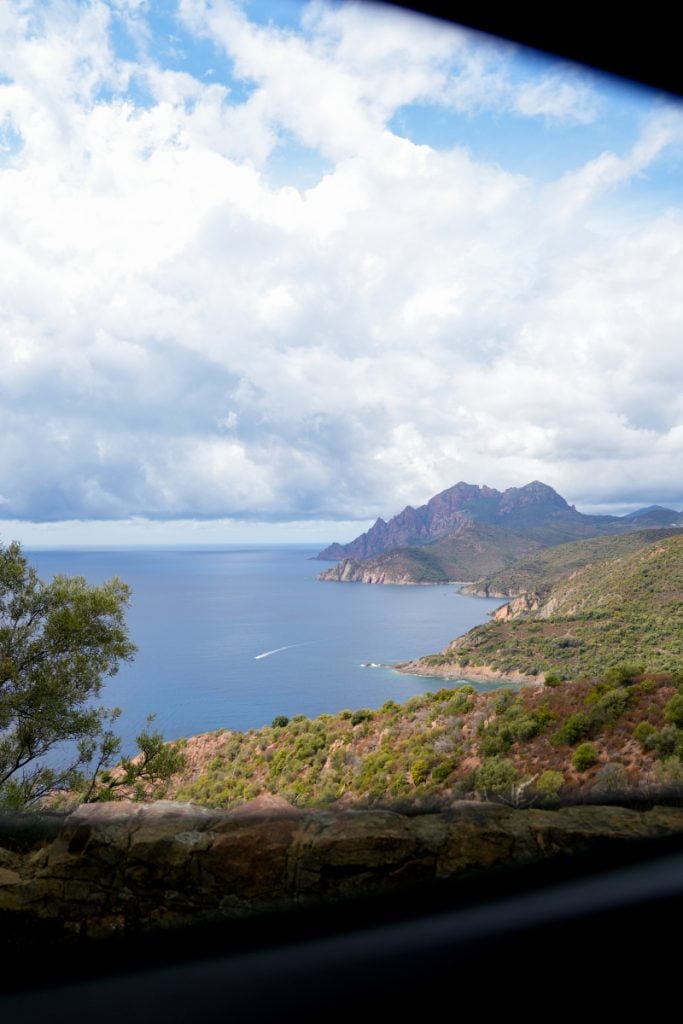
When I think about the most jaw-dropping landscapes in Corsica, my mind immediately goes to the coastline around Porto. On the island’s western side, about two hours south of Calvi, this region is home to the Scandola Nature Reserve (a UNESCO World Heritage Site) and the red cliffs of the Calanques de Piana. The coastline here is defined by sheer cliffs, volcanic rock, and dramatic elevation changes. Outside of the Dolomites, it’s the most grand nature I’ve experienced anywhere in Europe.
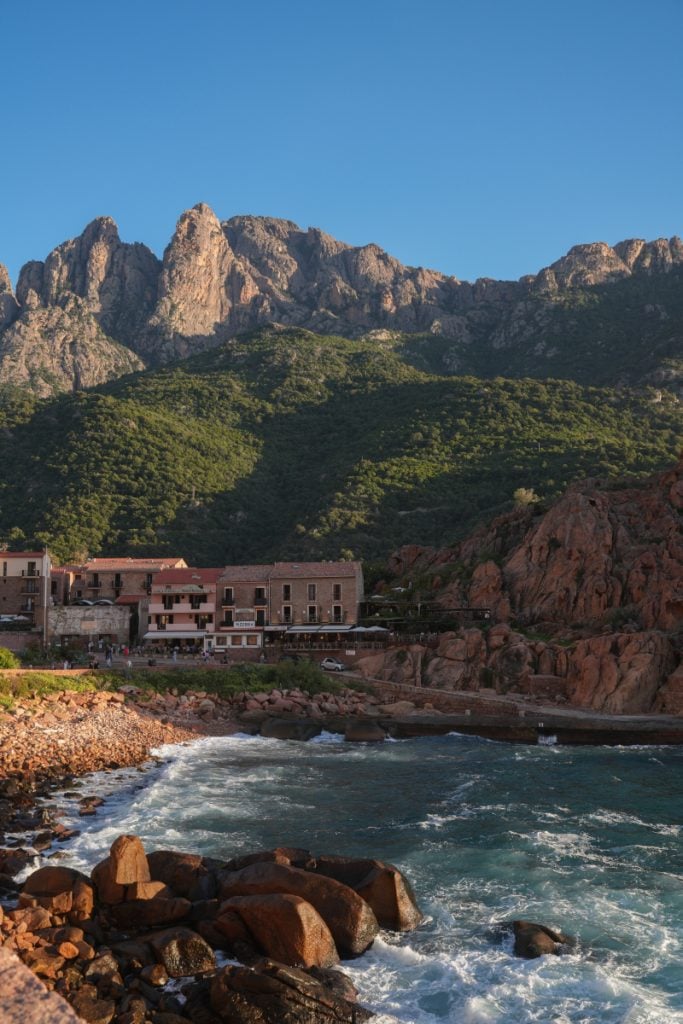
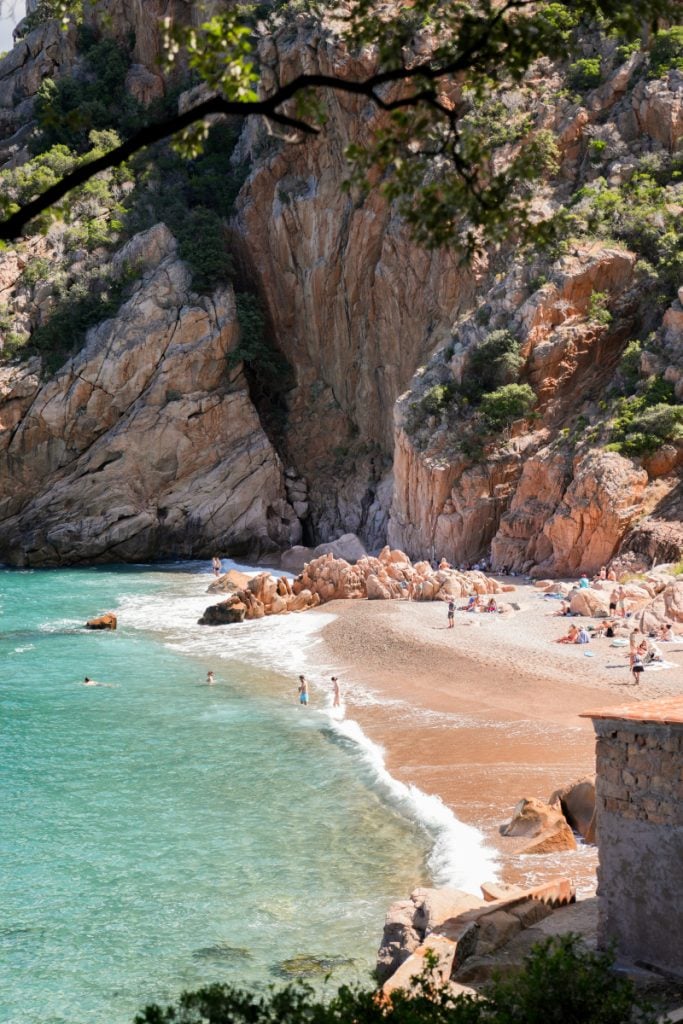
The scenery here is wild. The coastline is rugged and dramatic, with craggy peaks, hidden beaches, and all the adventure you could hope for. A few nights are helpful to fully explore the area, as the narrow road that hugs the mountains can often be slow-going.
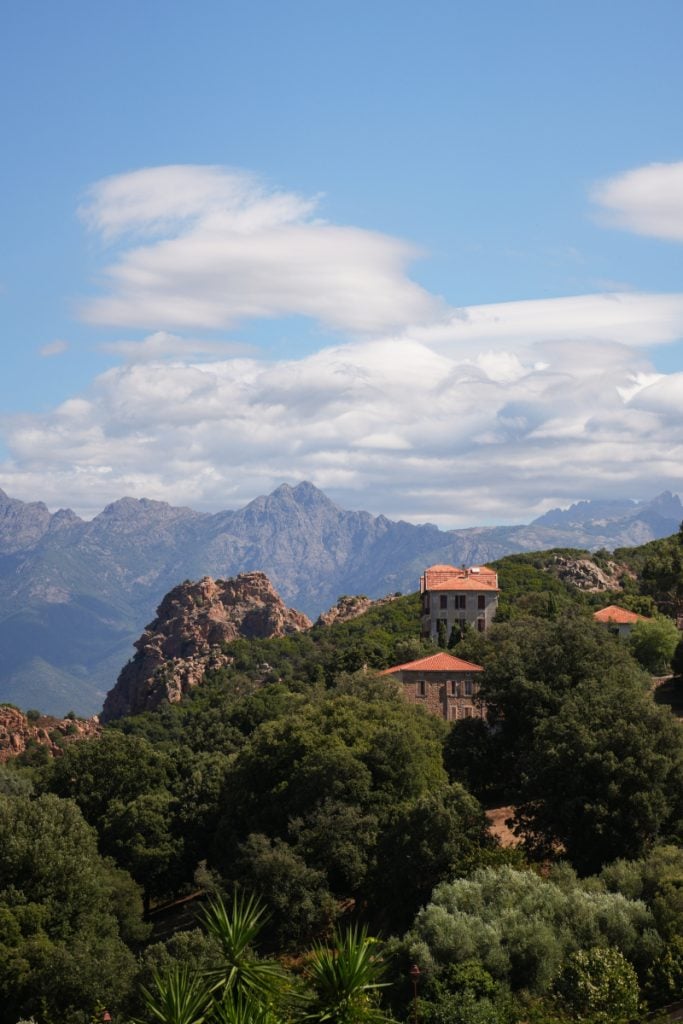
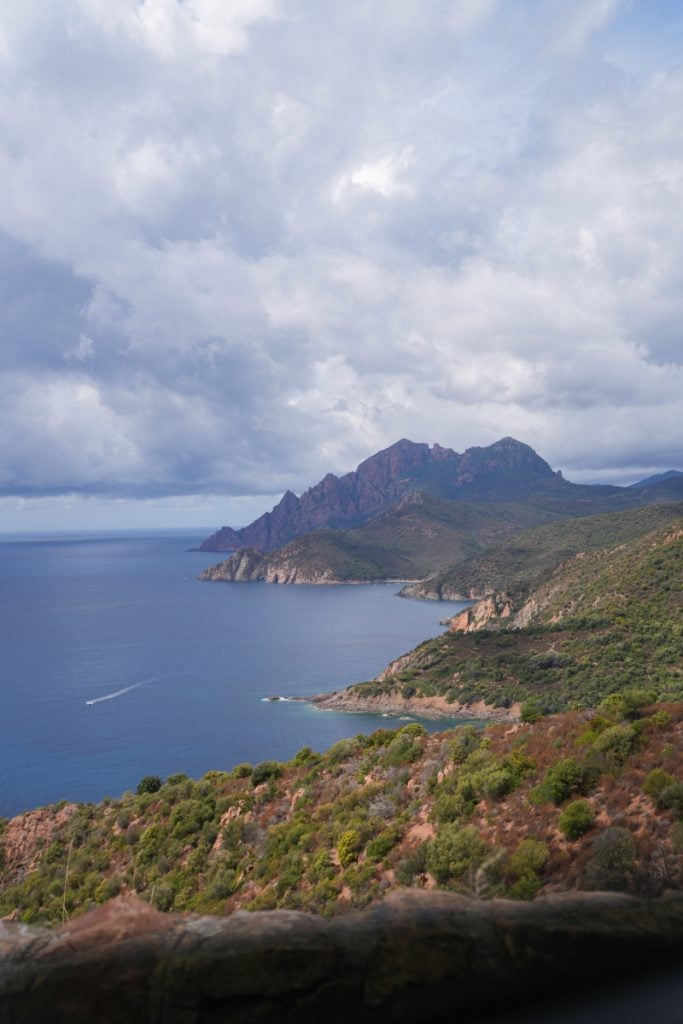
Favorite Things to Do in Porto
- Take a Boat Trip to the Scandola Nature Reserve — The main thing to do in this area is to visit the Scandola Reserve, which can only be done by boat, and all tours depart from the Porto Port. We had unfortunately high winds, so our tour was canceled and refunded, but I’d suggest booking this 4-hour tour that takes you down and up the coast to see the highlights of the reserve.
- Visit the Village of Piana — High on the coast, perched on the dramatic red granite cliffs of the calanques, is the village of Piana. It’s a wonderfully small village to visit with a few restaurants and shops to stop into.
- Have a Meal at Villa Rina — One of the most fantastic meals we had in Corsica, for both food and sea views, was at Villa Rina. Book far in advance at this restaurant and request a table by the edge for stunning views over Port de Porto. The food is fresh with amazing ingredients, and the team is lovely. Épicerie Castellani and Restaurant Chez Jeannette are other good spots for food, and don’t forget to see the Église de l’Assomption.
- See the Calanques de Piana — The main draw of this region is the Calanques de Piana, one of Corsica’s most iconic landscapes. Stretching between Piana and Porto, these dramatic red-rock formations rise above the Mediterranean and are best experienced by driving the D81, a winding coastal road carved through craggy peaks and sheer cliffs. It’s a narrow, high-altitude drive in places, so plan to take it slow — the views are worth it. There are several hiking trails here, from the short Sentier des Muletiers to longer routes that branch into the surrounding hills. Les Roches Bleues is also a great stop along the drive for a drink or a quick bite with a view.
- Spend time at Plage de Ficaghjola — One of our favorite beaches in this region was the secluded Plage de Ficaghjola. Reaching it requires a winding drive, paid parking, and a roughly 15-minute walk down the hill (wear good shoes), but the effort is rewarded with a beautiful, tucked-away cove. The waves here can be strong, so I wouldn’t recommend it for families with small children.
- Drive to Plage d’Arone — Further west along the coast, Plage d’Arone is a popular beach with calmer waters and a wider, sandy shoreline — a nice contrast to some of the more rugged coves nearby. There are a few beach restaurants here too, like the luxury Le café de la Plage or Restaurant Le Casabianca, and the easy-going L’onda Arone.
- Soak in the Views from Plage de Bussaghlia — One of our favorite sunset stops was Plage de Bussaghlia. The waves here are powerful, and the water isn’t swimmable, but the views at golden hour are incredible. It’s a pebble beach, so good shoes are a must. For a drink or a casual bite, Restaurant Mare Chiare is right there and perfectly placed for sunset.
- Swim in the Natural River Pools in Ota. If you head inland near the Gulf of Porto, you can drive towards the village of Ota. Along the way, the Spelunca Gorges are here, and there are several swimming holes to enjoy, like La Grotte Aux Serpents.
Corte
Corte is the place to experience Corsica beyond the coast, especially if you’re drawn to mountain landscapes and hiking. Set in the heart of the island, it’s surrounded by dramatic valleys and rugged peaks, with easy access to spectacular hikes in the Restonica and Tavignano gorges. I loved Corte as a contrast to the coast. It’s a base that feels quieter, more elemental, and connected to Corsica’s interior. Above the town, the hilltop citadel anchors its history as a center of Corsican culture and resistance and now houses the Corsica Museum, while the old town below winds through narrow streets lined with cafés and small shops.
Favorite Things to Do in Corte
- Visit the Citadel of Corte — Perched on a rocky promontory above town, the citadel is Corte’s defining landmark and once served as the stronghold of Corsican independence leaders. Today, it houses the Musée de la Corse (Corsica Museum), with immersive exhibits on Corsican identity, traditions, and history. From here, you can walk the ramparts for sweeping views over the Restonica and Tavignano river valleys, while the Belvédère de Corte offers the best vantage point back over the town itself.
- Go Hiking in the Nearby Region — Corte is a prime base for hiking in Corsica, surrounded by dramatic mountains, gorges, and rivers. The most famous trails are in the Restonica Valley, where paths lead to alpine lakes like Lac de Melo and Lac de Capitello, passing crystal-clear rivers and rugged cliffs. Nearby, the Tavignano Gorge offers slightly easier hikes along shaded riverbanks and natural swimming pools. For those seeking forested trails and panoramic viewpoints, the Corsican Regional Nature Park around Corte offers a network of marked routes that showcase chestnut forests, rocky peaks, and sweeping views of the town and valleys below.
Bonifacio
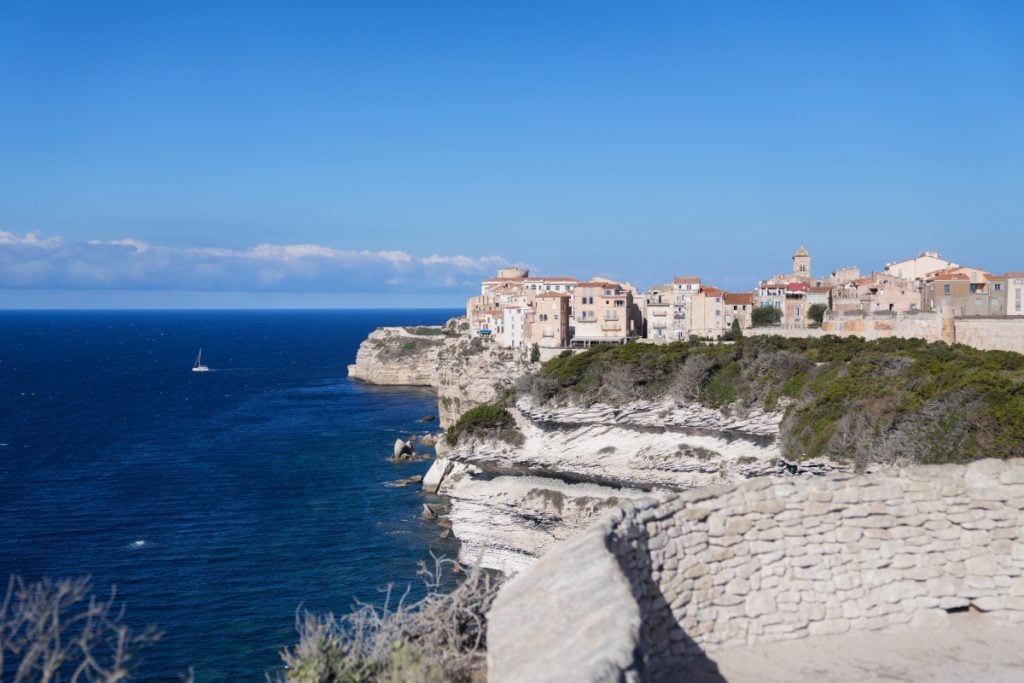
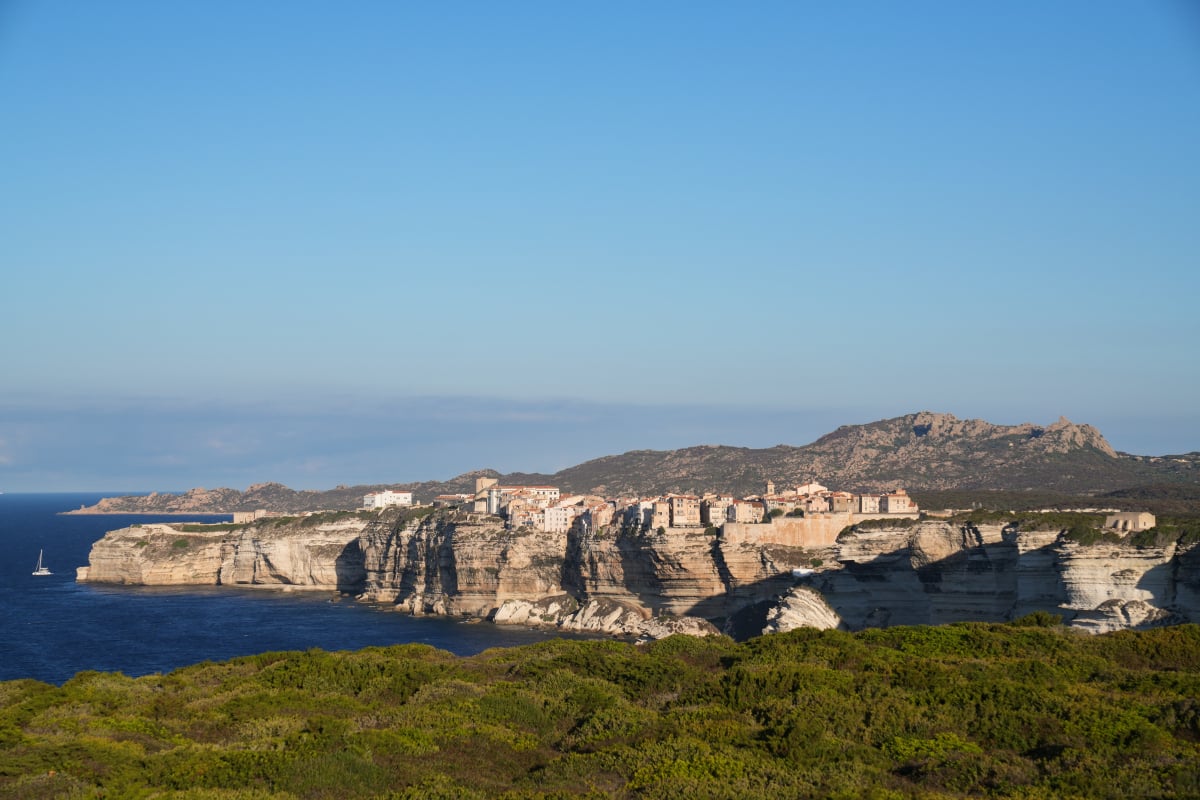
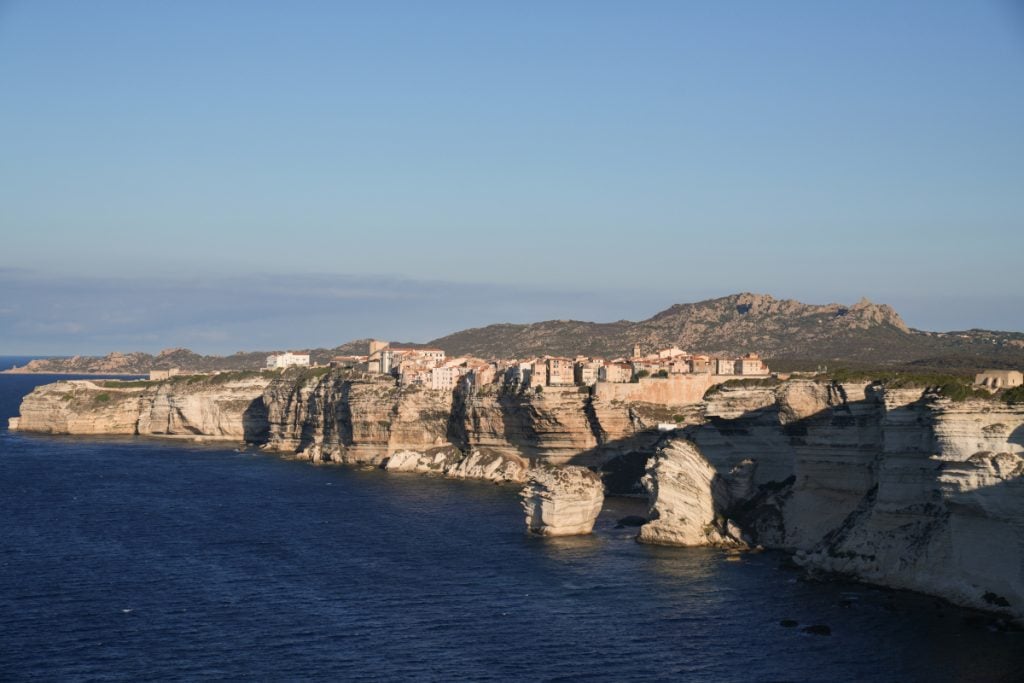
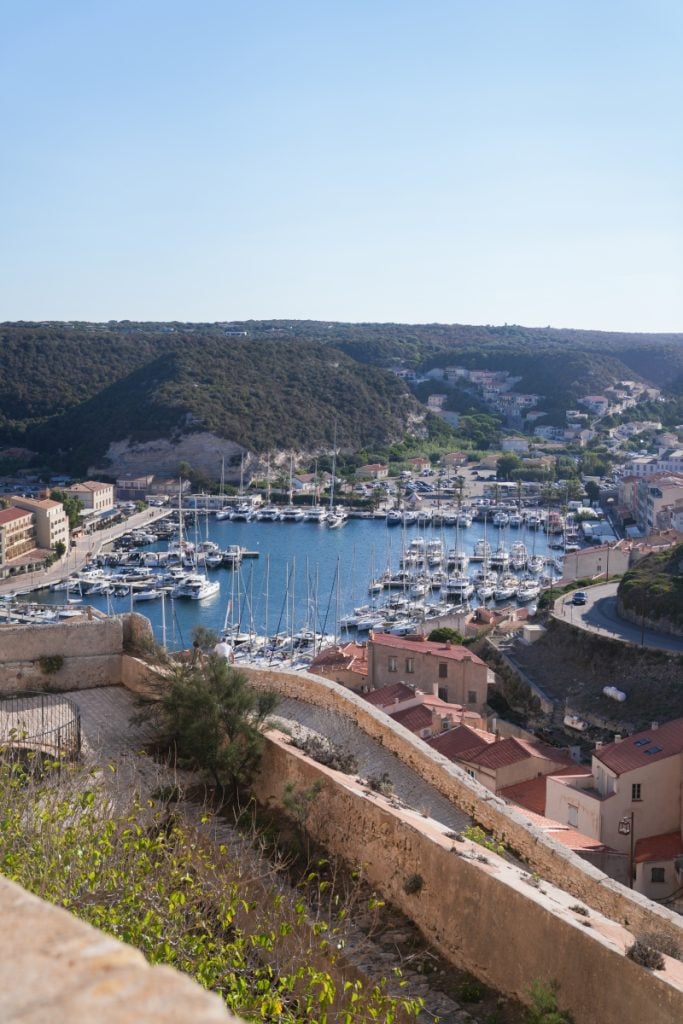
If I had to choose one historic citadel and town to visit in Corsica, it would be Bonifacio. Perched on white limestone cliffs at the island’s southern tip, it’s one of those places that genuinely takes your breath away. I loved Bonifacio so much that I made the trip twice from Porto-Vecchio — something I rarely do on a single trip.
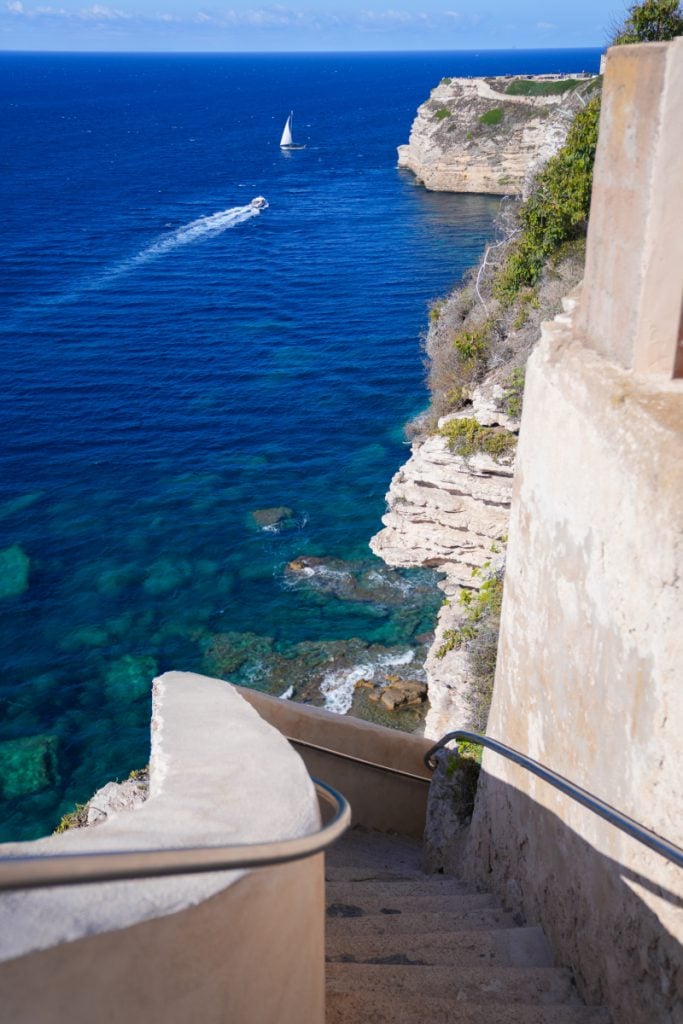
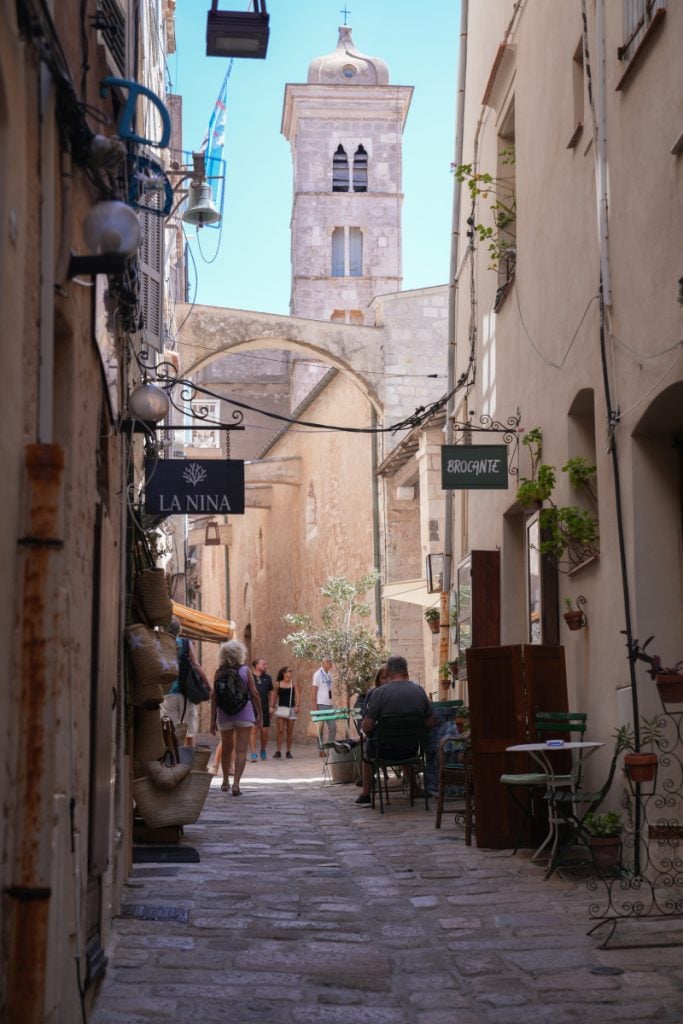
The Old Town is compact but full of life, with winding alleys, excellent restaurants, and small shops tucked into the stone. Standing along the cliff’s edge, with the sea stretching out below, is one of those moments that stays with you long after you leave.
Favorite Things to Do in Bonifacio
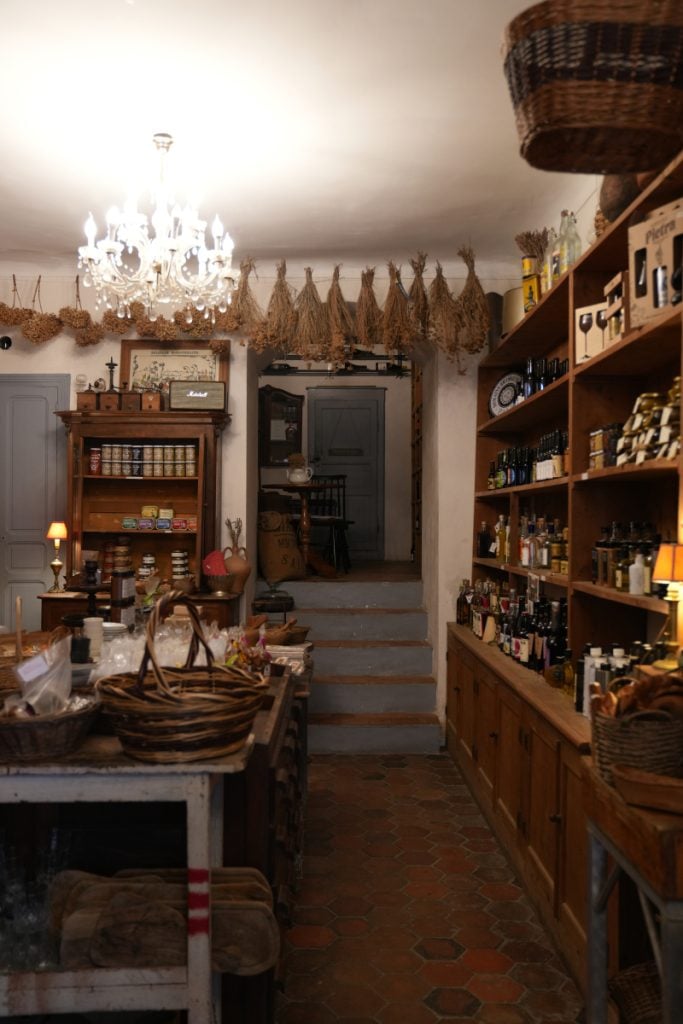
- Visit the Old Town of Bonifacio — The Old Town of Bonifacio, set high on the hill, is the main draw to this area. The fortified city is home to several charming streets lined with historic sights, shops, and restaurants. Pass through Porte de Gênes, make your way to Église Sainte Marie Majeure, and spot the small Chiesa di San Giovanni Battista. While here, have an authentic Corsican lunch at either Restaurant Lan’k, L’Archivolto, or Casarella.
- See the White Cliffs of the Coast — If you walk out to the “Réserve naturelle des Bouches de Bonifacio,” you’ll have incredible views down the coastline that look back into Bonifacio. You’ll be able to see the white limestone cliffs that shape and define this part of Corsica.
- Climb the Escalier du Roy d’Aragon — The steep, narrow staircase takes you down the edge of the cliffs. For a small fee, you’ll enter wearing a helmet and climb the incredibly steep stairs down to the ocean’s edge along the limestone for views.
- See the Cimetière Marin de Bonifacio — One of the most beautiful cemeteries in the Med, this is one that dates back to the 13th century and is a serene site that many visitors walk through.
- Visit the Lavezzi Islands — Just off the coast of Bonifacio are the famous Lavezzi Islands with several coves and snorkeling areas. The best way to get there is on a group tour, like this half-day small group tour, this catamaran trip, or this guided tour.
- Go Beach Hopping — There are some wonderful beaches under 30 minutes from Bonifacio to visit. Some of the most popular are Plage de Saint Antoine, Plage du petit Sperone, and Plage de Piantarella.
Porto-Vecchio
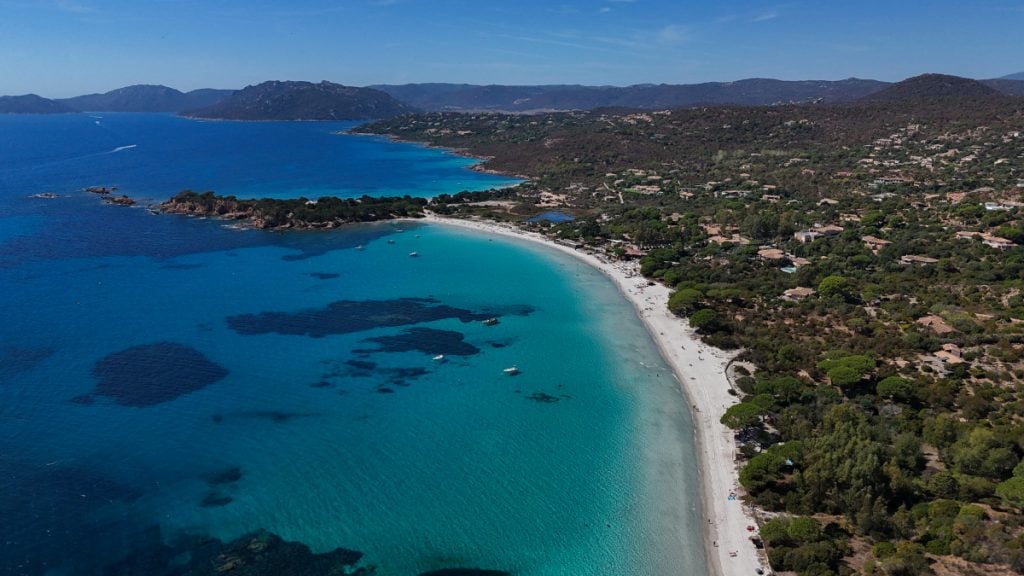
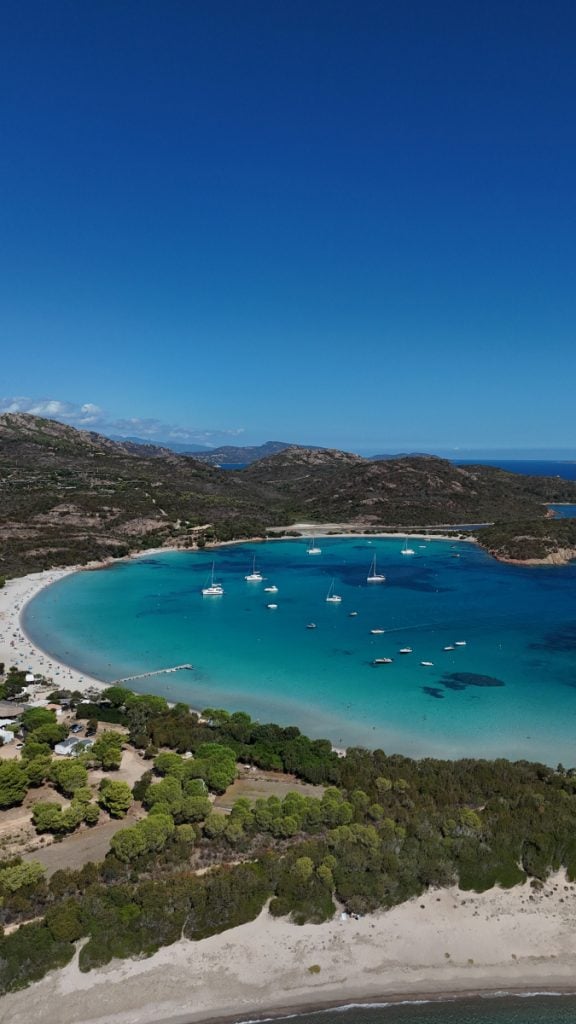
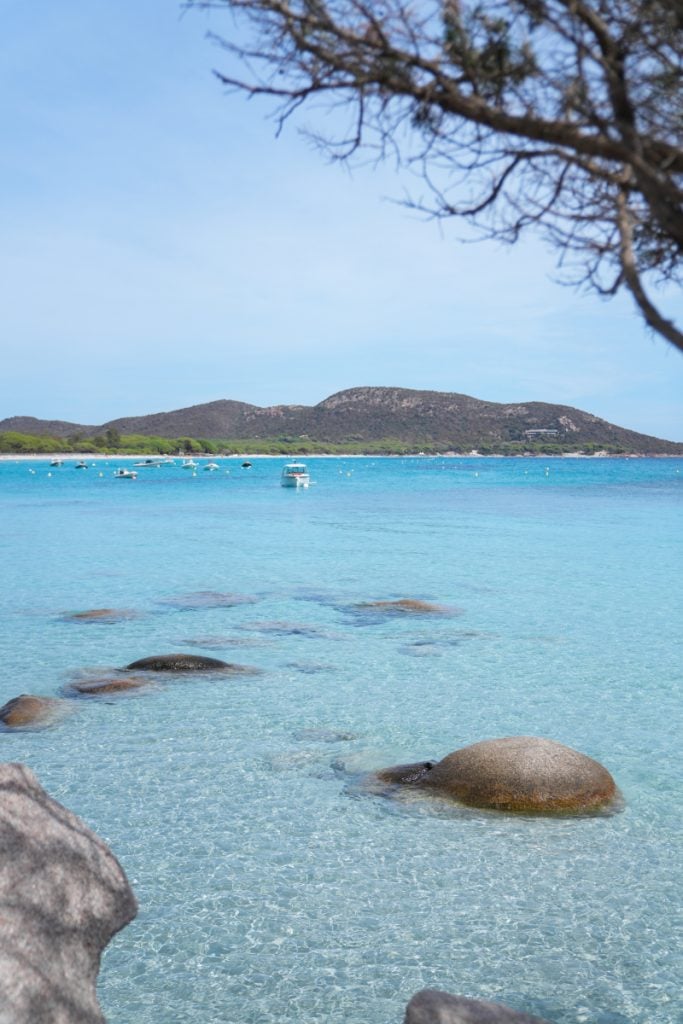
We spent over a week based in Porto-Vecchio near Santa Giulia Beach, and I absolutely loved being in this part of Corsica. The flat, sandy beaches nearby are some of the best in the region. They’re lively and easy to access, with calm, turquoise water that made the whole week feel like a vacation.
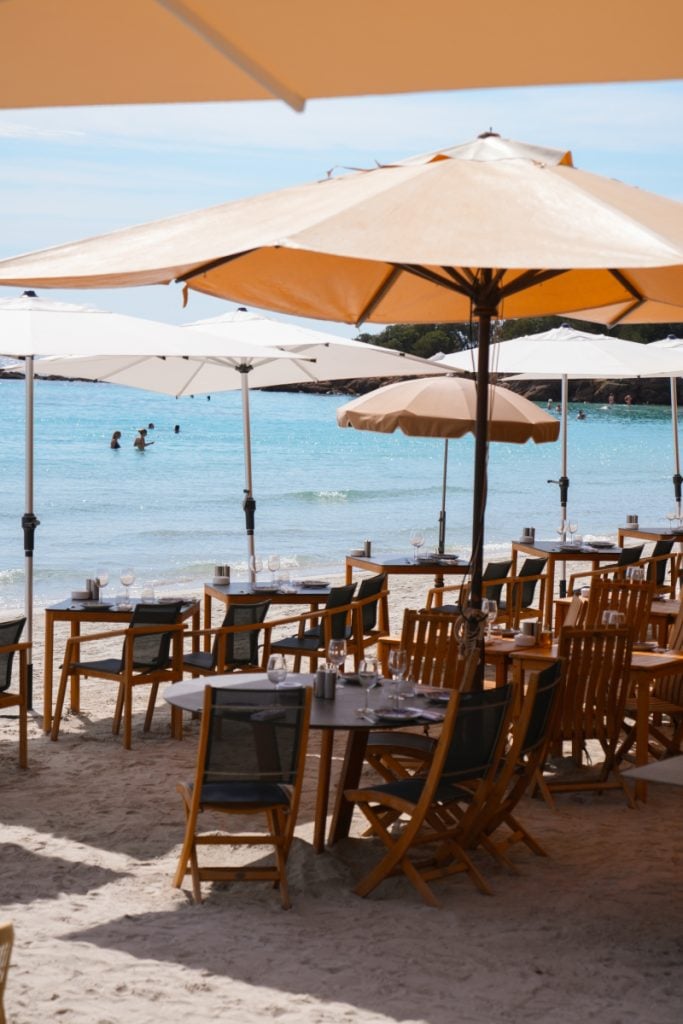
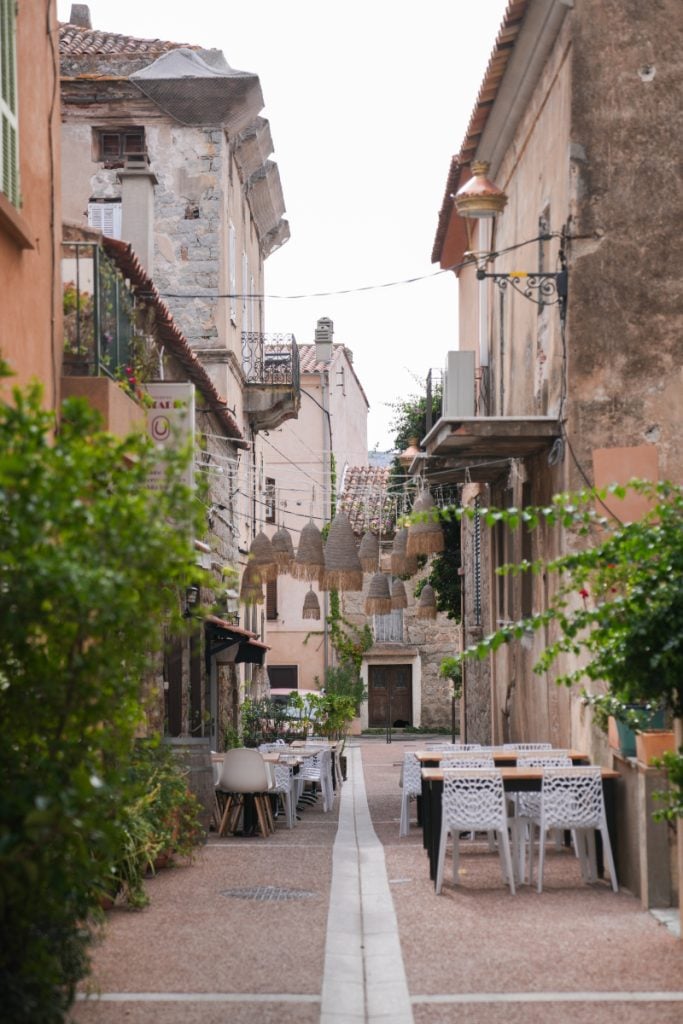
Beyond the beaches, Porto-Vecchio offers a more polished side of the island, with chic, luxury hotels and restaurants, and easy access to Bonifacio just down the coast. Good for a stroll and a meal, the small old town is a welcome change of pace from the beaches.
Favorite Things to Do in Porto-Vecchio
- Visit the Old Town of Porto-Vecchio — I’d recommend spending a morning and a meal in the historic town of Porto-Vecchio. It has wonderful views of the sea, and the charming streets are home to many shops and restaurants. If you can catch the weekly farmers’ market as well, this is a wonderful experience!
- Enjoy the Beaches of Palombaggia — For me, the best beaches near Porto-Vecchio were Palombaggia. The sand is powdery and soft, and the water is clear and stunning. It’s a wonderful stretch of beach, and you can walk over to the hidden Plage de Tamaricciu.
- Do Water Sports at Plage de Santa Giulia — If you’re looking to rent kayaks, paddleboards, and other fun water activities, head to Plage de Santa Giulia. It’s a great beach as well, but the spot to do all the water activities.
- Enjoy a Beach Club Restaurant — There are some very chic beachfront restaurants where you can dine with your toes in the sand. My favorite of the trip was at Tamaricciu. You’ll want a reservation, but this upscale spot is such a gem, and the grilled seafood was delicious.
- Visit Plage de Rondinara — Further down the coast, closer to Bonifacio, there is Plage de Rondinara, a near-perfect crescent beach. It’s stunning, and well worth the effort to get here.
- Go Wine Tasting — Between Bonifacio and Porto-Vecchio is the wine house, Domaine Zuria. You can stop in for wine tastings here; the setting is gorgeous in their modern building facing the vineyards.
Save This Post for Later on Pinterest
PS — Are You Booking a Trip Soon? Use My Booking Checklist!
These are the sites I use most to book my own trips. Using the links below is a great way to support Bon Traveler’s travel journalism at no extra cost to you. If you need help organizing your itinerary, get my free travel itinerary template here.
1. Book Your Accommodations
I use Booking.com for hotels and Airbnb for vacation rentals. They have the biggest inventory and consistently offer the best rates.
2. Book Your Rental Car
Self-driving is the best way to explore most destinations. I use Discover Cars for our rental cars, select full coverage insurance, and opt for a reputable company like Alamo, Hertz, or Sixt.
3. Book Your Tours & Experiences
I use Viator, Airbnb, and Get Your Guide to find the best tours and experiences. They are my favorite tour search engines. I always check all three as their inventory varies depending on the destination.
4. Book Your Private Transfers
For easy, reliable private transfers, I use Welcome Pickups. It’s my go-to for arranging a driver in advance — whether it’s an airport pickup, a hotel-to-hotel transfer, or a day trip. The experience is seamless, with English-speaking drivers and upfront pricing, so you can travel stress-free at every stage of your trip.
5. Get Cell Data for Your Trip
I use Holafly for international cell data. Their unlimited data eSIMs are easy to install, activate instantly on arrival, and let you skip local SIM cards and expensive roaming fees.
6. Don’t Forget Travel Insurance
I never leave the country without travel insurance. It provides comprehensive protection in case anything goes wrong (ie. illness, injury, theft, or cancellations).
My favorite companies that offer the best coverage and rates are:
- World Nomads (best for all-around)
- Safety Wing (best for frequent travelers)
Xx,
Jessica