

It was on my fourth trip to Lisbon that I realized how I couldn’t get enough of Portugal’s capital city. Lisbon is for the art-lover, the foodie, the historian, and those who want to be near the sea. If you’re planning a trip, this 3-day Lisbon itinerary is the ultimate guide for visiting.
Lisbon, with its sun-drenched streets and timeless charm, is a city that captivates you from the moment you arrive. Perched on the edge of the Atlantic, this storied capital effortlessly blends old-world allure with a really fun modern spirit. I love that you can walk under ancient tiles, and then pop into a unique concept store in the same moment.


Its pastel-colored buildings, cobbled alleyways, and iconic tiled facades drawback to the Moorish and maritime past. All while a burgeoning art scene, avant-garde restaurants, and sleek design boutiques propel the city forward. What I love about Lisbon is that tradition and innovation aren’t at odds; they coexist in an effortless and utterly unique way.


On my most recent trip this last year during my 10-day itinerary through Portugal, I was reminded again why this city is a top place to visit in Europe. From the historic maze of Alfama to the vibrant nightlife of Bairro Alto and the cosmopolitan elegance of Baixa, Lisbon has a bit of everything.
Lisbon is the perfect playground to spend a long weekend break. This itinerary represents the best of all of my trips over the years broken down into three days. While I’ll always vote for more time, three days will give you a lovely introduction to this Portuguese city.
Short on Time? Here is the Ultimate 3-Day Lisbon Itinerary:
Where to Stay
I look more to Bairro Alto, Baixa, and Chiado to base myself. If I were to pick my top three hotels to stay in Lisbon they would be:
- Memmo Alfama, for the best Alfama hotel
- Baixa House, for the best Baixa hotel
- The Lumiares Hotel & Spa, for the best Bairro Alto hotel
Day 1: Neighborhood Stroll + Food Market
- Morning: A Classic Stroll from Chiado, Baixa into Alfama
- Afternoon: Alfama and Beyond
- Dinner: Time Out Market
Day 2: Belém, History, & Food
- Morning: Belém – A Step Back into Portugal’s Golden Age
- Afternoon: Lx Factory to Lisbon’s Tile Heritage
- Evening: Dinner at A Cevicheria
Day 3: Sintra + Lisbon Highlights
- Morning: Day Trip to Sintra
- Afternoon: Lisbon Leftovers (ideas below)
- Evening: A Memorable Meal (ideas below)
Things to Do
- “Best-of” Lisbon Small Group Walking Tour
- Undiscovered Lisbon Food and Wine Tour
- Take a Day Trip to Sinta
Helpful Lisbon Guides to Plan Your Trip
For everything you need to know about visiting Lisbon, don’t miss my first timer’s guide to Lisbon, my guide on where to stay in Lisbon for first-timers, my guide to the best things to do, and my ultimate Lisbon restaurant guide! If you’re looking to venture beyond the city, check out my 10-day Portugal itinerary and travel guides to Alentejo, Comporta, Évora, and Monsaraz!
The Ultimate 3-Day Lisbon Itinerary
Things to Know Before Deciding on Your Itinerary for Lisbon

How Much Time is Enough for Lisbon?
Over my 4 separate trips to Lisbon, I have never felt like I’ve fully seen the city even over a four or five-day trip. And that’s just the thing — on any trip to Lisbon, you’ll always leave something for next time. With three days in Lisbon, I think you can get a great taste of the Portuguese capital.
It will allow for seeing the major sights, trying a handful of restaurants, and possibly fitting in a nearby day trip. Now if you have more time, don’t hesitate to add in a few more days in Lisbon. There is always something to do!
Getting Around Lisbon
The beauty of Lisbon is it is a compact city to visit. The downside? Some major hills are full of cobblestone (and quite slippery when it is raining). I love that you can walk everywhere in Lisbon if you choose to — nothing is really all that far.
Your other choice is to utilize Uber, one of the cheapest and most convenient ways to get around. I use Uber all the time in Lisbon, especially in the evenings when going to restaurants. It is also a convenient way to get across town for anything too long for a walk. Some places are just a bit out of reach or more of a head ache by public transport, so don’t shy away from an Uber.
The final way to get around Lisbon is by using its public transport system. You’ll see those brightly colored trams going up and down the hills. While some use them for actual transport, they’ve become more of a “tourist ride,” similar to the trollies in San Francisco on a few lines.
There are buses you can use, and their rail system is great for doing day trips. My tip is to download Google Maps and use the maps to calculate your best route by either foot, bus, or Uber.

Getting to Lisbon from the Airport
My preference for arrival in Lisbon is always to just take an Uber. It’s quite cost-effective, and the door-to-door service is convenient after a day of travel. I’ll call one on arrival and go straight to my hotel.
By Public Transport
To get from Lisbon Airport (Humberto Delgado Airport) to the city center, you have several options. The metro is an affordable choice, with a ticket costing around €1.50–€2.00 and a journey time of about 20–30 minutes. The metro station is directly accessible from the airport, where you can take the Linha Vermelha (Red Line) towards São Sebastião, and transfer to other lines depending on your destination. Trains run every 6–9 minutes.
Alternatively, you can take the Aerobus, a dedicated shuttle service that connects the airport to key areas like Avenida da Liberdade and Cais do Sodré. The Aerobus costs around €4.00–€6.00 and takes approximately 20–30 minutes, with buses running every 20 minutes.
By Direct Transfer
If you prefer a more direct route, a taxi is available just outside the terminal and typically costs between €15–€20, with the journey taking around 15–30 minutes, depending on traffic. For those looking for a more flexible option, ridesharing services like Uber are available for about €10–€20 and take around 15–30 minutes to reach the city center.
Time of Year to Visit
The beauty of visiting a city is that you can nearly visit year-long. Lisbon is one of those places, and when you go depends on what things you’d like to experience. Summers in Lisbon are hot and crowded, but that means you’ll be able to enjoy activities like beaches and swimming.
My preferred time of year is early to mid spring, and the early to late fall. Over my many trips to Lisbon over the years, I’ve enjoyed the city in both the rain and sunshine.
You Need to Book Certain Things in Advance
Lisbon, with its growing popularity, means better restaurants and popular sights are booked out in advance. My recommendation is to make a few reservations in advance before arrival. If not, there will always be restaurants to dine at, though it may not be your first choice.
Where to Stay in Lisbon

I have an entire guide on where to stay in Lisbon for first-timers that breaks down where to stay. Over my last several trips to Lisbon, I found myself deciding where to stay based on the hotel choice, though typically I prefer to stay in the Bairro Alto.
I do love the charm of the historical Alfama neighborhood, but I find it is further away from the majority of the things I like to do in the city. So for that reason, I look more to Bairro Alto, Baixa, and Chiado to base myself.
My Top Picks for the Best Hotels in Lisbon
If I were to pick my top three hotels to stay in Lisbon they would be:
- Memmo Alfama, for the best Alfama hotel
- Baixa House, for the best Baixa hotel
- The Lumiares Hotel & Spa, for the best Bairro Alto hotel
Quick Neighborhood Descriptions & Hotel Recommendations
Chiado
A blend of elegance and creativity, Chiado is Lisbon’s cultural heart, with historic cafes, bookstores, and modern boutiques. It’s the perfect spot for art lovers, offering a mix of old-world charm and contemporary flair.
- Verride Palacio Santa Catarina ($$$)
- The Ivens ($$$)
- Lisboa Pessoa Hotel ($$)
- Le Consulat ($$)
Bairro Alto
Lisbon’s nightlife epicenter, Bairro Alto comes alive after dark with lively bars, Fado music, and a bohemian energy. By day, its narrow streets offer quiet charm and stunning city views.
- The Lumiares Hotel & Spa ($$)
- Palácio Ludovice ($$)
- Bairro Alto Hotel ($$$)
- Monte Belvedere Hotel by Shiadu ($)
Alfama
Lisbon’s oldest neighborhood, Alfama is a maze of narrow alleys, historic buildings, and Fado-filled streets. It’s where the city’s soul lives, rich in history and offering breathtaking views over the river.
- Memmo Alfama ($$)
- The Lisboans Apartments ($$)
- Santiago de Alfama ($$$)
- Hotel Convento do Salvador ($)
Baixa
The grand, neoclassical center of Lisbon, Baixa is known for its wide boulevards, stately squares, and elegant architecture. It’s the city’s vibrant, cosmopolitan hub, where history meets modern life.
- Baixa House ($$)
- AlmaLusa Baixa/Chiado ($$)
- Pousada de Lisboa ($$)
- Hotel da Baixa ($$)
Editor’s Note: How I Structured This Itinerary
I always share a bit about how I like to travel. I am not an “I need to do it all” traveler. I’m more interested in savoring fewer things than satiating in it all. So I’m happy to cut my time down in places like museums and optimize more for walking neighborhoods and indulging in authentic local experiences.
- Day 1: Neighborhood Stroll and Food Market
- Day 2: Belém, History, and Food
- Day 3: Sintra Day Trip and Lisbon Highlights
Day 1: Neighborhood Stroll and Food Market
Morning: A Classic Stroll from Chiado, Baixa into Alfama

Start your journey in the heart of Baixa, Lisbon’s grand, neoclassical district that serves as the city’s vibrant hub. Begin at Praça do Comércio, one of the most iconic squares in Lisbon, where you can take in the Tagus River and admire the imposing Arco da Rua Augusta that marks the gateway to the Baixa district.
This area is full of majestic buildings, elegant arcades, and cafes so it’s a good spot to begin any adventure. You could stroll further into Baixa and Chiado for shops like A Vida Portuguesa for all things made in Portugal, great souvenirs, and gifts to bring home. Another two favorites are Cerâmicas na Linha and Livraria Bertrand – Chiado for books.


One other classic experience is coffee at A Brasileira, one of the oldest coffee shops in Lisbon. Fábrica Coffee Roasters is another good modern spot for coffee or SO Coffee Roasters.
Travel Tip: Walking tours are a wonderful way to get acquainted with a new city. I’ve curated the top three options for the city: this “best-of” Lisbon small group tour, affordable “unmissable” tour of Lisbon, and this small group walking tour recommended by a friend.
Afternoon: Alfama and Beyond

Next, head to the historic Alfama district, Lisbon’s oldest and most atmospheric neighborhood. Wander its labyrinthine alleys, past colorful houses, hidden courtyards, and traditional Fado music wafting from open windows. Alfama’s cobbled streets lead you through centuries of history, with landmarks like Sé Cathedral and Miradouro de Santa Luzia offering incredible photo opportunities.
After your stroll through Alfama, head to Graça 77 for an easy-going lunch. I love the design here and it’s a good spot for a quiet bite before continuing.


In the afternoon, make your way to the Castelo de São Jorge (St. George’s Castle), one of the most iconic landmarks in Lisbon. Perched atop one of the city’s highest hills, this medieval fortress offers stunning panoramic views of the city, the Tagus River, and beyond.
Dinner: Time Out Market
One of my favorite spots for a first dinner out in Lisbon is Time Out Market. The Market is one of Lisbon’s most vibrant food halls, bringing together the best of the city’s culinary scene under one roof. Located in the Cais do Sodré district, in a former warehouse, the market has offerings from some of Lisbon’s top chefs, renowned restaurants, and local food artisans.
You can pretty much get anything here, so I recommend going for a stroll and seeing what looks good to you. You’ll find everything from pastéis de nata and bacalhau (salted cod) to more contemporary dishes like sushi, tapas, and inventive vegan fare.
Day 2: Belém, History, and Food
Morning: Belém – A Step Back into Portugal’s Golden Age


Start your day by heading to the Belém district, one of Lisbon’s most iconic areas. The views along the Tagus River waterfront here are amazing. Begin with a visit to the Torre de Belém (Belém Tower), a 16th-century fortress that once guarded the entrance to the city’s harbor. This UNESCO World Heritage site is a stunning example of Manueline architecture, with intricate maritime motifs and decorative stonework.


Just a short walk away, you’ll find the Mosteiro dos Jerónimos (Jerónimos Monastery), another UNESCO World Heritage site that symbolizes the wealth and power of Portugal’s maritime empire. The monastery is an architectural masterpiece, with its stunning cloisters and elaborate façade, designed in the same Manueline style as the Belém Tower.

Inside, you’ll find the tomb of Vasco da Gama, one of Portugal’s most celebrated explorers, adding a historical dimension to this breathtaking site. You’ll want to pre-book tickets as the monastery gets a lot of visitors.

Before leaving Belém, make sure to stop at the Pastéis de Belém bakery, home to the famous pastéis de nata (Portuguese custard tarts) right next to the monastery. This legendary spot has been serving these war, pastries since 1837, and there’s no better place to enjoy them fresh from the oven. Pair your sweet treat with a strong Portuguese coffee; I love adding cinnamon and powdered sugar to mine!
Travel Tip: Lisbon is a culinary destination. If you want to explore more of its food, I would hop on this highly-rated food tour. It includes 7 tastings at 5 restaurants where you’ll get a great overview of Portuguese cuisine.
Afternoon: Lx Factory to Lisbon’s Tile Heritage

Since you’re on this side of town, I would stop into the Lx Factory neighborhood. In the Alcântara district, LX Factory was once a thriving manufacturing center, housing everything from textiles to printing presses. Today, old warehouses have been transformed into galleries, restaurants, studios, and shops.

Some favorite places are Landeau Chocolate for chocolate, the boutique book store called Ler Devagar, and Therapist LxFactory, which is a concept store. If I had to pick one restaurant here to eat, it would be 1300 Taberna for traditional cuisine with a modern twist.


After time at Lx Factory, I would grab an Uber over to the Museu Nacional do Azulejo (National Tile Museum), located in the historic Madre de Deus Convent. The Museu Nacional do Azulejo is dedicated to the stunning art of Portuguese tiles, or azulejos, which have adorned buildings across the country for centuries. The museum showcases a vast collection of tiles, from the earliest examples in the 15th century to contemporary designs.
Evening: Dinner at A Cevicheria


For dinner, head to A Cevicheria, one of Lisbon’s most innovative and talked-about seafood restaurants. Located in the Príncipe Real neighborhood, A Cevicheria is renowned for its creative takes on ceviche, I’ve eaten here every single trip to Lisbon it is so good!
Day 3: Sintra and Lisbon Highlights
Morning: Day Trip to Sintra

You have probably seen the most popular day trip from Lisbon is Sintra. It’s an easy place to get to by either public transport or hopping on a tour. I’ll give a breakdown of how I think it is best to visit if self-exploring, and then a few tour recommendations.
Getting to Sintra (On Own)
To get to Sintra from Lisbon by train, head to Rossio Station in central Lisbon, where you can catch a direct train to Sintra Station. The journey takes about 40 minutes, with trains running every 20–30 minutes. Once you arrive at Sintra Station, it’s a short walk to the town center, or you can take a bus or taxi to reach the popular attractions as I recommend below. Train tickets are affordable, usually around €2.25 one-way.

Hop on A Tour
I think visiting Sintra can be overwhelming in terms of the number of things to do, so the beauty of joining is a tour that will condense the experience. I have done a few tours over the years, and have self-explored. I’m including a few highly rated half-day tours that cover the major hits of Sintra:
- Private half-day tour to Sintra including Pena Palace, the historical center of Sintra, and Quinta da Regaleira (Hotel pick-up included)
- Small Group tour to Sintra including Pena Palace (best tour for least amount of time)
- Custom Private Half-Day Tour (best tour for customizing where you go in Sintra with guide)
Self-Exploring Sintra
If you’re self-exploring Sintra, my suggestion is to get an early start. Take the train to Sintra and take a taxi directly up to Pena Palace which is the top of the hill and then work back down from there. Keep in mind that Pena Palace has two sections to visit, both the gardens and the interior, which require separate tickets. Don’t miss the outer walls of the palace, which have some of the best views!

From there, walk down into Sintra and do the Moorish Castle (Castelo dos Mouros). The Moorish Castle is a medieval fortress perched high on a hill. Built by the Moors in the 8th or 9th century, the castle was strategically located to protect the region from invaders and to oversee the surrounding area. The castle’s ruins, with their iconic stone walls and watchtowers, wind through a lush forested area that you can walk today.

After the Moorish Castle, consider getting a bite to eat in Sintra. There are a handful of good restaurants like Incomum and Tascantiga.
Afternoon: Lisbon Leftovers


You probably won’t get back to Lisbon until around 2 or 3 pm by the time you return from Sintra. So this afternoon I would save whatever you haven’t done yet or want to revisit. I find that even a slow-going afternoon stocking up on souvenirs followed by a cocktail with a view is lovely.
A Few Ideas from my Never-Ending Must-Do List in Lisbon:
- Get a coffee at local favorite, Copenhagen Coffee Lab & Bakery
- Visit the Museum of Art, Architecture and Technology (MAAT)
- Stroll the Casa-Museu Medeiros e Almeida
- Ride the 28 Tram
- Climb to the top of the Panteão Nacional
- Get drinks at The V Rooftop Bar
Evening: A Memorable Meal
Let me introduce you to Portugal’s most iconic and celebrated chef — Chef José Avillez. I’ve had the pleasure of experiencing several of his restaurants over the years, returning to his restaurant Mini Bar 4 separate times. He has several in Lisbon, and I would end your time at one of them — my choice is Bairro de Avillez. Here are some picks from his collection:
- Belcanto (2 Michelin Stars) — With two Michelin stars, Belcanto offers a sophisticated tasting menu that blends traditional flavors with avant-garde techniques. The intimate atmosphere and exceptional service make it a top destination for food lovers.
- Bairro do Avillez — Bairro do Avillez brings together several distinct spaces, each showcasing a different aspect of Portuguese cuisine, from the traditional to the contemporary. The restaurant offers everything from petiscos (small bites) to more elaborate dishes in a relaxed, urban setting.
- Cantinho do Avillez — With locations in Chiado and Parque das Nações, Cantinho do Avillez offers a more informal setting compared to Belcanto but still features José Avillez’s signature twist on classic Portuguese dishes.
- Pizzaria Lisboa — A casual venture by José Avillez, Pizzaria Lisboa brings a touch of Italy to Lisbon with its refined approach to pizza. Located in the Avenida da Liberdade area, this pizzeria offers artisanal pizzas made with high-quality ingredients, but still with a nod to Avillez’s culinary creativity.
- Mini Bar — Mini Bar is a trendy and playful restaurant that showcases José Avillez’s love for the avant-garde. The menu offers a variety of small, tapas-style dishes designed for sharing, with an emphasis on creativity, presentation, and bold flavors. (Note: I have eaten here on every trip to Lisbon. On my most recent, I cannot say I was impressed by the quality anymore. It may have been an off night, but worth noting.)
Best Day Trips from Lisbon
If you have more time to spend or are interested in other possible day trips from Lisbon, I have a few ideas. Over the trips I’ve done several, so I’m going to recommend my top choices depending on what you’d like to experience. I’ve also included some tour options which are a very convenient way for doing some of these.
Cascais: For No-Car Needed Beach Time

Cascais is Lisbon’s closest beach town. It’s an easy spot to escape for a day by the sea, in one of the most charming towns in Portugal. Cascais has a rich history, once serving as a small fishing village before becoming a royal retreat in the 19th century. The town gained prominence when King Luís I of Portugal made it his summer residence, transforming it into an elegant resort for European aristocracy.
You’ll find a lot of this old-world charm in its architecture today, which makes it a beautiful town with incredible sea views. The popular Praia da Rainha and Praia do Guincho beaches are favorites for both sunbathers and surfers. Guincho Beach, in particular, is known for its strong winds and waves, making it a hotspot for water sports.
The town itself has a handful of good restaurants, some local shops, and cafes. Cascais is really the spot to go to if the weather is good and you can have some time on its beaches.
Getting to Cascais
The most popular option is to take the train from Cais do Sodré Station in central Lisbon. Trains run frequently, typically every 20-30 minutes, and the journey takes around 40 minutes. The train route follows the scenic coastline, where you’ll have views of the Atlantic Ocean as you approach Cascais.
Cascais Tour Options
If you’re looking for a tour that includes time in Cascais, many tours couple it with day trips to Sintra and the western seaboard. This full-day tour private tour includes time in Cascais, or you could hop on this small-group half-day tour that visits only Cascais.
Évora: For a UNESCO World Heritage Town

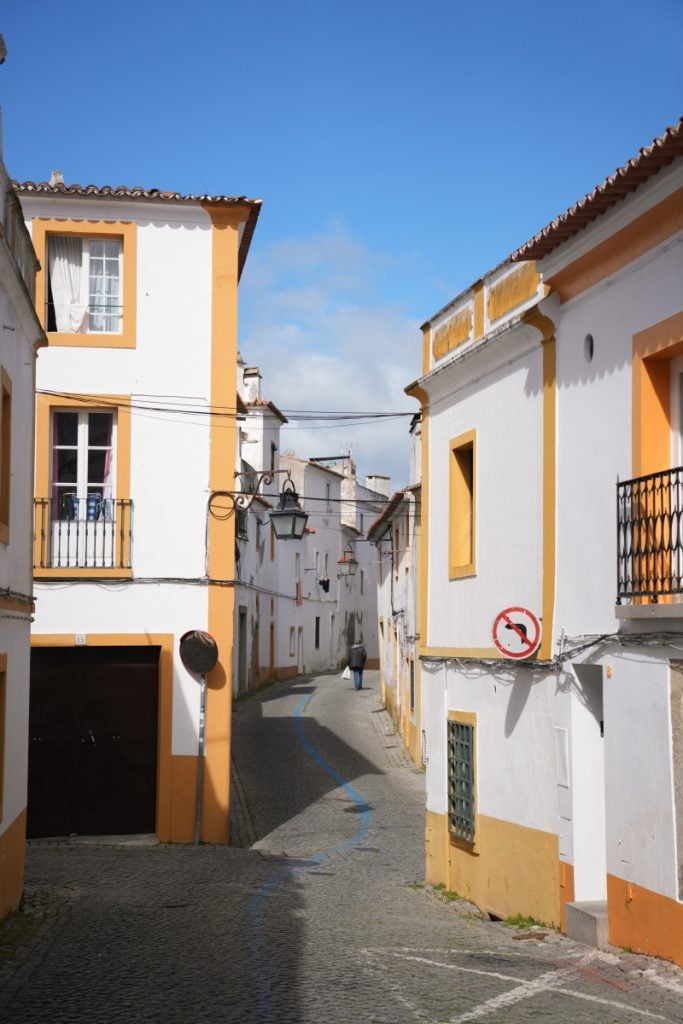
Évora is a captivating historical city in the Alentejo region of southern Portugal, known for its well-preserved Roman, medieval, and Renaissance heritage. This UNESCO World Heritage site offers a fascinating glimpse into Portugal’s past, with its narrow cobbled streets, ancient monuments, and rich cultural traditions.
I had the chance to spend three days in Évora and adored it. It can be visited as a day trip by train with an early start, which is why I suggest it. The town has lots to see from historic sites to great restaurants, and more. I would also consider renting a car and spending time in the region for the day.
Getting to Évora
You can take a train from Lisbon’s Sete Rios Station (the main station for trains heading to the south) to Évora Station. The journey takes about 1.5 to 2 hours, with trains running regularly throughout the day. Alternatively, you can take a bus from Lisbon’s Terminal Rodoviário de Sete Rios or Praça de Espanha, taking 1.5 hours.
I’m going to make a case for renting a car for the day as it takes about 1.25 hours to drive. You could explore Évora for a half-day and then go visit nearby wineries as well.
Rental Car Tip: We use Discover Cars for our rental cars in Europe, choose full coverage insurance, and opt for trusted companies like Alamo, Hertz, or Sixt.
Évora Tour Options
If you’d like to hop on a tour to Évora, this full-day private tour from Lisbon is a great option, as is this small group full-day tour.
Comporta: For A Car Day Trip to Sprawling Coastlines
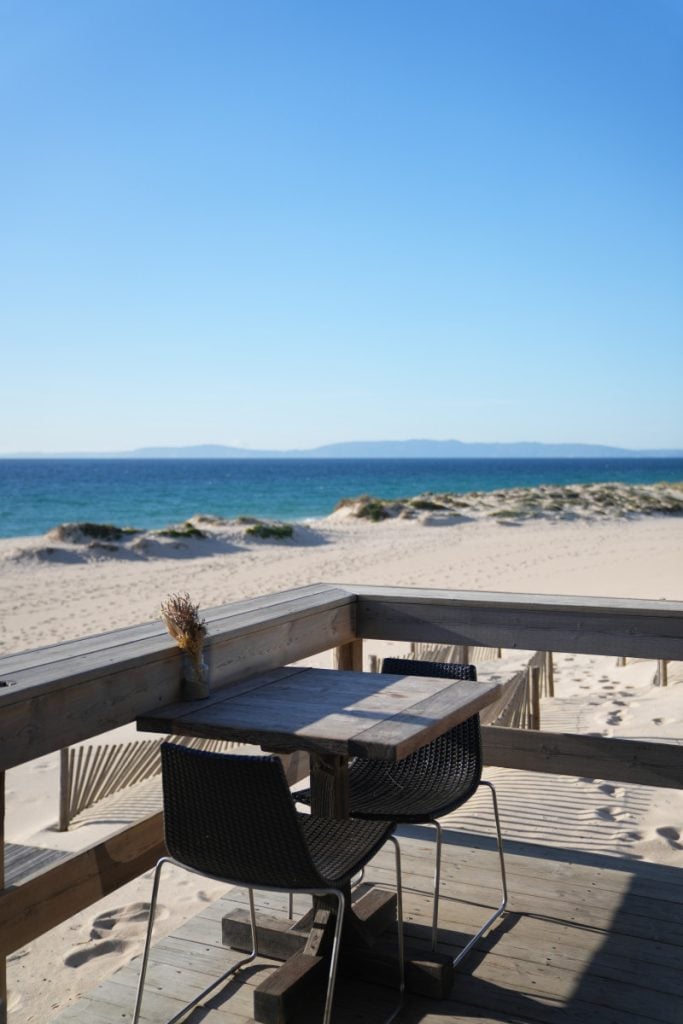
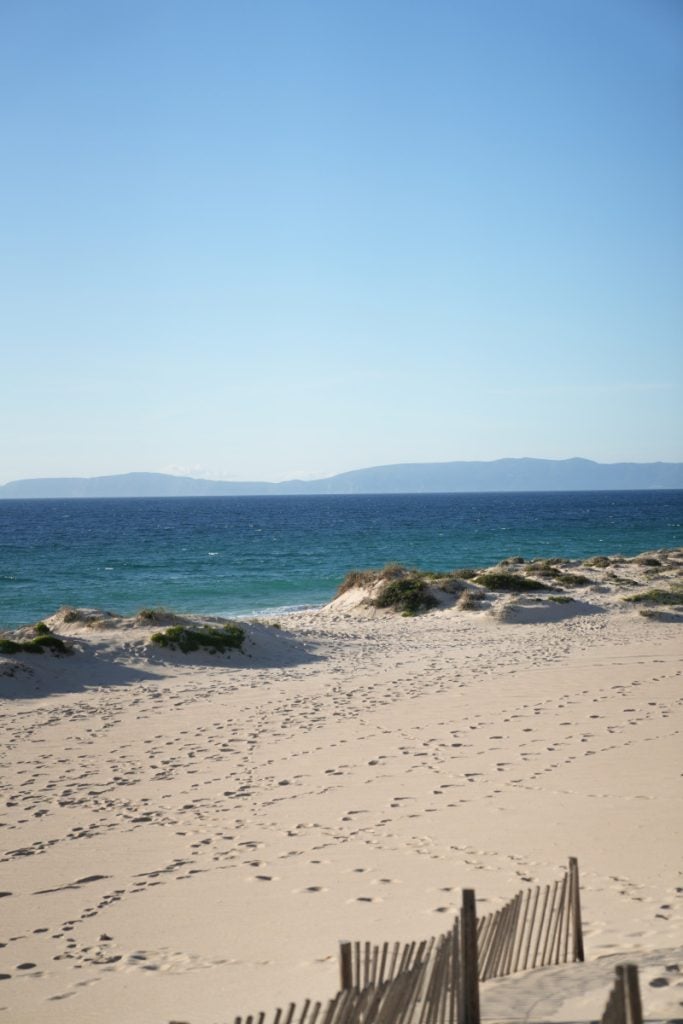
If I rented a car for the day and wanted to get out to the best beaches, I’d head to Comporta. You’ll need a car to visit, but it’s only a 1 hour 25-minute drive to get down there. You’ll be rewarded with a bustling beach town, beautiful beaches, wonderful hotels, and incredible seaside dining.
Rental Car Tip: We use Discover Cars for our rental cars in Europe, choose full coverage insurance, and opt for trusted companies like Alamo, Hertz, or Sixt.
Getting to Comporta
Getting to Comporta from Lisbon by car is a straightforward and scenic drive, taking about 1 to 1.5 hours, depending on traffic. You’ll start by heading south on the A2 motorway, which connects Lisbon to the Algarve. After about 40 minutes, take the exit for Sines/Comporta onto the N253 road. This road leads directly to Comporta, passing through the picturesque Alentejo countryside, with fields, cork trees, and small villages along the way.
Save This Post for Later on Pinterest


PS — Are You Booking a Trip Soon? Use My Booking Checklist!
These are the sites I use most to book my own trips. Using the links below is a great way to support Bon Traveler’s travel journalism at no extra cost to you. If you need help organizing your itinerary, get my free travel itinerary template here.
1. Book Your Accommodations
I use Booking.com for hotels and Airbnb for vacation rentals. They have the biggest inventory and consistently offer the best rates.
2. Book Your Rental Car
Self-driving is the best way to explore most destinations. I use Discover Cars for our rental cars, select full coverage insurance, and opt for a reputable company like Alamo, Hertz, or Sixt.
3. Book Your Tours & Experiences
I use Viator, Airbnb, and Get Your Guide to find the best tours and experiences. They are my favorite tour search engines. I always check all three as their inventory varies depending on the destination.
4. Book Your Private Transfers
For easy, reliable private transfers, I use Welcome Pickups. It’s my go-to for arranging a driver in advance — whether it’s an airport pickup, a hotel-to-hotel transfer, or a day trip. The experience is seamless, with English-speaking drivers and upfront pricing, so you can travel stress-free at every stage of your trip.
5. Get Cell Data for Your Trip
I use Holafly for international cell data. Their unlimited data eSIMs are easy to install, activate instantly on arrival, and let you skip local SIM cards and expensive roaming fees.
6. Don’t Forget Travel Insurance
I never leave the country without travel insurance. It provides comprehensive protection in case anything goes wrong (ie. illness, injury, theft, or cancellations).
My favorite companies that offer the best coverage and rates are:
- World Nomads (best for all-around)
- Safety Wing (best for frequent travelers)
Xx,
Jessica


