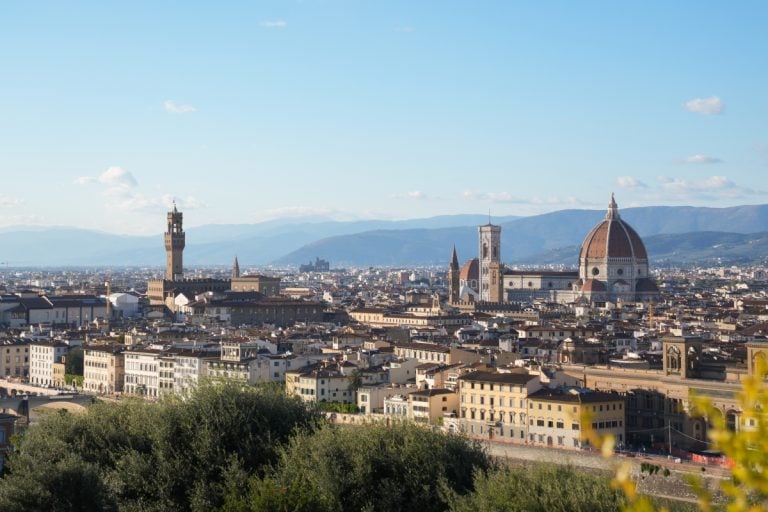
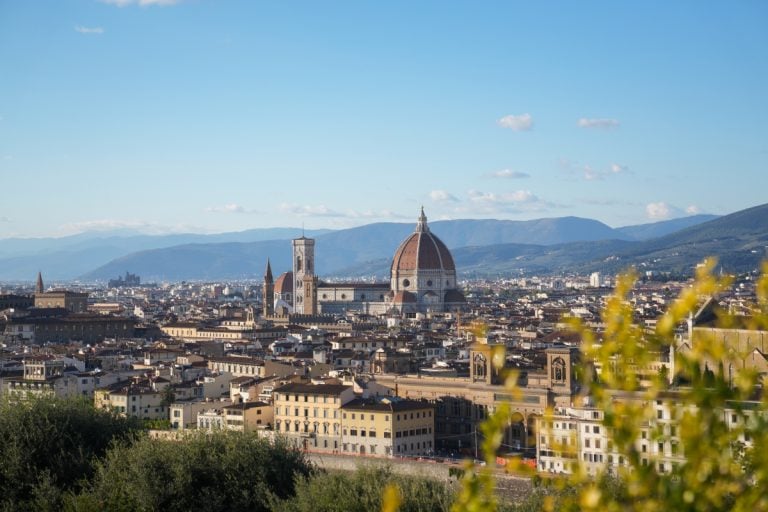
From an early morning walk along historic streets to the Pantheon to the best guided tours in the Vatican, I’ve rounded up the best things to do in Rome. After two back-to-back visits in under 4 months, Rome has quickly become somewhere I can’t wait to revisit.
Rome was my last major city stop in Europe after several dozen trips to Europe, and honestly, I wish I had made the effort to visit sooner. It’s fantastic, wonderfully charming with layers of history and art that I really can’t wrap my mind around. I think it took me a long time to go because I was overwhelmed by its size, the often crowded city, and planning it.


So I’ve taken many hours of research, my two trips over the course of 9 individual days in the city, and dialed it into this guide to the best things to do in Rome. My style of travel is a mix of the classic sights plus a focus on arts, food, and local shopping. I love to spend a morning doing an informative guided tour, and then the rest of the afternoon meandering the streets, popping into local shops and galleries.


With several neighborhoods to explore, like Monti, Regola, and Trastevere, with all of these incredible landmark places to visit, there is a lot to choose from. I’ve narrowed down the most memorable, the ones to see on a guided tour, and included some of our favorite restaurants from dozens of meals out.


So if you’re beginning to plan your trip, give this a read. It has several gems from the classic sights to ones you may not have thought of doing for your time in Rome.
Short on Time? Here Are My Top Picks for the Best Hotels and Things to Do in Rome:
Hotels
For a first-time visit, staying in the Centro Storico, Regola, or Monti will put you within walking distance of the main sights.
- Centro Storico (Trevi to Pantheon), for first-timers who want to walk to the iconic sights
Palazzo Talìa ($$$ / Where I Stayed), Orient Express La Minerva ($$$$), Portrait Roma ($$$), Martius Private Suites ($$$), G-Rough ($$), Hotel dei Barbieri ($$), or a 1 Bedroom Apartment Next to the Pantheon - Regola, for piazzas, shopping, and some of the best restaurants in the city
Navona Essence ($ / Where I Stayed), Hotel De’Ricci ($$$), DOM Hotel ($$$), Nomos Hotel ($$$), Hotel Indigo St George ($$$), or a 1 Bedroom Apartment on Campo de’ Fiori - Monti, for laid back local neighborhood near the Colosseum
Casa Monti ($$$), Casa Tre Sarte ($$$), The Fifteen Keys Hotel ($$), Salotto Monti | BZAR hotels ($), or a 2 Bedroom Apartment with Timber Beams
Things to Do
- Tour the Colosseum, Roman Forum, and Palatine Hill (2 hours / What I Did)
- Join a Guided Tour of the Vatican, Sistine Chapel, and St. Peter’s Basilica (4 hours / What I Did)
- Take a Self-Guided Audio Tour of the Pantheon (25 minutes, What I Did)
- Rome Twilight Trastevere Food Tour by Eating Europe (I did this one in Florence by the same company)
- Take a Private Golf-Cart Tour of Rome (3 hours / What I Did, so fun with kids!)
Day Trips
- Bagnoregio & Orvieto Day Trip from Rome with Wine Tasting & Lunch
- Rome: Tuscany & Montepulciano Day Trip with Lunch & Wine Tasting
- Tivoli Full Day Trip from Rome: Hadrian’s Villa and Villa D’Este
- Pompeii, Sorrento & Amalfi Coast Day Trip from Rome
Travel Tips
- Get Cell Data Before You Arrive — We use Holafly unlimited data eSIMs for all international travel.
- Book an Airport Transfer in Advance — We use Welcome Pickups for our private transfers to and from the airport.
- Rent a Car for Day Trips — If you’re pairing Rome with the countryside, we use Discover Cars for our rental cars in Europe, choose full coverage insurance, and opt for trusted companies like Alamo, Hertz, or Sixt. Book your car with Discover Cars here.
Helpful Guides to Plan Your Trip
Planning a trip to Rome? Be sure to check out my guide on where to stay in Rome, which breaks down my favorite neighborhoods to stay based on travel style and my Rome itinerary, which outlines exactly how I’d spend 3-4 days in the city. For more on where to go from Rome, see my 10-day Italy itinerary.
If you’re planning on visiting Tuscany, start with my Tuscany itinerary for a practical, day-by-day plan, then dive deeper with my guide on the best towns to base yourself in Tuscany, my regional guide to Val d’Orcia, and my guides to San Gimignano, Siena, Pienza, Montepulciano, and Montalcino! For more on Italy, start with my list of the best cities in Italy.
The Best Things to Do in Rome, Italy
A Quick Look at Rome’s History


Rome’s history is so vast that I won’t pretend to cover it all properly, but at a minimum, I’ll give some basic perspective as you look at visiting Rome. The best way I heard Rome described in terms of history and place is that it is like lasagna, each layer revealing another era of architecture, culture, and history.
The earliest roots were founded in 753 BCE by Romulus, though archaeological evidence points to earlier settlements. By the 5th century BCE, it became a powerful republic that expanded over the Italian peninsula,. Then by 27 BCE, it gave way to the Roman Empire under the rule of Augustus, which at its peak controlled most of the Mediterranean. Caesar Augustus, also known as Octavian, is the founder of the Roman Empire, and ruled until he died in AD 14, which gave way to an era of imperial peace.
Eventually, this empire splits, the Western Roman Empire falls in 476 CE, and this is when Rome transitions into a center of Christian authority as the head seat of the Catholic Church. The city didn’t become the capital of Italy until 1871, and since then has continued to play a central role in art, culture, and religious importance. As you visit Rome, you’ll see just how much the Roman Empire intertwines with the Catholic Church, really shaping the city you see today.
Rome Planning Tips Before You Arrive


When is the Best Time to Visit Rome
When it comes to the best time to visit Rome, the perfect mix of good weather and fewer crowds is sometime between February and March, and then late October into November. The truth is, Rome is almost always busy, as it is one of the most popular cities to visit in Europe. Here’s what you can expect in each season:
- Spring — Spring is one of the busiest times, especially near Easter week, which I’d highly recommend not being in Rome as it draws in big crowds to the Vatican. The other weeks in April will have pleasant weather, cooler nights, and be great for terrace dining before the thick of summer crowds.
- Summer — One of the busiest and hottest times of the year to visit, summer in Rome is a very popular time to visit.
- Fall — Fall is lovely in Rome; it does stay crowded through October, but in exchange, you’ll have wonderful weather to experience the city.
- Winter — The coldest time of the year, and the wettest, winter is slower, but you will need to factor in the rain for visiting.

How Many Days Do You Need in Rome
In my opinion, at least four full days to visit Rome are needed for a first-time trip. The reason is that if you plan to visit the major sights like the Vatican, the Colosseum and Roman Forum, each requires three to four hours alone, and it’s best to break them into two separate days. Then from there, there are several outstanding galleries, sights like the Pantheon, museums, and the city itself to enjoy. Four days give you ample time to experience Rome at a pace that is doable and not oversaturated.


Getting to Rome
By Plane
Rome’s main airport is Leonardo da Vinci International Airport (FCO). It’s an outstanding airport for Europe, one of the best-connected for Italy, with several direct flights to airports in the U.S. and within Europe. It’s around 30 to 40 minutes from inside the Aurelian Walls of Rome to reach FCO. I recommend pre-booking your transfer for arrival instead of queuing up for long taxi lines.
Travel Tip: For easy, reliable private transfers, we always book with Welcome Pickups. It’s a seamless way to arrange a private driver in advance for airport rides, day trips, or hotel-to-hotel transfers across Europe.
By Train
Roma Termini is the main train station. With 29 platforms, it’s Europe’s largest train station. You’ll arrive in the Monti neighborhood and can reach the Centro Storico in less than 15 minutes by taxi.
By Car
If you’re planning to reach Rome by rental car, like we did when we came from Tuscany, I recommend dropping the rental car off at one of the agency’s locations on the outskirts of the city, outside the Aurelian Walls. You do not need a car to visit Rome, so it is best to drop your car on arrival or pick up your rental car after your time visiting Rome.
Rental Car Tip: We use Discover Cars for our rental cars in Europe, choose full coverage insurance, and opt for trusted companies like Alamo, Hertz, or Sixt.


Getting Around Rome
Since Rome is such a large city, the three best ways to get around the city are either on foot, by subway, or by taxi. You can easily walk through the bigger neighborhoods and stick to walking for the majority of your trip. The subway does have three main lines (A, B, and C) and connects the key tourist spots like the Colosseum and Vatican City. However, I found it much simpler and not terribly expensive to use Uber and taxis to get around for the longer distances.
Cash and Credit Cards in Rome
Major credit cards are accepted around Rome, especially at bigger restaurants, shops, and hotels. I do recommend carrying some cash (not a lot) for smaller purchases like coffee, public bathrooms, or tipping. I usually keep €20–€50 on hand for small, daily needs.

Get a Prepaid SIM Card
I tried out two different data plans in Rome: our Verizon international plan and the Holafly eSIM. The Holafly eSIM worked significantly better and was more reliable. I highly recommend getting one for your time. For more on my experience with Holafly, read my review on why Holafly is the best eSIM for Europe.
Download Google Maps Offline
One of the most helpful things you can do for Rome is download Google Maps offline. This will allow you to navigate the city if you lose cell service.
Other Helpful Tips
- Book major attractions in advance — I highly recommend booking your tours to visit to the Vatican and Colosseum in advance, as soon as you know your dates.
- Dress appropriately for churches — Shoulders and knees should be covered when entering religious sites.
- Protect your belongings — Like in any busy tourist destination, keep an eye on your bag, especially in crowded areas and public transport. Pickpockets are an issue in Rome.
- Book restaurants in advance – All of the popular restaurants book far in advance. I’d get these scheduled as soon as you know your dates.
- Coperto charge and tipping culture — Know that most restaurants in Rome will charge a “coperto” a small fee to the bill, usually 1 to 2 euros for bread service. In general, tipping in Rome is not mandatory or expected, but at a fine restaurant, I’d do 5-10%.
Where to Stay in Rome


Editor’s Note: I spent countless hours researching where to stay in Rome for our second trip. I came to a clear conclusion that the best places to stay in Rome are the Centro Storico near the Trevi Fountain or Pantheon, Regola, and the Monti neighborhood. My preference? The Centro Storico for the main sights, and Regola for an artisan neighborhood.
Travel Tip: Read my guide on where to stay in Rome for an in-depth breakdown of the different areas of Rome and my recommendations for where to base yourself!
Best Hotels Near Centro Storico
- Palazzo Talìa ($$$ / Where I Stayed), for the best luxury boutique hotel
- Portrait Roma ($$$), for the best modern luxury hotel
- Hotel dei Barbieri ($$), for the best design for dollar hotel
Best Apartment Rentals Centro Storico
- 1 Bedroom Chic and Spacious Apartment near Pantheon, for the best quiet stay
- 1 Bedroom Airy and Bright Apartment Across Pantheon, for the best polished apartment
- 1 Bedroom Flat with a Pantheon View, for the best views of the Pantheon
Best Hotels Near Regola
- Navona Essence ($ / Where I Stayed), for the best budget-friendly hotel
- Hotel De’Ricci ($$$), for the best luxury hotel
- Hotel Indigo St George ($$$), for the best design hotel
Best Apartment Rentals Near Regola
- 1 Bedroom Beautiful Apartment Next to Campo de Fiori, for the best designed stay
- 1 Bedroom Condo with Stunning Terrace , for the best rooftop views
- 1 Bedroom Historic Home with Views, for the best old-world apartment with views
Best Hotels Near Monti
- Casa Monti ($$$), for the best chic boutique hotel
- The Fifteen Keys Hotel ($$), for the best Scandinavian design boutique hotel
- Salotto Monti, BZAR hotels ($), for the best affordable yet stylish hotel
Best Apartment Rentals Near Monti
- 2 Bedroom Chic Apartment in the Heart of Monti, for the best old-world stay
- 2 Bedroom Home with Garden and Patio, for the best family-friendly stay near the Colosseum
- 1 Bedroom Penthouse with Terrace and Views, for the best panoramic views
What to Do in Rome, Italy
I’ve placed the Colosseum/Roman Forum and the Vatican at the top of this list, as my suggestion is to book your tours as soon as you know your dates. If you’re going to do a guided tour of anything in Rome, it should be these sights because a) you don’t have to get your own tickets, which is a hassle, b) you can get early + special access, and c) you’ll learn so much from an educated guide.
Tour the Colosseum, Roman Forum, and Palatine Hill


What ended up being one of my favorite experiences in the city was the chance to visit the Colosseum, the Roman Forum, and Palatine Hill on this Colosseum Arena Floor & Roman Forum Express Tour with Walks of Italy. I heavily researched which tour company to choose for our two guided tours in the city, and landed on Walks of Italy for its thoroughness, qualified guides, and special access. The two tours we did with Walks of Italy were phenomenal, highly organized, and our tour leaders were equally engaging and knowledgeable.


We learned a wealth of history on the Colosseum, putting to bed all of these “stories” we heard growing up and from the movie Gladiator, and learned the true history and significance. The Colosseum is massively impressive in size, fitting over 50,000 people in the stands, and was the central point of Rome at its time. From there, we crossed into the Roman Forum, which was included as part of the tour, bypassing what felt like a mile-long line for self-entry tickets.

The Roman Forum is equally impressive for Ancient Rome, acting as the political center for society at its time. You get a real sense of just how deep they excavated below the current street level of Rome to uncover the forum. There are ancient temples, like the Temple of Saturn, one of the oldest and the former state treasury, and the impressive Temple of Vesta, which housed the eternal flame of Rome and was guarded by the Vestal Virgins.
I chose to do the “express” tour as it was two hours long and included guided access to the Colosseum floor (it’s nearly impossible to get tickets for this), the Roman Forum, and then up to the Palatine Hill. It was the right amount of time for me personally to listen to a guide (ours was a trained archeologist), as there’s so much information to soak in. It makes sense to do a bundle tour that includes the Colosseum, Roman Forum, and Palatine Hill as they’re all adjacent, plus it’s one less ticket to navigate.


Walks of Italy does offer a few other tours that I think could be interesting if you’re able to snag a spot. And if you want more in-depth tours, or something private, there is that too. Here are the ones I’d look at:
- Colosseum Arena Floor & Roman Forum Express Tour (2 hours / What I Did)
- Premium Colosseum Guided Tour with Roman Forum & Palatine Hill (3 hours, doesn’t go on Arena Floor)
- Colosseum Tour with VIP Caesar’s Palace & Roman Forum Super Sites (3.5 hours, special access)
- Private VIP Colosseum Tour with Roman Forum & Palatine Hill (3 hours, private)
Buying Your Own Colosseum Tickets

If you do plan to navigate tickets for the Colosseum and Roman Forum on your own, here’s what to know. The tickets are highly in demand; I saw some of the longest lines I’ve ever seen for people waiting for tickets. This is the official site for Colosseum Tickets, and the ticket includes entry at a specific time and then entry to the Roman Forum within 24 hours from that secured time. These tickets go on sale 30 days in advance, with most selling out within an hour or two of publishing.
Now you could show up on the day of and get a ticket, but plan to spend at least 1-2 hours waiting to buy the ticket, and then another 1-2 hours to get into the sights. If you do get your own tickets, I’d opt for the earlier time slots before the lines get long for single entry. If you’re on a guided tour, like the one we did, you have your own line to bypass the ticketed lines.
Join a Guided Tour of the Vatican, Sistine Chapel, and St. Peter’s Basilica


Second to the Colosseum tour, our tour of the Vatican, Sistine Chapel, and St. Peter’s Basilica was my favorite thing we did in Rome. I was absolutely blown away by the sheer size of these religious monuments, the architecture and details, and their historical significance. I was equally surprised by the sheer chaos of entering these sights with quite literally *hundreds* of people lining up at the crack of dawn to gain access with their tickets.


It confirmed for me once again that spending the money on a guided tour that includes early access to the Vatican is an absolute must for ease and enjoyment. I chose the four-hour Pristine Sistine Small Group Vatican Early Access Tour with Walks of Italy after hours of research and two separate people I know who recommended it.

We arrived early in the morning, getting to be the first in line to enter the Vatican Museum with our guide (there’s a special line for group tours, saving a massive headache for entering). Our Walks of Italy guide was incredible, a historian who herself actually got to help restore some of the facades on St. Peter’s Basilica. She navigated us through the important parts of the Vatican Museums, took us through the museums, into the Sistine Chapel before the big crowds, and into St. Peter’s Basilica — the big kicker was getting to use a special passageway only open to group tours to cut the crowds to access the basilica (FYI, the passageway is closed Wednesday mornings).


Okay, I’ll stop gushing about the tour because I literally want to go back and do another; there’s so much to take in there. What’s most important about the Vatican is getting an understanding of what it is you’re actually visiting. The Vatican is its own country (you’ll need to carry your passport), and it comprises a handful of things you can visit as a visitor.
What You’re Seeing at the Vatican

The first main area you enter when you access the Vatican is an open square that offers an incredible bird’s-eye view of the Dome of St. Peter’s Basilica. From there, you continue, passing through the Belvedere Courtyard, into some of the renowned galleries that are in the “Vatican Museum,” remember the church is a big collector of art. Some of the most impressive are things like the Gallery of Maps (my husband’s favorite), and into the four Raphael Rooms (my favorite part).

From there, you can visit the Sistine Chapel, famous for Michelangelo’s masterpiece on the ceiling, which depicts scenes from the Book of Genesis, like the Creation of Adam, the Great Flood, and the Last Judgment. It’s just absolutely mind-blowing Renaissance Art, commissioned by Pope Julius II; ironically, Michelangelo didn’t want to do the work, but still did, and did it mostly alone.


After the Sistine Chapel, you pass through a passageway (if on a group tour) and into the impressive St. Peter’s Basilica. No words can capture this masterpiece constructed between 1506 and 1626, as the center of the Roman Catholic Church. From the grand square designed by Bernini to the dome by Michelangelo and his Pietà, a famous sculpture of Mary holding Jesus after the crucifixion. All of it is a lot to soak in.


The Best Tour Options for Visiting

I, in good faith, could not recommend self-visiting the Vatican sights like the Sistine Chapel and the Basilica, mostly because the lines are so atrociously long and the tickets are an absolute headache to navigate. My only recommendation I can give is to choose a tour that best suits you, and most certainly choose early access for a more peaceful experience (it will still be busy, but not as busy as midday). These are the tours I’d look at:
- Pristine Sistine Small Group Vatican Early Access Tour (4 hours / What I Did)
- Vatican Evening Tour: Alone in the Sistine Chapel Tour (2 hours, wish we could have snagged this, it was sold out)
- Private Vatican Tour (3.5 hours, private for up to 6 people)
- Vatican Express Tour: Highlights of the Museums & Sistine Chapel (3 hours, and at 4:15 pm only)
Travel tip: You Can Climb the St. Peter’s Dome
Once you’re in St. Peter’s Basilica, you can actually climb up to the dome and into it. The climb takes you up into the dome designed by Michelangelo. The payoff is the best panoramic view in the city: St. Peter’s Square perfectly framed below, the rooftops of Rome stretching out in every direction, and on a clear day, the hills beyond. It’s not a casual stroll as there are 500+ steps (or ~320 if you take the elevator partway), so it’s not ideal if you’re uncomfortable in tight spaces or with heights.
Practical Info:
- Cost: ~€8 (stairs) or ~€10 (elevator + stairs)
- Entrance: Separate line to the right of the basilica façade
- Best time: Early morning for fewer crowds and cooler temps
- Dress code: Same as the basilica (covered shoulders/knees)
Take a Self-Guided Audio Tour of the Pantheon

I almost didn’t go into the Pantheon when in Rome, and I’m so glad I did because it ended up being my favorite architectural site of the week. Constructed in 126 AD during Ancient Rome as a temple to all gods, it’s hard to take in just how they created the largest unreinforced concrete dome in the world.


As one of the best-preserved buildings of its era, the Pantheon opens up into the central floor, surrounded by tombs and important worshiping sights. And when you’re inside, look up to the Oculus, a circular opening that lets in natural light to light up the entire temple. It’s so incredible, and to think that this was built by hand and has been in use for 2,000 years.
The Pantheon does get some significant lines, but we found this option to pre-book tickets with an audio guide that you download on an app. We pre-purchased it the night before, met the rep of the company out front who gave us the tickets, and we got to skip the buy-it-yourself line. The audio guide is included (it’s the same one as the Pantheon offers at entry to download). It takes about 25 minutes to listen to, and guides you through the importance of the structure, and points out significant elements, like Raphael’s Tomb.
Don’t Miss These 3 Tucked-Away Galleries

Let’s get into some of the lesser-known gems of Rome to give a break from the crowds. The art in Rome is incredible, dating back to the Renaissance era and even before. Across Rome, I found three impressive galleries with private collections of art that were incredible. Each one was different in terms of collection, but all held important pieces of art from Caravaggio, Raphael, and other Baroque artists.
Galleria Doria Pamphilj


The most impressive of the galleries was Galleria Doria Pamphilj, a private art collection from the Doria Pamphilj family housed in their palace. It’s one of the most lavish palaces I’ve seen, with halls that reminded me of Versailles. There are major artworks inside the palace, like the Velázquez portrait of Pope Innocent X, considered one of the greatest portraits ever painted.
Tip: Downstairs, as you enter, don’t miss the chance to go into the Secret Apartment; it’s a separate ticket, but the Bagno di Diana is one of the most beautiful 19th-century Pompeian-style bathrooms I’ve ever seen.
Galleria Spada


Set in the Regola neighborhood, Galleria Spada is a smaller and more intimate gallery. It has this fantastic inner courtyard that you walk into before entering the Spada Palace. The upstairs has a collection of Baroque paintings, with impressive astronomy globes, and works by Guercino. The one highlight here is the Galleria Prospettica del Borromini, a forced-perspective corridor in the inner garden, created by Borromini — it looks like a long corridor, but in fact is quite small.
Galleria Colonna
One of the tougher galleries to visit due to its opening hours, if you can time it over the weekend, the Galleria Colonna opens its doors to the public each weekend. It’s known for large Baroque paintings by Pietro da Cortona, set in these incredibly gilded halls with mirrors and ceiling frescoes. It’s one of the oldest galleries in Rome for private art, and you can’t miss the small garden off the backside.
Visit the Lesser-Known Museum, Palazzo Altemps


With dozens of museums in Rome, the Palazzo Altemps was a favorite of mine for sculptures, a welcome change from the mostly paintings we had seen prior. It’s also an under-the-radar museum, and there were virtually no people in there as we visited midday. Palazzo Altemps is part of the National Roman Museum system, set in a Renaissance Palace (your ticket gives you access to several museums).


It houses dozens of Roman copies of Greek original sculptures and ancient collections. It’s all set in this wonderful palazzo with fresco ceilings and a stunning inner courtyard with its arcaded halls. The beauty of it is that it feels like a quiet escape in the Centro Storico, and it has incredible ancient sculptures to see here from the Ludovisi collection.
Get Sunset Rooftop Drinks with a View


The skyline in Rome is best seen from a terrace or rooftop, and what better place to end the day? One of the highlights for me was sunset drinks at Gigi Rigolatto Rooftop at the Orient Express Hotel. We spent two hours enjoying cocktails and some small snacks, as the sun went down — the view from here is fantastic, to the Pantheon, to the Monumento a Vittorio Emanuele II. There are several standout rooftop bars as well if you can’t get a reservation there. I’d look at places like Cielo at Hotel de la Ville, the iconic The Court Bar at Palazzo Manfredi, with unparalleled views of the Colosseum, and the Vista Rooftop.
See the Trevi Fountain at Least Once

It’s not a trip to Rome without seeing the Trevi Fountain at least once. Commissioned by Pope Clement XII in 1730 to replace a 15th-century fountain, it marks the end of the historic Aqua Virgo, the aqueduct built in 19BC by Marcus Agrippa. Started by Nicola Salvi, it was completed in 1762 by Giuseppe Pannini and became one of the emblems for the city.


When it comes to seeing the Trevi fountain, the best advice is to go early. If you arrive some time between 6 and 7 am, it won’t be crowded, just a few people, but more empty than most of the day. They’ve also introduced a ticketed entry that allows you to go to the lower basin of the fountain, for a €2 fee, between 9 AM and 10 PM. So if you arrive before 9 AM, you won’t have to pay to go down and do like the Romans, and throw a coin over your shoulder.
Join a Food Tour in Rome
I’ve done several food tours across Italy during my travels, as it’s one of the best ways to experience the local cuisine. Rome is full of food tour options, so I want to call out a few standouts if you’re looking to join one. There are wonderful ways to learn more as well about neighborhoods and traditions (I loved my one in Florence!). I’d look at:
- Rome Twilight Trastevere Food Tour by Eating Europe (I did this one in Florence by the same company)
- Rome Food & Wine Tour: 15 tastings in Trastevere & Charming Spots
- Rome Food Tour: Hidden Gems of Trastevere with Dinner & Wine
Spend an Afternoon at Galleria Borghese and the Borghese Gardens


For a welcome green break in a lovely park in Rome, head straight to the Borghese Gardens. Set up on Pincian Hill behind the Spanish Steps, it covers over 80 hectares and is lovely for a stroll. If you don’t know where to head first, I’d begin at the Tempio di Esculapio that sits over a small lake; you can even rent little boats to paddle around here. From there go to the Piazza di Siena, this stunning grassy area from the 1790’s is where locals go to hang around and lounge.


One thing that absolutely can’t be missed in the gardens is the Galleria Borghese, housed in a 15th-century villa. It’s a private museum, and while you absolutely need tickets in advance (like at least a week before!), It’s so worth doing.
The Galleria Borghese was one of our top museums visited because of the works of art inside. It houses some of the most iconic Bernini statues and Caravaggio pieces from Italy. The Apollo and Daphne by Bernini is probably one of my top 3 pieces of art I’ve seen in my lifetime. We circled back twice to soak in the intricate detail, and you can’t miss Caravaggio’s “David with the Head of Goliath.”
Trastevere

One of the most talked-about neighborhoods in Rome is Trastevere. The word Trastevere, meaning “across the Tiber,” is Rome’s 13th district. It’s this sort of bohemian, young, previously the main working-class neighborhood, now bar-heavy, with cobbled streets. While it does have quite the party atmosphere at night, during the day, there is a lot of Ancient Rome to discover alongside a handful of gems to enjoy.


In Trastevere, the streets and alleys intertwine with all of these green vines growing between buildings — it has an entirely different feel than Centro Storico. On my first trip to Rome, I spent three nights in this neighborhood, and practically didn’t leave, so I became quite familiar with it. Some of the places I came to love here are:
- Porta Portese, for the Sunday Market
- Villa Farnesina, for fresco art by Raphael
- Getting dinner, at one of the iconic trattorias like Da Enzo or Da Teo (I prefer Da Teo)
- Getting pizza, at Dar Poeta or Ai Marmi
- Biscottificio Artigiano Innocenti, for a generational family biscuit shop, one of the last of its kind in Rome
- F. LLI INNOCENZI SNC, for Italian gourmet products
- Basilica of Santa Maria, in Trastevere and the square in front to see
- Ristorante Da Sabatino or Bar San Calisto, for aperitivo
Hit These Specialty Stores


Italy has to be one of my favorite places to shop, and Rome was no exception. I did loads of research on where to get Italian goods from and the best stores for unique souvenirs. I personally love to hunt down artisans and specialty shops, and so I have a full list here to peruse:
- Emporio Centrale, for curated artisan Italian goods from all over Italy
- Cucina, for Italian kitchenware
- F. LLI INNOCENZI SNC, for Italian gourmet, think olive oils and candy
- Schostal, for renowned celebrity-worn pajamas, the best!!
- Booktique, for books and prints
- Chez Dédé Store, for a well-curated lifestyle shop with luxury goods
- Il Papiro, for stunning paper and stationery
- Castroni, for high-end gourmet
- Giorenbiancheria – Roma Centro, for incredible linens produced in Italy
- La Cornice Antica, for centuries-old frames (very expensive, but worth a peek)
- GIUNCART, for woven goods
- Vio’s Shop, for stunning ceramics
- Mercato Antiquario Piazza Borghese, for prints (not originals, but well-priced)
- Biscottificio Artigiano Innocenti, for biscuits and cookies
See the Noteworthy Basilicas and Churches

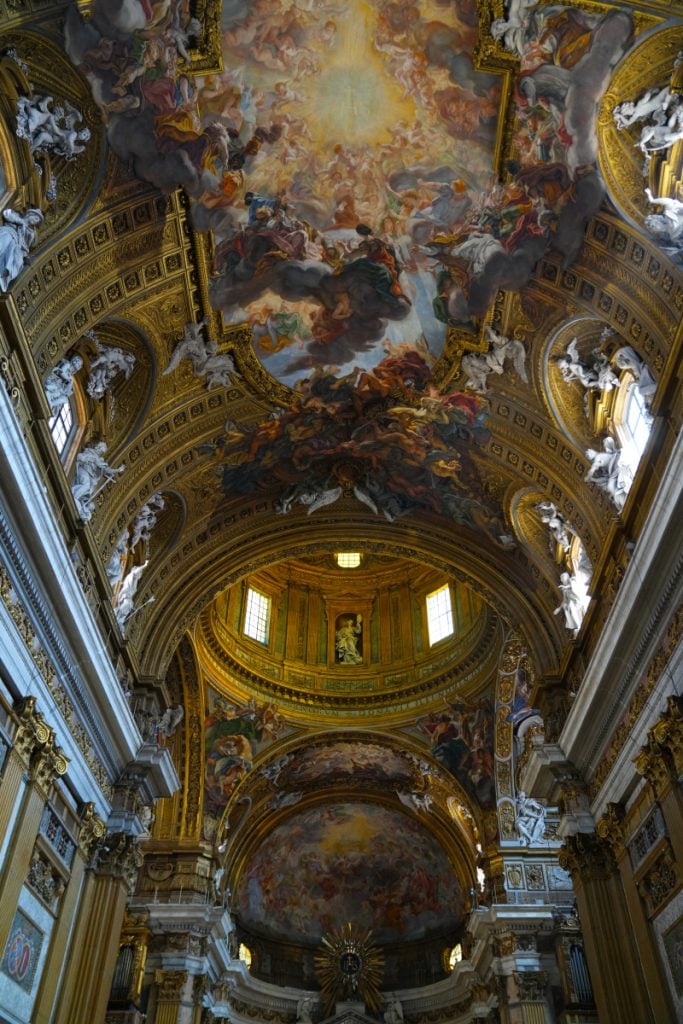
Outside of the famous St. Peter’s Basilica, there are a handful of other basilicas and churches worth noting while you’re exploring Rome. You’ll likely walk by these at some point:
- Papal Basilica of Saint Mary Major — One of the four major papal basilicas in Rome, dedicated to the Virgin Mary. It’s one of the largest Marian churches in Rome, and has a stunning 5th-century mosaic with coffered ceilings with gilded gold.
- Basilica of San Pietro in Vincoli — Home to Michelangelo’s statue of Moses, this 5th-century church over in Monti is worth stepping into to see his art. There is also a relic of St. Peter’s chains displayed under the altar.
- Chiesa del Gesu — The highlight of this church is its fresco ceilings, called “Triumph of the Name of Jesus.” It’s absolutely impressive art, and worth taking a look.
- Chiesa Sant’Ignazio — Another favorite for the ceiling, and it’s “fake dome,” which is a painted optical illusion.
Discover the Hidden Galleria Sciarra

This is a quick one, but while you’re in the center, if you see signs for Galleria Sciarra, I’d stroll through it and look up. It’s a glass-covered arcade that was built in 1885 and designed by Giulio De Angelis for Prince Maffeo Sciarra. It’s getting turned into a refined shopping passage, but honestly, just the frescoes on the wall and the glass iron roof are worth walking through to see.
Take a Golf-Cart Tour of Rome
On our first trip to Rome, we had our 3-year-old daughter with us, and one of the best things we did was take this golf-cart tour around Rome. It was fast, thrilling, and gave us a chance to drive by the iconic sights. Perfect for tired legs, and a great way to see the city at large, this was a favorite from our first trip!
Explore the Neighborhood of Monti


For another charming neighborhood, Monti should be on your list. It sits just next to the Colosseum, and its ancient streets are full of pastel-colored walls and all of these leafy vines crisscrossing back and forth. Two main streets lead down to Piazza della Madonna dei Monti, near the Chiesa di Santa Maria ai Monti.
I’d go for a stroll up and down Via Cavour and Via Urbana, checking out all of the boutiques and shops. Via Leonina also has many wonderful stores here. Towards the end of the run, make your way to Mercato Rionale, a very small market, but it has one stand in there, La Ciriola Romana, selling the best paninis.
Shop Vintage and Antiques in Centro Storico


Vintage shopping in Rome is some of the best; several stores carry a range of pieces. Some of my favorite finds were at these older stores, and one in particular for vintage prints and art. And because Italy is home to some of the most iconic fashion houses, like Ferragamo to Prada, I found many of the vintage clothing stores carried incredible pieces. If you’re looking to go vintage shopping, here’s what I’d check out:
- Antica Libreria Cascianelli, for antique prints and art
- Ciao Vintage – di Antichita Carnovale est.1955, for vintage luxury goods
- REVOLUTION VINTAGE, for a range of vintage to second-hand luxury handbags
- SeryMoon Vintage, for luxury secondhand shoes, clothing, and bags
Catch a Weekly Farmers’ Market


If you’re looking to catch a farmer’s market while in town, Rome has several great ones I’d recommend looking for direct from producer markets. You can find everything here, from fruits and vegetables to bottled goods. Some of the best farmers’ market tours:
- Mercati Campagna Amica (Mercato di Circo Massimo), Saturdays and Sundays from 8 am to 3 pm
- Campo de’ Fiori Market, Monday to Saturday from 8 am to 2 pm
- Testaccio Market, Monday to Friday, 7 am-2:30 pm, Saturday: 7 am-3:30 pm
- Mercato Rionale Campo Marzio di Piazza Monte d’oro, Monday to Saturday, 7 am-2 pm
Visit the Capitoline Museums and Capitoline Hill
Sitting atop Capitoline Hill, the Capitoline Museums feel like a perfect intersection of art, history, and atmosphere without the overwhelming crowds of some other major sites. As the world’s oldest public museum, it’s home to some very significant art pieces, like the She-Wolf bronze and the Dying Gaul. One of the best parts of visiting here is the terrace view over the Roman Forum, one of the best views in the city.
But What About These Sights?
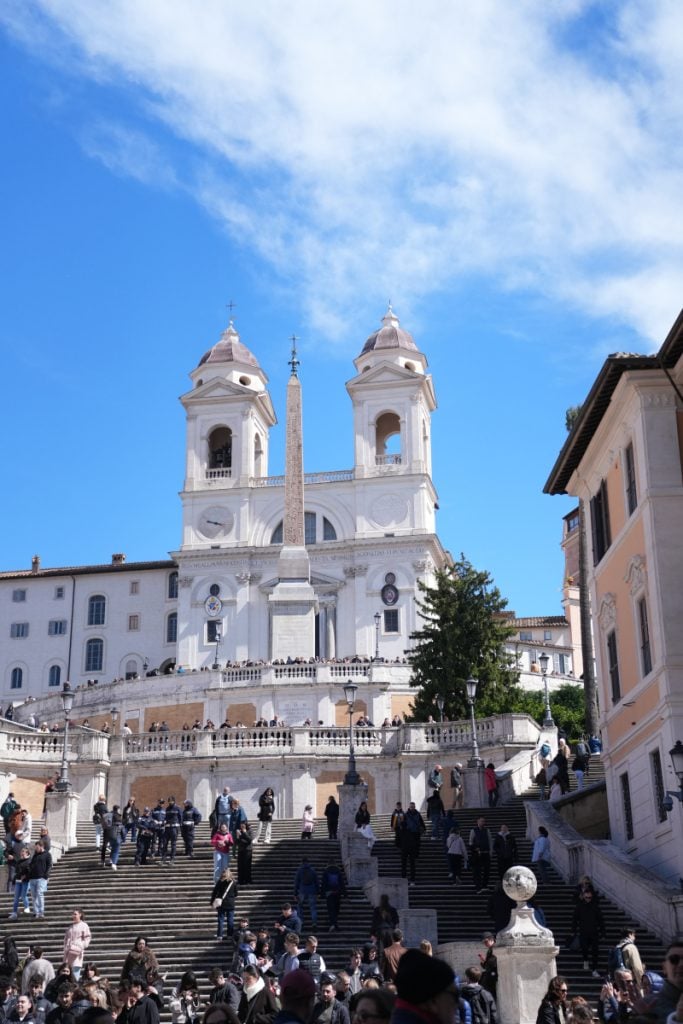

I always include a section of popular sights that you may consider visiting, but personally found not the top priority. This is them:
- Piazza Navona — While it’s one of the most impressive plazas in Rome from the 1st century A.D. with the Bernini fountains, I found it the most overwhelming for tourist shops, visitors, and restaurants asking you to sit down. Instead of hanging out there, I’d make the effort to walk through it early in the morning on the way to the Pantheon or to the Vatican.
- Spanish Steps — You’ll likely walk by the Spanish Steps at some point, and while they’re beautiful, it’s not somewhere you can sit and hang out (you get a fine if you do!). I’d recommend walking by them or climbing up them during your time to go visit the Borghese Gardens.
- Castel Sant’Angelo — We went by this on our trip; it looked interesting as a former fortress built for Emperor Hadrian in the 2nd century AD, but I wouldn’t go out of my way to visit the museum. It’s mostly focused on weapons rooms and prison cells, but at the top, you do get a good view from the terrace.
- Victor Emmanuel II National Monument (Altar of the Fatherland) — I heard someone describe it as the “wedding cake” placed in Rome because it clashes so much with the existing historic pieces. You can’t miss it, you’ll walk by it to go to the Colosseum, no need to climb the steps (trust me), and enjoy it from the street.
The Best Day Trips from Rome
While I didn’t have time this trip to make it out on any day trips, I’ve saved a few of these for my next trip. There are several wonderful options, from historical towns to villas. If you don’t want to self-drive or navigate transportation, the tours listed below are the easiest and best ways to do these. All of the group tours are under $200 a person, with most being $50-70 per person.
Orvieto

If you’re looking to visit one of the most dramatic hill towns just outside of Rome, and looking for a break from city life, Orvieto is it. We drove by this on our way from Tuscany into Rome, and wished we had stopped here. It’s home to a gothic cathedral, charming streets, and a network of tunnels and caves under the city. It gives “storybook Italy” vibes, and I think it would make for a nice chance of scenery. A lot of the tours combine it with Assisi and other nearby locations, too.
Popular Orvieto Tours from Rome
- Bagnoregio & Orvieto Day Trip from Rome with Wine Tasting & Lunch
- Assisi and Orvieto Guided Day Tour from Rome with Lunch
- Assisi, Orvieto, and Civita di Bagnoregio Full Day Tour from Rome
Tivoli – Hadrian’s Villa and Villa d’Este

Tivoli is a scenic hill town just about 20 miles east of Rome, and it draws in thousands of visitors because of two famous sights. The UNESCO World Heritage Sites of the Roman Complex, Hadrian’s Villa, and the 16th-century Villa d’Este with its incredible gardens. This was at the top of my list of day trips from Rome, and I regret not making the time to do it, as we were so close!
Popular Tivoli Tours from Rome
- Tivoli Full Day Trip from Rome: Hadrian’s Villa and Villa D’Este
- Tivoli Villas Full Day Trip From Rome with Lunch
- Tivoli, Hadrians Villa and Villa d’Este, a charming day trip from Rome
Tuscany and Montepulciano


I always forget just how close Tuscany is to Rome; you’re really under two hours to visit, which is why it’s such a popular place to go for the day. While you’ll absolutely need a car to visit, you could opt to get your own or join a pre-curated trip. Tuscany, and specifically the Val d’Orcia, is an area I adore for rolling hills with towns and villages, plus wineries. I spent several weeks there last year and would recommend getting out there on a day trip.
Popular Tuscany Tours from Rome
- Rome: Tuscany & Montepulciano Day Trip with Lunch & Wine Tasting
- Tuscany Wine Tour: 2 Wineries & San Gimignano from Rome
- Private Tour: Siena and San Gimignano Day Trip from Rome
Pompei and the Amalfi Coast


When it comes to a scenic drive plus historic sites, Pompei and the Amalfi Coast are a wonderful option for a day trip. I’ve been to both on a previous trip, and it’s actually quite close to visit from Rome if you’re looking for a full-day trip out of the city. Pompeii is a fantastic historic sight to see, and getting to explore the ruins of the city is really something worth doing. You’ll get a lot of insight into the preserved city and the horrific ending for it. And then right near it is the Amalfi Coast, with stunning cliffside towns like Sorrento and Amalfi, an absolutely breathtaking coastline.
Popular Pompei and Amalfi Tours from Rome
- Pompei, Sorrento & Amalfi Coast Day Trip from Rome
- Premium Minivan Trip from Rome: Pompeii Tour & Lunch in Sorrento
- Day Trip from Rome: Explore Pompeii & Sorrento Amalfi Coast
The Best Restaurants in Rome, Italy
All restaurants on this list require a reservation; it would be very hard to walk into any of these during peak season, and even during shoulder season. I’ve picked the very best of our dining from our trip to put into this list, curated down from two dozen meals in the city.
Trattoria Da Teo


In our top two favorite meals comes Trattoria Da Teo. An institution for trattoria cuisine, it was such an incredible dinner spent over several hours, and trying lots of dishes. The carbonara, the fried artichoke, the off-menu puntarelle, and the wild strawberries with marscapone, all of it was fantastic. Our server was wonderful, and we overall enjoyed this spot.
Da Francesco


Our second favorite, so good we went back twice, was the unassuming Da Francesco. The pasta here was delicious. I tried everything from the carbonara to the cacio e pepe, and the truffle specials were great. Very friendly team, and this one didn’t feel fully known yet by travelers, lots of locals eating here.
Roscioli Salumeria con Cucina


Set in Regola, Roscioli owns several spots in this neighborhood, but one spot you have to try is the “kitchen in the meatshop”, Roscioli Salumeria con Cucina. The tables are literally in the middle of the deli; it’s got a very high-energy feel to it, and the food is fantastic. Order at least one charcuterie while here, and try the ravioli pasta.
Emma Pizzeria

We tried a few pizza spots, and agreed Emma Pizzeria was our favorite for the week for Roman pizza. It was buzzing! So many people are coming here, the pizza was fantastic, the Roman-style thinner crust, and the menu was massive.
La Matriciana


La Matriciana is a longstanding institution for all things red sauce pasta — think all’Amatrician, a rich, savory pasta with guanciale, and then the Arrabbiata, which is a spicy tomato sauce over penne. I’m not a huge red-sauce pasta fan, but I did love these ones, and worth eating here once when in Rome.
Nino


Nino was our most unassuming spot; we almost canceled the reservation as the reviews were pretty mixed. Honestly, it was fantastic. It’s Tuscan cuisine (nice change up from Roman classics) and right near the Spanish Steps. Order any of the seafood; the squid was great, and I loved their Roman-style artichokes.
Pierluigi


For fine-dining seafood, Pierluigi is the spot to go. It’s super elevated, and one of the most pricey meals in town. You can pick out your own fish right there on the spot. I’d recommend coming here for seafood only. The pasta dishes are fantastic, and the prawns were a highlight.
Al Pompiere or Nonna Betta


Dine at least once in the Jewish Ghetto, an enclave of really great Jewish restaurants. They all serve the famous Carciofi alla giudia (Roman Jewish-style artichokes), which are fried and lightly salted. The two restaurants I would try to get into are Al Pompiere or Nonna Betta.
Dar Poeta or Ai Marmi
One more pizza spot, it’s Neapolitan-style pizza, and Dar Poeta is the spot to go for it. The lines can be long, but they move quickly. For Roman-style pizza, also in Trastevere, Ai Marmi is one of the most recommended in the city and on my list for next time.
Where to Get Coffee in Rome


For your coffee needs, this is my short list of places for coffee, baked goods, and cafes.
- Forno Conti, phenomenal pastries and coffee
- Roscioli Caffe, get your maritozzo here!
- Regoli Pasticceria, classic early morning pastry shop
- Caffe Peru, old-school, local’s espresso bar
- Slow, modern, hip breakfast cafe
- Bar San Calisto, longstanding espresso bar
Where to Get Gelato in Rome


Yes, we need a whole section on gelato for Rome. We did extensive gelato research in each neighborhood we stayed in, and here’s where to go.
- Neve di Latte (My Top Choice)
- Fatamorgana
- Gelateria Alla Scala
- Alberto Pica
Frequently Asked Questions About Visiting Rome

Should you book Colosseum and Vatican tickets in advance?
The two most important things to book in advance are the Colosseum and the Vatican tours. In fact, I actually booked these before I booked my hotels because I know just how hard it is to get on the early-access tours, as the spots are limited. I’d book your tickets or tours as soon as you know your dates.
Is the Roma Pass worth it?
It’s a toss-up, and comes completely down to whether you’ll visit the sights that are listed on it and if you plan to use the public transport. It includes free entry to one or two museums/archaeological sites and then reduced prices on the sights thereafter, and free unlimited public transport. I personally didn’t take a ton of public transportation, so I opted not to get the pass.
What are the best free things to do in Rome?
If I had to pick the best free things to do in Rome, I’d start by going for a walk. I’d pass through Piazza Navona to see the Bernini fountains, head to the Trevi Fountain (before 9 am), and then continue to climb the Spanish Steps. You can go up to the Borghese Gardens, which are beautiful, and enjoy the free green space. You can also enter most churches and basilicas for free!
Save This Post for Later on Pinterest


PS — Are You Booking a Trip Soon? Use My Booking Checklist!
These are the sites I use most to book my own trips. Using the links below is a great way to support Bon Traveler’s travel journalism at no extra cost to you. If you need help organizing your itinerary, get my free travel itinerary template here.
1. Book Your Accommodations
I use Booking.com for hotels and Airbnb for vacation rentals. They have the biggest inventory and consistently offer the best rates.
2. Book Your Rental Car
Self-driving is the best way to explore most destinations. I use Discover Cars for our rental cars, select full coverage insurance, and opt for a reputable company like Alamo, Hertz, or Sixt.
3. Book Your Tours & Experiences
I use Viator, Airbnb, and Get Your Guide to find the best tours and experiences. They are my favorite tour search engines. I always check all three as their inventory varies depending on the destination.
4. Book Your Private Transfers
For easy, reliable private transfers, I use Welcome Pickups. It’s my go-to for arranging a driver in advance — whether it’s an airport pickup, a hotel-to-hotel transfer, or a day trip. The experience is seamless, with English-speaking drivers and upfront pricing, so you can travel stress-free at every stage of your trip.
5. Get Cell Data for Your Trip
I use Holafly for international cell data. Their unlimited data eSIMs are easy to install, activate instantly on arrival, and let you skip local SIM cards and expensive roaming fees.
6. Don’t Forget Travel Insurance
I never leave the country without travel insurance. It provides comprehensive protection in case anything goes wrong (ie. illness, injury, theft, or cancellations).
My favorite companies that offer the best coverage and rates are:
- World Nomads (best for all-around)
- Safety Wing (best for frequent travelers)
Xx,
Jessica