If you’re wondering how to spend a few days in Madrid, I’m breaking down an itinerary that includes popular sights like the Prado Museum, Retiro Park, and Reina Sofía, all in one thoughtful Madrid itinerary. Madrid is one of those cities that needs a bit of planning, and if you want to skip the crowds, there’s a way to do it.
I’ve been to Madrid a total of four times, and it’s one of my favorite cities to visit in Spain. There’s an amazing mix of old and new, with medieval architecture and grand boulevards paired with the feel of a cosmopolitan city. Add on to that fantastic food, architecture, and so much to do, Madrid is definitely an enormous city with lots to explore. With that in mind, it takes some thought to figure out an itinerary that’s just right.
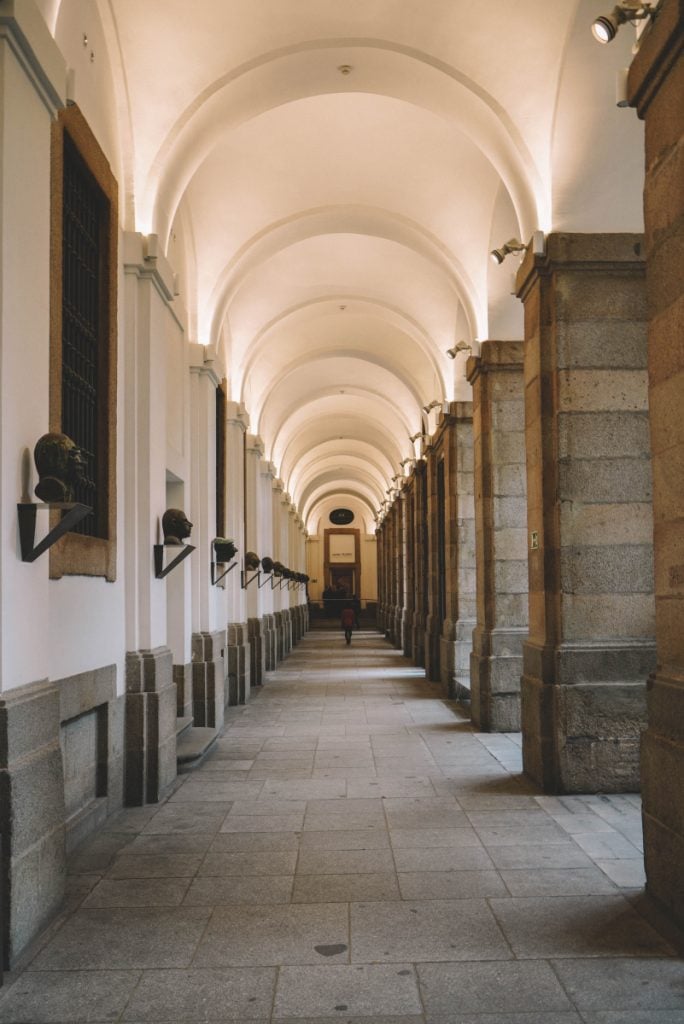
After all of my trips, I’ve taken the best of the dining, sights to book ahead, and where to hang in Madrid into this itinerary. With a mix of traditional and new spots, it’s an itinerary that reflects Madrid’s incredible past and the new, happening spots within the city. Read on to explore my perfect 3-day Madrid itinerary.
Short on Time? Here’s the Ultimate 3-Day Madrid Itinerary:
Where to Stay
For a first visit, I’d choose your base based on travel style, since the best areas are all quite central.
- Sol or Los Austrias, for the best area for first-timers
Stay at Gran Hotel Inglés or this 2 Bedroom Penthouse - Retiro, for the best area for families
Stay at Hotel Palacio or this 2 Bedroom Modern Apartment - Barrio de las Letras or Paseo del Prado, for the best area for history and art lovers
Stay at Casa de las Artes or this 1 Bedroom Apartment with Balcony and Plaza Views - Salamanca, for the best area for luxury hotels
Stay at Rosewood or Santo Mauro, a Luxury Collection Hotel or this 4 Bedroom Two-Floor Apartment - La Latina, for the best area for a local feel
Stay at Posada del Dragón or this 2 Bedroom Penthouse with Private Terrace - Malasaña, for the best area for culture and nightlife
Stay at 7 Islas or this 1 Bedroom Bright and Cheery Apartment
Madrid in 3 Days
| Base yourself | Sol or Los Austrias (Gran Hotel Inglés or 2 br Penthouse), central base for first-timers | |
|---|---|---|
| Book ahead | Royal Palace, Prado Museum (VIP Early Access tour), Reina Sofía, Botín | |
| Day 1Royal Madrid and the historic center | Palace and gardens | FOUR Madrid Specialty Coffee coffee before the palace |
| Royal Palace reserve your entry | ||
| Jardines de Sabatini and Plaza de Oriente gardens and palace views | ||
| Plaza Mayor and lunch | Plaza Mayor historic square | |
| Mercado de San Miguel or Botín market tapas or a reserved sit-down lunch | ||
| Chocolatería San Ginés chocolate and churros | ||
| Sol and tapas | Puerta del Sol Kilometre Zero | |
| Mesón del Champiñón, Casa Revuelta, or Casa Gonzalez tapas for dinner | ||
| Alimentación Quiroga alternative dinner for cheese boards | ||
| Day 2Prado, Retiro, and Salesas | Coffee and the Prado | El 17 de Moreto or Etual sit-down breakfast or coffee |
| Prado Museum and Paseo del Prado art, then a boulevard stroll | ||
| Lunch and Retiro | Restaurante La Puebla Spanish lunch | |
| El Retiro Park and Palacio de Cristal view the glass palace from across the pond | ||
| Librería Prestel open-air book browsing | ||
| Museo Nacional Thyssen-Bornemisza optional second museum | ||
| Shop Salesas | Casa Gonzalez y Gonzalez and La Oficial home goods and ceramics | |
| Travesia Cuatro gallery stop | ||
| Dinner and wine | Los 33 or Charrua Uruguayan cooking or steak | |
| GOTA wine and vinyl records | ||
| Day 3Reina Sofía, La Latina, and Malasaña | Coffee and modern art | Hola Coffee Fourquet breakfast and coffee |
| Reina Sofía Picasso’s Guernica, closed Tuesdays | ||
| Lunch in La Latina | Casa Lucio or Pez Tortilla Spanish lunch or tortilla | |
| Librería Desperate Literature browse old and new books | ||
| Malasaña to Liria | Toma Café 1 and Antigua Casa Crespo coffee, then handmade espadrilles | |
| Palacio de Liria optional palace art collection | ||
| Sunset and tapas | Temple of Debod arrive an hour before sunset | |
| Bodega de la Ardosa tapas and vermouth | ||
| OptionalDay trip | Choose a day trip | Toledo or Segovia medieval streets or Roman aqueduct |
Helpful Guides to Plan Your Trip
For Madrid, don’t miss my guide to where to stay in Madrid. If you’re planning to explore more of Spain, start with my 10-day Spain itinerary and guide to the most beautiful cities in Spain. I also have everything you need for Barcelona (city guide, itinerary, where to stay, things to do, coffee, and restaurants), Madrid (where to stay), Seville (city guide, where to stay), Bilbao (where to stay, things to do), San Sebastian (where to stay, itinerary, things to do, restaurants) as well as guides to Costa Brava, Granada, Andalucia, and Córdoba.
The Complete Madrid 3 Day Itinerary
Madrid Travel Tips Before You Arrive
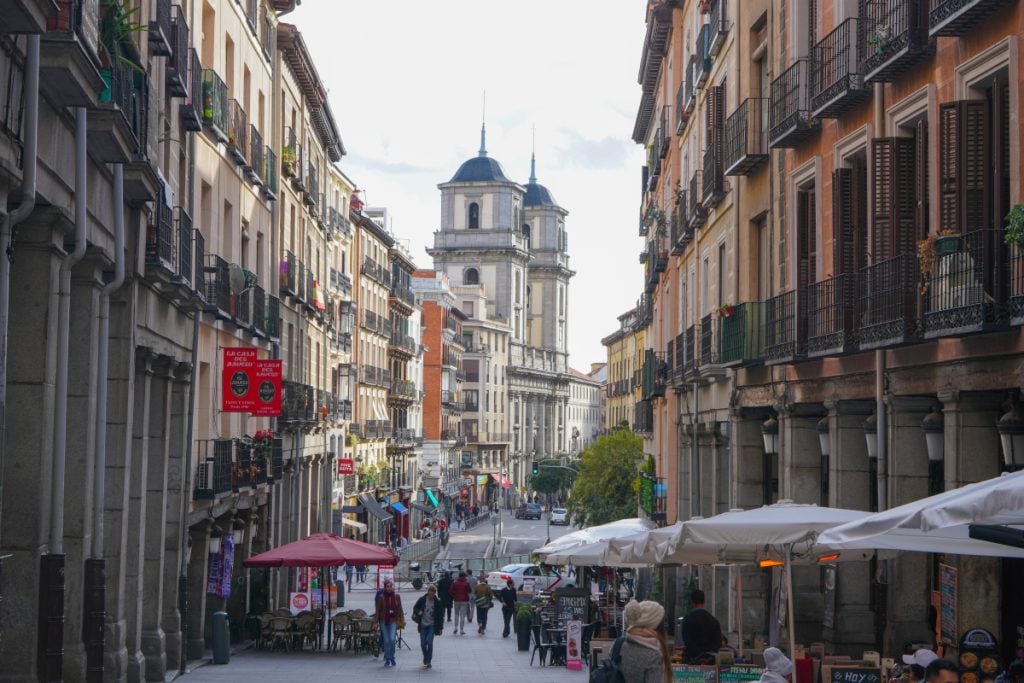
What is the best Time of Year to visit Madrid?
The perfect time to visit Madrid is shoulder season, so spring or autumn, which has a great mix of mild temperatures and fewer crowds. In summer, expect hot days and peak crowds, so plan ahead to visit major sights. Winter in Madrid is cold, with many clear days and some rain, but you can find plenty to do indoors, and this is the slowest season at the most affordable prices to visit.
How much time do I need to visit Madrid?
If it’s your first time in Madrid, I’d say 3 to 4 days is the perfect amount of time to get a sense of the city, without feeling too rushed. With extra days, you can consider taking a day trip to Toledo, or explore more of Madrid’s neighborhoods.
Is Madrid Expensive?
Madrid is a moderately priced European city. Prices on average are less than Paris or London, but it’s still more expensive than other destinations.
Getting Around Madrid
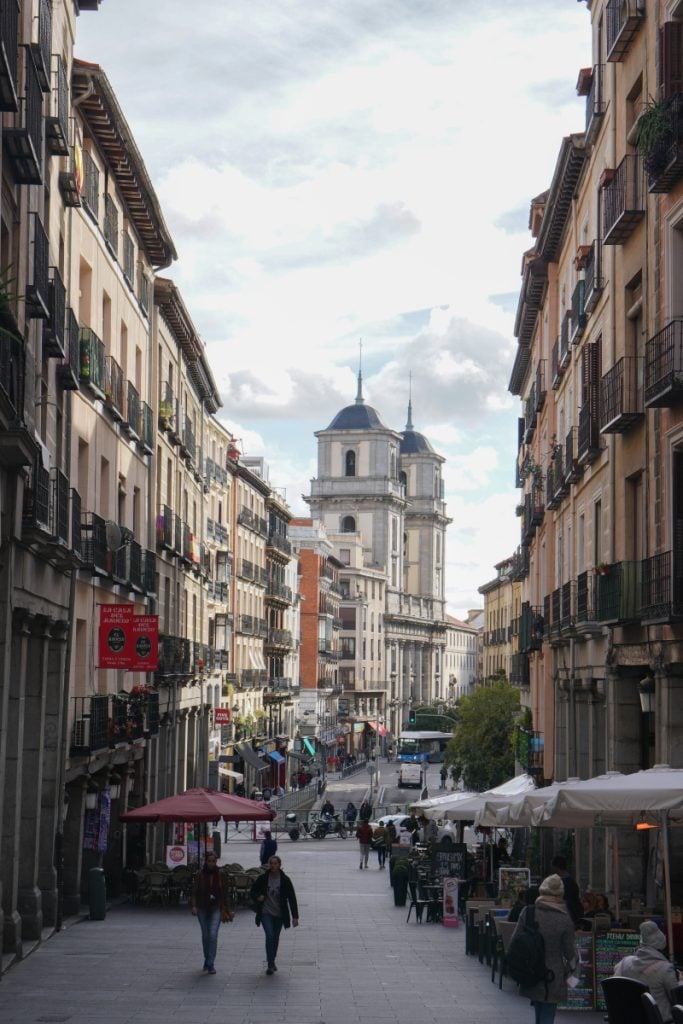
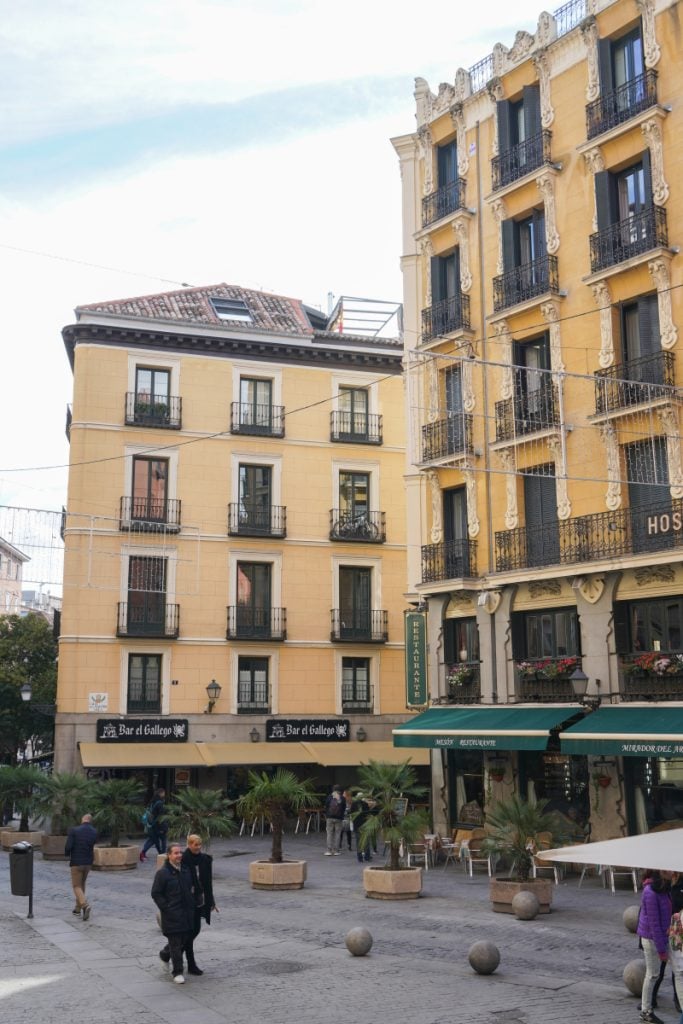
Getting around Madrid is super straightforward as Madrid is walkable, but also has a great metro system. Plan to walk to major sights if staying centrally, but also utilize taxis, Ubers, or public transportation for longer distances or when you need a break. Because the city has a great public transportation system, you can use buses and metro to get around at an affordable price.
How to Get to Madrid
- By Train — You can get to Madrid easily through Spain’s high-speed train system. Madrid is about 3 hours by train from Barcelona, for example.
- By Plane — Madrid has a large international airport that’s well-connected with direct flights throughout Europe and abroad. If you’re coming from the U.S., there are direct flights from cities like New York, Los Angeles, Miami, and more.
Where to Stay in Madrid
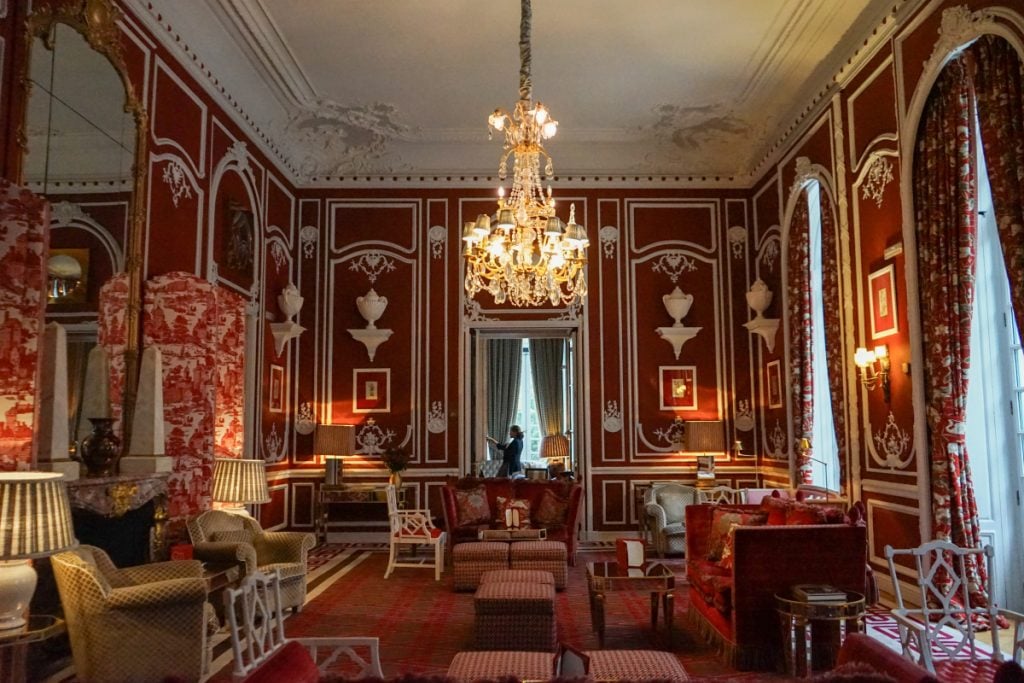
Editor’s Note: For first-timers in Madrid, I recommend choosing where to stay based on your travel style, as the best areas to stay in Madrid are all quite central. Being in the central area allows you to easily walk from one sight to the next. I have a guide on where to stay in Madrid for more details. Here are my top picks for where to stay:
- Sol or Los Austrias, for the best area for first-timers
Stay at Gran Hotel Inglés or this 2 Bedroom Penthouse - Retiro, for the best area for families
Stay at Hotel Palacio or this 2 Bedroom Modern Apartment - Barrio de las Letras or Paseo del Prado, for the best area for history and art lovers
Stay at Casa de las Artes or this 1 Bedroom Apartment with Balcony and Plaza Views - Salamanca, for the best area for luxury hotels
Stay at Rosewood or Santo Mauro, a Luxury Collection Hotel or this 4 Bedroom Two-Floor Apartment - La Latina, for the best area for a local feel
Stay at Posada del Dragón or this 2 Bedroom Penthouse with Private Terrace - Malasaña, for the best area for culture and nightlife
Stay at 7 Islas or this 1 Bedroom Bright and Cheery Apartment
Day 1: Royal Madrid and The Historic Center
Morning: Breakfast and the Royal Palace
I’d start the very first day in Madrid with a stop at FOUR Madrid Specialty Coffee, a super charming specialty coffee shop not far from the Royal Palace. It’s the perfect place to grab a coffee and take in some of the city’s atmosphere. Next up, take a short walk to Madrid’s Royal Palace. Keep in mind that you’ll want to pre-book this on the official website, since tickets often sell out.
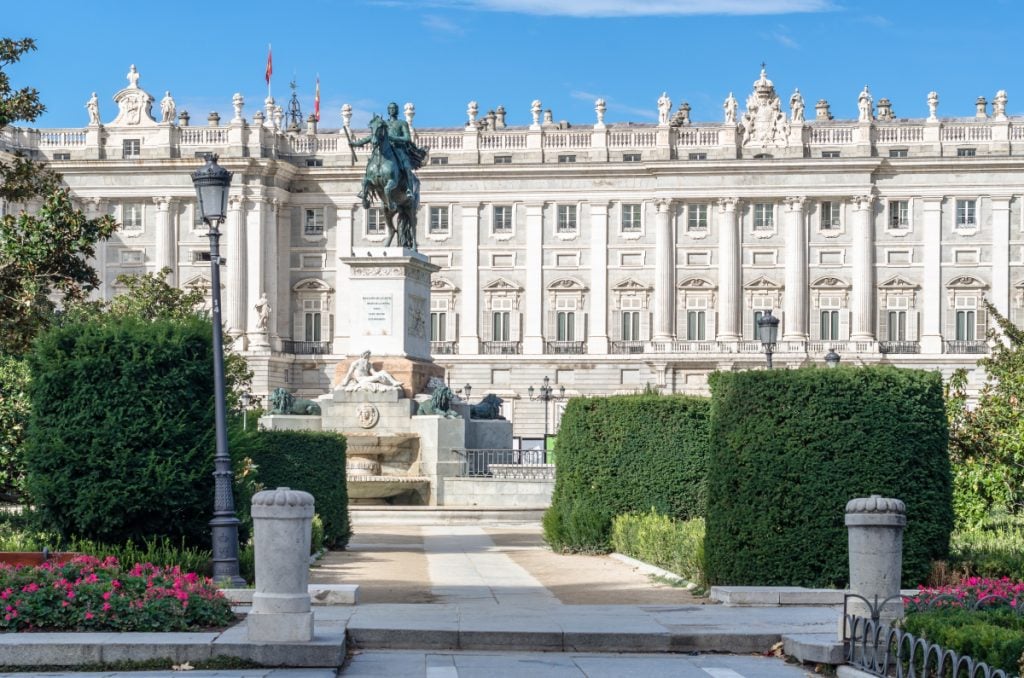
The Royal Palace of Madrid (Palacio Real de Madrid) is the largest royal palace in Western Europe in terms of square meters, with 3,418 rooms. It’s an impressive space, built in the 18th century on the site of an earlier fortress and well worth visiting for its Baroque and classical style architecture. Beyond the building, it houses a spectacular collection of artwork from great masters like Caravaggio to Velázquez, and pieces from the Royal Armory.
Travel Tip: The palace is free to visit Monday to Thursday for eligible EU citizens and residents from 4–6 pm October through March and 5–7 pm from April through September. But the lines are long, and last entry is one hour before closing. I’d recommend showing up one hour before the start time if you’re looking to get a free spot. Free tickets are available only at the ticket office.
Afterwards, visit the gorgeous and peaceful Jardines de Sabatini at the back of the Palace. These impressive, manicured gardens sit at the north façade of the palace and honor Francesco Sabatini, the 18th-century Italian architect who helped design the palace. From there and not too far away, the Plaza de Oriente is a gorgeous historic square to stroll through, and has beautiful views of the Royal Palace.
Afternoon: Plaza Mayor and Mercado de San Miguel
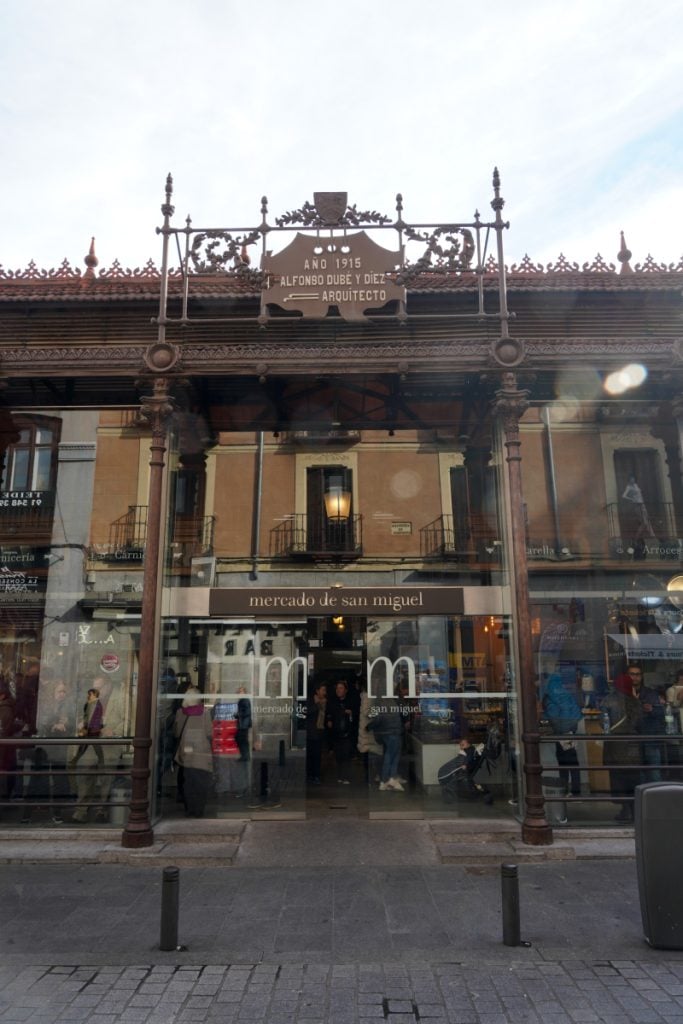
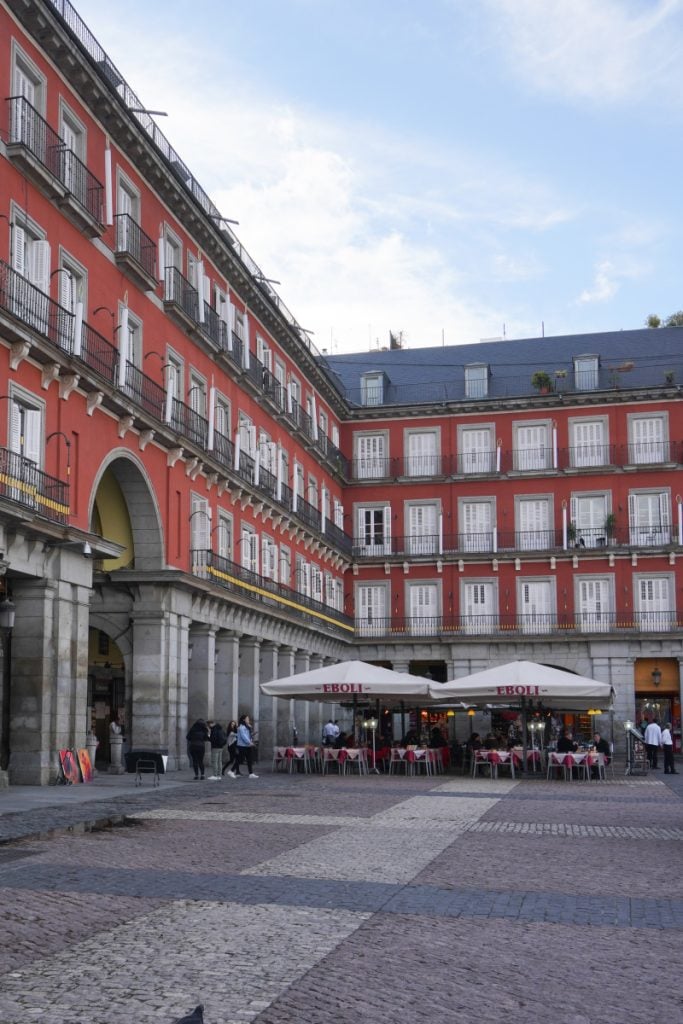
After visiting, I’d recommend strolling to Plaza Mayor. In the center of Madrid, you’ll be surrounded by the city’s history. The square dates back to the 17th century, with gorgeous Baroque architecture. For a quick bite and to try a few tapas, stop by the Mercado de San Miguel, which is just a short walk away. Mercado de San Miguel is a culinary epicenter, featuring several stalls selling everything from drinks to small bites.
If you’d prefer a sit-down lunch, I’d reserve a table at Botín for a lovely lunch. Botín is the oldest continually operating restaurant in the world, according to the Guinness Book of Records. Its tradition dates back to the 18th century, with wood-fired oven cuisine, and is most famous for its “cochinillo Asado” or roast suckling pig. For me, this is one restaurant I love to eat at every time I visit Madrid, as I love the atmosphere and traditional cuisine.
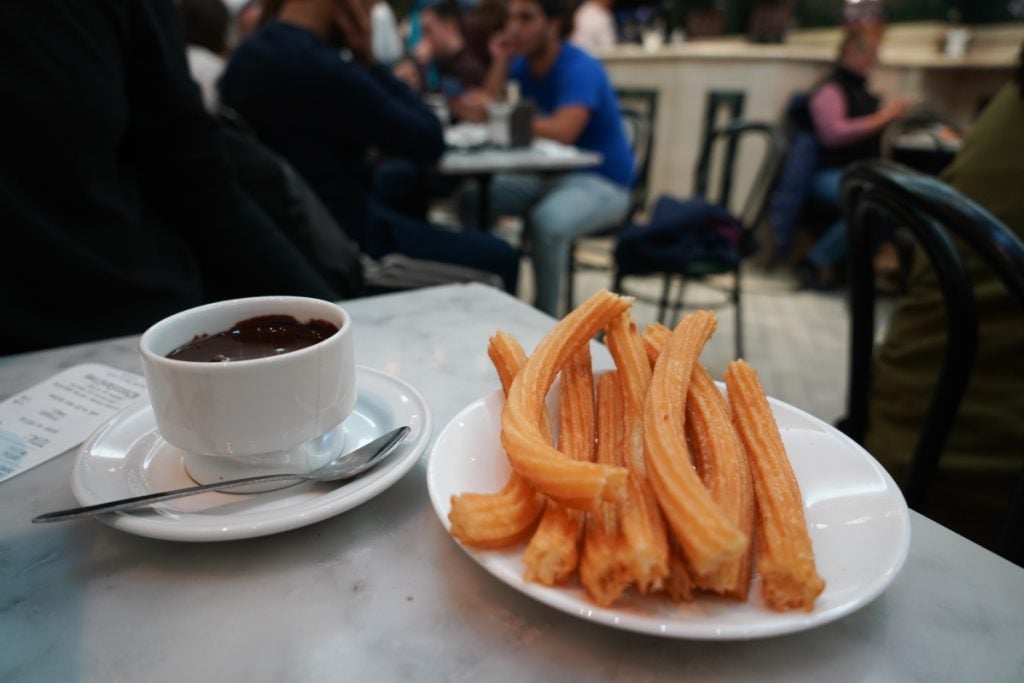
And because no afternoon is complete without something sweet, I’d make my way over to Chocolatería San Ginés for chocolate and churros. A Spanish tradition, and a great thing to enjoy on your very first day in Madrid.
Evening: Stroll to Puerta del Sol and Dinner
End your day with a stroll through Puerta del Sol, a great way to get a sense of the city’s center. It’s also known for Kilometre Zero, which is the starting point for Spain’s highways. Next up, I’d suggest tapas for dinner. A few places I’d recommend are Mesón del Champiñón (famous for grilled garlic mushrooms), Casa Revuelta (order the bacalao rebozado (battered and fried cod pincho)), or Casa Gonzalez (get custom cheese and charcuterie boards and tostas), trying a few bites based on what looks delicious to you!
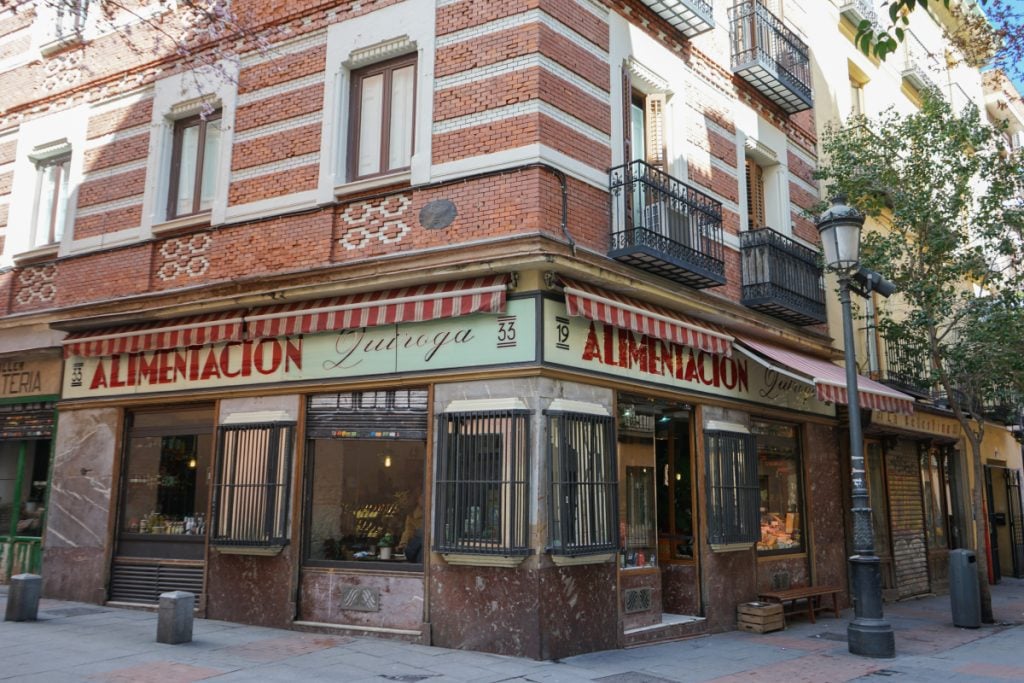
Or, if you’re in the mood for a single spot for dinner, I’d recommend Alimentación Quiroga. They have fantastic cheese boards and dishes featuring quality Spanish products, making it a great place to sample local cuisine.
Day 2: Prado Museum and Retiro
Morning: Breakfast to the Prado Museum
Start off your second day in Madrid with a sit-down breakfast at El 17 de Moreto. There’s an outdoor terrace that I love, and it’s a great place to fuel up for the day. If a coffee is all you need, I also like Etual for a calm, design-y ambiance in the area.
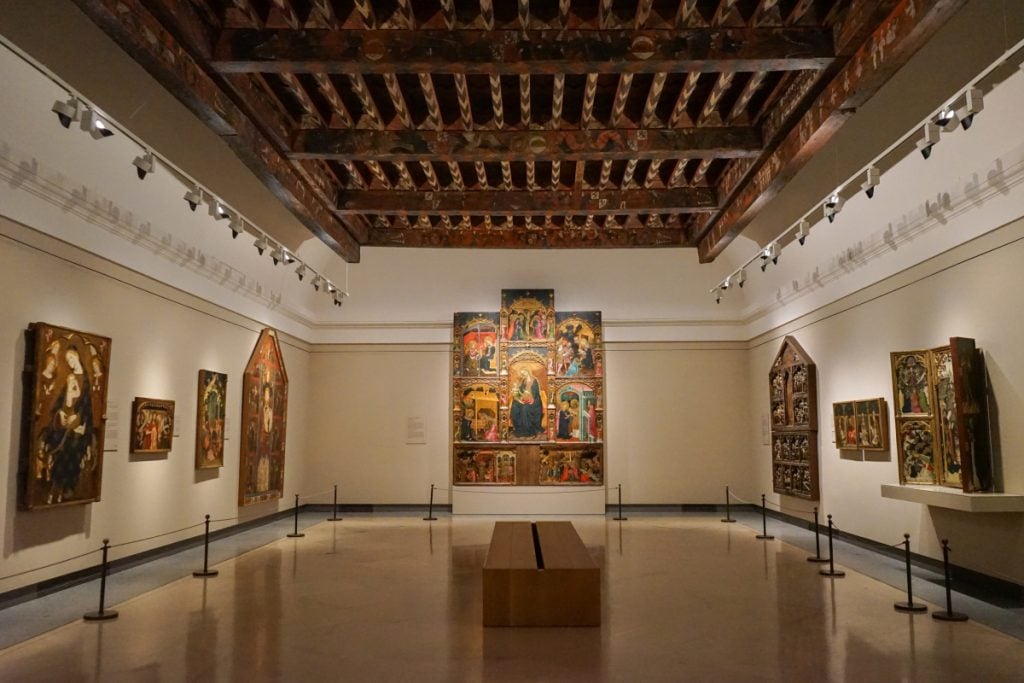
Next up, the Prado Museum. This art museum is one of Madrid’s must-dos and has some incredible works from artists like Francisco Goya, El Greco, Raphael, Caravaggio, and plenty more legendary artists. The historical studio copy of Mona Lisa is also housed at the Prado! The Prado is open daily, including most holidays, but closes on January 1, May 1, and December 25. Double-check opening dates and hours well in advance.
Travel Tip: I’d recommend getting tickets in advance to minimize any stress or lines. Even better, this VIP Early Access tour gives you access to the museum to see its works without the massive crowds.
To get some fresh air after the museum, stroll through the Paseo del Prado just nearby. This boulevard, lined with trees, is ideal for a walk and has some gorgeous fountains to admire along the way.
Afternoon: Lunch and El Retiro Park
Right around the corner from Prado Museum is Restaurante La Puebla. Madrid is home to so many incredible restaurants, but this one wins in my books in terms of proximity and incredible, authentic food. Think Spanish food in a cozy, comfortable atmosphere.
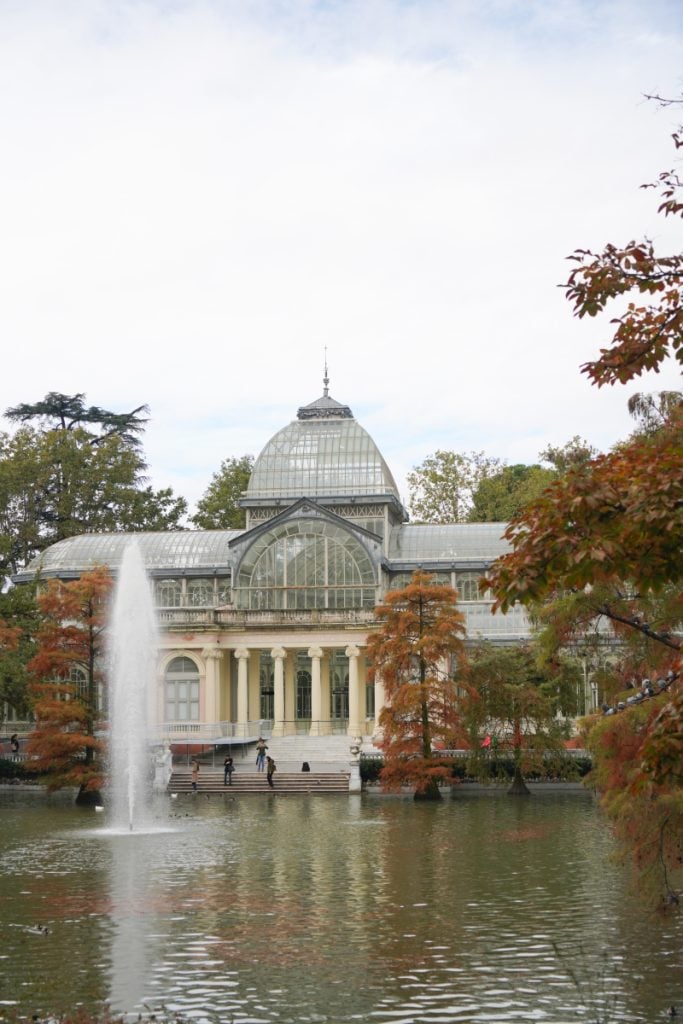
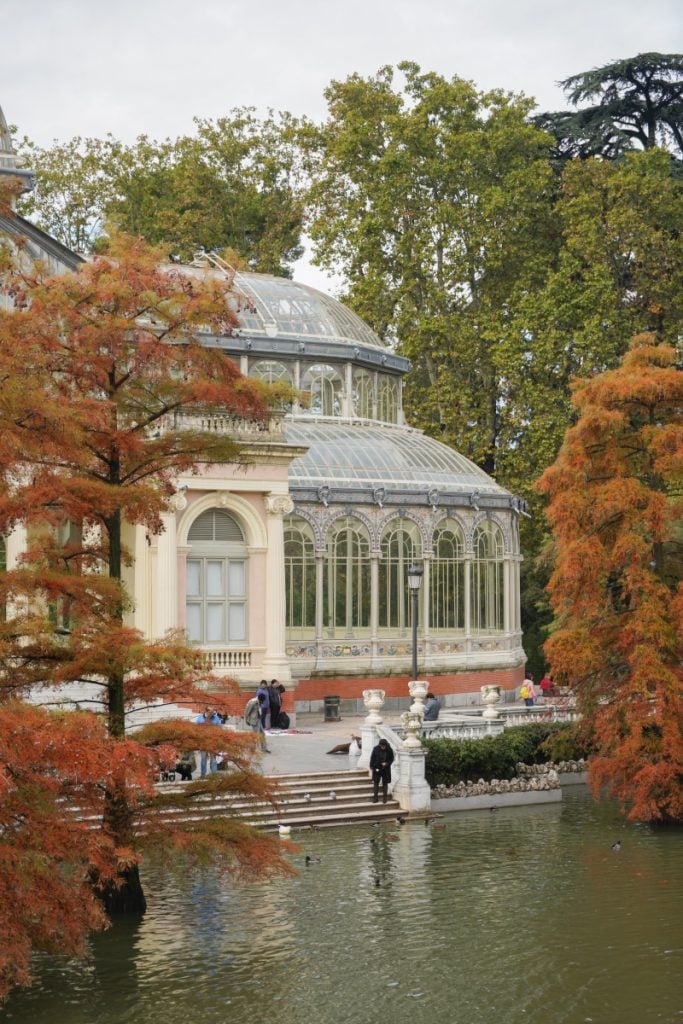
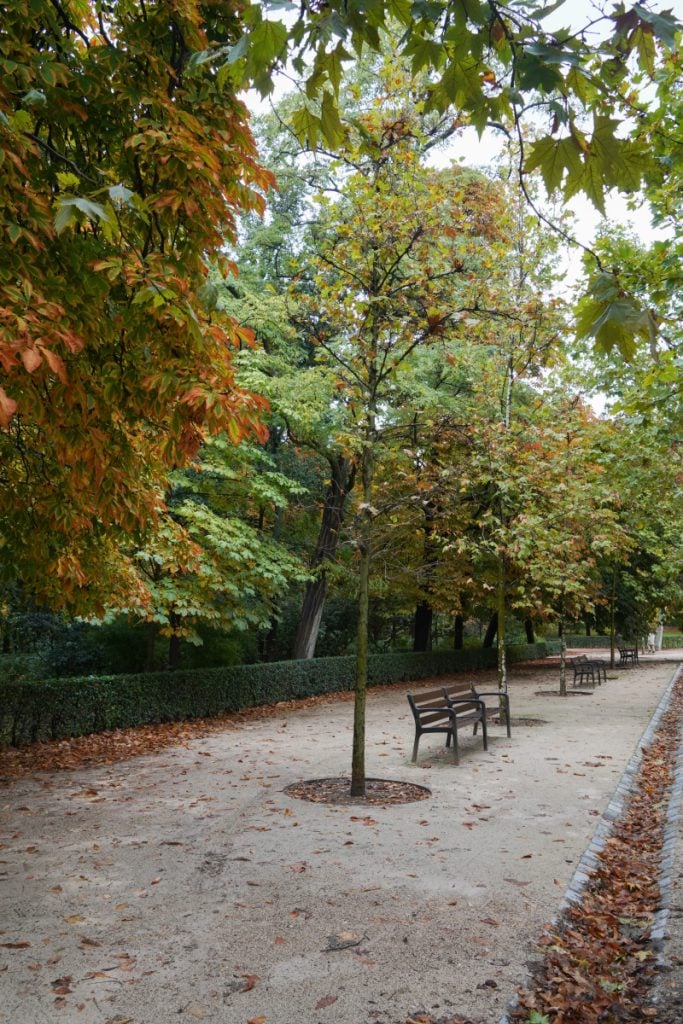
As a post-lunch walk, El Retiro Park is a must-visit in Madrid. It’s lush and gorgeous, and also right beside it is Puerta de Alcalá, a stunning neoclassical monument. Don’t skip the Palacio de Cristal in the park, a beautifully serene palace with enormous glass panels. I think it’s best viewed from across the pond as you get a sense of scale and details. Note: Palacio de Cristal is currently covered for restoration, so you won’t see its usual glass façade. You can still stroll around the pond and see the artwork on its exterior covering.
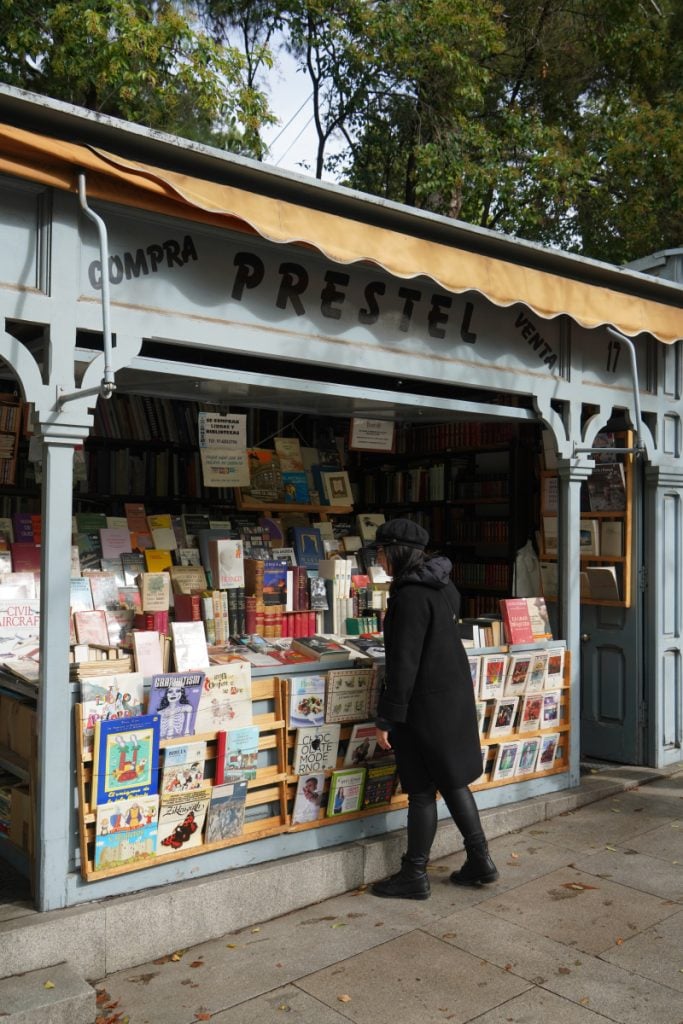
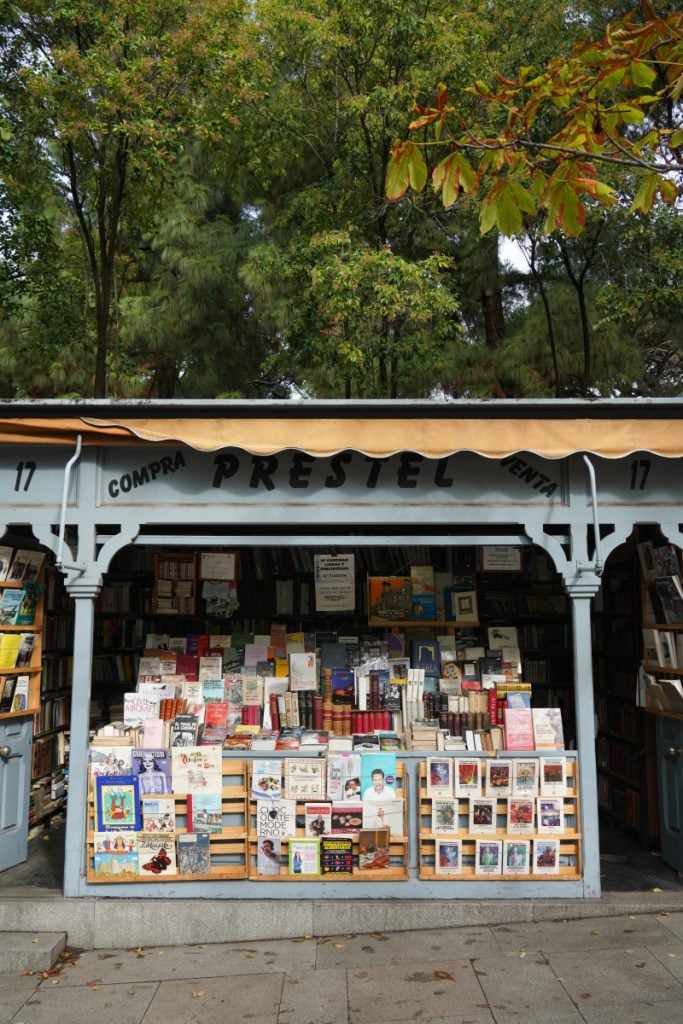
A short walk away, I love visiting Librería Prestel, a great little open-air bookstore just at the edge of the park. This is such a cute spot and a perfect place to peruse some books. If you want to double up on museums, another good one I’d suggest is the Museo Nacional Thyssen-Bornemisza. It’s not far away and has an impressive collection of art over several centuries, including works by artists like Rembrandt, Van Gogh, Degas, and Picasso.
Evening: Shopping and Dinner
Madrid has some incredible shopping, and Salesas is a great area with plenty of cute boutiques and independent shops. Evening is the right time to go, since many of them are closed during the city’s hottest hours for siesta and open back up around 5 pm. I love Casa Gonzalez y Gonzalez for thoughtful home goods, La Oficial for colorful ceramics, and the French sneaker brand Veja has a shop here, too.
Stop into Travesia Cuatro, an art gallery with interesting exhibits for a mini dose of art in the evening. If you need a coffee to power through your evening, Faraday has a great neighborhood feel.
For dinner, I’d recommend Los 33 in the area. If you can get a table and appreciate fine dining, they serve both traditional dishes from Uruguay and more contemporary ones, too. As another option, Charrua is a steakhouse with amazing quality dishes and a gorgeous, modern atmosphere. After dinner, grab a glass at the minimally designed GOTA, with vinyl records playing in the background and a great wine selection.
Day 3: Reina Sofía and More of Madrid
Morning: Breakfast and Reina Sofía
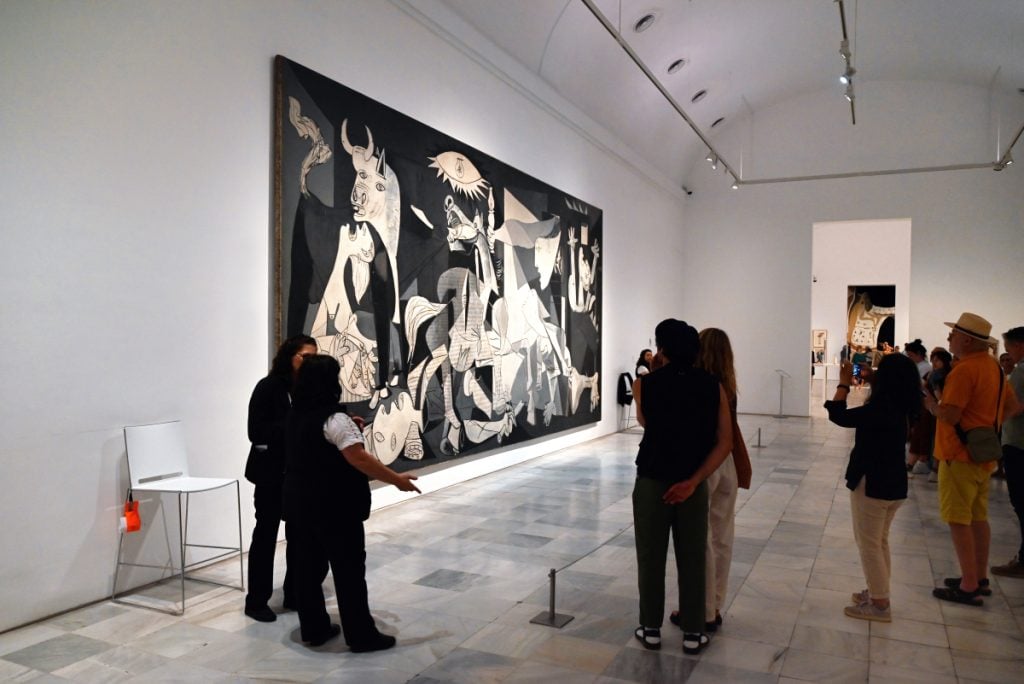
Get ready for the final day with breakfast and coffee at Hola Coffee Fourquet, with a cozy, charming ambiance. Next up, walk over to Madrid’s Reina Sofía, known for an incredible collection of 20th-century art. The museum is often visited for Picasso’s Guernica, one of his most famous works.
The Reina Sofía closes on Tuesdays and certain holidays, so double-check hours and times in advance to plan your visit. There’s also free admission for certain evenings, but tickets can sell out, and lines can be long. You don’t need to book tickets in advance most days; I’d still recommend booking yours ahead of time to help guarantee your spot and avoid lines.
Afternoon: La Latina to Malasaña
During the afternoon, stop by Casa Lucio for a traditional Spanish lunch. Or, Pez Tortilla in La Latina, if you want to try Spanish tortilla. From there, Librería Desperate Literature has a huge selection of old and new books lining the walls, and is a great place to wander through and pick up your next read.
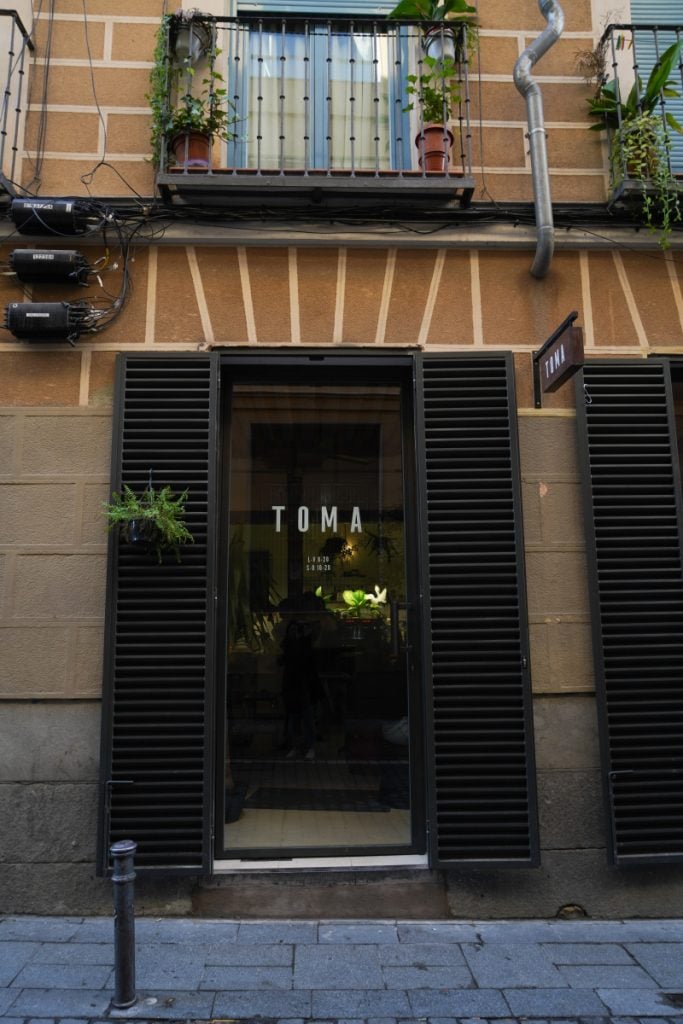
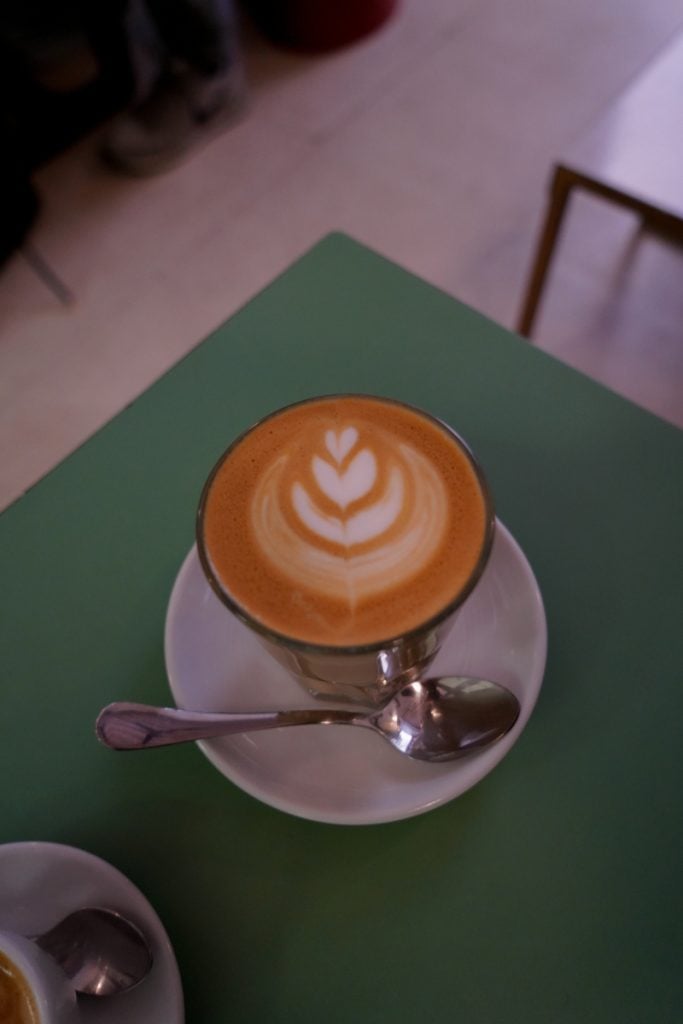
Afterwards, stroll up to Malasaña, one of my favorite neighborhoods in Madrid. This is a great area to just walk through the streets and take in the city. Stop for a coffee at the Toma Café 1 for a little pause. Then, if you’re interested in Spanish espadrilles, Antigua Casa Crespo sells handmade ones in a super historic little shop.
For more art, stop into Palacio de Liria. This historic, palatial building has an extensive art collection and is a great way to get a look into an aristocratic Spanish home.
Evening: Temple of Debod and Dinner

For the final evening of your three days in Madrid, visit the Temple of Debod (Templo de Debod) to watch the sunset. The park and sunset views are free, but if you’d like to go inside the temple, you’ll need to reserve a free timed ticket in advance. The Egyptian temple is one of the most popular places to see the sunset in the city, and with good reason: the views are really stunning. Plan to be there about an hour before sunset to find a spot, relax, and watch the golden light.
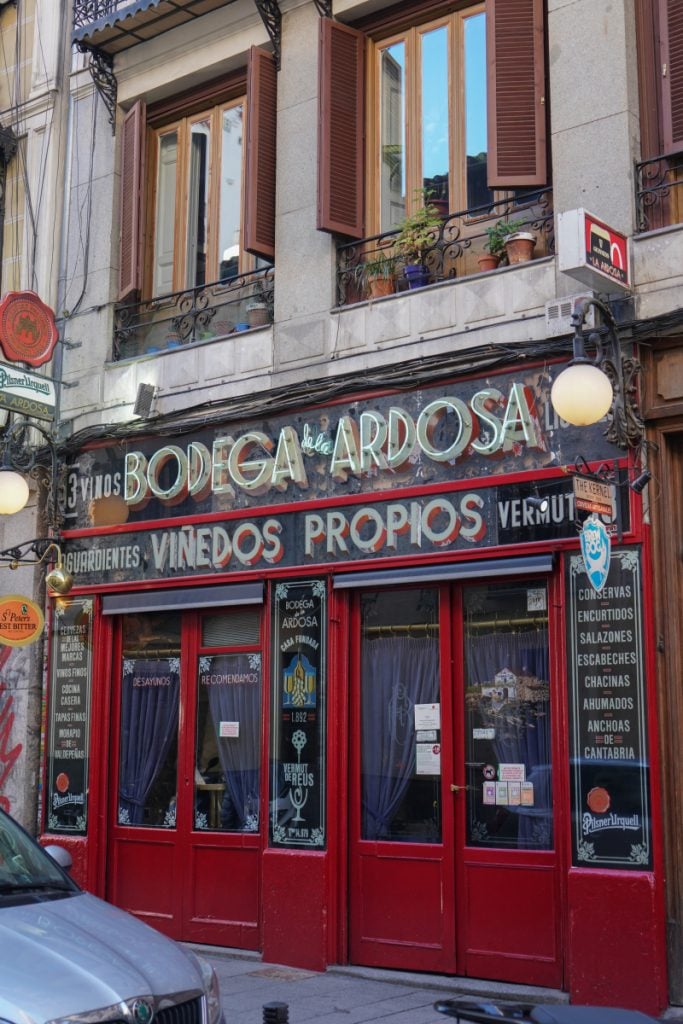
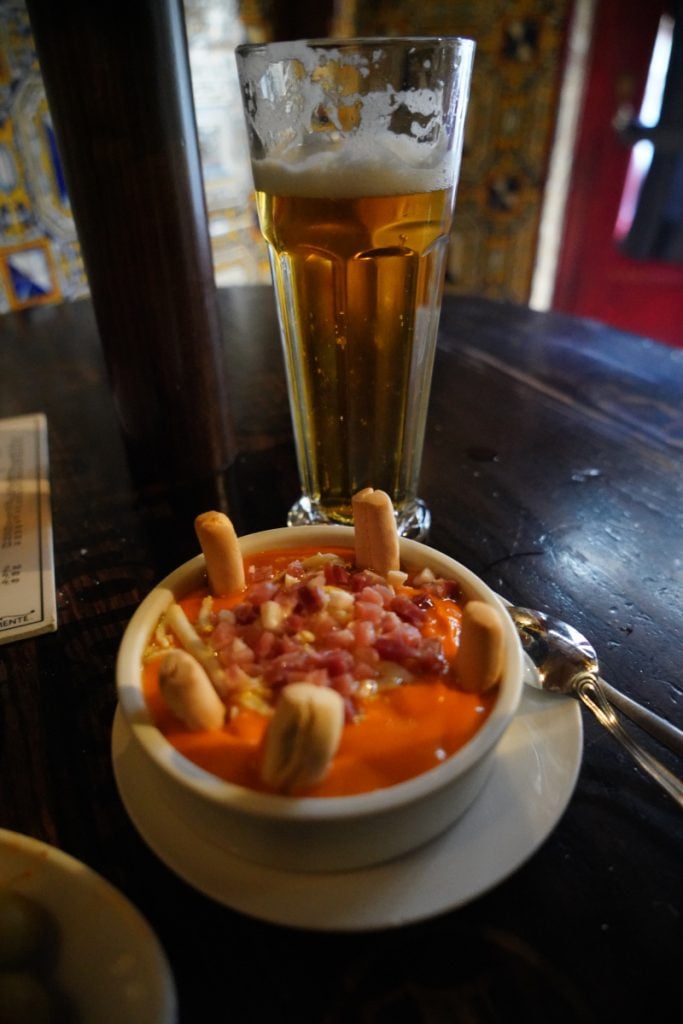
Afterwards, it’s a quick taxi (or more leisurely walk) to Bodega de la Ardosa for dinner. This historic restaurant is known for its tortilla, and also traditional tapas and vermouth on tap.
More Time? Take A Day Trip
Toledo
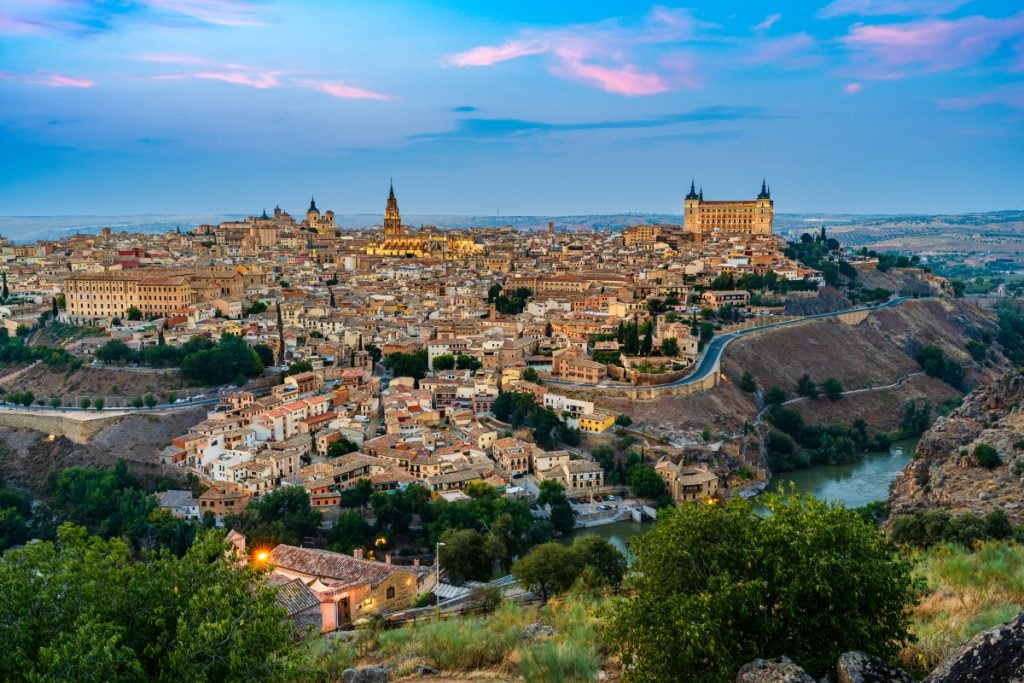
Toledo is a perfect easy day trip from Madrid, especially since it’s only about 35 minutes by high-speed train. If you leave in the morning, you’ll have the whole day to explore this incredibly historic town. There are so many monuments to visit and so much architecture to see, with medieval streets and great museums. The city is also very walkable (but does have a lot of hills and cobblestone streets), so it’s a great one to explore from the train station.
Segovia
As another option for a day trip from Madrid, I’d recommend Segovia. It’s also just about a half-hour train ride to Segovia-Guiomar, followed by a transfer to the historic center, and is even more compact than Toledo. Segovia is known for its impressive Roman aqueduct and the Alcázar of Segovia, a hilltop medieval fortress.
This little city has a gorgeous, grand feel, and is perfect for walking and strolling. Stop by one of the many cafes for a walking break, or one of Segovia’s restaurants to try their suckling pig specialty.
Save This Post for Later on Pinterest
PS — Are You Booking a Trip Soon? Use My Booking Checklist!
These are the sites I use most to book my own trips. Using the links below is a great way to support Bon Traveler’s travel journalism at no extra cost to you. If you need help organizing your itinerary, get my free travel itinerary template here.
1. Book Your Accommodations
I use Booking.com for hotels and Airbnb for vacation rentals. They have the biggest inventory and consistently offer the best rates.
2. Book Your Rental Car
Self-driving is the best way to explore most destinations. I use Discover Cars for our rental cars, select full coverage insurance, and opt for a reputable company like Alamo, Hertz, or Sixt.
3. Book Your Tours & Experiences
I use Viator, Airbnb, and Get Your Guide to find the best tours and experiences. They are my favorite tour search engines. I always check all three as their inventory varies depending on the destination.
4. Book Your Private Transfers
For easy, reliable private transfers, I use Welcome Pickups. It’s my go-to for arranging a driver in advance — whether it’s an airport pickup, a hotel-to-hotel transfer, or a day trip. The experience is seamless, with English-speaking drivers and upfront pricing, so you can travel stress-free at every stage of your trip.
5. Get Cell Data for Your Trip
I use Holafly for international cell data. Their unlimited data eSIMs are easy to install, activate instantly on arrival, and let you skip local SIM cards and expensive roaming fees.
6. Don’t Forget Travel Insurance
I never leave the country without travel insurance. It provides comprehensive protection in case anything goes wrong (ie. illness, injury, theft, or cancellations).
My favorite companies that offer the best coverage and rates are:
- World Nomads (best for all-around)
- Safety Wing (best for frequent travelers)
Xx,
Jessica