Arashiyama is one of Kyoto’s most treasured areas, where the mountains meet the Hozugawa River, and is brimming with historic sites. Home to zen temples, lush bamboo forests, and some of the region’s most scenic spots, there are plenty of things to do to fill an entire day.
Most people know Arashiyama for the famous bamboo groves. However, with tourist crowds increasing in the area, discovering other activities and attractions in this leafy region of western Kyoto is key to making the most of your time here. It’s part of Kyoto that I adore and recommend as part of any Kyoto itinerary!

Offering some of the best views in Kyoto, I recommend you spend a full day exploring the area. This list of things to do in Arashiyama, Japan, is perfect for first-timers who want to experience authentic places and make the most of their time here.
Short on Time? Here Are My Top Picks for the Best Areas to Stay and Things to Do in Kyoto:
Where to Stay
The best two neighborhoods for exploring Arashiyama and Kyoto’s major sights are Downtown Kyoto and Southern Higashiyama.
- Downtown Kyoto (staying at Ritz-Carlton), for the best central location near shopping and dining
- Southern Higashiyama (staying at Four Seasons), for the best access to temples and traditional charm
Things to Do
- Join A Food Tour Through Nishiki Market
- Join in with a Local Tea Ceremony
- Take a Kintsugi Workshop with Wabunka
Helpful Guides to Plan Your Trip
To help you better plan your time in Kyoto, be sure to check out my Kyoto itinerary, Kyoto city guide, and guide to the best restaurants in Kyoto! If you’re planning to visit other parts of Japan, my transportation guide to Japan and top tips for visiting Japan have everything you need to know about getting around.
Arashiyama Guide: Things to Do for First-Timers
What to Know Before Visiting Arashiyama


How to Get to Arashiyama
The Arashiyama district is easily accessible from downtown and central Kyoto, as well as Kyoto Station. Depending on where you’re staying, these are the best options to get to Arashiyama.
- Take the JR Sagano line from Kyoto Station to Saga-Arashiyama Station. The train journey takes around 18 minutes. This is the best route if you are staying near the Kyoto Station area.
- From central and downtown Kyoto, you can take the Hankyu Line to Omiya Station and change to the Randen tramline to Arashiyama Station. The tram takes around 25 minutes from Omiya to Arashiyama.
Things to Do in Arashiyama
Adashino Nenbutsuji Temple


Nestled in the hills of Arashiyama, this Buddhist temple is a beautiful place honoring those who have passed without family to remember them. Adashino Nenbutsuji Temple has more than 8,000 statues known as ‘Rakan’ dedicated to the souls, and it is a peaceful place beyond the usual tourist route in Arashiyama.
The temple grounds also feature a stair-cased bamboo grove where towering bamboo trees create a serene place without the crowds. This is a great alternative to the busier Arashiyama Bamboo Grove. The quiet beauty of the moss-covered statues and peaceful grounds makes this temple a must-visit during your visit to Arashiyama.
% ARABICA Kyoto Arashiyama


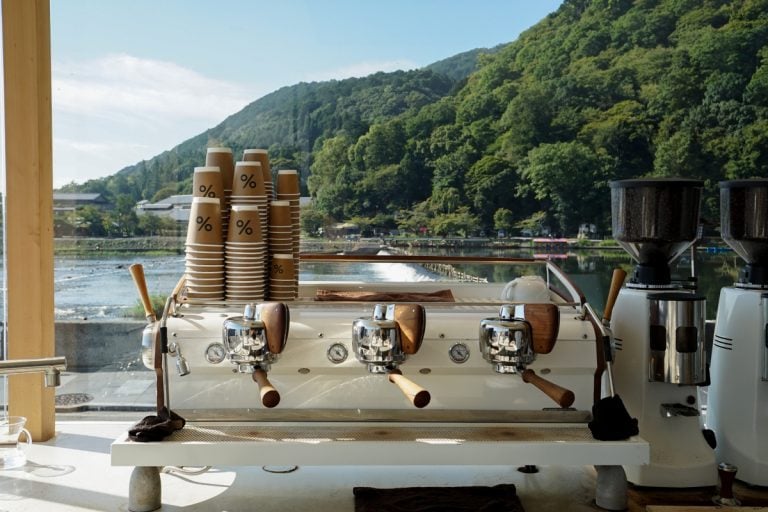
Located right by the banks of the Hozu River, % ARABICA Kyoto Arashiyama is one of the most beautiful coffee shops in Kyoto. The % ARABICA brand is known for its delicious Kyoto latte and aesthetically beautiful spaces, which have now gained popularity in cities across Asia and Europe.
The setting elevates the experience, where you can sip your coffee while enjoying views of Togetsukyo Bridge and the surrounding mountains. The cafe’s clean design harmoniously contrasts with the natural beauty of Arashiyama, making it the perfect spot for your morning coffee.
Saga Toriimoto Preserved Street

A walk along Saga Toriimoto Preserved Street will transport you back to the Edo period. The stone-paved street is lined with beautifully maintained machiya (traditional townhouses), many of which are now home to cafes, local restaurants, and traditional souvenirs.
The route was once used by pilgrims heading to local temples, with today’s visitors now able to take in the historical charm of the area. If you follow my recommended one-day Arashiyama route (listed later in this article), you’ll wander this street that connects cultural landmarks like Otagi Nenbutsuji Temple and Adashino Nenbutsuji Temple.
Togetsukyo Bridge

Togetsukyo Bridge is an iconic scene that connects attractions on the east and west banks of the Hozugawa River. The name translates to “Moon Crossing Bridge,” and is a sight to behold, especially during the cherry blossom viewing and fall seasons.
The bridge was originally built during the Heian period (794-1185) and reconstructed several times, with the current version most recently rebuilt in the 1930s and ensuring it retains a traditional aesthetic.
While the area is popular and centrally located near numerous attractions in Arashiyama, it is a must-visit for first-time visitors. Nearby, you can join a boat tour along the Hozugawa River, and I love crossing the bridge to take in the scenic views that are some of the best photography spots in Kyoto.
Tenryu-ji Temple


Considered one of the most important Zen temples in Kyoto, Tenryu-ji was added to the list of UNESCO World Heritage sites in 1994. While some of the temple’s original buildings have been lost to fire throughout the centuries, the stunning gardens are still remarkably intact.
The sogenchi garden expertly blends a central pond, rocks, and carefully positioned pines to complement the natural scenes of the surrounding mountains. In spring, cherry trees transform the garden into a wonderland of pink and white. Visiting Tenryu-ji gives you a look at Japanese Zen philosophy and traditional Japanese garden design. It’s great to pair with a visit to the Arashiyama Bamboo Grove and Arashiyama’s main shopping street.
Fukuda Art Museum
While much of a visit to Arashiyama is about traditional attractions and nature spots, you shouldn’t skip the newer Fukuda Art Museum. Opened in 2019, the museum houses a private collection of over 1,800 works spanning Edo-period masters like Ito Jakuchu and Katsushika Hokusai to modern Japanese painters.
A conscious decision was made to ensure the architecture harmonizes with the natural surroundings of Arashiyama and features floor-to-ceiling windows that frame the Hozugawa River and the Arashiyama mountains. The minimalist interior embraces Kyoto’s aesthetics and emphasizes the works on display.
As well as permanent exhibitions, there are rotating temporary exhibits, all with English signage, making it accessible to international tourists. Art lovers and those in search of a cultural connection will love the space where traditional and contemporary art blend seamlessly.
Arashiyama Bamboo Forest

Arguably one of Kyoto’s most iconic and photographed scenes, Arashiyama Bamboo Grove is a much-loved spot. The paths lined with towering bamboo offer an otherworldly experience, especially as dappled sunlight gently filters through the lush canopy of leaves.
The path is relatively short and can become quite busy during the day, especially during peak travel periods, such as the cherry blossom season. However, the experience shouldn’t be missed if it’s your first time in Arashiyama.
I recommend arriving early in the morning and starting your day here to skip the crowds, or making it one of your final stops before heading back to central Kyoto, as crowds thin by late afternoon.
Monkey Park Iwatayama

If you’ve ever wanted to see Japanese macaques up close, then Iwatayama Monkey Park is perfect for you. Offering a wildlife encounter coupled with panoramic views, there are around 100 macaques that call this region home.
There is a approximately 20-minute uphill walk to reach the monkey park; however, the views from the top are exceptional. A visit makes for a fun addition, especially for families with children. You have the opportunity to observe the monkeys roam freely in their natural habitat and can even purchase nuts and fruit to feed them from within an enclosed space.
Jojakkoji Temple

One of Arashiyama’s lesser-known cultural attractions is Jojakkoji Temple. Tucked away in the woodland of Mount Ogura, the temple is renowned for its moss-covered paths and vibrant seasonal foliage, particularly the fiery fall colors.
Unlike some of the more popular temples in Kyoto, Jojakkoji has an intimate atmosphere that feels authentic and untouched by overtourism. This is the ideal place to visit if you want to experience a quieter, more meditative side of Kyoto’s temple culture.
Fu Fu No Yu Onsen
Experiencing Japanese onsen culture is a unique addition to any Japan itinerary. Fu Fu No Yu is a modern public onsen (hot spring) offering a relaxing and rejuvenating experience, perfect for soaking after a long day of exploring. Located near the Arashiyama Bamboo Grove and Togetsukyo Bridge, this bathhouse is a favorite among both locals and visitors.
The baths, which are fed by natural hot spring water, soothe muscle aches and promote circulation, a key reason why onsens are so revered in Japan. There is a mix of indoor and outdoor baths, and nothing beats soaking in an open-air bath on a crisp day, surrounded by fall foliage or light snowfall.
You don’t need to stay overnight to make use of Fu Fu No Yu’s facilities, but you can enjoy the addition of a stay in a traditional ryokan by spending the night if you wish.
Arashiyama Itsukichaya
Arashiyama Itsukichaya is a charming tea house that seamlessly blends traditional and contemporary elements to create the ideal cafe experience. Its convenient location near Tenryu-ji Temple makes the cafe perfect for a refreshment before or after a visit. The menu features Kyoto-style sweets, such as warabi mochi and matcha parfaits, as well as traditional set meals and seasonal specialties crafted with local ingredients.
The tea house also serves sencha and matcha tea, offering traditional flavours from the region. The interior is designed using warm wood tones and minimalist decor, and when the weather is good, you can choose to sit in the open-air seating overlooking the waterway nearby.
PIZZERIA MAMA
I love Japanese food, but it’s nice to switch things up occasionally. That’s why I love dining at PIZZERIA MAMA. Serving authentic Italian pizza with a distinctly Japanese twist, the restaurant is operated by a local chef trained in Naples. With a wood-fired oven and menu that features Neapolitan-style pizzas, flavours of Japan are infused by using locally sourced ingredients.
Located at ARASHIYAMA HOUSE MAMA in a building that was formerly used as a resort for Hankyu Railway employees and their families, the interiors are modern yet cozy. The menu features a blend of traditional and local Kyoto ingredients, including shiso leaf, yuzu-pickled daikon, and sukiyaki beef. The menu changes with the seasons to reflect the availability of produce, and it’s the perfect place for families and international travelers seeking a fusion-based dining option.
Otagi Nenbutsuji Temple


Otagi Nenbutsuji is one of Kyoto’s most underrated temples, in my opinion. High up on the northern edge of Arashiyama, the 8th-century temple was relocated and rebuilt in the 20th century after a series of floods and fires. The most notable sight at the temple is the 1,200 stone rakan, which are statues of the Buddha’s disciples. Each one is carved with a unique expression and personality, making wandering around the temple grounds even more enjoyable.
The statues were not carved by Buddhist leaders, but instead by local people under the guidance of a temple priest. The grounds are filled with maple trees and moss-covered grounds, giving the space a mystical charm as you walk around the tiered garden.
With fewer visitors than other Arashiyama temples, Otagi Nenbutsuji offers a peaceful experience of Buddhism. For first-time visitors, it’s a hidden gem that perfectly captures Kyoto’s spiritual side.
Sagano Romantic Train

If you’re visiting between spring and fall, then a ride on the Sagano Romantic Railway is a stunning way to experience the natural landscapes around Arashiyama. Transformed into a tourist sightseeing train in 1991, the vintage-style train features wooden interiors and open-air carriages that are designed to let riders experience the full beauty of nature.
Operating between Arashiyama and Kameoka, the scenic route traces along the hills of Arashiyama and the Hozugawa River. The best times to take the train are in spring when the cherry blossoms are blooming or in fall when the leaves are vibrant shades of red and orange.
Tickets are available one month in advance, and I do recommend you pre-purchase them, as seats are available by reservation only, and same-day tickets are not usually available.
How to Spend a Day in Arashiyama

I recommend spending a full day in Arashiyama to make the most of the beautiful natural scenery of the area, as well as visiting more than just the top two or three tourist activities. This is my recommended one-day guide for your day in Arashiyama.
- Start at the Bamboo Grove to beat the crowds. I recommend arriving by 7 am if you want to take crowd-free photos.
- Walk down to Togetsukyo Bridge and enjoy the scenery in tranquility.
- Grab a coffee from % ARABICA. They open at 9 am, so it’s perfect to head there as soon as it opens.
- Wander the gardens and temple grounds of Tenryu-ji Temple, and I’d allow around one hour to enjoy everything without rushing.
- Grab a taxi and head to Otagi Nenbutsuji Temple.
- Walk 7 minutes down the hill to Adashino Nenbutsuji Temple and visit the bamboo grove here, especially if you’re not a morning person and decided to skip the main bamboo forest.
- Walk along Saga Toriimoto Preserved Street back to central Arashiyama.
- Grab lunch at Arashiyama Itsukichaya for traditional Japanese cuisine or PIZZERIA MAMA for wood-fired pizzas.
- Spend the afternoon admiring the art at Fukuda Art Museum.
- Finish with a soak in the onsen at Fu Fu No Yu Onsen.
Save This Post for Later on Pinterest


PS — Are You Booking a Trip Soon? Use My Booking Checklist!
These are the sites I use most to book my own trips. Using the links below is a great way to support Bon Traveler’s travel journalism at no extra cost to you. If you need help organizing your itinerary, get my free travel itinerary template here.
1. Book Your Accommodations
I use Booking.com for hotels and Airbnb for vacation rentals. They have the biggest inventory and consistently offer the best rates.
2. Book Your Rental Car
Self-driving is the best way to explore most destinations. I use Discover Cars for our rental cars, select full coverage insurance, and opt for a reputable company like Alamo, Hertz, or Sixt.
3. Book Your Tours & Experiences
I use Viator, Airbnb, and Get Your Guide to find the best tours and experiences. They are my favorite tour search engines. I always check all three as their inventory varies depending on the destination.
4. Book Your Private Transfers
For easy, reliable private transfers, I use Welcome Pickups. It’s my go-to for arranging a driver in advance — whether it’s an airport pickup, a hotel-to-hotel transfer, or a day trip. The experience is seamless, with English-speaking drivers and upfront pricing, so you can travel stress-free at every stage of your trip.
5. Get Cell Data for Your Trip
I use Holafly for international cell data. Their unlimited data eSIMs are easy to install, activate instantly on arrival, and let you skip local SIM cards and expensive roaming fees.
6. Don’t Forget Travel Insurance
I never leave the country without travel insurance. It provides comprehensive protection in case anything goes wrong (ie. illness, injury, theft, or cancellations).
My favorite companies that offer the best coverage and rates are:
- World Nomads (best for all-around)
- Safety Wing (best for frequent travelers)
Xx,
Jessica