Words contributed by Japan travel blogger Jo at the Tokyo Chapter. Images by Jessica Wright.
For one year in high school, I lived in Japan as an exchange student in the Japanese countryside before returning for the majority of my twenties. I found myself working in a Japanese office, a prestigious Japanese high-end hotel, and as an interpreter.
So, I was foolishly cocky when I took on the new role of “Mom” in Tokyo. I mean… I spoke the language, had a great grasp of the cultural nuances, etc. “Surely, getting around with a baby and a toddler in Tokyo would be much easier for me than for most, right?”
In the same way that you seem to notice pregnant people everywhere once you are pregnant, I had never really looked for all the child-friendly spots in Japan before. I hadn’t been looking for the playgrounds or sparkling clean restrooms equipped with changing tables. Once I did find my groove in Japan as a mom, completely through trial and error, I knew that I wanted to share just how magical it can be to explore Japan with little children in tow.

I wanted to make it easier for parents who are visiting Japan with toddlers. It’s clear why all families fall in love with Japan. Even in Japan’s major cities, every family travel tale feels different from the next. There are many different types of Japan — each memorable in its own way.
Yes, of course, it is important to be well-prepared when seeing Japan with little ones, more so than when traveling during those pre-children days. I feel that planning accordingly (and knowing what to expect) allows for more spontaneous, one-of-a-kind travel moments as a family. A solid, well-prepared itinerary, with the main pillars locked in ahead of time, leaves room for the ability to wander, get “lost” (in the best way), and even let the curiosity of the youngest in the family group lead some of the way.

With solid Japan plans in hand, everyone can then really lean into the cleanliness, safety, kindness, and stunning customer service that Japan has to offer. This is my guide to visiting Japan with toddlers, with firsthand knowledge from living there.
Short on Time? Here Are My Top Tips for Visiting Japan with Toddlers:
- Bring a Compact, Foldable Stroller
- Bring some Coloring Kits, Sticker Stampers, and Small Magnetic Puzzles
- Use a Hard Case Four-Wheel Suitcase
- Bluetooth Headphones for phones or iPads
Helpful Guides to Plan Your Trip
I have a variety of additional travel planning resources for Japan and toddler travel. I would recommend reading these posts:
- My Toddler Travel Essential Gear List for all things gear-related
- Important Things to Know Before Traveling to Japan for things you should before visiting
- How to Get Around Japan: A Japan Rail Travel Guide for how to get around by train
- 7 Tips for Surviving Long-Haul Flights with Toddlers for a few tips after some lessons learned with our toddler in tow
- What to Wear: The Styled Traveling Mom Edition for fashion recommendations for moms
For help planning your itinerary, my Japan with toddler itinerary and 10-day Japan itinerary for first-timers are a great place to start!
The Ultimate Guide to Japan With a Toddler
Helpful Tips to Know Before You Arrive
Planning the Time of Year to Travel


First thing to do is take note of the Golden Week (end of April to early May) and Obon (mid-August) dates for the year of travel. It’s not a disaster if you must travel during these Japan National Holiday times, but it will make for a busier time of year and will make family-friendly accommodation and flights more expensive.
I believe that Japan is fabulous for families at any time of year. The only exception is July and August. Spring and autumn allow for easy exploration, and the seasonal produce in restaurants also changes with the seasons. Cherry blossoms and autumn leaves offer some of the most incredible outdoor adventures with kids.
Japanese winter gives families the chance to experience that famous “pow-pow” snow in the mountainous ski field regions. More than just skiing and snow, though, not many people realize that Japanese winter skies are almost always blue and sunny, making it the best time to take in the most stunning Mt Fuji views. Spending time in Japan over the New Year’s period can be a special way to welcome in the new year. Please note that almost all restaurants and shops will be closed January 1-3, so this is a fabulous time to stay in a traditional ryokan and embrace the quietest time of the year in nature, taking an onsen several times a day, family times on a futon and tatami, and eating traditional Japanese cuisine.
July and August are the height of summer in Japan. The heat is particularly brutal in the most popular sightseeing cities such as Osaka, Kyoto, and Tokyo. Particularly since Japan is largely an outdoor walking vacation, it is not a by-the-pool style holiday, unlike visiting Bali or Thailand.
Should July and August be the only time you can travel to Japan with young children, I recommend keeping the heat and humidity in mind during the planning process. I recommend planning for long, lush lunches, packing light and breathable clothing, embracing slow travel, and taking advantage of Japan’s incredible museums for children. Please note that the price for hotel pool use is not often included in accommodation prices in Japan. Before making a reservation, I recommend checking the months the pool is open, whether children are allowed, and the cost of using the pool.
Some travelers worry about the rainy season in June or the typhoon season later in the year. I find the weather to be inconsistent at this time of year, and I wouldn’t let it stop any of your family plans.

Plan out a Rough Itinerary
To me, the ideal Japan with kids itinerary includes:
- A blend of “Old Japan” and “New Japan” as well as nature and city.
- A slow pace that allows for at least 3-4 nights at a time in each city (keeping in mind that you can stay in Kyoto OR Osaka and easily day trip to the other city on a regular limited express train as they are close together. It is also very easy to day trip to Nara, Kobe, and Himeji easily too.)
- At least half of the meals are reserved at least a few days in advance (I recommend making sure you’ve included options like tempura, sukiyaki/shabu-shabu, sushi, a few nice izakaya options, okonomiyaki, and teppanyaki)
- Leave time at least once a day for play – whether that be playgrounds, parks, or play centers. A little bit of “them time” can equal peace and sanity for parents in return.
- A few nights at a traditional Japanese ryokan or a modern version of a ryokan (please note that this is the only time in the trip that I don’t recommend staying for 3-4 nights)
- At least one ride in a Shinkansen (bullet train)
- At least one kid-friendly spot to take in Mt Fuji (remember that, when planning to see Mt Fuji, it’s not about “going to Mt Fuji.” It’s about choosing a beautiful spot with a Fuji backdrop (We love Fujiyoshida, Fuji-Q Highland, Grinpa Amusement Park with the Sylvanian Family section, Lake Kawaguchi, and Lake Yamanakako.)
- One of the Team Lab art installation experiences (there are at least 5 across Japan)
- Saving the Tokyo Disney parks for the last few days of the Japan vacation. This leaves a little treat for kids to look forward to, but also, Disney makes everyone very tired and helps little kids sleep better on the plane ride home.
Book Flights and Decide which Airports are Best
Deciding on a rough itinerary is a good way to determine which airports to fly in and out of. When choosing a Tokyo airport, I recommend opting for Haneda over Narita, if it is a financially viable option, as it is much closer to central Tokyo. Consider flying out of Osaka International on your departure as well, if you’re not returning to Tokyo.
Choose the Right Accommodation for Your Family

Hotel rooms in Japan are notoriously small, making it hard for families with small kids who need even a tiny bit of space to wriggle, play a little, and just live. For this reason, I recommend apartment-style hotels. Brands such as Mimaru or &Here are often best, as rooms typically feature a kitchenette, space for dining, a lounge-type area, and a spacious bathroom with a Japanese bath and a separate futuristic-style Japanese toilet. These hotels also have an on-site coin laundry.
These apartment hotels also have an English-speaking front desk. Having a front desk provides peace of mind for families if a child is ill, as they can assist with purchasing medicine, scheduling doctor’s appointments, calling an ambulance, and providing support in emergencies, such as earthquakes. These hotels can also assist with forwarding and receiving luggage — an option not available at all hotels.
For families who decide not to stay at an apartment hotel, I recommend prioritizing accommodations with the following options available:
- A bed for everyone in the family — many hotels offer bed-sharing, but decide if that is right for you and the ages of your children
- Hotels that provide cots for children — I don’t recommend bringing your pack’n’play as most hotels that don’t provide cots are unable to do so as the room doesn’t have enough space.
- A manned 24-hour front desk — this means that a hotel can assist you in an emergency and can also make restaurant reservations on your behalf
- A hotel that is less than 5 minutes walk from a major station — a longer walk may not seem like a lot, but as everyone gets tired, it can stop parents from venturing out for dinner again and miss out on some special Japan experiences if it all starts to feel “too hard.” In Japan, convenience is measured by proximity to stations, not by area names (this goes for real estate shopping in Japan, too.
- An on-site coin laundry — this is an option in even the most budget-friendly business hotels in Japan. It means that families can pack light and wash clothing often.
- Choose neighborhoods with parks and play spots nearby — for toddlers who need playground time at the beginning of the day. For example, in Tokyo, Roppongi offers amazing play spaces for children, along with numerous child-friendly restaurants. For slightly older children, Ueno is a fabulous option, as Ueno Park, featuring swan boats, is conveniently located nearby.
Getting Around Japan with Toddlers
The Thing with JR Passes in Japan
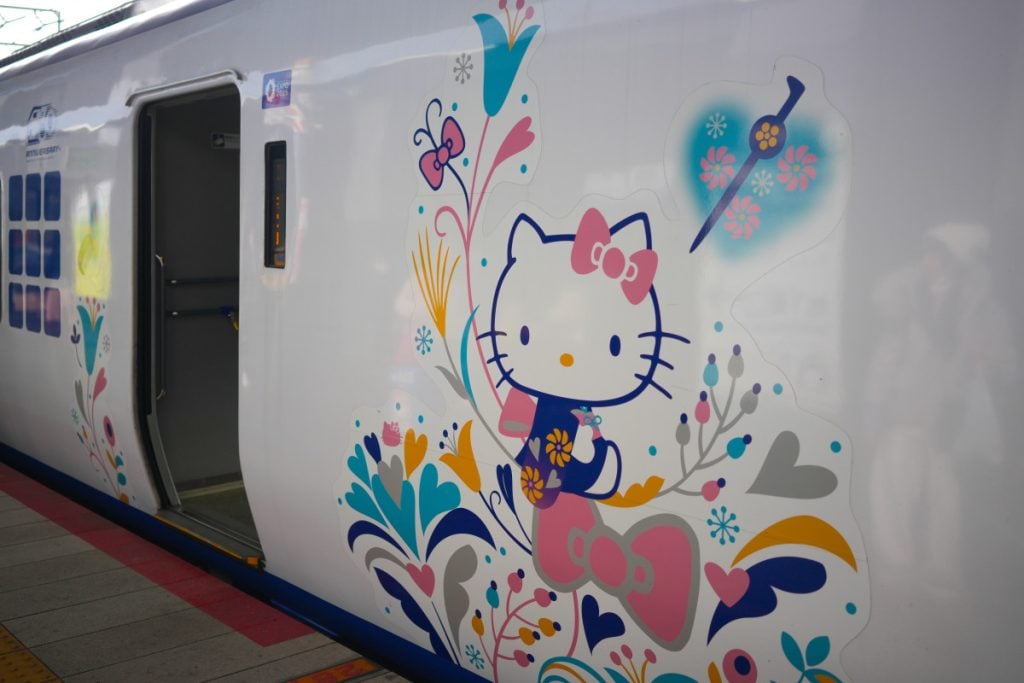
Up until a few years ago, the JR Pass was the “must-have” option for tourists in Japan. However, since prices increase, it rarely makes sense, economically, for visitors. If you’d like a way to check if a JR Pass will save money, I recommend using this JR Pass Calculator to check your specific routes. It will give you a definitive answer whether outright tickets are best for your family.
Take a Stroller

A stroller is a must. For babies, toddlers, and even some bigger kids (who will still fit), a stroller can change the entire holiday. It will stretch out the length of the day for parents who want to explore. Japan isn’t a “by the pool” style holiday, so it usually involves walking more than many little legs are used to. Parents who take strollers can spend more time exploring and also enjoy long, leisurely meals hands-free while their child naps or plays sitting down.
Travel Tip: I recommend a light stroller that also folds easily; the Stokke Yo-Yo or Cybex Libelle are great examples.
For families with two children, I recommend two light strollers over a double stroller (if there is more than one adult traveling). We have also had success with an easy-folding double stroller, as my children are close together in age.
I don’t ever recommend a side-by-side double stroller for Japan. The reason? It will literally limit the shops and restaurants you can enter as a family, and also make travel difficult at train station ticket gates. Wagon-style strollers are also not allowed in many indoor museums, shopping malls, or amusement parks in Japan, so I recommend leaving them at home.
For when the baby is sitting in the stroller (ie, unable to fold and carry), I recommend using Google Maps to assist in finding an elevator. Google Maps is incredible for train travel in Japan. It will tell you ticket prices, which platform to board the train from, AND which station exit is closest to your destination. When looking for an elevator, change the Google Maps options settings to “wheelchair accessible,” and it will guide you to your closest option every time.
If the baby is still small enough for a baby sling or carrier (this Artipoppe baby carrier is my favorite!), I recommend packing that too. It’s always great to have options to mix it all up and keep everything fresh.
Take Public Transport Where Possible, but Also Keep Taxis in Mind

The train and bus systems in Japan are so reliable and efficient that I recommend using them as much as possible. However, with kids comes tired kids or meltdowns, and in those moments, I recommend keeping taxis as a backup option.
Hailing a taxi or collecting a taxi from a taxi stand in front of a station or landmark is the easiest option. The GO Taxi app is also another option. Uber in Japan ends up being a taxi anyway, so I would look at the other options first. HOWEVER, the Uber app is a great way to get a rough idea of how much a certain distance will cost, so the app is fabulous when used in that way. Most Japanese taxis accept most major credit cards.
Child seats and baby seats are not required by law in Japanese taxis. For those who are not comfortable with this idea, public transport or a pre-booked private transfer may be a better option.
Make Travel Easier by Traveling Like a Local and Forwarding Luggage
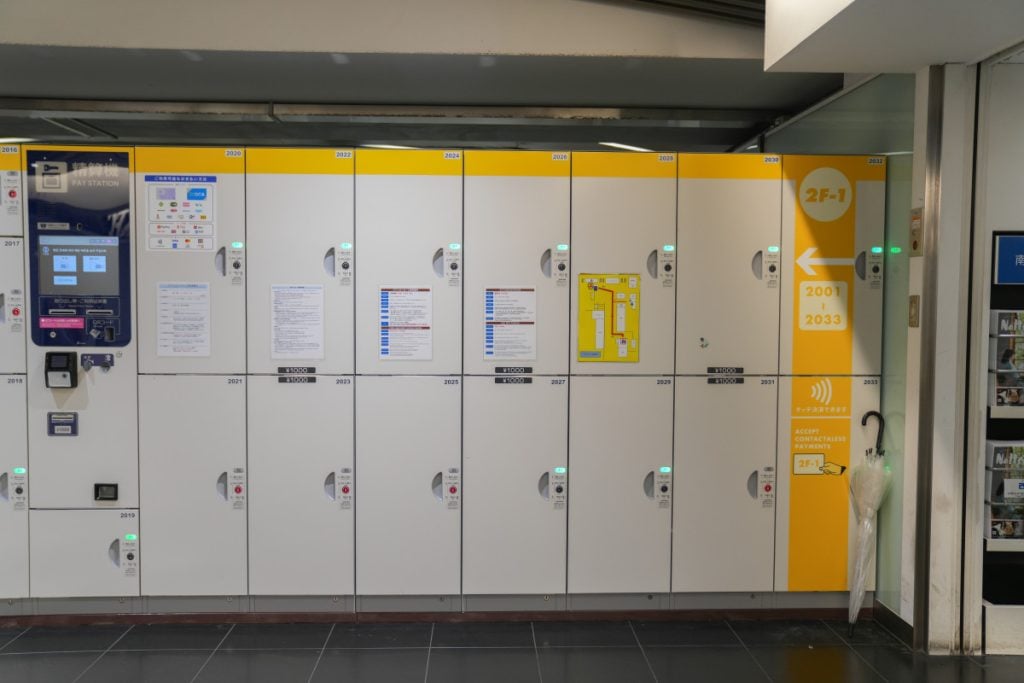
The luggage forwarding system in Japan is the easiest way to travel in Japan, with or without children. Embracing this convenient option for kids is a game-changer for families. It makes the experience of getting on and off trains lighter and easier. Kuroneko (also known as “black cat”) is the standard option used in hotels and station offices.
Many new tourists to Japan misunderstand the convenience of forwarding luggage because they get hung up on the fact that it takes 24 hours for a suitcase to reach the next location. However, the best way to use it is to forward luggage the evening before checking out. Then you’ll only need to travel with a light backpack the next day, and the luggage will be waiting at the next hotel when you arrive.
Where to Get Supplies for Your Toddlers

Diapers
Diapers are not always easy to find in larger Japanese cities. This is because diaper packs are bulky and take up a lot of shopping “real estate” in smaller stores. For guaranteed success when shopping for diapers in Japan, use Google Maps and put in “Toys R Us near me,” “Akachanhompo near me,” or “Nishimatsuya near me.” All of these stores stock a large supply of diapers in different sizes. The biggest and most well-recognized drugstore brands are Matsumoto Kiyoshi, Welcia, and Tomods.
Baby Food
The same places listed above (Toys R Us, Nishimatsuya, and Akachanhompo) also stock baby food. However, baby food is much easier to find than diapers. These stores also sell baby formula. Drugstores also stock baby food, as do supermarkets like Life, Daiei, My Basket, Aeon Supermarkets, and Izumiya. Baby food options include purees, jellies, and little baby-friendly casseroles and rice pudding-style dishes.
Many visitors in Japan are, understandably, in awe of the convenience stores, but don’t understand how amazing Japanese supermarkets can be. Supermarkets offer a wide range of ready-made meals, raw ingredients, and fresh produce. This is easy to turn into homemade baby food for parents who are staying in a hotel with a kitchenette (mashed fruit and cooked veg, etc).
Recommended Gear for Traveling Japan
Check out my toddler travel essential gear list for my complete list of gear recommendations!
Things to Prepare Ahead for a Japan Trip with Children
- Write down the height and weight of children in kilograms and centimeters — children’s clothing is sold by height, diapers are sold in sizes based on the weight of the child, knowing the weight of a child can help if parents need to purchase medication and it can help to see which rides at theme parks will be ok for certain children based on their height.
- Download Google Maps, Google Translate, ecbo cloak, and MyMizo — ecbo is an app for real-time coin locker and luggage storage information, and the MyMizo app provides information on where to refill water bottles at any time.
- Download the Mamapapamap app — this app provides parents with information on locations that offer nursing areas, baby change tables, toddler toilets, microwaves, and boiling water options for preparing baby formula. It’s such a wonderful travel tool in Japan for parents.
Things to Pack for a Japan Trip with Children
- A compact stroller (and baby carrier, if the child is still small enough)
- Easy on and off shoes — it gets tiring to remove shoes for temples or restaurants all the time if the shoes have lots of laces or buckles
- Enough diapers for the first 3-4 days — so that parents don’t have to be on the lookout for necessities like these from the very first day.
- Coloring kits, sticker stampers, and small magnetic puzzles — for playing with in restaurants or on the bullet train.
- At least 2 pairs of walking shoes/sneakers per person — in case one pair gets wet, and it’s also good to have a pair that rubs in different spots in case of blisters to give feet a rest.
- Bluetooth Headphones for phones or iPads — kids need downtime, but it’s polite not to have to share a YouTube Kids video or Bluey episode with the entire train car or restaurant.
- Blackout curtain — some children need complete darkness to sleep, and some rice paper doors and windows in Japanese hotels don’t block out sunlight completely, so travel or stick on versions of blackout blinds can save the day.
- Familiar snacks and treats
- Dryer-friendly clothing — the onsite coin laundries have dryers, and that’s the main way to dry clothing, so this is not the time to pack that favorite cashmere sweater.
- A good quality passport wallet — it is illegal to walk around Japan without a passport in hand
- A hard case four-wheel suitcase — this is the type of suitcase Japanese locals use for domestic travel, and it is also most widely used for luggage forwarding. This is also a great way to travel around Japan with a suitcase and children in tow, as, thanks to the wheels, no one needs to carry the weight of the suitcase.
- Plastic bags — trash cans are not common in public spaces in Japan, so it’s great to have somewhere to keep snack wrappers, used diapers, and tissues until returning to your accommodation.
- A physical credit card and some cash — a phone wallet card isn’t accepted everywhere, and cash is often needed for temples and shrines, street food, smaller shops, and some 100 yen stores.
- Mosquito repellent — especially when traveling March-November. Although not dangerous, Japanese mosquitoes leave quite a mark, especially on babies.
- Pain medication for parents and children — check in advance that all medication is allowed in Japan first. But, it is great to have familiar medication on hand and known reactions accounted for.
- Fiber supplements or powder — many tourists in Japan experience constipation due to dehydration or the change in diet. For kids, it’s great to have a little fiber powder to add to orange juice and get everything back to normal right away.
Quick Guide: Where to Stay for Families in Japan
A few personal recommendations for accommodations across Japan for traveling with toddlers.
Where to Stay in Tokyo with a Toddler
- &Here Ueno ($), for the best family-friendly apartments near Ueno Park
- Mimaru Ueno North ($$), for the best spacious suites with kid-friendly bunk beds
- Mimaru Ueno East ($$), for the best walkable access to Ueno’s museums
- Candeo Roppongi ($$), for the best modern rooms with Roppongi convenience
- All Day Place Shibuya ($$), for the best trendy Shibuya stay with family space
- Ibis Styles Ginza East ($), for the best budget-friendly Ginza location
- Sotetsu Fresa Ginza Sanchome ($), for the best affordable comfort near Ginza
Where to Stay in Kyoto with a Toddler
- Mimaru Kyoto Station ($$), for the best family apartments near Kyoto Station
- 22 Pieces Kyoto ($$), for the best boutique suites with toddler space
- Hotel Imagine Kyoto ($), for the best modern design near transport hubs
- Kyoto Century Hotel ($$), for the best classic comfort by Kyoto Station
Where to Stay in the Tokyo Disney Area with a Toddler
All of these recommendations have a complimentary shuttle to Tokyo Disneyland and Tokyo Disneysea.
- Ibis Styles Tokyo Bay ($), for the best budget-friendly Disney shuttle
- Henn Na Hotel Maihama ($), for the best quirky, robot-themed family fun
- Hotel Okura Tokyo Bay ($$), for the best upscale Disney shuttle experience
- La’Gent Hotel Tokyo Bay ($), for the best colorful, kid-friendly shuttle stay
- Sheraton Grande Tokyo Bay ($$$), for the best luxury near Disney monorail (no shuttle, but is in front of the Tokyo Disney Resort Liner monorail)
- The Toy Story Hotel ($$$), for the best immersive Disney-themed adventure (no shuttle, but it’s in front of the Tokyo Disney Resort Liner monorail)
Where to Stay in Hiroshima with a Toddler
- Fav Hotel Heiwa Odori ($), for the best modern apartments with family space
- The Knot Hiroshima ($$), for the best stylish stay near Peace Park
- Nest Hotel Hiroshima Hatchobori ($), for the best budget connecting rooms (requires connecting rooms for more than 2 people)
- Sotetsu Grand Fresa Hiroshima ($), for the best affordable city-center comfort
- Rihga Royal Hotel Hiroshima ($$), for the best upscale family-friendly amenities
- Kiro Hotel ($$), for the best boutique charm with toddler perks
Save This Post for Later on Pinterest

PS — Are You Booking a Trip Soon? Use My Booking Checklist!
These are the sites I use most to book my own trips. Using the links below is a great way to support Bon Traveler’s travel journalism at no extra cost to you. If you need help organizing your itinerary, get my free travel itinerary template here.
1. Book Your Accommodations
I use Booking.com for hotels and Airbnb for vacation rentals. They have the biggest inventory and consistently offer the best rates.
2. Book Your Rental Car
Self-driving is the best way to explore most destinations. I use Discover Cars for our rental cars, select full coverage insurance, and opt for a reputable company like Alamo, Hertz, or Sixt.
3. Book Your Tours & Experiences
I use Viator, Airbnb, and Get Your Guide to find the best tours and experiences. They are my favorite tour search engines. I always check all three as their inventory varies depending on the destination.
4. Book Your Private Transfers
For easy, reliable private transfers, I use Welcome Pickups. It’s my go-to for arranging a driver in advance — whether it’s an airport pickup, a hotel-to-hotel transfer, or a day trip. The experience is seamless, with English-speaking drivers and upfront pricing, so you can travel stress-free at every stage of your trip.
5. Get Cell Data for Your Trip
I use Holafly for international cell data. Their unlimited data eSIMs are easy to install, activate instantly on arrival, and let you skip local SIM cards and expensive roaming fees.
6. Don’t Forget Travel Insurance
I never leave the country without travel insurance. It provides comprehensive protection in case anything goes wrong (ie. illness, injury, theft, or cancellations).
My favorite companies that offer the best coverage and rates are:
- World Nomads (best for all-around)
- Safety Wing (best for frequent travelers)
Xx,
Jessica