I’ve just returned from my fourth trip to Tokyo, Japan, and have some serious thoughts on where to stay in the city. When it comes to picking the best areas and hotels in Tokyo, I believe it is important to pick the right neighborhood, because it does matter for exploring.
When it comes to where to stay in Tokyo, I’d rank the five main areas to stay for a leisure traveler in this order: Shibuya, Asakusa, Roppongi/Minato City, Ginza/Tokyo Station, and Shinjuku.
Editor’s Note: Shinjuku is a popular recommendation you’ll see in most guides, but it’s my least favorite of the top areas to stay. It’s quite far north, which makes it harder to reach the other areas of Tokyo you’ll most likely want to visit, and the crowds (and packed subways) are very overwhelming. That said, I’ve included it in this guide with some hotel recommendations if you’re drawn to the neon nightlife and decide to base there.
Shibuya’s location is unbeatable, whether it’s your first time in Tokyo or your fourth. I spend part of every trip here because the neighborhood is wonderful and has so much to offer, from walkability to the ability to easily take subway to anywhere in Tokyo. The smaller yet energetic Asakusa was a new find for me this last trip. And finally, Roppongi’s hotel options make it an easy win for families who want the larger hotels, more amenities, and quieter stays in the center of Tokyo and I stay in Ginza for any quick overnight stays before catching a train or flight.


If you’ve come across my blog before, you know that I’ve spent a great deal of time traveling in Japan. I revisited Tokyo for a fourth time in February 2026 for a week-long deep dive. So I’ve refreshed this guide with both new and confirmed insights to reflect current tourism in Tokyo, as the city was busier than ever this last trip, despite visiting in what was once considered an “off-season.”
I have personally stayed in over a half-dozen hotels and Airbnbs in Tokyo (which I have paid for myself), tried out neighborhoods for different travel purposes, and returned to my favorites to confirm if they were still the right choice. The result? I have a very clear plan on which neighborhoods are the best in Tokyo to stay, depending on the length of stay and purpose of visit.


This where to stay guide includes my top hotel, ryokan, and vacation rental picks for each neighborhood. I know that where I’ve stayed may not fit for every traveler’s needs, so I’ve given well-researched recommendations across different budgets and styles of accommodations — the most important thing to decide first is which neighborhood and area, then the accommodation.
Let’s get into it. Keep on reading to get an understanding of different kinds of accommodations in Tokyo, the neighborhoods I recommend, and what to expect when choosing where to stay.
Short on Time? Here’s My Quick Guide for Where to Stay in Tokyo:
Shibuya is my top pick for incredible access to Tokyo. Asakusa is great if you’re looking for a more cultural and traditional feel. Roppongi works well as a central base for family travelers or those who want a quiet stay with luxury hotel options, Ginza/Tokyo Station is where I stay for quick overnight stays, then Shinjuku for nightlife.
- Shibuya, my go-to base for visiting the main sights and neighborhoods
Hotels: TRUNK Hotel Cat Street ($$$), TRUNK Hotel Yoyogi Park ($$$), Hotel Indigo Tokyo Shibuya ($$, Where I’ve Stayed), Shibuya Granbell Hotel ($$, Where I Stayed), JR-East Hotel Mets Shibuya ($$, Where I Stayed)
Airbnbs: 1 Bedroom Luxury Apartment, 1 Bedroom Modern Apartment - Asakusa, for a small neighborhood with cultural sights and ryokan stays
Hotels: Cyashitsu Ryokan Asakusa ($$), Kaminarimon Ryokan ($$, Where I Stayed), OMO3 Asakusa by Hoshino Resorts ($$), Onyado Nono Asakusa ($)
Airbnbs: 1 Bedroom Japanese-Modern Apartment, 1 Bedroom Apartment with Rooftop - Roppongi / Minato City, best for families, elevated hotels, and museums
Hotels: Janu Tokyo ($$$), The Ritz-Carlton Tokyo ($$$), Grand Hyatt Tokyo ($$$), The Prince Park Tower ($$)
Airbnbs: 1 Bedroom Zen Studio with Sauna, 1 Bedroom Apartment with Tokyo Tower Views - Ginza / Tokyo Station, for train station access and quick overnight stays
Hotels: The Aman Tokyo ($$$$), HOSHINOYA Tokyo ($$$), Mitsui Garden Hotel Kyobashi ($$ / Where I Stayed)
Airbnbs: 1 Bedroom Contemporary Apartment, 1 Bedroom Japandi Apartment - Shinjuku, if nightlife and skyline hotels matter more than being central (not my first pick, but can still work)
Hotels: Park Hyatt Tokyo ($$$$), Kimpton Shinjuku Tokyo ($$$)
Airbnbs: 1 Bedroom Apartment with Rooftop and Hot Tub, 1 Bedroom Stylish Apartment
Helpful Guides to Plan Your Trip
To help you better plan your time in Tokyo, be sure to check out my Tokyo itinerary, Tokyo city guide, and guide to the best coffee shops in Tokyo!
For more of Japan, I also have everything you need for Kyoto (city guide, itinerary, and where to stay), Osaka (city guide, itinerary, where to stay), and Kanazawa (city guide, where to stay). If you only have time for one other city, my Kyoto vs Osaka guide will help you decide where to stay. Lastly, see my two-week Japan itinerary, transportation guide to Japan, and top tips for visiting Japan for everything you need to know to organize a trip and get around.
Where to Stay in Tokyo: The Best Areas, Ranked for First-Timers
Tokyo Neighborhood Comparison and Map


Tokyo Neighborhoods at a Glance
Here’s a quick look at the best neighborhoods to base yourself in Tokyo.
| Area | Best For | Vibe | Transit | Price Tier |
|---|---|---|---|---|
| 1. Shibuya | First-timers, main sights, walkability | Energetic, with quiet pockets nearby | Yamanote line, walkable in most directions | $$–$$$ |
| 2. Asakusa | Culture, temples, ryokan stays | Historic and bustling, slower side streets | Metro lines, best for east Tokyo | $–$$ |
| 3. Roppongi / Minato City | Families, museums, elevated hotels | Polished and calm after dark | Central metro, easy west or east | $$–$$$$ |
| 4. Ginza / Tokyo Station | Layovers, bullet trains, business travel | Elegant, business-forward, quiet at night | Best rail access in Tokyo | $–$$$$ |
| 5. Shinjuku | Nightlife, skyline hotels (not my first pick) | Neon, crowded, packed trains at rush hour | Yamanote and Marunouchi, far north for the rest of Tokyo | $$–$$$$ |
Map of the Best Areas to Stay in Tokyo
If you prefer the interactive version, you can open the full Tokyo neighborhood map here.
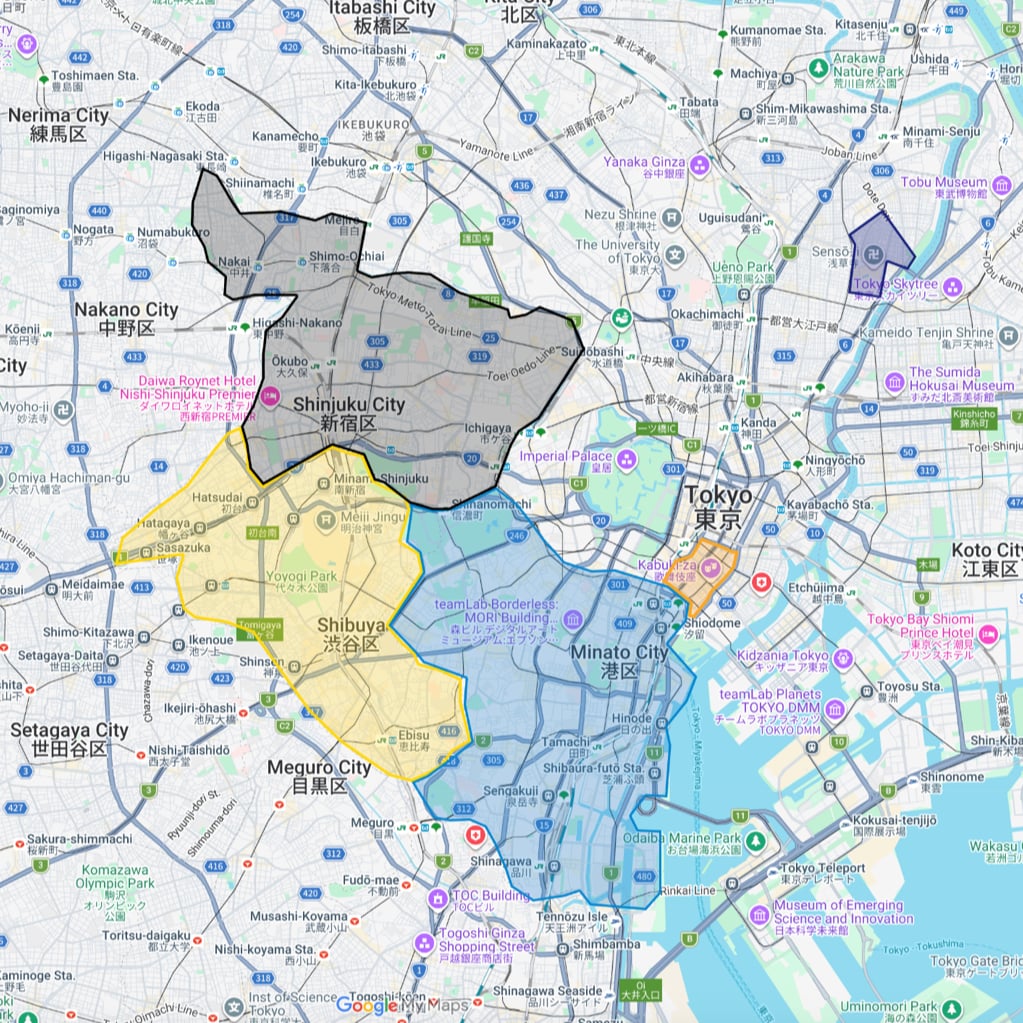
- Shibuya (YELLOW)
- Asakusa (PURPLE)
- Roppongi / Minato City (BLUE)
- Ginza / Tokyo Station (ORANGE)
- Shinjuku (BLACK)
1. Shibuya: Best for Visiting the Main Sights and Neighborhoods
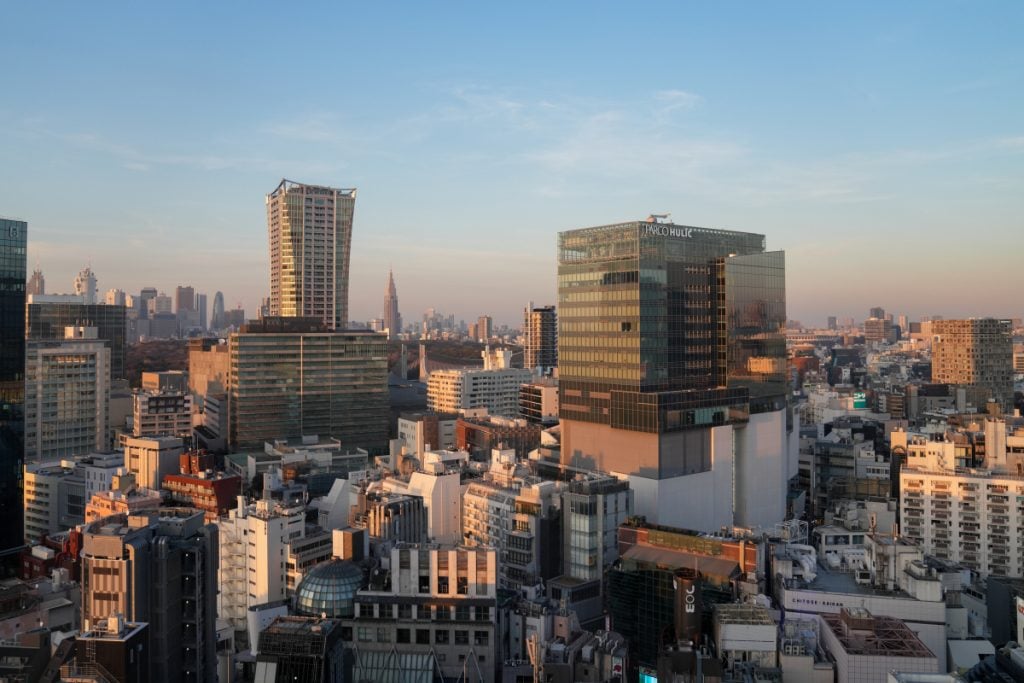
Just south of Yoyogi Park and centrally located to most of the things you’ll want to see in Tokyo, Shibuya is my number one pick for where to stay. I’ve stayed in this neighborhood a half-dozen times, and again recently in February. I thought to myself, there’s no way it can still be the best place to stay, and I have to admit, it was and still is.
For me, what makes Shibuya so great is the proximity to so much on foot and by subway. Everything is here, including several of my favorite coffee shops in Tokyo. You can walk to Yoyogi Park and Meiji Shrine and trendy neighborhoods like Omotesando and Minamiaoyama. Being so close to Shibuya Station makes it so easy to get to some of my favorite neighborhoods, like Nakameguro, Roppongi, Ginza, and Shinjuku.
What Side of Shibuya to Stay On?
One thing to know about the Shibuya neighborhood is that it’s quite large. The two main areas are Cat Street/Jingumae and Dogenzaka. I prefer staying in the Cat Street area so I can easily walk into Yoyogi Park and Aoyama. It’s also much quieter here at night. Dogenzaka, on the other hand, is louder and where all the skyscrapers and bright lights are. You’ll have easier access to the western side of Shibuya from here, but know that it comes with being in the more energetic part of neighborhood.
The Pros vs Cons of Shibuya
Pros
The pros of staying in Shibuya are simple: you’re so well located to so much, both on foot and by subway. You can go in any direction and do something, and you have all of the amenities outside your door.
Cons
The main con is that convenience means the hotels here are typically the most expensive in the city (even for mid-tier hotels). The other downside is that you’re in a busy area, especially if staying right near the station. It can be loud and chaotic, but don’t worry, you’re never far from quieter pockets.
Where to Stay in Shibuya


Where I’ve Stayed in Shibuya
- Hotel Indigo Tokyo Shibuya ($$) — This was the hotel I chose for the trip in February, and I loved it. Only 10 minutes walk from the station, Hotel Indigo was set up high in a tower and felt in it all, but quiet and insulated. The rooms were very clean and modern, and had spectacular views of Tokyo. The daily housecleaning and an included Nespresso machine inside as well were a bonus.
- JR-East Hotel Mets Shibuya ($$) — I stayed here on a previous trip, and the location can’t be beat as it’s literally attached to Shibuya Station. It’s very convenient, and even has a restaurant on-site with free breakfast. It’s nothing to write home about, a more budget option, but suitable for a short stay. One note: through October 2026, construction and repairs are happening on the exterior daily from 9 am to 5 pm.
- Shibuya Granbell Hotel ($$) — I stayed here on a previous trip, and it’s such a convenient location for hopping around the city and a touch more stylish than Hotel Mets.
Luxury Hotels
- TRUNK Hotel Cat Street ($$$) — This is probably the hardest luxury hotel to get a reservation at in Shibuya because it only has 15 rooms. It’s right in Omotesando, super chic, and a very boutique experience
- TRUNK Hotel Yoyogi Park ($$$) — One of the best newer boutique hotels in the city. It’s located just across from Yoyogi Park in the Tomigaya neighborhood. It was fully booked out when I came in February, but I visited the hotel, and I have to say, for a luxury and secluded stay, this is the spot to book. It’s also near all of my favorite cafes and has a rooftop pool.
- Cerulean Tower Tokyo Hotel ($$$) — Set in one of Shibuya’s tallest skyscrapers, this is another good choice for a luxury hotel that has all of the amenities, like a fitness room, executive lounges, and a restaurant.
- Hyatt House Shibuya ($$$) — If you’re traveling as a family, don’t overlook the Hyatt House. It’s one of the few luxury hotels in the area to have rooms with kitchenettes, and there is an indoor pool.
Mid-Range to Budget Hotels
- Shibuya Stream Hotel ($$) — A stylish lifestyle hotel housed in the contemporary Shibuya Stream complex, it’s a good hotel if you can’t get a room at the Granbell.
- Shibuya Excel Hotel Tokyu ($$) — A long-standing hotel known for reliable comfort and well-locted in the center of Shibuya and direct station access.
- All Day Place Shibuya ($$) — One of the cheaper places to stay, just a few minutes out of the station. The rooms here are very clean (and small), but work great for a base in the city.
Vacation Rentals
- 1 Bedroom Luxury Apartment, for the best luxury stay
- 1 Bedroom Modern Apartment, for the best clean, calm stay
- 1 Bedroom Apartment with Japanese Garden, for the best cozy stay
Things to Do in Shibuya


- Yoyogi Park — This is the green heart of Tokyo, the biggest garden park in the city. You have everything here, from cherry blossoms to picnic areas; it’s wonderful for a morning stroll and a great break from the city.
- Meiji Shrine — Set inside Yoyogi Park, this is one of my favorite historic sights to see in the city. The shrine is dedicated to Emperor Meiji and Empress Shoken, and it’s still an active Shinto Shrine today.
- Harajuku — One of the most lively areas of Tokyo, it’s all things pop culture and anime and centered around Takeshita Street.
- Omotesando — I love Omotesando and always make a point to spend time here for the cafes, trendy and vintage shops, and high-end restaurants. Very chic, just 10 minutes on foot.
- Japan Folk Crafts Museum — My recent find, just a touch west, is the historic museum founded in 1936, and it’s dedicated to ceramics, textiles, lacquerware, and woodwork from Japan and abroad.
- Shibuya Crossing — Just outside of Shibuya Station is the famous intersection that draws in thousands of tourists. It’s the busiest pedestrian crossing in the city, so much so that they have guards and police to help manage crowds.
2. Asakusa: Best for Cultural Sights and Small Neighborhoods


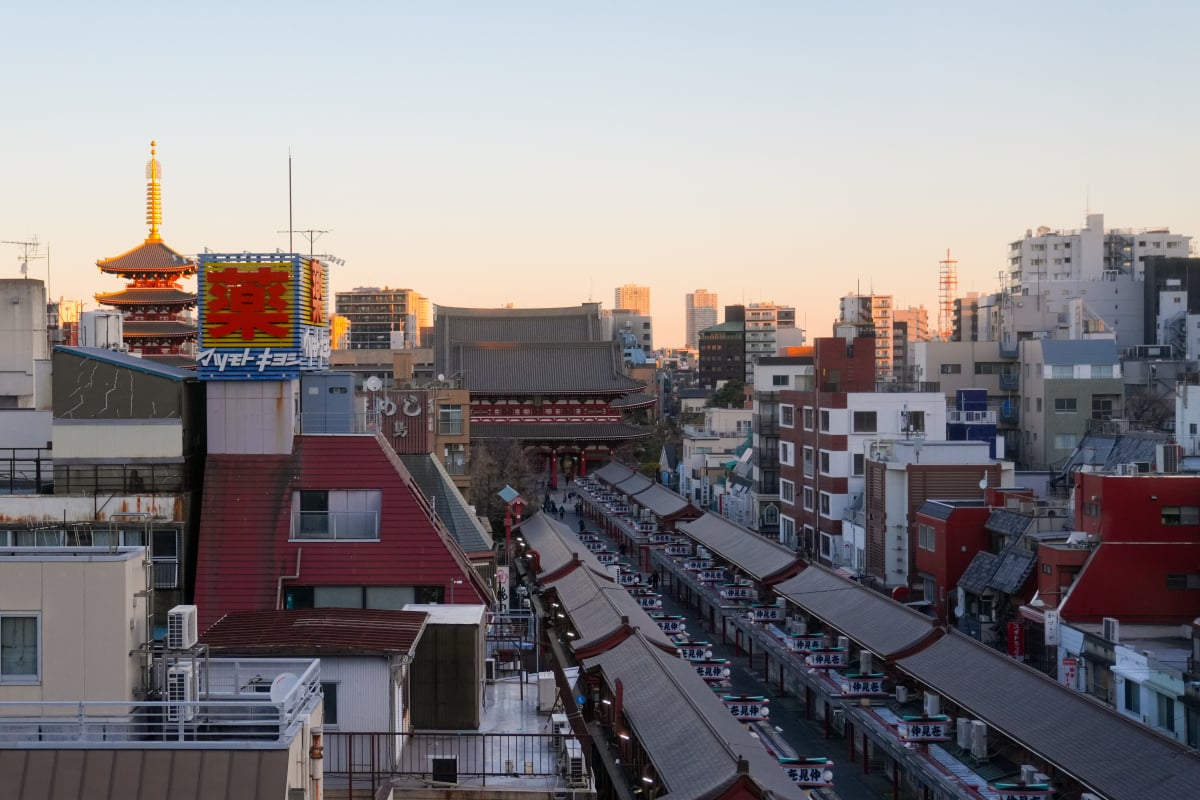
My latest discovery on my recent trip was the neighborhood of Asakusa. I spent half my week based here and it was wonderful and a great option if you’re looking for a historic and culture-rich neighborhood. It had all of the bustling vibrance similar to Shibuya, with more historical sights and slower-going neighborhoods, too. And while it’s on the more eastern side of Tokyo, it’s still in a prime position to visit most of Tokyo. Best part? Most of the hotels, on average, were cheaper than those in Shibuya, and many had onsens because of the concentration of ryokan-style accommodations.
Asakusa itself is rich with history (think historic Samurai and Edo merchant districts to temples) and all close to really wonderful small neighborhoods (kind of Kyoto vibes, if you know what I mean). Don’t be fooled, though, the neighborhood itself comes with its crowds, similarly to Shibuya, but it doesn’t have the major skyscrapers as much, and it’s easy to find quiet pockets.
If Shibuya was the best access for the west side of Tokyo, then Asakusa would be it for the east side. The starting-to-trend neighborhood of Yanaka Ginza is nearby and known for antiques. As is Ueno Park (great for families!) and the up-and-coming Kuramae area for cafes and ceramics.
What Side of Asakusa to Stay On?
To be in the heart of the action, I’d choose an accommodation near Sensō-ji Temple. If you’re looking for something more residential, I’d stay on the southern side near Kuramae.
The Pros vs Cons of Asakusa
Pros
The benefit of being here is that you’re close to many cultural sights and small neighborhoods within a 10-15 minute walk. Asakusa is very vibrant, with a range of street food to high-end restaurants, plus the ryokan-style accommodations feel very unique here.
Cons
The downside is that the temple area can get very busy, and often feels a touch touristy.
Where to Stay in Asakusa


Where I’ve Stayed in Asakusa
- Kaminarimon Ryokan ($$) — After a lot of deliberation, I chose this hotel for our time in Asakusa. The location is unbeatable, just steps outside of the Senso-Ji temple (my room even had a view of it!). The rooms are traditional Japanese, with tatami mats topped with the most comfortable futon beds, and are some of the largest and most spacious rooms I’ve stayed in in Tokyo. The hosts were very helpful and even arranged luggage forwarding for us as well for our transfer to Osaka.
Luxury and Ryokan Hotels
- Cyashitsu Ryokan Asakusa ($$) — I tried hard to get a room at this high-end ryokan hotel, but it’s a tough reservation to get as it’s only 10 rooms. If you want a traditional ryokan stay in a quiet pocket, this is the one to choose. The suites are stunning and the included meals meant to be incredible.
- MIMARU Tokyo Asakusa Station ($$) — This is where I’d stay if I was traveling with my family. The modern apartment-style rooms are spacious and have full kitchens. They have locations in other major cities in Japan, too.
Mid-Range to Budget Hotels
- Asakusa Kokono Club Hotel ($$) — I looked closely at this hotel as I loved that it’s a boutique hotel and it’s all about arts and local culture. There is a cafe and restaurant, it feels very trendy and yet boutique, and is in a great pocket of Asakusa.
- OMO3 Asakusa by Hoshino Resorts ($$) — One of the newer hotels to open from the high-end Hoshino Resorts Group, this one is a wonderful city stay; it’s modern and has a great rooftop stay. I had looked at this one as well for my trip.
- Ryokan Asakusa Shigetsu ($$) — One of the more affordable ryokan-style stays in the heart of the neighborhood.
- Onyado Nono Asakusa ($) — If you’re looking for an onsen experience with comfortable rooms, this is a good mid-range option that I came across in my research.
- The B Asakusa ($) — One of the best priced accommodations, I’d say you get great value for how cheap this is.
Vacation Rentals
- 1 Bedroom Modern Apartment, for the best modern stay
- 1 Bedroom Japanese-Modern Apartment, for the best designed stay
- 1 Bedroom Apartment with Rooftop, for the best affordable stay
Things to Do in Asakusa


- Sensō-ji Temple — This is Tokyo’s oldest temple and one of the most important cultural sights in the city. Set with a five-story pagoda and the Kaminarimon Gate, it’s a wonderful temple to visit, dating back to the Edo period.
- Nakamise Shopping Street — This street runs from Kaminarimon Gate to Sensō-ji’s main hall, so you’ll likely pass through when visiting the temple. For several centuries, local merchants have been selling goods to temple visitors. Today the street is filled with small shops with traditional snacks and crafts.
- Sumida Park — Another favorite find from this last trip was the Sumida Park that stretches along the Sumida River. Lots of green spaces and cafes, with a paved walkway, great for a quieter walk in the city.
- Kappabashi Kitchen Supply Town — This was a fun find near Asakusa. Kappabashi is a specialized shopping street between Ueno and Asakusa known for restaurant supply stores. This is where to go for chef knives, ceramics, and kitchenware.
- Samurai Ninja Museum Asakusa Tokyo — For those wanting to learn more about Japan’s samurai and ninja history, this museum is the spot to go.
- Kuramae — Just 10 minutes south of Asakusa is Kuramae, a warehouse district that has been transformed into cafes, restaurants, and small design studios.
3. Roppongi / Minato City: Best for Families and Elevated Hotels


Roppongi and nearby Minato City are good choices, as they sit right in the middle of Tokyo. In either direction of Roppongi and Minato City, you can peel off west to Shibuya or east to Tokyo Station and Asakusa. Roppongi into Minato City itself doesn’t necessarily have a ton to do, but what you do have are some wonderful hotels that are set up for families and upscale stays.
What you will find in Roppongi Hills and Minato, which also includes the Azabudai Hills, are popular museums like The National Art Center, 21 21 Design Sight, and teamLab Borderless. It’s also home to Tokyo Tower, one of the most iconic skylines in the city, with Zojo-ji Temple behind it.
What Side of Roppongi and Minato City to Stay On?
I recommend staying in western Minato (Roppongi, Akasaka, and Azabu). This will give the best access to Shibuya and dining. The eastern side of Minato (Shinbashi, Hamamatsucho, and Shiodome) is closer to the airport, but is more of a business district.
The Pros vs Cons of Roppongi (Minato City)
Pros
My main reasons for basing myself here are to stay at one of the modern luxury hotels or at a family-friendly aparthotel. You have several museums here, and you’re not far from exploring western or eastern Tokyo.
Cons
The downside is that it’s quieter, limited in food options at night, and you’ll have less outside of your door to do.
Where to Stay in Roppongi / Minato City
Luxury Hotels
- Janu Tokyo ($$$) — This is the newest hotel to open in this area, coming from the Aman hospitality group. This is city-chic; the hotel is splendid in design, has a wonderful wellness center, and the views are beautiful. A friend stayed here recently and said it was one of her favorite stays in Tokyo in some time.
- The Ritz-Carlton Tokyo ($$$) — Like most Ritz-Carlton hotels, this one gets the best reviews for its luxury service and concierge, and is just outside of the 21 21 Design Museum. The hotel is located on the upper floors of a high-rise and has panoramic views of the city (including Mount Fuji on clear days!)
- Grand Hyatt Tokyo ($$$) — This is a longstanding classic hotel for the area, the Grand Hyatt has been here for years and consistently gets rated as one of the better hotels for Roppongi.
- The Tokyo EDITION, Toranomon ($$$) — For a lush, modern design hotel, this is a great stay above Toranomon Hills.
Mid-Range to Budget Hotels
- The Prince Park Tower ($$) — A luxurious high-rise stay near Tokyo Tower.
- Mitsui Garden Hotel Roppongi Tokyo Premier ($$) — I am always a big fan of the Mitsui Garden hotels, reminds me of Hiltons back home, it’s a solid and affordable choice for the neighborhood.
- Villa Fontaine Grand Tokyo Roppongi ($$) — There aren’t many boutique hotels in the area, but this is a nice option for an elevated and more intimate stay.
- ANA InterContinental Tokyo by IHG ($$) — Another good hotel in the area. This one leans more corporate but is well-rated and is a convenient location for exploring.
Vacation Rentals
- 1 Bedroom Zen Studio with Sauna, for the best modern studio with access to a shared sauna and gym
- 1 Bedroom Apartment with Tokyo Tower Views, for the best architectural stay
- 2 Bedroom Luxury Apartment, for the best elevated stay
Things to Do in Roppongi (Minato City)


- The National Art Center — Absolutely loved this museum on the last trip, incredible architecture with rotating exhibitions for art.
- Nezu Museum — This is my favorite museum in Tokyo. The building itself, designed by Kengo Kuma (one of my husband’s favorite architects), and the incredible Japanese garden in the back are worth the visit alone. The collections here are mostly comprised of modern Japanese and East Asian art and were originally assembled by industrialist Nezu Kaichiro.
- 21 21 Design Sight — Founded in 2007 by fashion designer Issey Miyake and designed by architect Tadao Ando, this is a lovely museum for exhibitions.
- Tokyo Tower — This is the most iconic tower in Tokyo. You can go to observation deck at the top of the bright red tower for some of the best views in the city.
- teamLab Borderless — The best way to describe this museum is immersive art with interactive light and projection-based installations. I’ve been to it a few times, and really enjoy it.
- Zojo-ji Temple — One of the most prominent Buddhist temples in this part of town.
4. Ginza and Tokyo Station: Best for Business Travelers and Bullet Trains

For me, there are a few specific reasons for staying in Tokyo Station and Ginza. Tokyo Station is the best-connected train station in Tokyo, so I’d stay here if you are only doing a quick overnight and passing through Tokyo to visit other parts of Japan. For example, this is where I base myself if I only have one night before flying out of Narita Airport.
It’s also an area that has the vibrant Ginza neighborhood just off of it, a very trendy and elegant area chock-full of high-end restaurants, shops, and hotels. So you have this interesting blend of what I call “travel convenience” stays, and then a collection of really high-end hotels that cater to business and luxury travelers.
The area itself is near sights like the Imperial Palace, the famous Hamarikyu Gardens, and the Tsukiji Outer Market fish market. You will have no problem finding places to eat here as well, at all hours of the day.
What Side of Ginza to Stay On?
I recommend staying in Ginza proper (the area around Ginza Station and Chuo-dori). It’s the most central and is where most of the luxury shops are. Otherwise, Higashi-Ginza is a good option for more budget-friendly hotel stays, better subway access, and proximity to the Tsukiji Outer Market.
The Pros vs Cons of Tokyo Station and Ginza
Pros
The benefit of staying in the Ginza to Tokyo Station area is having the best train access for both local exploration and trips to other regions of Japan. Some truly top-end hotels are here, too, like the Aman Tokyo.
Travel Tip: Tokyo Station is a great base for a Haneda Airport red-eye as it’s only 26 minutes on the train, and equally so for Narita Airport at 65 minutes on the Narita Express line.
Cons
The downside is that the area is very business-forward, has a noticeable lack of “trendy” things to do, and is often quiet at night.
Where to Stay in Tokyo Station and Ginza
Where I’ve Stayed in Tokyo Station
- Mitsui Garden Hotel Kyobashi ($$) — This was an easy choice as I had two nights in Tokyo before flying home on a previous trip. Well-located across from Tokyo Station and with the right amenities for a stay in this part of town.
Luxury Hotels
- The Aman Tokyo ($$$$) — Is there a more bucket-list stay in Tokyo than this? If you splurge, let it be Aman Tokyo. It’s in Otemachi Tower, and the panoramic skyline from the indoor pool and rooms is unmatched
- Mandarin Oriental Tokyo ($$$$) — An iconic luxury hotel in Mitsui Tower. It’s everything you’d expect from Mandarin Oriental, including an amazing spa and Michelin-starred dining.
- Four Seasons Hotel Tokyo at Marunouchi ($$$$) — Like all Four Seasons hotels, they’re known for service and consistency. For those who want the predictable, this is a wonderful choice with the amenities of a luxury stay.
- HOSHINOYA Tokyo ($$$) — This is Tokyo’s first luxury ryokan style hotel, from one of the best luxury Japanese hotel brands.
Mid-Range to Budget Hotels
- Muji Hotel Ginza ($$) — From the Muji brand, this is a stylish stay right about the store and is set with all of the amenities and products from the brand. It’s well-priced but hard to get a reservation because of popularity.
- Mitsui Garden Hotel Ginza Premier ($$) — Another great Mitsui Garden hotel location on this side of town.
- Daiwa Roynet Hotel Ginza PREMIER ($$) — A good value option for a contemporary boutique stay. The rooms are larger than most boutique hotels in the city, but a bit more utilitarian.
Vacation Rentals
- 1 Bedroom Contemporary Apartment, for the best located stay
- 1 Bedroom Japandi Apartment, for the best designed stay
- 1 Bedroom Service Apartment, for the best quiet stay
Things to Do in Tokyo Station and Ginza


- Fish Market Tsukiji Outer Market — If you’re in Ginza, you’ll be close to the best market in Tokyo, and the most famous. It’s one of the experiences I associate most with Tokyo and I come here every time I visit. Head over in the early morning and eat your way through it!
- Imperial Palace — One of the more popular cultural sights to see in Tokyo, the Imperial Palace is on the former site of Edo Castle. Know that the inner grounds are largely closed to the public, but the East Gardens and the Nijubashi bridge are worth a visit.
- Hamarikyu Gardens — This is one of the most unique gardens in Tokyo and has a tidal pond that changes with Tokyo Bay.
- Kabuki-za Theatre — Where to go in Tokyo for kabuki theatre, an art form that dates back to the 17th century. You can purchase single-act tickets.
5. Shinjuku: Popular for Nightlife, But Not My Favorite Base

Shinjuku is famous for its neon nightlife and definitely should be in your Tokyo itinerary. But, unless nightlife is a priority, I think the areas I covered above are better overall bases. In Shinjuku, you get massive crowds and packed subways during rush hours, all to be very far north in terms of reaching other parts of Tokyo. Two hotels in exception to this, that sit more in western Shinjuku and closer to the northern part of Yoyogi Park, are the famous Park Hyatt Tokyo with its iconic bar featured in the Lost in Translations Movie, and the newer Kimpton Shinjuku Tokyo. Both of these are within walking distance of Sangubashi Station, a quieter (less connected) alternative to Shinjuku Station and the JR Yoyogi Station on the Yamanote Line.
What Side of Shinjuku to Stay On?
There are two main sides of Shinjuku, divided by Shinjuku Station. The East side of the station is the neon district, Kabukicho (loud until very late at night). The West side is the skyscraper district, Nishi-Shinjuku (quiet at night). I’d suggest staying near Shinjuku Gyoen National Garden and Sangubashi Station (where the Park Hyatt and Kimpton are). This would put you 10-minute walk from the station without being in the center of the action.
The Pros vs Cons of Shinjuku
Pros
The benefit of Shinjuku is how connected it is by train. Most main lines run through here, and it’s the easiest base for day trips to Mount Fuji or Hakone. There are also a lot of hotels here, so you can find more mid-range value options here than you will in Shibuya.
Cons
The downside is the crowds and its out-of-the-way location. Shinjuku Station is the busiest in the world (the trains are packed at rush hour) and Shinjuku is quite far from the main areas you’ll want to spend time in.
Where to Stay in Shinjuku
Hotels
- Park Hyatt Tokyo ($$$$), for the best luxury highrise stay
- Kimpton Shinjuku Tokyo ($$$), for the best newer hotel
Airbnbs:
- 1 Bedroom Apartment with Rooftop and Hot Tub, for the best elevated stay
- 1 Bedroom Stylish Apartment, for the best located stay
Things to Do in Shinjuku
- Shinjuku Gyoen National Garden — One of the most beautiful gardens in the city, and in the summer months a perfect place to catch the sunset.
- Omoide Yokocho (Memory Lane) — It’s gotten touristy, but it’s worth a quick peek if you’re here.
- Kameya Shinjuku — For incredible soba noodles.
- Golden Gai — Known for its tiny late-night bars.
- Azuki to Kōri — Kakigori (Japanese shaved ice) from a Michelin-starred chef. Six seats, reservation only, and one of my favorite stops in this part of the city.
Other Areas in Tokyo I Have Not Included
Nakameguro, Meguro, and Daikanyama

Nakameguro, Meguro, and Daikanyama are three very trendy neighborhoods for cafes and shops right now, which practically blend into each other along the Meguro River. It’s one stop off of Shibuya, so I find them rather easy to visit versus staying there, as the hotel accommodations are quite limited and the area gets quiet come evening.
Ueno, Akihabara, and Ikebukuro
Though each of these areas has its appeal, they’re a bit more out of the way. For example, I’d visit Ueno as a day trip from Asakusa, and Akihabara is easy to get to on the Yamanote Line.
What to Know Before Booking in Tokyo
How to Think About Tokyo: Several Cities Within a City

The first thing I want to share is that the best way to think about Tokyo is that it’s several “cities” within a city. So picking a neighborhood is essentially like picking a small city as your base within the larger city.
There are also quite a few neighborhoods you definitely want to visit, but don’t make great for great bases. For example, Nakameguro is wonderful, but I don’t recommend staying there because it has limited subway lines, so it’s harder to get to the other parts of the city. The accommodations here are also very limited and the neighborhood gets sleepy come dinner time.
What Accommodations are Like in Tokyo
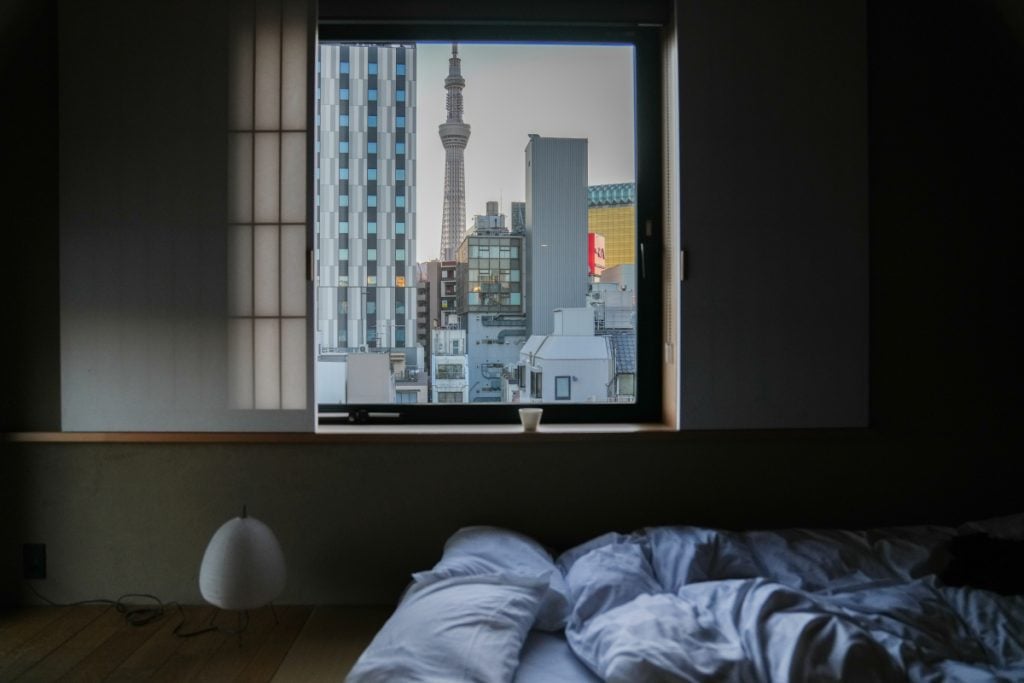
There are a few different kinds of accommodation styles in Tokyo, and I think it’s helpful to quickly mention the differences as they’re quite different from each other.
- Hotels — classic hotel experience with full amenities and options for all budgets. One thing to note, hotels often offer both western-style and Japanese-style room, so be sure confirm when you book.
- Ryokans — traditional Japanese-style inns. Ryokan stays almost always include breakfast and dinner in the price. I definitely recommend experiencing one at least once, but the trade-off is less flexibility with meals.
- Ryokan-style Hotels — I’m including this as a subset, because often there are “ryokan” hotels which don’t do the food portion, but are designed with Japanese-style rooms with a mattress on tatami mats.
- Capsule Hotels — Compact, pod rooms. I’ve never tried one, but they are definitely a uniquely Tokyo experience.
- Vacation Rentals — Airbnbs are very popular in Tokyo, great for longer stays or if you’d like a kitchen, or more space for larger groups.
Hotels Versus Airbnbs in Tokyo
When you decide between a hotel versus an Airbnb in Tokyo, it’s good to know what you’re giving up in either. If choosing a short-term apartment rental in Tokyo, you can get a much larger space, often with a kitchen, a washing machine, and other home amenities. Do know that the listing needs to have a minpaku registration number to operate as an Airbnb. When choosing a hotel, these serviced hotels have more predictable experiences with staff should you need help with anything in that moment, and even luggage storage, which not all Airbnbs can offer.
What to Consider for Choosing Accommodations in Tokyo

- Be Close to a Subway Line — I always recommend being within a 10-minute walk of a main subway line. If you want the most convenient line to be close to, the circular JR Yamanote Line is the best-connected line in the city for exploring. Just know that the Tokyo Metro does offer good access to the rest of Tokyo, and often is faster with fewer transfers, depending on where you are headed. Metro prices are quite affordable, too:
- 24 hours: ¥1,000
- 48 hours: ¥1,500
- 72 hours: ¥2,000
- Access to Narita and Haneda Airport — Depending on how long your trip is in Tokyo, being on a train line that directly accesses either airport would be helpful to cut down on transfers and maximize getting in and out of the city for stays under 2 nights.
- For Shibuya, Narita Airport is 75- 90 minutes on the Narita Express, versus Haneda Airport is 30-45 minutes on the JR.
- For Asakusa, Narita Airport is 45-60 minutes on the Keisei Skyliner, and Haneda Airport is 50 minutes on the Keikyu/Asakusa line with no transfers.
- For Roppongi, Narita Airport is 90 minutes with a transfer on the Narita Express, versus Haneda Airport, which is 30-40 minutes on the Keikyu line.
- Western vs Japanese Rooms — With rooms being considerably smaller in Tokyo, you want to consider what style of room you want. Western rooms will have standard bed frames with mattresses, while Japanese rooms have tatami mat flooring with futon bedding and have sliding doors and low tables. A lot of the larger hotels often offer both styles of rooms, so look closely.
- You Need to Book Ahead — The good hotels in Tokyo get booked months in advance, as the city is popular for business and tourist travelers.
- Included Breakfast or Not — Some hotel pricing will include breakfast as an add-on, and is worth considering. If I had my kid with me, I’d probably opt to do breakfast, as many cafes and restaurants don’t open in the city until 9 am, making hungry tummies hard to wait.
- Non-Smoking Rooms — Yes, smoking rooms are still available in Japan; make sure yours is a non-smoking room.
Frequently Asked Questions: Where to Stay in Tokyo
What is the best area to stay in Tokyo for first-timers?
Shibuya is my number one pick for first-time visitors. The neighborhood has so much to do, great subway access for seeing the rest of the city, and good hotel options.
Should I split my stay in Tokyo?
It only makes sense to split your stay in Tokyo for a 6+ night stay. Alternatively, if you begin and end your Japan trip in Tokyo, I would stay on one side of Tokyo for the first part, and when you return to Tokyo, stay on another side. I’ve done this on several trips, and it allows me to break up my time in Tokyo.
Is Shinjuku or Shibuya better for first-timers?
Though Shinjuku is exciting and definitely worth spending time there, Shibuya is the best base for first-timers. Shibuya is more centrally located and is generally less crowded and hectic than Shinjuku.
Is Asakusa a good area to stay in Tokyo?
If you’re staying for 5+ days, then I’d definitely recommend splitting your time between Shibuya and Asakusa. There are some wonderful restaurants and ryokan-style accommodations here, and the neighborhood’s historic vibe is a nice contrast from modern Tokyo.
Do I need to stay on the Yamanote line?
The best subway line in Tokyo to stay along is the Yamanote Line (yellow-green, line #6) that loops around central Tokyo, and can connect to major hubs. However, it is not crucial, as you can still access all of Tokyo from other subways, it just means more transfers and time to get to the other areas.
Is it better to stay in Shibuya or Ginza?
If you’re staying multiple days, Shibuya is a much better base than Ginza. I only stay in Ginza if I’m doing a one-night layover in Tokyo before catching a flight home or train to other parts of Japan.
How many days should I stay in Tokyo?
A minimum of four days, ideally five to seven, is how many days I’d stay in Tokyo for a first visit. See my Tokyo itinerary for exactly how I’d organize my time.
What areas should I avoid staying in Tokyo?
Though they are worth visiting, I would avoid Ueno, Akihabara, Nakameguro, and Ikebukuro because they’re a bit out of the way and make it harder to visit the main highlights.
Save This Post for Later on Pinterest


PS — Are You Booking a Trip Soon? Use My Booking Checklist!
These are the sites I use most to book my own trips. Using the links below is a great way to support Bon Traveler’s travel journalism at no extra cost to you. If you need help organizing your itinerary, get my free travel itinerary template here.
1. Book Your Accommodations
I use Booking.com for hotels and Airbnb for vacation rentals. They have the biggest inventory and consistently offer the best rates.
2. Book Your Rental Car
Self-driving is the best way to explore most destinations. I use Discover Cars for our rental cars, select full coverage insurance, and opt for a reputable company like Alamo, Hertz, or Sixt.
3. Book Your Tours & Experiences
I use Viator, Airbnb, and Get Your Guide to find the best tours and experiences. They are my favorite tour search engines. I always check all three as their inventory varies depending on the destination.
4. Book Your Private Transfers
For easy, reliable private transfers, I use Welcome Pickups. It’s my go-to for arranging a driver in advance — whether it’s an airport pickup, a hotel-to-hotel transfer, or a day trip. The experience is seamless, with English-speaking drivers and upfront pricing, so you can travel stress-free at every stage of your trip.
5. Get Cell Data for Your Trip
I use Holafly for international cell data. Their unlimited data eSIMs are easy to install, activate instantly on arrival, and let you skip local SIM cards and expensive roaming fees.
6. Don’t Forget Travel Insurance
I never leave the country without travel insurance. It provides comprehensive protection in case anything goes wrong (ie. illness, injury, theft, or cancellations).
My favorite companies that offer the best coverage and rates are:
- World Nomads (best for all-around)
- Safety Wing (best for frequent travelers)
Xx,
Jessica