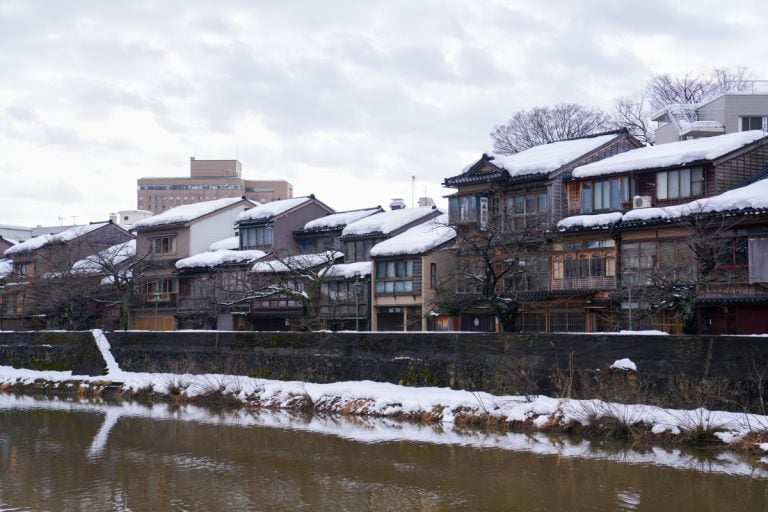
Kanazawa is one of those cities I wish I’d visited sooner. Known as “Little Kyoto” and the capital of Ishikawa Prefecture, the city has preserved geisha and samurai districts, incredible seafood, and a craft tradition that rivals anywhere in the country. On my fourth trip to Japan, I finally made the time to visit. After spending 3 days in the city and hours of research, I’m sharing my guide to the best things to do, where to eat, and where to stay in Kanazawa.
Kanazawa is often compared to Kyoto, and the two are an easy train ride apart. But what most visitors don’t realize is that Kanazawa feels equally traditional in arts and crafts, if not more so.


The best part? The crowds haven’t caught on to it yet, and I’m not entirely sure why. Kanazawa’s rich history in Edo-period architecture, impeccably preserved geisha and samurai districts, and a longstanding reputation as the best seafood in Japan make it a total catch. My guess is that the city will be on most visitors’ itineraries in the coming years; the train from Tokyo takes under 3 hours, and Kyoto is a quick connection away.


My experience? I’m disappointed I didn’t go sooner. I had meant to go last year when I revisited Kyoto for a third time, but ended up diving deep into Osaka‘s food scene instead. Kanazawa feels genuinely untouched, not propped up for thousands of visitors, but rooted in a longstanding tradition of arts and crafts.


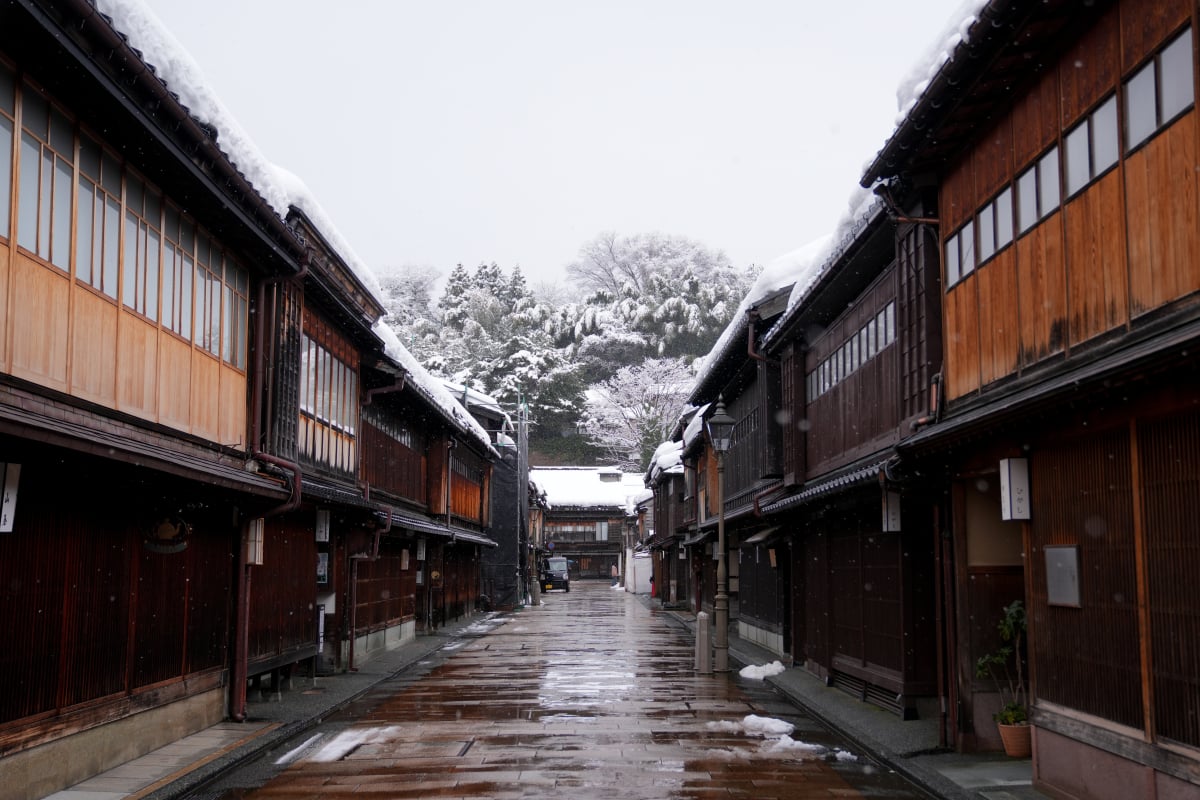
I found myself mesmerized by intricate wooden machiya-lined streets, losing myself in the Omicho Market, watching fishermen bring in the day’s catch, and gazing at a variety of seafood I didn’t even recognize. The city felt a world away from the Japan I had discovered over the last 15 years, and drew me into wanting to explore slowly. There were too many good details not to miss.


So if you’re thinking about adding Kanazawa to your Japan itinerary, my vote is yes. This guide on the best things to do in Kanazawa will give you the insight you need to plan your time. I think you’ll be pleasantly surprised by this small yet mighty city.
Short on Time? Here Are My Top Picks for the Best Hotels and Things to Do in Kanazawa:
Hotels
- Soki Hotel ($$ / Where I Stayed), for a well-priced stay with an onsen
- UAN ($$), for a boutique stay near Omicho Market
- Korinkyo Kanazawa ($$), for the best luxury design hotel
- Kinjohro ($$$), for a traditional luxury ryokan experience
Airbnbs
- 2 Bedroom Modern and Traditional Townhouse, for the best luxury machiya with a private hinoki bath and garden
- 2 Bedroom Elevated Machiya Near Higashi Chaya District, for the best family-friendly machiya near Higashi Chaya
- 1 Bedroom STUNNING Traditional Machiya Near Everything, for the most beautiful couples stay with river views
Things to Do
- Omicho Market + Higashi Chaya Combination Tour, a guided food tour that covers the best of Omicho Market and the Higashi Chaya District in one go
- Sowaryu Tea Ceremony, a one-of-a-kind, small-group tea ceremony done in the traditional Sowa style
- Urushitoki Kintsugi 2-Hour Workshop, a hands-on kintsugi workshop with a local artisan where you take your creation home
- Fukumitsuya Sake Brewery Tour, an exclusive tour and tasting at Kanazawa’s oldest sake brewery (November–March only)
- Shirakawa-go + Gokayama Full Day Tour, a full-day trip to both UNESCO World Heritage villages and their iconic thatched-roof farmhouses
Travel Tips
- Get Cell Data Before You Arrive — The easiest way to navigate Japan is with reliable cell data. We use Holafly unlimited data eSIMs for all international travel and recommend installing your eSIM before arrival so maps, ride-sharing, and directions work the moment you land. Pre-Purchase your Holafly eSIM here.
- Get the Kanazawa Cultural Zone Pass — for entry to around 15 cultural sites, including Kenroku-en and the 21st Century Museum (~¥1,000, valid 2 days). It’s worth it if you visit three or more sites. Pre-Purchase the pass here.
Helpful Guides to Plan Your Trip
For more on Kanazawa, my guide to where to stay in Kanazawa covers my favorite areas and hotels. If you’re planning a trip to Japan, don’t miss my Japan itinerary. My city guides to Tokyo, Kyoto, and Osaka cover the best things to do in each city, and my where to stay guides for Tokyo, Kyoto, and Osaka will help you pick the best neighborhoods to book in. I also have day-by-day itineraries for Tokyo, Kyoto, and Osaka to help you plan each day.
If you’re going by train, check out my tips for getting around Japan by rail and important things to know before traveling to Japan.
The Ultimate Guide to Kanazawa, Japan: The Best Things to Do
A Quick Look at Kanazawa History

Kanazawa sits on the western coast of Honshu along the Sea of Japan. The city became a major cultural center under the Maeda clan, who ruled the Kaga Domain from the late 16th century through the Edo period. The Maeda were one of the wealthiest families in Japan, and that wealth poured into artisan crafts: gold leaf, Kaga silk, lacquerware, and ceramics, all developed here. The nearby sea also meant incredible seafood, which remains a cornerstone of the city’s food scene today.

During the Edo period (1603–1868), Kanazawa was one of the wealthiest domains in all of Japan, known for its refined samurai districts, teahouses, and gardens. The city kept that heritage intact through the modern era, preserving neighborhoods like Nagamachi and the Higashi Chaya district even as the rest of Japan industrialized. Today, you can walk through centuries-old architecture, visit contemporary museums like the 21st Century Museum of Contemporary Art, and eat some of the best seafood in the country at Omicho Market.
Kanazawa Planning Tips Before You Arrive

Best Time to Visit Kanazawa
Kanazawa can be visited year-round, with each season giving a very different experience. Know that the summer-to-fall season comes with the most crowds, but mild temperatures. The winter is particularly interesting for foodies who want to eat the best seafood of the year, but with it comes a snowy winter experience. Here’s what to expect:
- Spring: Mild temperatures, cherry blossoms, and consider the crowds for Golden Week (usually the last week of April into May).
- Summer: Hot and humid temperatures, more crowds, and often rain.
- Fall: Best fall colors, mid to cold temperatures, risk for rain.
- Winter: Coldest time of year, no crowds, incredible seasonal seafood.
Travel Tip: Worried about winter in Kanazawa? This city is built for snow, so don’t shy away from snowy weather. They actually have an entire underground heating water system that flows up on the streets and melts away all snow and ice. Most paths are kept clear of snow, and there are ample ways to stay warm!
How Many Days Do You Need in Kanazawa?
I was surprised by how much there is to see and do in Kanazawa, given how compact the city is. You can easily see the city itself with two full days at a fast pace, but a third day gives you time for a day trip or a slower pace. I could also make the case for making Kanazawa a base for a week, as there are several day trips to nearby cities and onsen towns.
Travel Tip: One tip for planning your Japan itinerary is to take the trains at night. You won’t spend daytime hours in transit, and you’ll have full days in each city. Do an early dinner, then take the train to your next destination.
Getting to Kanazawa

Getting to Kanazawa is easy, with multiple trains on the Shinkansen line and limited express routes from major cities. The city fits perfectly into an itinerary that includes Tokyo, Osaka, or Kyoto, as you’re under three hours from each. Once there, the Kanazawa Train Station is a 5-minute taxi ride to the city center.
- From Tokyo: The Hokuriku Shinkansen, 2.5-3 hours, and covered by the Japan Rail Pass
- From Kyoto: Take the Limited Express Thunderbird to Tsuruga, then transfer to the Hokuriku Shinkansen (about 2.5–3 hours total, covered by the Japan Rail Pass)
- From Osaka: Take the Limited Express Thunderbird to Tsuruga (via Kyoto), then transfer to the Hokuriku Shinkansen (about 3 hours total, covered by the Japan Rail Pass)
Travel Tip: Be sure to get your JR Rail Pass prior to arrival in Japan! For more, my Japan rail guide covers everything you need to know about getting around.
Getting Around Kanazawa
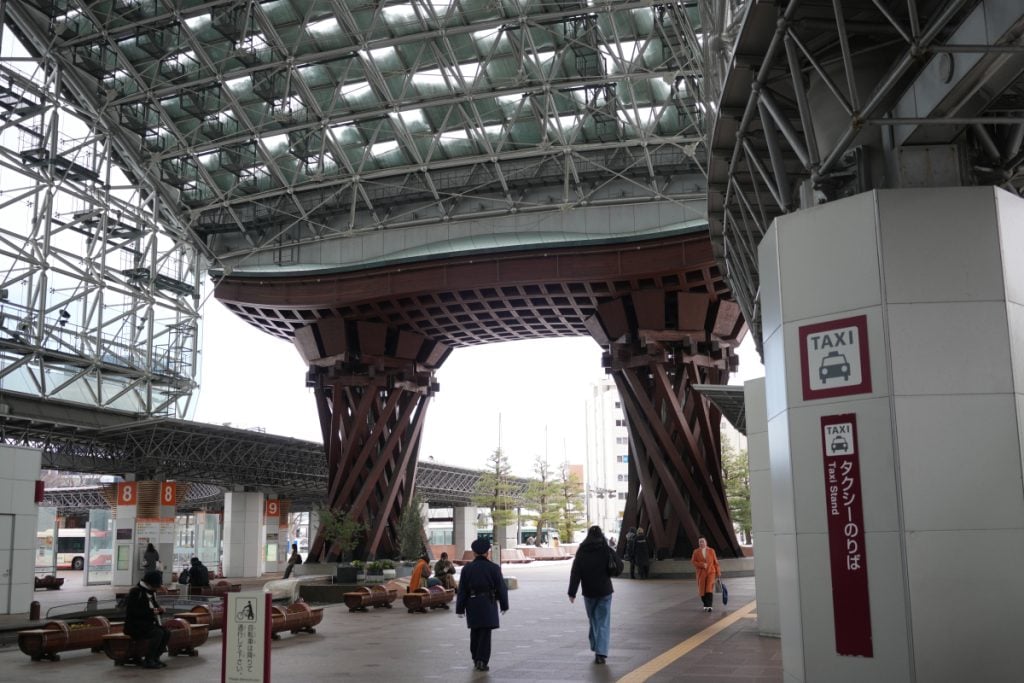
Like all major cities in Japan, Kanazawa is often best explored on foot when it comes to the main sights, as most are within a 15-20 minute walk. The city is so compact that hopping from one thing to the next was easy. Here are other modes of transport to consider:
- Ubers: Very practical and easy to use for the longer distances or stormy weather. I took several Ubers while there, as we had a lot of snow.
- The Loop Bus: Designed for sightseeing visitors, the Loop Bus is a convenient and cost-effective way to get around the city. You can buy a one-day pass for 800 yen, which gives you access to the route all day, or buy a single ride for around 200 yen. The Loop Bus goes between Kanazawa Station, Omicho Market, Kenroku-en, Kanazawa Castle, 21st Century Museum, and Nagamachi Samurai District.
Get the Kanazawa Cultural Zone Pass
With this single pass, you can enter around 15–16 cultural facilities (such as Kenroku-en Garden, 21st Century Museum of Contemporary Art, and others) without paying individual admission fees. Those typically range from about ¥100 to ¥550 per site. The pass costs about ¥1,000 for adults and is valid for 2 consecutive days. Visit just three mid-priced attractions at around ¥500 each, and you’ve already spent more than the cost of the pass. The discounts at participating restaurants and shops are a bonus.
Cash and Credit Cards in Kanazawa
Japan is one of the few modern countries that still heavily relies on cash payment. I recommend having about USD 200 on you at all times, as several restaurants and cafes will be cash only. Use the ATMs at 7-Eleven or Lawson for a reliable cash withdrawal. Major credit cards are accepted at businesses that do credit card transactions. For tax-free purchases, you will need your physical passport.
Get a Prepaid SIM Card
Kanazawa is compact, but having cell data makes navigating between neighborhoods and pulling up reservations so much easier. I use Holafly unlimited data eSIMs for all my international travel and recommend installing your eSIM before you land.
Download Google Maps Offline
Even with cell data, I recommend downloading Google Maps offline for Kanazawa. Before your trip, open Google Maps, search for Kanazawa, and tap “Download offline map.” You’ll still have access to turn-by-turn navigation and saved places without service.
Other Helpful Tips
- Tipping is not part of Japanese culture
- Be quiet on the train; loud noises or voices are considered rude
- Carry cash at all times
- Trash cans are limited, so bring a small bag with you and don’t eat on the go
- You’ll walk on the right side vs the left, like in other Japanese cities like Tokyo
Where to Stay in Kanazawa
I spent hours researching where to stay in Kanazawa. My conclusion, confirmed once I arrived: the two best areas are near Downtown/Korinbo by Omicho Market or near Katamachi. Hotels are great for short stays, but don’t skip the Airbnbs. There are some phenomenal traditional machiya homes available. See my full guide to where to stay in Kanazawa for my full recommendations.
Best Hotels Near Omicho Market


- Soki Hotel ($$ / Where I Stayed) — I booked in at Soki for my two nights in Kanazawa as it checked all the boxes for me: well-priced, footsteps in any direction to sights, modern with Japanese design, and a tranquil onsen inside. I booked into the Superior Wide Twin, a very comfortable room with Japanese beds and a good bathroom, with a lovely view of the city. Soki was incredibly comfortable, yet chic, given how affordable the price was in comparison to other options. I adored the onsen as well, which was on the bottom floor, and included free drinks as part of the experience. There’s nothing better than a soak when it’s cold.
- UAN ($$ / Great Overall) — The next overall hotel I had considered was the UAN, a modern boutique hotel just around the corner from Soki. The rooms are spacious and have that classic Japanese aesthetic. One benefit of the rooms here is that many have a private courtyard or terrace, great for good weather.
- Kinjohro ($$$ / Best Luxury Ryokan) — When it comes to the most elevated ryokan in Kanazawa, the six-room Kinjohro is it. The stay is highly personalized and traditional. It’s the kind of place for those looking to experience traditional Japanese cuisine, as meals will be served in your room with classic Kaga cuisine.
- Zoushi Hotel ($$ / Best Design for Dollar) — A very easy-going, chic hotel not far from the market. I flagged Zoushi as a great choice for the price and location. There are Japanese and Western-style rooms, and many set up quite well for traveling with kids.
- KUMU by the Share Hotels ($$ / Best Budget) — One of the cheapest and best-located hotels in the city, I’d call it “cheap and charming.” It’s stylish and contemporary, yet very affordable.
Best Hotels Near Katamachi Area
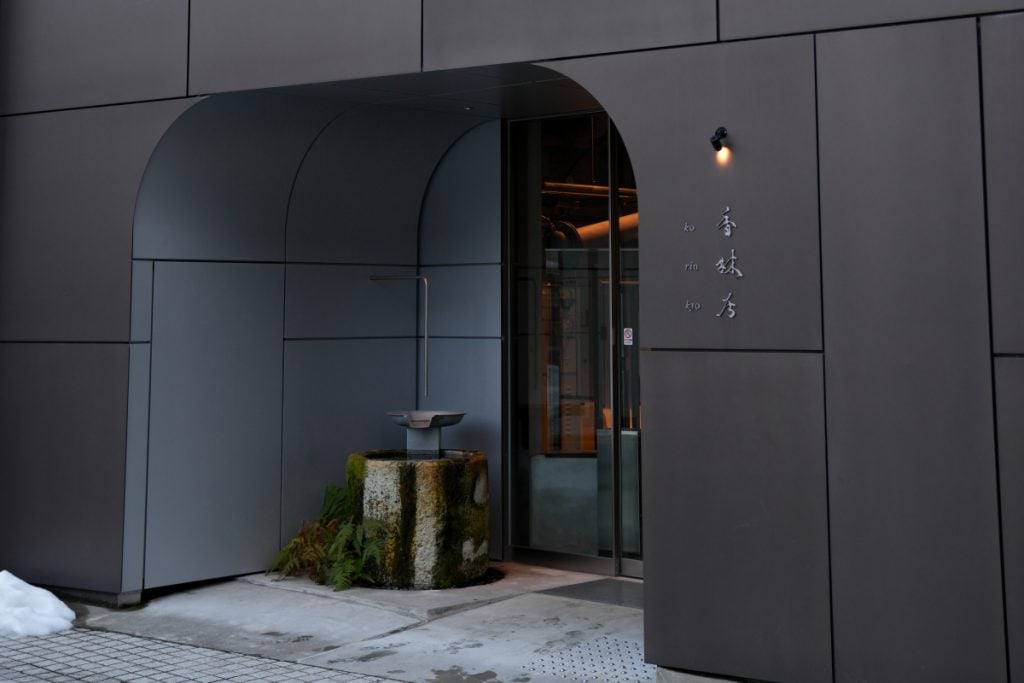
- Korinkyo Kanazawa ($$ / Best Luxury Design Hotel) — An absolute gem, this was the hotel I had really wanted to stay at, but it was sold out for my dates. The design here is impeccable. I stepped into the lobby to get a feel for the hotel, and the Korinkyo is wonderful. Very spacious suites, some with terraces and soaking baths, and splendid Japanese design.
- NODE Saigawa ($$ / Best Design for Dollar) — One of the newer boutique hotels to open near the Nishi Chaya district, it’s very small but has a very calm setting. The design is minimal and modern; there are only three guest rooms here.
- Hotel Amanek ($ / Great Overall) — A very stylish stay in the neighborhood, you’re within earshot of all of the museums and a cluster of great restaurants. The design is clean and modern, with a range of Japanese and Western beds (be sure to specify when booking). The perk of this one is the large onsen available to guests, which is wonderful to soak at the end of the day.
- SAIK ($$ / Best Ryokan) — I’d say SAIK leans more modern ryokan, yet still embodies the traditional experience. The 4-room property is a traditional machiya townhouse with tatami flooring, Japanese sliding screens, and beautiful woodwork.
Best Airbnbs in Kanazawa
- 2 Bedroom Modern and Traditional Townhouse — A fully renovated early-Showa townhouse in a designated preservation area with gorgeous European and Japanese design throughout. The standout is the bathroom: a large hinoki cypress bath with garden views, plus a semi-open-air hinoki soaking tub. The award-winning garden and mix of tatami and Western-style rooms make this one of the most elevated Airbnb stays I’ve come across in Kanazawa.
- 2 Bedroom Elevated Machiya Near Higashi Chaya District — A renovated machiya about a 6-minute walk from Higashi Chaya. The layout works really well for families, and the tsuboniwa garden, full kitchen, and heated floors are all nice touches.
- 1 Bedroom STUNNING Traditional Machiya Near Everything — Built in 1898 and right on the Asano River, this machiya is special. The river views, hinoki cypress bathtub, and beautifully appointed interiors make it one of the most memorable stays in the city. The futons are from a 100-year-old Kanazawa bedding shop, and the whole place has a warm, lived-in quality. Best for couples or solo travelers, and know that you may hear shamisen and drums from the nearby geisha houses at night.
Need A Quick and Convenient Place Near the Train Station? I’d Book At:
- Kanazawa Chaya Ryokan ($$$), for a traditional Ryokan stay
- Hyatt Centric Kanazawa ($$), for the best modern stay near the station
The Best Things to Do in Kanazawa, Japan
Discover the Higashi Chaya District


Quite possibly the most beautiful geisha quarter I’ve seen in Japan, the Higashi Chaya district is an absolute gem in Kanazawa. A main single lane cuts down the middle of it, lined with traditional wooden machiya townhouses, many of which were former geisha teahouses. The architecture is wonderfully preserved from the Edo period, and the machiya now house everything from cafes to gold-leaf craft boutiques.
Higashi Chaya is the most popular area to visit in Kanazawa, so my recommendation is to get there earlier rather than later. Higashi Chaya has a handful of gems on this street and nearby. I’d get tea and visit the Geisha House Shima, stop in next door at Hakuza Hikarigura Store for gold leaf souvenirs, and then continue to 東山 久りゅう (Higashiyama Hisaryu) for antique Japanese ceramics.
Traditional Teahouse at Geisha House Shima

One of the most popular things to do in Kanazawa is to step into a traditional teahouse for tea and dessert. There are several standout experiences throughout the city, and the one I opted for was at the Geisha House Shima.
I have no photos as cameras weren’t allowed inside. You step in and visit the historic Geisha house, and afterward sit in a small room with a bowl of matcha and a wagashi dessert. I found a few others that looked equally beautiful in Kanazawa, like Salon de thé Kaikaro and then Gyokusen-an inside the Kanazawa Castle complex.
Travel Tip: Want to experience a formal Sowa-style tea ceremony? This tea ceremony experience is a one-of-a-kind experience for a small group done in the traditional Sowa style.
Visit Kanazawa Castle and Kenroku-en Together in All Seasons
Two great sites to visit together, as they sit across from each other, are the Kanazawa Castle and Kenroku-en Gardens. I’d bookmark at least 3 to 4 hours to do both.
Kanazawa Castle

Originally built in the late 16th century as the seat of the powerful Maeda clan, Kanazawa Castle has been carefully reconstructed to reflect its Edo-period architecture. White plaster walls, imposing stone foundations, and elegant turrets give the complex its striking presence. I loved walking through the Kanazawa Castle Park gardens and strolling the outer walls, which have stunning views over the city.


Inside, you can visit the Hishi Yagura, a striking watchtower, and the Gojukken Nagaya, a long wooden structure formerly used for storing arms. Both require an additional fee to enter. If you want just a feel of the castle, it’s free to go in and walk the outer perimeter.
Hours and Prices
- Hours: Open every day of the year to visit, March 1 – October 15: 7:00 AM – 6:00 PM, and October 16 – February 28/29: 8:00 AM – 5:00 PM
- Prices: The grounds and gardens are free to visit
Kenroku-en Garden


Kenroku-en Garden is one of the official Three Great Gardens of Japan, and one of those places you could spend a few hours just taking in all of the incredible details. The garden is beautiful year-round. You’ll find incredible fall foliage, cherry and plum blossoms in spring, and pines braced with bamboo supports to keep the snow from overpowering the branches.
The gardens are a stunning example of traditional Japanese garden design, combining the six ideal qualities of seclusion, spaciousness, artifice, antiquity, water features, and panoramic views. While walking around, you’ll find serene spots to sit and reflect, multiple teahouses like Shigure‑tei and Yugao‑tei, ponds, and paths that wind through it all.

While there, try to see Seisonkaku Villa, a beautifully preserved samurai‑era residence near Kenrokuen Garden, which is practically inside. The woodwork here and private gardens, with wonderful rooms, make it one of the few surviving Daimyō villas in Japan.
Hours and Prices
- Hours: Open year-round, with the hours of March 1 – October 15: 7:00 AM – 6:00 PM and October 16 – February 28/29: 8:00 AM – 5:00 PM
- Prices: Adults (18+): ~¥320 and Children (6–17): ~¥100
Travel Tip: There’s also early‑morning free entry before official hours (starting as early as ~4–6 AM depending on season). This is the best opportunity to enjoy the garden in peaceful quiet before crowds arrive.
Discover the World of Omicho Market


The heart and soul of all things food in Kanazawa is Omicho Market. I have done my fair share of markets in Japan, and this one now tops the list for me. Having the chance to visit in winter, the peak season for specialty seafood like snow crab, uni, blackthroat seaperch, and sweet shrimp, the market was jamming.
It’s one of those spots you want to start your day at — stop in, and just stroll. In an ideal world, you walk a few of the lanes and then get a seat at Mori Mori, one of the best sushi spots right in the market. If you can’t go there, head to Ushioya for donburi. Adjacent to both is PETRA, your caffeine stop when visiting.


The market is an absolutely splendid experience; there are dozens of things to eat here, and you can’t really go wrong. For those wanting to dive deeper or who don’t want to go in without a guide, a guided tour is a great option. I’d recommend this highly rated food tour, or this combination tour of the market and nearby stops.
Shop Local


It’s no secret that Kanazawa is the city for artisans, from everything from gold-leaf crafts to ceramics. I spent some time doing a deep dive into specialty stores throughout the city and came across a few wonderful spots. Here’s where I’d shop, and what to buy there:
- Galerie Mita, for antique ceramics and more
- Byakko Knives Kanazawa, for the best knife store in the city. I picked up my knives here this trip, and was impressed by the service, knowledge, and much better pricing than Tokyo and Kyoto.
- Niguramu, for a phenomenal selection of Japanese serveware, plateware, and glassware
- Soil Flagship Shop, for a store specializing in smart home goods
- 東山 久りゅう, for antique ceramics in Higashiyama
- SKLO Room Accessories, for a variety of Japanese antiques and designs
- Hakuza Hikarigura Store, for all things gold leaf
Stroll the Asano River Through Kazuemachi Chaya District
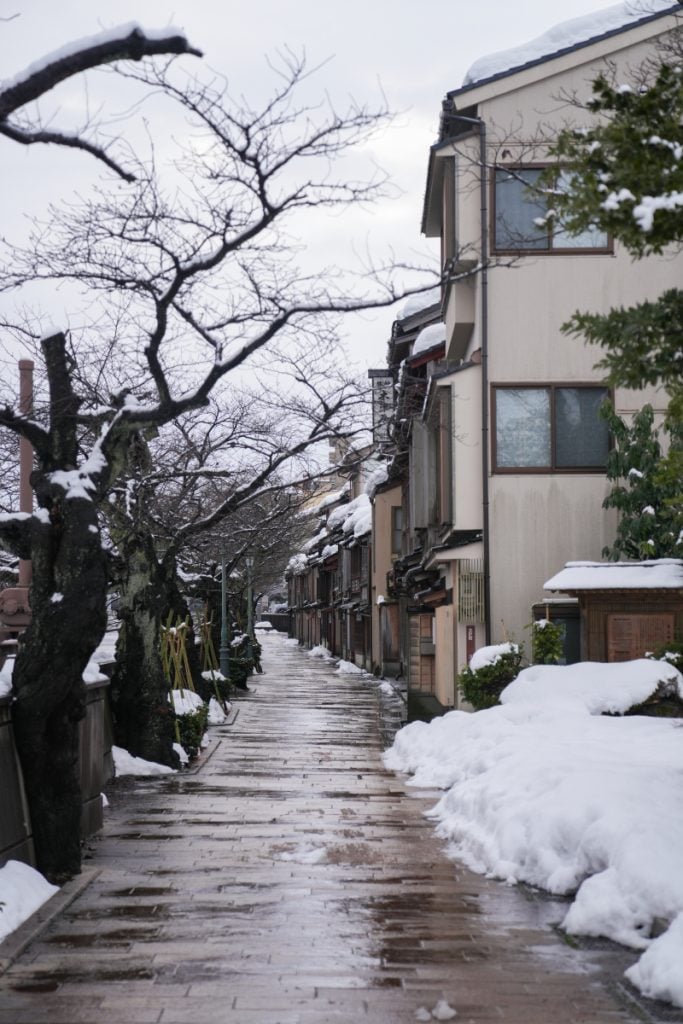

For a picturesque stroll, make your way to the Kazuemachi Chaya district along the Asano River. As one of the three historic districts, Kazuemachi Chaya stretches along the river, where several historic teahouses and machiyas are. There are scenic stone bridges and wonderful walkways that feel a world away from the city center.


While here, stop at the notable spot called Kuragari-zaka or “Slope of Darkness.” It’s a narrow, dimly lit alley running parallel to the Akari-zaka Steps, which lead to the river. The alley earned its name because men would sneak along it to enter teahouses offering more than just tea, attempting to remain unseen.
Spend Time in the Museum Quarter


What absolutely blew me away was the sheer number of museums to visit in Kanazawa, which largely focus on contemporary art. The museums were a beautiful counterpoint to the historical sights, and a great escape from the heat or cold. There were a few standouts that I think are absolutely worth visiting. They all sit in the Nishi Chaya district, where about a half dozen museums are, all connected by the scenic Path of Art (not recommended in winter due to snow). Here’s where to visit:
Kanazawa 21st Century Museum of Contemporary Art
This museum is all things contemporary and modern art from Japan and around the world, including interactive installations, video art, and conceptual pieces. One of the most famous works here is Leandro Erlich’s “Swimming Pool” – an optical illusion of a pool you can walk under. And don’t miss Turrell’s room while here.
Hours and Prices
- Hours: Exhibition galleries: 10:00 – 18:00 (last entry typically before the gallery closes)
- Prices: Prices vary by exhibition, but typical permanent exhibit tickets are around ¥300 – ¥450 for adults; special exhibitions can be higher (¥800 – ¥1,400+) depending on the show.
D.T. Suzuki Museum
At this museum, you step into the life and philosophy of Daisetz Teitaro Suzuki, the world-renowned scholar of Zen Buddhism who helped introduce it to the West. For me, one of the biggest highlights was the Contemplative space with a reflecting pool off the backside of the museum; it’s so stunning.
Hours and Prices
- Hours: Wednesday through Monday 9:30 – 17:00
- Prices: Tickets for Adults: ~¥310
Ishikawa Prefectural Museum of Art
Here, you’ll find traditional and modern Japanese art, with a strong emphasis on works from the Hokuriku region. The collection spans everything from Edo-period folding screens to crafts. One highlight here is the café, which also serves a range of very elevated desserts.
Hours and Prices
- Hours: Wednesday through Monday 9:00 – 17:00
- Prices: Tickets for Adults: ~¥310
Experience Kanazawa’s Gold Leaf Tradition in a Variety of Ways
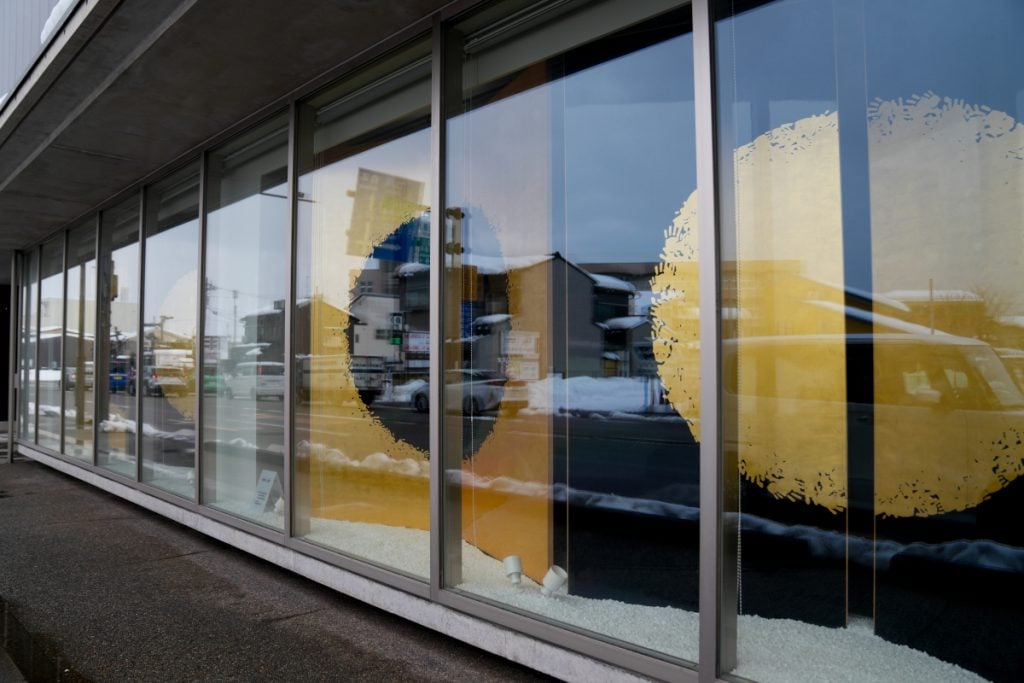
As the largest producer (99%) of Japan’s gold leaf, known as “kinpaku,” it’s a craft that goes back over 400 years. There are a few ways to dive into the city’s longstanding tradition, and no better place to start than the Kanazawa Yasue Gold Leaf Museum. The museum is a small exhibition, but it gives great insight into the significance of gold leaf production.


Around the corner, visit Hakuichi Higashiyama Store, one of the best places to shop for gold leaf items, and even eat it. Yes, it’s safe to eat it, and at Hakuichi Higashiyama Store, they wrap a single, glimmering sheet of gold leaf around an ice cream cone with creamy soft-serve.
One other very popular experience to do in Kanazawa, which I regret not having the time for, is a gold leaf workshop or a kintsugi workshop. I’m a big fan of Wabunka’s tours in Japan, very well-tailored and arranged with local artisans. They offer two kintsugi experiences in Kanazawa, this Urushitoki Kintsugi 2-Hour Workshop and this Urushitoi Sadaike lacquerware workshop (100 minutes). In both, you get to take your creation home.
Explore the Samurai District and Nomura-ke Samurai Heritage Residence

Set on the west side of Kanazawa Castle, the Samurai District, or formally the Nagamachi bukeyashiki-ato Samurai District, is one of the best preserved historic areas. The district has a very different feel from the geisha quarters, as the samurai residences used more stone. This area has narrower lanes, and then there are earthen walls that line the outside of the homes. The district also has these canals that line the outer edge, and the Edo-period houses lead into them.


One of the most important sites, and one of my favorite visits, was the Nomura-ke Samurai Heritage Residence. A restored samurai residence, it’s one of the best preserved houses built in the early 19th century for the Nomura family. You can visit inside; the gardens are particularly beautiful, as are the tatami-mat rooms.
Taste Sake at Fukumitsuya Higashi


One of my favorite breaks in the city was visiting the oldest sake brewery in Kanazawa, founded in 1625. Fukumitsuya Higashi is on the main street of Higashi Chaya district, and is something I’d recommend stepping into or even doing a tasting here. I came in last-minute, and tried a plum wine and their sake. They were so good, I ended up buying two bottles to bring home. My preferred tour company, Wabunka, actually offers an exclusive brewery tour and sake tasting at Fukumitsuya. Note: The brewery tour is only available from November to March.
Discover the Quiet Nishi Chaya District

The small Nishi Chaya (Ninja) district just over the Sai River was one of my final visits to the city. The district is quite small, about a half block, but a few machiya buildings line the street. What is most interesting is the cultural sight of Myouryuji (the Ninja Temple or Ninjadera) just up the street.


Built in 1643, the Ninjadera has over 29 rooms and 23 floors, with several hidden levels, secret staircases, and trap doors. The temple was built to allow monks and samurai to hide and defend the grounds. The Ninjadera is one of the better visits in the city, but a guided tour is required to enter. Most are in Japanese, some are in English, and no photography is allowed inside the temple. Show up and put your name on the list for a tour (arrive early). The hours are from 9:00 to 16:00 and it’s about 500 yen for adults.
After, consider visiting the Ninja Weapons Museum. The museum is a compact, interactive space dedicated to the tools and lore of shinobi (ninja) from feudal Japan. The historical artifacts and hands-on experiences make it fun for all ages.
See Oyama Shrine

Next to Kanazawa Castle stands Oyama Shrine, dedicated to the city’s founding lord, Maeda Toshiie, and his wife, Lady Matsu. Toshiie’s arrival in 1583 marked the beginning of a peaceful and prosperous era, laying the foundation for Kanazawa’s traditional arts and crafts. Many of which still owe their prominence to the Maeda family today. The shrine is open year-round and an easy visit when exploring downtown.
Step into the World of HIMITO


In all of my travels in Japan, I think HIMITO gallery takes the cake for the wildest exhibition, and yet wonderfully whimsical. Walking into the gallery is kind of an out-of-body experience. You pay a “donation” of 1000 yen to walk in and see the three-room art gallery that is full of art made from everything from fruit peels, dandelions, and plants. I met the artist while there who has dedicated many years to creating this space. She is wonderful, and you can see her passion for the intricate art pieces. The whole place feels out of this world. I’d recommend not going in the summer, as many reviews say it’s hot.
The Best Restaurants in Kanazawa, Japan
Mori Mori Sushi Omicho


Mori Mori, a popular kaiten‑zushi (conveyor‑belt sushi) restaurant right inside Omicho Market, was one of my favorite meals of the time. The sushi is incredibly fresh, sourced from right inside the market. You can order off a menu or get it from the sushi conveyor belt. I’d recommend getting there close to open, as the lines do get quite long.
If you’re not able to get in at Mori Mori, there are several other wonderful sushi spots known for nigiri in the city that stood out to me, like:
Ushioya
Inside the Omicho Market as well, Ushioya is the spot for donburi bowls. You have a variety of fish here, from uni to shrimp, and the seafood could not be any fresher.
Sho Sushi Katamachi Japanese eatery


One of the most delightful meals of the trip was at this 7-seat sushi counter bar in Kanazawa. I found Sho Sushi Katamachi while researching Tabelog recommendations, and am so glad I booked it. The restaurant offers a set menu; I went with the 4-course and added a few à la carte items. Some of the standout dishes showcased the region’s best seafood, like blackthroat perch and snow crab. The chef and team are so wonderfully kind and were very helpful with our limited Japanese.
Fukuwauchi


Fukuwauchi was such a cozy spot in Kanazawa; it’s a restaurant that specializes in udon noodles. Each table is in a private setting. I’d arrive early to get a table as seating is limited, or call ahead for a reservation. You’ll sit in the dining room and cook your own udon with fresh vegetables and a protein of your choice. The menus are all set and come with pickles, tea, and a dessert. If you can’t get in, just next door is Otafuku, which has a similar menu as well.
Kanazawa Curry Laboratory


Curry is a staple of Ishikawa cuisine, and Kanazawa has a distinct flavor profile for its take on the popular comfort food. The Curry Laboratory is where to go; they do a few different curry options, with proteins like tonkatsu and chicken katsu. The restaurant is small, so be prepared to wait.
isotope アイソトープ


One of my favorite breakfasts in town, Isotope is a cozy breakfast cafe that has a few classic Japanese dishes like breakfast porridge and seasonal dishes. The menu has so many great drinks, and you can’t miss their in-house-baked goods, which change daily with the season.
Fuwari
For izakaya dining, look no further than Fuwari. Fuwari is one of the most popular restaurants in town for izakaya cuisine and came highly recommended. You will need a reservation, so be prepared to book ahead here. If you can’t get in at Fuwari, I bookmarked Kanazawa Shu Shu or Zeniya.
Bakeries


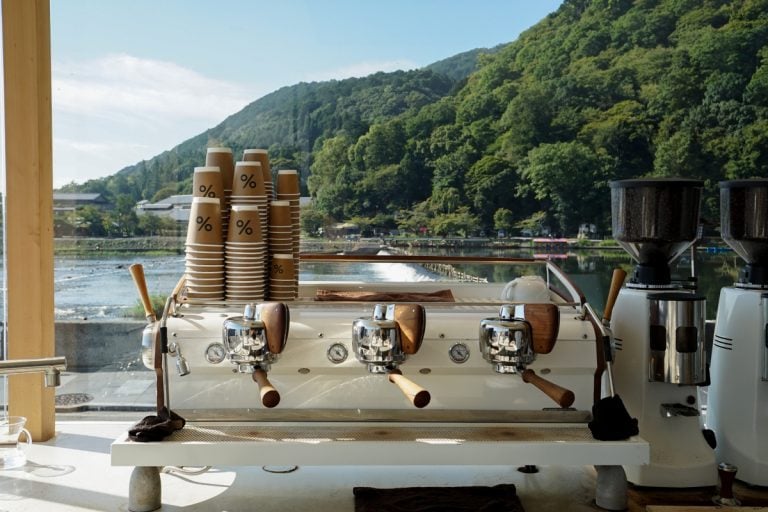
Where to Get Coffee in Kanazawa


Cute and hip coffee shops are a growing trend in Kanazawa. Here are my favorites:
- Townsfolk Coffee (favorite)
- Nonstop Coffee Stand (favorite)
- Kaikodo Coffee
- Petra Bake & Coffee (favorite)
- Angolo Caffe
- Moron Cafe (favorite)
- Cowrite Coffee
- 6 Apartment Coffee
- Kissa Glider
Where to Take a Day Trip From Kanazawa

Shirakawa-go and Gokayama
The number one day trip from Kanazawa is a visit to Shirakawa-go and Gokayama. These UNESCO World Heritage villages are known for their gasshō-zukuri houses, with steep thatched roofs built to withstand heavy snow. The quiet lanes, traditional farmhouses, and countryside views are worth the trip in any season. I’d recommend booking a group day trip tour or a private one like these, which combine several of the villages:
- Full day group tour to Shirakawa-Go
- Half-day small group tour to Shirakawa-Go
- Full Day tour to both villages
Takayama
Takayama has beautifully preserved Edo-period streets in the Sanmachi Suji district that are lined with wooden merchant houses, sake breweries, and artisan shops. The morning markets along the Miyagawa River are wonderful for local produce and crafts, and the Takayama Jinya, a historic government building, is worth a stop. The train is about 2 hours, which you could navigate yourself, or consider a guided tour like this one that combines Takayama and Shirakawa-Go.
Kaga Onsen
For a more relaxing day, Kaga Onsen is a wonderful escape into Japan’s hot spring culture. The area is home to several onsen towns like Yamashiro, Yamanaka, and Katayamazu, each with its own character. Soak in mineral-rich baths, stroll streets lined with traditional ryokan, and enjoy kaiseki meals made with seasonal ingredients. Some ryokans also offer pottery workshops or yukata dress-ups. If you don’t want to navigate public transportation, this private car tour for a full-day trip to Kaga onsen is a good choice.
Kanazawa FAQ
Is Kanazawa worth visiting?
Absolutely. Kanazawa has some of the best-preserved historic districts in Japan, incredible seafood, and a craft tradition that runs centuries deep. The city is compact and easy to navigate, and the crowds are a fraction of what you’ll find in Kyoto. I’d say Kanazawa is one of the most underrated cities in Japan right now.
How many days do you need in Kanazawa?
Two full days is ideal for the main sights at a comfortable pace. Add a third day if you want to do a day trip to Shirakawa-go or Takayama, or just want to explore slowly.
Save This Post for Later on Pinterest


PS — Are You Booking a Trip Soon? Use My Booking Checklist!
These are the sites I use most to book my own trips. Using the links below is a great way to support Bon Traveler’s travel journalism at no extra cost to you. If you need help organizing your itinerary, get my free travel itinerary template here.
1. Book Your Accommodations
I use Booking.com for hotels and Airbnb for vacation rentals. They have the biggest inventory and consistently offer the best rates.
2. Book Your Rental Car
Self-driving is the best way to explore most destinations. I use Discover Cars for our rental cars, select full coverage insurance, and opt for a reputable company like Alamo, Hertz, or Sixt.
3. Book Your Tours & Experiences
I use Viator, Airbnb, and Get Your Guide to find the best tours and experiences. They are my favorite tour search engines. I always check all three as their inventory varies depending on the destination.
4. Book Your Private Transfers
For easy, reliable private transfers, I use Welcome Pickups. It’s my go-to for arranging a driver in advance — whether it’s an airport pickup, a hotel-to-hotel transfer, or a day trip. The experience is seamless, with English-speaking drivers and upfront pricing, so you can travel stress-free at every stage of your trip.
5. Get Cell Data for Your Trip
I use Holafly for international cell data. Their unlimited data eSIMs are easy to install, activate instantly on arrival, and let you skip local SIM cards and expensive roaming fees.
6. Don’t Forget Travel Insurance
I never leave the country without travel insurance. It provides comprehensive protection in case anything goes wrong (ie. illness, injury, theft, or cancellations).
My favorite companies that offer the best coverage and rates are:
- World Nomads (best for all-around)
- Safety Wing (best for frequent travelers)
Xx,
Jessica